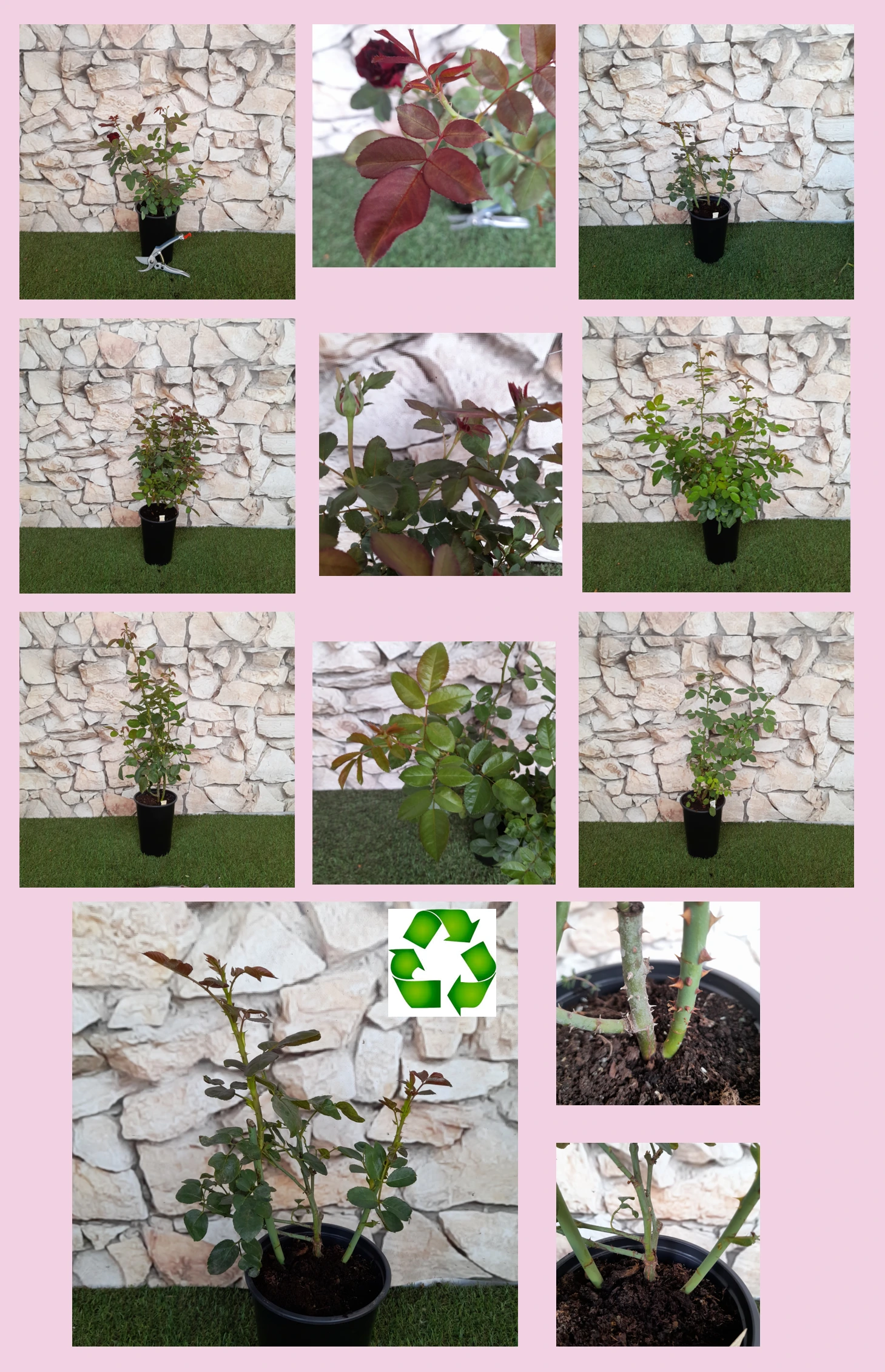
Park shrub rose

90-059-1
90-059-2

Violet Hood

Park - shrub rose

- – Louis Lens

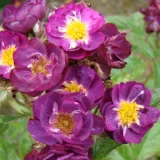
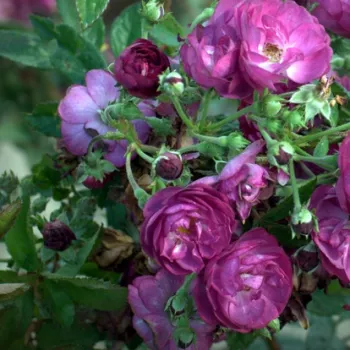
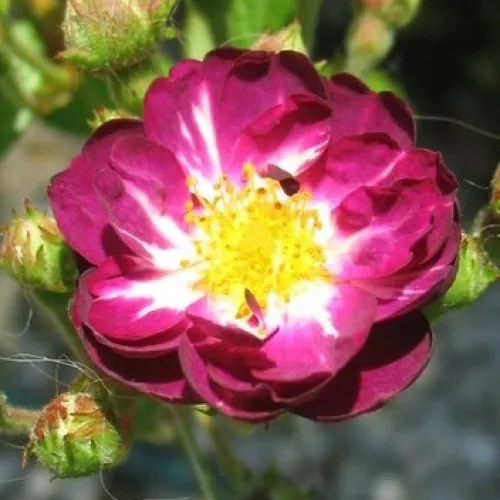
Dark purple with crimson shades and lavender tones. - park rose - scentless rose - no noticeable fragrance

– Dark purple-lilac blooms with velvety tones.
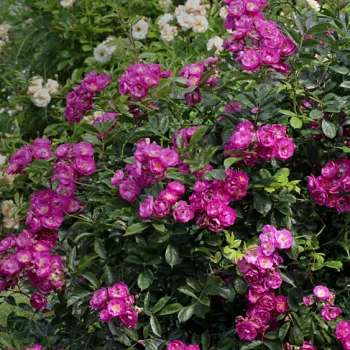
– Compact shrub, ideal for borders and hedges.
– Reliable repeat flowering with abundant flushes.
– Medium disease resistance, rust-resistant foliage.
– Attractive red hips add autumn garden interest.
Special feature: Silver Medal winner at Kortrijk 1978.
Safe long-term – Together with nature
Violet Hood
darinaROSE® ORIGINAL 2-litre own-root potted rose
21,20 £
Unfortunately, we are currently unable to ship to the United Kingdom; we only deliver to countries within the European Union. For more information, please contact us!
3.5 (5563)
facebook   twitter

VIOLET HOOD – violet-purple park rose – Lens

Set a romantic cottage mood with Violet Hood, a compact, shrub-form Hybrid Musk that slips easily into ordinary family gardens and thrives even where wind-tunnel corners and coastal-style exposure demand a sturdier rose. Its semi-double, violet-purple blooms appear in airy clusters from early summer, then repeat generously, giving a softly storybook look above dark, slightly glossy foliage. This own-root 2-litre plant is simple to handle and settles quickly, building a quiet presence in borders, low hedges or large containers without fussy pruning. Over the years, its stable framework and reliable colour create a sense of continuity, while the ability to regenerate from the base supports a genuinely long-lived planting. In autumn, the neat red hips add gentle seasonal interest, sliding naturally into the kitchen-garden feel of an English-style plot. Expect a gradual development – first the underground roots, then stronger top growth, before full cottage-garden impact fills your tea-time arbour view.


Usage options

Target areaReasoning
Front-of-border cottage strip Compact height and 50–80 cm spread let Violet Hood sit neatly at the front or mid-front of a mixed cottage border without swamping neighbouring perennials, while repeat clusters of purple bloom keep colour moving between classic pinks and creams; ideal for those who want a romantic, “girly” effect with limited upkeep, especially beginners.
Low informal flowering hedge Planted at 50 cm intervals, its branching, moderately thorny framework knits into a softly defined hedge that flowers repeatedly, then carries red hips into autumn, giving privacy and structure along drives or around a kitchen garden with only light annual trimming; particularly appealing for families.
Feature shrub in small family gardens At 90–140 cm tall, this shrub rose offers presence without dominating a modest plot, providing season-long violet tones and a compact, tidy habit that suits overlooked suburban gardens where space is tight and reliable structure matters; a reassuring choice for busy homeowners.
Large container or half-barrel planting In a 40–50 litre container, the own-root plant gradually builds a balanced crown and root system, avoiding the instability of grafted standards while allowing you to move the rose to patios or courtyards for tea-time colour with straightforward watering and light feeding; well suited to urban balconies.
Mixed country-style shrub group Used in groups of three with other shrubs, Violet Hood’s repeated clusters of semi-double, purple blooms thread a unifying colour through greens and silvers, while medium disease resistance keeps care to a few seasonal checks, even in damper sites where frequent rain and stronger winds are common; reassuring for time-poor gardeners.
Naturalistic edge to kitchen or cutting beds The rose’s generous second flush and ornamental hips provide both small stems for informal cutting and a soft, wildlife-friendly frame to vegetable beds or herb rows, allowing you to borrow colour for vases while keeping the garden picture cohesive and traditionally domestic; attractive for cottage-garden enthusiasts.
Long-term structural planting in clay or chalk As an own-root shrub, Violet Hood settles gradually, establishing strongly in improved heavy clay or chalky soils, where deep, spreading roots support long life and recovery after hard winters or pruning, making it a sound investment for gardeners planning their borders for many years; perfect for forward-looking planners.
Relaxed family seating or play area backdrop The upright yet compact habit, lack of strong fragrance and medium prickliness make it a practical backdrop behind benches or play lawns, adding a soft purple curtain and autumn hips with only moderate pruning and routine health checks; a good fit for sociable outdoor spaces.

Styling ideas

  • Cottage-Romance Border – Combine Violet Hood with foxgloves, lavender and old-fashioned pink roses to create a layered, front-of-border storybook strip – for lovers of nostalgic, feminine gardens.
  • Kitchen-Garden Hedge – Plant a low row along vegetable beds, underplant with chives and marigolds, and enjoy flowers followed by red hips framing your produce – for home cooks who value beauty and bounty together.
  • Patio-Barrel Feature – Set one plant in a half-barrel with trailing thyme and violas beneath, positioning it by a seating area for close-up viewing – for city gardeners making the most of limited space.
  • Woodland-Edge Mix – Use Violet Hood with shade-tolerant perennials like hardy geraniums and astrantia on a bright edge, letting its purple clusters punctuate looser plantings – for those softening the transition to trees.
  • Grasses-and-Roses Drift – Interweave with low ornamental grasses and calamint to contrast fine textures against the compact shrub form and mauve blooms – for design-led gardeners seeking a modern take on cottage style.

Technical cultivar profile
PropertyData
Name and registration Violet Hood, shrub Hybrid Musk park rose; ARS exhibition name Violet Hood; collection Park – shrub rose; commercial use mainly in borders, hedges and landscape groupings.
Origin and breeding Bred by Louis Lens, Belgium (1973) from ‘Robin Hood’ × ‘Baby Faurax’; introduced and registered in 1975 by Lens Roses N.V. and Pépinières Louis Lens SA for European garden use.
Awards and recognition Silver Medal, Kortrijk International Rose Exhibition 1978, reflecting dependable garden performance and ornamental value in public landscape and park plantings over several growing seasons.
Growth and structural characteristics Compact shrub, 90–140 cm high, 50–80 cm spread, moderately thorny, with moderately dense, slightly glossy dark green foliage showing a brownish tinge; forms a stable, well-branched framework over time.
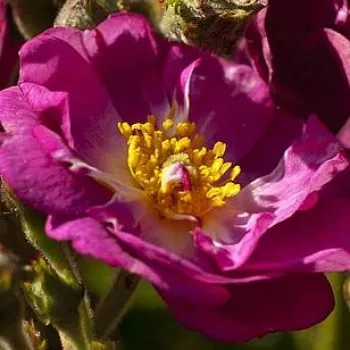
Flower morphology Semi-double, flat flowers, 13–25 petals, small size (about 0.5–1.5 in), borne in clusters; remontant with an abundant second flush; petals drop to reveal developing spherical hips in autumn.
Colour data and phenology Dark purple with crimson and lavender tones; buds deep purple, opening to velvety lavender purple (RHS 79A outer, 79B inner), then fading evenly to matte mauve and finally brownish-mauve before petal fall.
Fragrance and aroma No noticeable fragrance; considered a scentless rose, which suits seating areas where visual effect is desired without competing aromas; semi-double form offers moderate but not high pollinator attractiveness.
Hip characteristics Produces many ornamental, spherical red hips 6–10 mm across in autumn, following petal fall; hips add fine-textured seasonal interest in mixed borders, hedges and naturalistic or kitchen-garden settings.
Resistance and winter hardiness Medium overall disease resistance: medium for powdery mildew and black spot, resistant to rust; hardy to about −21 to −18 °C, RHS H7, suitable for USDA zone 6b and Swedish hardiness zone 3 gardens.
Horticultural recommendations Best in full sun with well-drained but moisture-retentive soil; recommended spacings: 60 cm mass planting, 50 cm hedge, 100 cm specimen; medium maintenance with occasional health checks and light pruning.

Violet Hood offers compact, long-lived shrub structure, generous repeat violet flowering and autumn hips in an easy-handling own-root form that settles securely into family gardens, making it a thoughtful choice for relaxed, enduring cottage-style planting.
Detailed product attributes

Product Identification Data

Product Name: VIOLET HOOD – violet-purple park rose - Lens
Product Type: darinaROSE® ORIGINAL - 2-litre own-root potted rose
Cultivar Authenticity: Verified:08.04.2025
Cultivar Quality Rating: premium bronze
Item Number: [1409] 90-059 (14.02.2026) darinarose.co.uk

Name and Registration

Meaning of Cultivar Name: In the name, "Violet" denotes the violet-purple flower colour, while "Hood" refers to the "Robin Hood" parent variety.
Original Trade Name: Violet Hood
Current Trade Name: Violet Hood Park - shrub rose Lens
Rose Group: Shrub, Hybrid Musk
Commercial Type: park rose
Commercial Group: Park - shrub rose
Exhibition Category: shrub rose; landscape and park plantings
Collection: Park - shrub rose

Origin and Breeding

Initial Distributor: Lens Roses N.V. (Belgium); Pépinières Louis Lens SA (Belgium)
Breeder: Louis Lens
Breeding Company / Institution: Lens Roses N V (Belgium)
Breeding Year: Belgium, 1973
Parentage: ‘Robin Hood’ × ‘Baby Faurax’

Awards and Honours

Competition and Show Awards: Kortrijk International Rose Exhibition – Silver Medal (1978)

Growth and Structural Characteristics

Height: 3-4.6ft (90-140 cm)
Spread: 1.6-2.6ft (50-80 cm)
Growth Habit: compact
Foliage: The variety has moderately dense foliage. The leaves have a slightly glossy surface and are dark green with a brownish tinge.
Prickliness: moderately thorny
Self-Cleaning Description: The petals fall after the bloom opens and the flower base develops rose hips in autumn.
Self-Cleaning Intensity: No data on the degree of self-cleaning.

Flower Morphology

Petal Count: 13-25
Flower Fullness: semi-double
Flower Shape: flat
Flower Size: S (0,5-1,5 in)
Inflorescence Type: clustered
Colour Code: ARS code: m RHS code: 79A (outer), 79B (inner)
Repeat Flowering: Remontant; the second flowering is also abundant.

Colour Data and Phenology

Colour: purple-lilac
Flower Colour Description: Dark purple with crimson shades and lavender tones.
Closed Bud: Deep, almost black purple.
Newly Opened Flower: Intense, velvety lavender purple with a slight bluish tinge.
Full Bloom: Even, matt purple with subtly lightened edges.
Before Fading: Fading purple tending towards a brownish‑crimson tone.
Colour Fading Description: As it opens, the intense lavender purple fades evenly to a matte mauve, the edges lighten and, before the bloom fades, it shifts to a brownish-mauve tone.

Fragrance and Aroma

Fragrance Strength: scentless rose
Fragrance Character: no noticeable fragrance
Pollinator Attraction: Semi-double flowers (13–25 petals) with only moderate stamen accessibility make this variety moderately attractive to pollinators.
Pollinator-Friendly Rating: It is considered partially pollinator-friendly due to its semi-double flowers.

Hip Characteristics

Hip Shape: spherical
Hip Colour: red
Hip Comment: In autumn it may produce many spherical red rose hips 6–10 mm in diameter; they can be ornamental.

Resistance and Hardiness

Hardiness (°C): -21–-18 °C
Heat and Drought Tolerance Description: No data are available on heat–drought tolerance.
Disease Resistance: medium
  • powdery mildew – medium
  • black spot – medium
  • rust – resistant

Horticultural Recommendations

Recommended Planting Distance: 60 cm for mass planting, 50 cm for hedging, 100 cm for a solitary specimen
Planting Density: square planting 2,8 plants/m², hexagonal arrangement 3,2 plants/m²
Partial Shade Tolerance: Best in a sunny position
Maintenance Requirement: Maintenance requirement medium; occasionally requires pest and disease control.
Primary Uses: border, specimen, hedge, container, cut flower

Comments

Strengths: Safe long-term – Together with nature
Companion Plants: Phormium 'Tom Thumb' - New Zealand flax
Pennisetum alopecuroides - fountain grass
Calamintha grandiflora ‘Elfin Purple’ - large-flowered calamint
Comment: -
VIOLET HOOD – violet-purple park rose - Lens
Dark purple with crimson shades and lavender tones. - park rose - scentless rose - no noticeable fragrance
Online rose purchase - park rose - Violet Hood - purple-lilac - (3-4.6ft (90-140 cm))
Inflorescence: clustered Height: 3-4.6ft (90-140 cm) Flower shape: flat Winter hardiness: 6b purple-lilac - Lens Roses N.V. (Belgium); Pépinières Louis Lens SA (Belgium) park rose - Flower size: S (0,5-1,5 in) Flower size: S (0,5-1,5 in) - Height: 3-4.6ft (90-140 cm) Height: 3-4.6ft (90-140 cm) - Flower fullness: semi-double Violet Hood - Roses in the garden | darinaROSE® Original - premium bronze Louis Lens

We showcase the external appearance of the roses available for online purchase from our webshop.


Which product type is right for you?


Information

In what condition do we send the rose from our online webshop?

Let us ask ourselves the question: What do I want to use the rose for?
Flower? - Location? - Cover? - Fragrance? - Height? - Breeder? - Rose hips?

Rose purchase information
Methods of payment - Delivery charges - Delivery - Complaints handling

Care guide

Our product is a rose grown using the unique PharmaRosa® cultivation technology!

2-litre, own-root, potted rose.
With a shoot system appropriate to the season.
With a root system that permeates the growing medium.
Quality in line with the requirements of the E.N.A. (European Nurserystock Association).
In unique packaging designed to prevent damage.
Can be planted at any time during frost-free periods.
True-to-variety rose plant with a unique identifier.

The own-root, potted PharmaRosa® rose is a fully rooted plant that guarantees reliable establishment for you, so it can be planted at any time of the year during frost-free periods.


Crop: several varieties and several stages of development in a short crop section.
Shoot system: intensive growth of fresh basal shoots on a young plant.
Root system: presentation of the strong root system permeating the growing medium, with the pot removed.
Balance: mature plant where the development of the root system and the shoot system is in harmony.

Information about the videos
This video series is not a “seasonal showcase”, but a way of making the essence of own-root PharmaRosa® cultivation tangible: how the plant is structured, what the root system is like, and how the shoot system renews itself. The footage was therefore recorded at different times, showing plants at various stages of development, so mixed leaf cover or differing levels of development may appear in the videos. This is not a “sample” of the consignment delivered, but an illustration of how the technology works. The current condition of the rose You are purchasing, characteristic of the given period (the state in which You can expect to receive it in the parcel), is shown in the upper part of the product page.

pharmarosa.atpharmarosa.compharmarosa.depharmarosa.ropharmarosa.sipharmarosa.skpharmarosa.hrpharmarosa.itpharmarosa.frpharmarosa.grpharmarosa.bepharmarosa.dkpharmarosa.nlpharmarosa.iepharmarosa.plpharmarosa.lupharmarosa.ptpharmarosa.espharmarosa.bgpharmarosa.ltpharmarosa.sepharmarosa.lvpharmarosa.eepharmarosa.fipharmarosa.rudarinarose.co.ukpharmarosa.cz

Product types

Pages for private customers
Garden roses for the family garden, with minimal care  → ORIGINAL®
Premium garden roses – instant impact, a truly showpiece garden  → EXTRA®
Pages for professionals and private customers
Roses for public spaces – large areas, sustainable maintenance  → NATURAL®
Roses for projects – hedge and row planting, fast implementation  → RAPID®
For professional partners only
Production – propagation material for garden roses, wholesale  → NEONATAL®

Company details

PharmaRosa Ltd.
Company registration number: 01-09-717479
VAT number: 13075314-2-43
Plant health registration no.: HU130721
Bank account (IBAN):
HU85117631891388688400000000
BIC (SWIFT): OTPVHUHB
Bank name: OTP Bank Nyrt.