QUEEN OF WARSAW – pink bedding floribunda rose – Rojewski
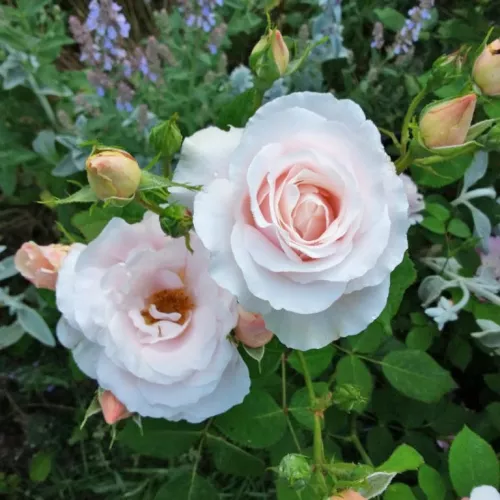
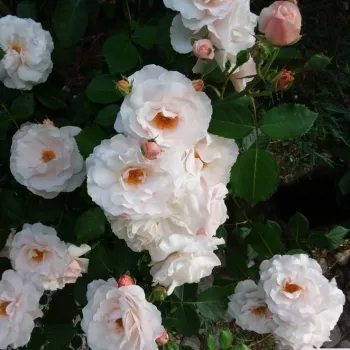
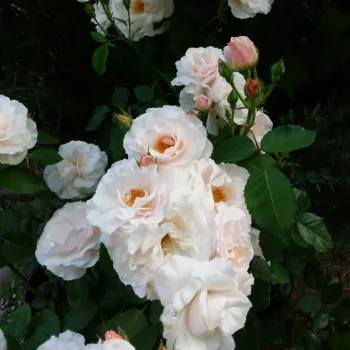
QUEEN OF WARSAW brings a quietly romantic, storybook feel to an everyday family garden, its pearlescent pink blooms lending effortless elegance to cottage-style borders and relaxed seating areas. Semi-double, cup-shaped flowers open in pastel shades that soften towards near-white, creating a natural multicolour effect that pairs beautifully with hedging and a small kitchen garden. On its own roots this rose develops a dependable framework that supports a long lifespan, with the plant steadily regenerating from the base so it can recover well after pruning or difficult seasons. Once established it becomes increasingly reliable year to year, ideal where you want a cosy, lived‑in look rather than high-maintenance perfection. The bushy, medium-sized habit is easy to place in modest spaces and anchors well even where winds can be brisk near the coast, while good self-cleaning keeps beds pleasantly orderly between visits with the secateurs. Medium, spicy fragrance and open centres add gentle charm near a seating area or path, and the semi-double form makes it quietly wildlife-friendly by offering pollen to visiting insects. Over time, dainty orange-red hips in late season give extra interest and help this rose blend naturally into an English countryside-style planting.
Usage options
| Target area |
Reasoning |
| Cottage-style flowerbed in a family back garden |
The bushy, medium-height habit sits comfortably in smaller borders, giving layered height without overwhelming nearby perennials or herbs, and the pearlescent pink tones blend easily with traditional cottage colours; its quietly romantic look suits those wanting relaxed elegance. |
| Mixed rose and shrub bed with colour nuances |
Subtle shifts from soft pink to near-white across the cluster give a gentle multicolour effect without clashing, helping to soften hedges or fences and tying together roses of different hues in one border, ideal for gardeners who appreciate nuanced multicolour. |
| Long-term structure in a family garden plan |
As an own-root shrub, the plant builds a stable framework that can regenerate from the base after pruning, supporting many years of ornamental value; this suits homeowners planning a garden to mature gracefully alongside them and prioritising planting with a long lifespan. |
| Low-fuss rose corner near a seating area |
Self-cleaning clusters drop most spent petals on their own, so the plant keeps a neat look between regular care sessions, letting you enjoy blooms from the patio without constant deadheading, a practical choice for time-pressed gardeners who value an orderly space. |
| Cosy path edge or around an informal arbour |
Medium-strength, spicy fragrance and repeated flushes of bloom close to nose height create a welcoming atmosphere along paths or around benches, particularly during afternoon tea moments, making it appealing to those who see scent as part of the garden’s charm. |
| Wildlife-aware family garden with children |
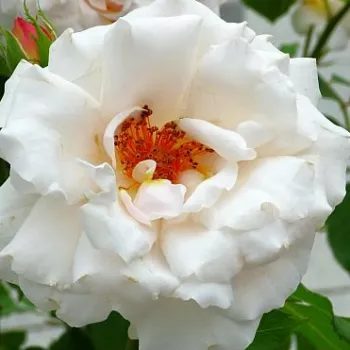
Semi-double flowers with exposed stamens offer accessible pollen, inviting bees and other insects without an overpoweringly wild look; this balances a tidy appearance with a small ecological contribution, attractive to families seeking a gently wildlife-friendly planting. |
| Small to medium front garden for kerb appeal |
The compact, bushy form and adaptable pastel palette suit narrow beds by drives or front paths, and once its roots knit in over the first seasons it anchors reliably even in breezier sites, reassuring householders who need a visually stable, reliable feature. |
| Kitchen-garden edge and late-season interest |
After flowering, orange-red spherical hips provide a light ornamental effect and can be harvested for home use, extending the plant’s contribution beyond summer blooms in a productive yet pretty plot, ideal for those who enjoy gardens that retain layered interest. |
Styling ideas
- Tea-arbour romance – Train QUEEN OF WARSAW alongside a light climber such as clematis on an arbour, underplant with soft geraniums, and place a small table beneath for afternoon tea – for lovers of scented charm and intimate seating corners.
- Soft-front border – Use three plants in a gentle arc by the front path, threading between low lavender and evergreen box to create an elegant yet easy kerbside welcome – for busy homeowners prioritising long-term reliable structure.
- Kitchen-garden edge – Line the edge of raised vegetable beds with QUEEN OF WARSAW and herbs, letting the pastel flowers and later hips soften the productive area – for cottage-garden enthusiasts who enjoy edible interest and informal order.
- Wildlife strip – Combine with single-flowered perennials and a light honeysuckle on a fence to offer pollen and scent without a wild tangle – for families seeking gently wildlife-friendly planting that still looks cared-for.
- Pastel courtyard – Grow one plant in a 40–50 litre container with drainage, pairing it with soft-toned annuals and a bistro set to bring multicolour bloom close to the house – for urban gardeners wanting compact elegance and seasonal charm.
Technical cultivar profile
| Parameter |
Data |
| Name and registration |
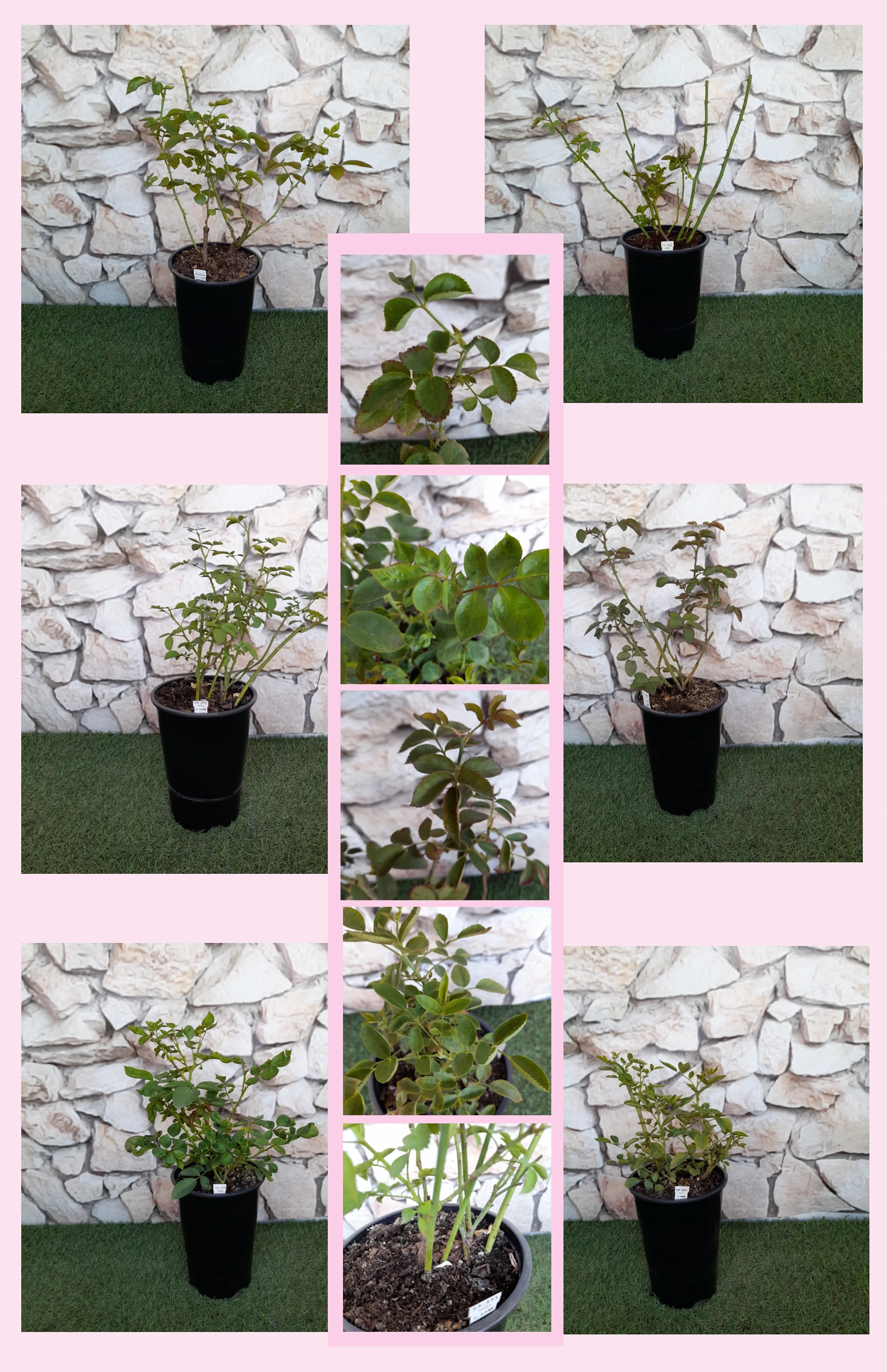
QUEEN OF WARSAW is a bedding floribunda shrub rose sold as QUEEN OF WARSAW – pink bedding floribunda rose – Rojewski; collection Bedding rose; commercial group Bed rose; own-root, container-grown. |
| Origin and breeding |
Bred by Łukasz Rojewski in Poland (2014) from (‘Morgengruss’ × ‘Constance Spry’) × (‘Morgengruss’ × ‘Comte de Chambord’); introduced after 2024 by Rojewski Roses, registered in 2024. |
| Awards and recognition |
Certificat de Mérite at the International New Roses Competition in Switzerland (2022), supported by EU plant variety protection under CPVO 67090, granted in 2024 for this cultivar. |
| Growth and structural characteristics |
Bushy shrub reaching about 80–110 cm in both height and spread, with dense, medium-green, slightly glossy foliage (RHS 137A) and moderate prickliness; good self-cleaning habit keeps the plant visually tidy. |
| Flower morphology |
Semi-double, cup-shaped blooms in clusters, each large flower around 2.75–3.95 inches across with 13–25 petals; repeat-flowering through the season with an abundant second flush following the first main display. |
| Colour data and phenology |
Pearlescent pale pink flowers (ARS Lt Pk; RHS 65C outer, 69D inner) opening from milky pink buds, fading gradually to almost white with a light pink veil, giving a soft, translucent effect over the flowering period. |
| Fragrance and aroma |
Medium-strength scent with a spicy character typical of some historic-style roses; noticeable at close range along paths or seating areas without overwhelming nearby plantings, adding a refined sensory layer to the garden. |
| Hip characteristics |
Produces moderately abundant, spherical orange-red hips about 8–12 mm in diameter; hips have ornamental value in late season and are considered edible, extending the plant’s visual and practical interest beyond flowering. |
| Resistance and winter hardiness |
Very susceptible to powdery mildew, black spot and rust, needing regular protection; winter hardy to about −32 to −29 °C (RHS H7, USDA 4b, Sweden Zone 5), suiting cold-winter regions with appropriate care. |
| Horticultural recommendations |
Prefers a sunny position in well-drained soil; for mass bedding plant 65 cm apart, for hedging 55 cm, or 100 cm as a solitary; densities around 2.5–2.9 plants/m² are recommended for fuller, even coverage in designed schemes. |
QUEEN OF WARSAW offers pastel multicolour charm, self-cleaning clusters and a long-lived own-root framework that matures steadily, making it a thoughtful choice if you would like a romantic rose that settles in for the long term.