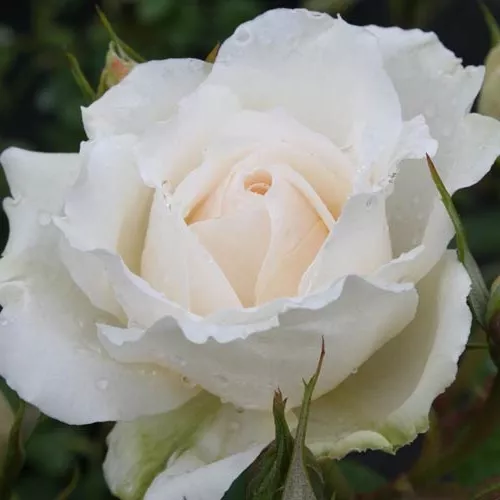
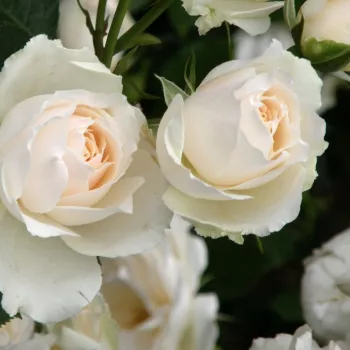
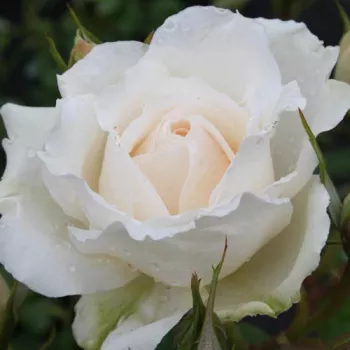
PRINCESS OF WALES – white bedding floribunda rose
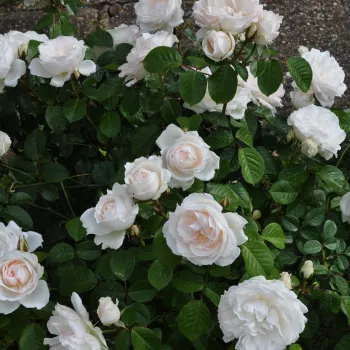
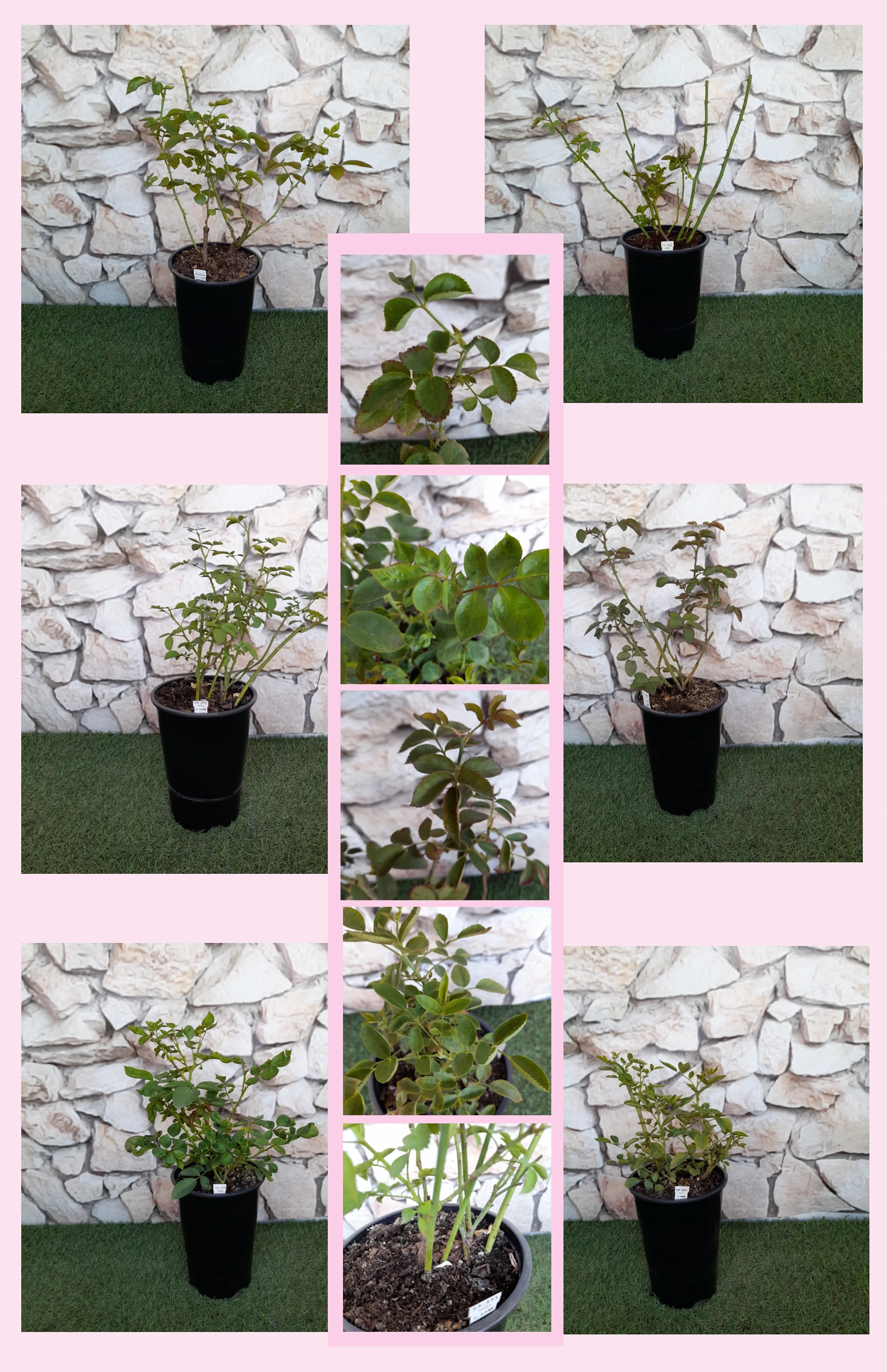
Brought to you in the convenient pharmaROSA® ORIGINAL 2-litre format, PRINCESS OF WALES settles quickly and lends a quietly romantic note to family gardens, coping reliably even where winds sweep in from the coast and rain is frequent. Its bushy habit forms a low, tidy hedge or edging, while clusters of cup-shaped blooms create a soft cushion of white above dark, glossy foliage. Semi-double flowers with open centres offer gentle fragrance and pollen to visiting bees, making this an easy way to add life as well as beauty around a terrace, path or kitchen garden beds. Pure white petals with a hint of ivory combine effortlessly with cottage-style perennials, and its RHS Award of Garden Merit backs up its garden reliability. As an own-root rose it builds from strong roots into a compact, enduring structure that will reward light, regular care for many years.
Usage options
| Target area | Reasoning |
|---|
| Front-of-border cottage edging |
The compact, bushy habit and 65–95 cm height make it ideal for defining the front of mixed cottage borders without shading herbs or vegetables behind. Regular clusters of white flowers soften hard edges and create a relaxed, storybook feel for homeowners. |
| Low flowering hedge along paths |
Recommended hedge spacing at 35 cm allows plants to knit into a low, continuous line that guides the eye and frames lawns or gravel paths. The dense foliage and moderate prickles discourage shortcutting feet, suiting shared family spaces for family-garden buyers. |
| White rose bed with seasonal colour |
Square planting at around 5.7 plants/m² produces a full, even white display that works beautifully with bulbs and low perennials. The good colour retention and generous second flush keep the bed looking composed rather than patchy for romantic-style gardeners. |
| Large containers on terraces and patios |
The moderate height and bushy structure adapt well to tubs of at least 40–50 litres, where roots have room to anchor and remain moist between waterings. This keeps care simple on paved terraces and small urban plots for busy city gardeners. |
| Mixed planting in heavy soil areas |
Best planted into improved topsoil or raised bands over heavier clay, where its own-root system can develop steadily and support long-term flowering. Once established, the stable framework and medium care needs fit those seeking dependable structure for low-maintenance users. |
| Pollinator-friendly cottage garden corners |
Semi-double, cup-shaped blooms open to show stamens that are easy for bees to reach, while the medium, softly sweet scent adds to the draw. Threaded among herbs and vegetables, it supports wildlife as well as atmosphere for nature-conscious households. |
| Coastal and breezier gardens |
The relatively low, bushy growth and dense foliage help the shrub hold its shape where open aspects bring frequent wind and rain, provided drainage is reasonable. This makes it a calmer, less demanding choice than taller climbers for coastal gardeners. |
| Long-term feature in family gardens |
As an own-root floribunda it can regenerate from the base after hard pruning or winter damage, maintaining shape and flower quality over many seasons with only moderate yearly care; expect roots to strengthen first, then growth, then full display for planning-focused buyers. |
Styling ideas
- Kitchen-border ribbon – Plant a loose line along vegetable beds, weaving between herbs like chives and thyme so its pure white clusters frame productive rows – ideal for cottage-plot enthusiasts.
- Pathway lanterns – Place pairs on either side of a gravel or brick path, underplanting with low catmint or hardy geraniums to create a soft, fragrant guide towards a seating area – suitable for family hosts.
- Tea-terrace pots – Grow in 40–50 litre terracotta containers with trailing bacopa or lobelia to enjoy scented white flowers at eye level during afternoon tea – perfect for patio-focused homeowners.
- White-and-gold border – Combine with golden grasses and soft yellow perennials to echo the ivory flower centres, giving a calm, luminous evening look – appealing to romantic border planners.
- Hedged seating nook – Form a low, three-sided hedge around a small bench, interplanting with lavender for scent and bees, to create a sheltered, storybook reading corner – suited to contemplative garden users.
Technical cultivar profile
| Parameter | Data |
|---|
| Name and registration |
Floribunda bed rose, registered as HARdinkum, marketed as Princess of Wales in the Masterpiece Collection; approved exhibition floribunda and shrub rose name with verified authenticity. |
| Origin and breeding |
Bred by Robert B. Harkness in the United Kingdom from ‘Sexy Rexy’ × (‘Pearl Drift’ × ‘Autumn Fire’); introduced and distributed by R. Harkness & Co. Ltd. in 1997. |
| Awards and recognition |
Holds the RHS Award of Garden Merit (2002), indicating reliable garden performance, sound constitution and consistent ornamental value in typical British growing conditions. |
| Growth and structural characteristics |
Bushy, well-branched shrub reaching around 65–95 cm high and 50–70 cm wide, with dense, glossy dark green foliage and moderate prickles, forming a compact, tidy outline in beds or low hedges. |
| Flower morphology |
Semi-double, cup-shaped clusters of medium-sized blooms with roughly 13–25 petals; remontant flowering pattern with a generous second flush across the season enhancing display continuity. |
| Colour data and phenology |
Pure white flowers with subtle ivory to pale cream at the throat; creamy buds open to radiant white with good colour retention even in warmth; ARS code W, RHS 155D outer and 11D inner segments. |
| Fragrance and aroma |
Medium-strength, softly sweet scent noticeable at close range; open, accessible flowers offer pollen and, together with fragrance, contribute to partial pollinator appeal in mixed plantings. |
| Hip characteristics |
Forms small, spherical orange-red hips about 10–14 mm across in moderate quantities, adding late-season colour and modest wildlife interest once the main flowering display has eased. |
| Resistance and winter hardiness |
Rated H7 RHS and hardy to about −21 to −18 °C (USDA 6b, Swedish zone 3); disease resistance to powdery mildew, black spot and rust is medium, so occasional preventative care may be beneficial. |
| Horticultural recommendations |
Best in full sun with reasonable drainage; suitable for beds, edging, low hedges and larger containers; plant at 35–65 cm depending on use, and carry out light annual pruning plus periodic health checks. |
PRINCESS OF WALES offers compact structure, reliable white flowering and gentle scent on an own-root framework that matures into a long-lived feature, making it a thoughtful choice for relaxed, traditional family gardens.