PANOLDAP – pink hybrid tea rose – Panozzo
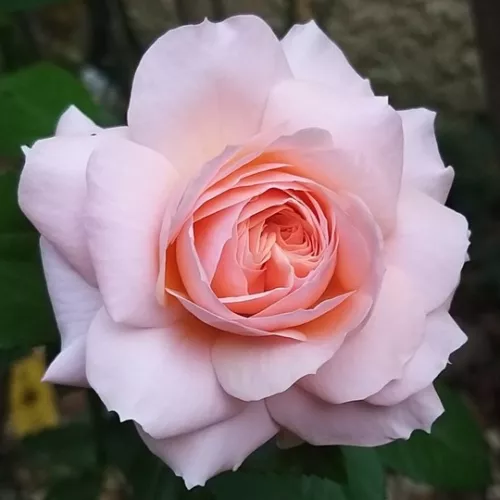
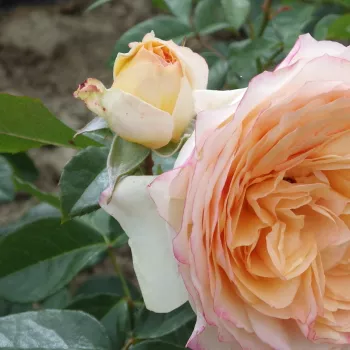
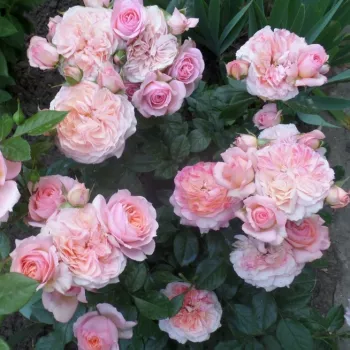
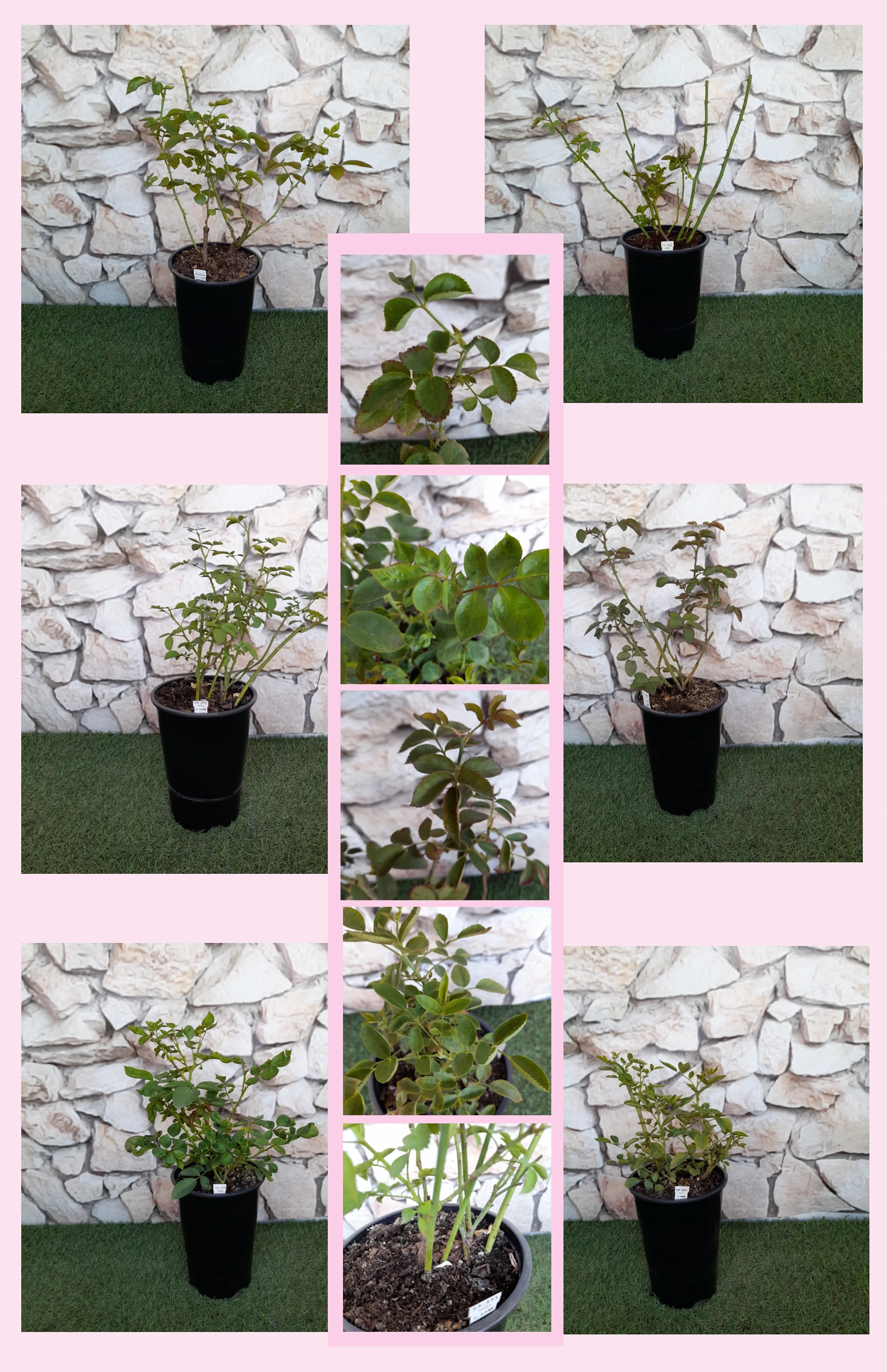
Let PANOLDAP bring a quietly romantic, storybook charm to your garden, its tall, upright stems carrying large, double flowers ideal for classic bouquet arrangements as well as admiring in situ. The apricot–coral buds open to a soft powder-pink rosette with a warm peach centre, a refined palette that slips easily into English cottage borders and “girly” garden corners of foxgloves, herbs and weathered timber. From the moment you plant this own-root rose, you are investing in long-term longevity, with a woody framework that regenerates from the base and supports reliable flowering year after year. Over time you will notice the calm structure it gives a bed or small hedge, its dense, glossy dark foliage forming a stable backdrop for perennials and kitchen-garden rows. The strong, spicy fragrance is easily appreciated from a seat or path, evoking afternoon tea beneath an arbour on a still day. In UK gardens where strong winds and coastal weather can ruffle blooms, its firm, exhibition-type flowers hold well on their stems, particularly when planted in a well-prepared bed with good drainage and organic matter. Grown on its own roots in our 2‑litre containers, PANOLDAP settles quickly, then moves from root establishment to steady top growth and, by the third season, to its full ornamental impact for the whole family to enjoy.
Usage options
| Target area | Reasoning |
|---|
| Feature rose for classic cut flowers |
PANOLDAP is bred as a hybrid tea, producing long, upright stems with solitary, exhibition-style blooms, making it particularly suitable for cutting. The large, double rosettes hold their form indoors, so a single bush can supply vases for the house, appealing to home florists. |
| Romantic focal point in a cottage border |
The soft powder-pink and peach tones sit beautifully among traditional cottage plants and kitchen-garden edges, creating a gentle focal point without overwhelming nearby colours. Its upright habit adds height and form among looser perennials, suiting cottage gardeners. |
| Container feature near seating or terrace |
With its strong, spicy perfume, PANOLDAP works well in a large container of at least 40–50 litres placed close to a bench or patio, where scent and bloom detail can be enjoyed at eye level, particularly valued by busy homeowners. |
| Structuring element in small mixed beds |
The dense, dark green foliage and neat, upright growth help give shape to smaller borders, providing a steady vertical presence among shrubs and herbaceous planting. Over time, the own-root framework matures into a stable, enduring feature appreciated by long-term planners. |
| Season-long colour with repeat flushes |
This remontant hybrid tea reblooms with a particularly generous second flush, extending the flowering season and keeping family gardens lively well beyond the first summer display, which is especially attractive to colour lovers. |
| Part-shade planting near paths |
PANOLDAP tolerates partial shade, so it can be sited along side paths or near north–east facing walls where full sun is limited, yet still offers colour and perfume where people pass frequently, benefiting town gardeners. |
| Coastal or breezy garden situations |
Its upright growth and sturdy flower stalks help the blooms cope with exposed, windier spots where more delicate varieties may be damaged, particularly when combined with improved soil structure and careful drainage, reassuring coastal residents. |
| Long-lived, regenerative planting scheme |
As an own-root rose, PANOLDAP does not rely on a graft union, so it can regenerate from its base if pruned hard or after winter damage, supporting a long garden life and flexible pruning approaches valued by practical gardeners. |
Styling ideas
- ArbourRomance – Train PANOLDAP as a vertical accent beside an arbour post with honeysuckle weaving above, creating a scented archway for family tea times – ideal for romantic traditionalists.
- KitchenBorder – Combine with soft herbs, foxgloves and cottage annuals along a kitchen-garden edge for a “girly”, storybook border that still feels productive – perfect for country-style cooks.
- PatioPerfume – Grow one plant in a 50‑litre terracotta pot by a seating area to enjoy strong, spicy fragrance and easy-to-cut stems close at hand – suited to busy terrace owners.
- PastelRibbon – Plant a short row as a low, upright hedge with pastel perennials like campanulas and salvias in front for a neat, romantic framework – attractive to order-loving designers.
- EveningFocus – Place PANOLDAP near a garden path viewed from indoors, where its pale blooms lift evening light and repeat flushes prolong interest – appealing to after-work relaxers.
Technical cultivar profile
| Parameter | Data |
|---|
| Name and registration |
Hybrid tea rose, registered as PANaldap, traded as PANOLDAP – pink hybrid tea rose – Panozzo; part of the Hybrid tea rose commercial group for garden and cutting use. |
| Origin and breeding |
Hybrid tea selected and introduced in France in 2011 by breeder Bernard Panozzo; parentage and breeding institution remain undocumented, initial distribution through Pétales de Roses. |
| Growth and structural characteristics |
Upright hybrid tea, around 80–110 cm tall and 60–85 cm wide, with dense, glossy dark green foliage and moderate thorns, forming a tidy, vertical bush in beds or containers. |
| Flower morphology |
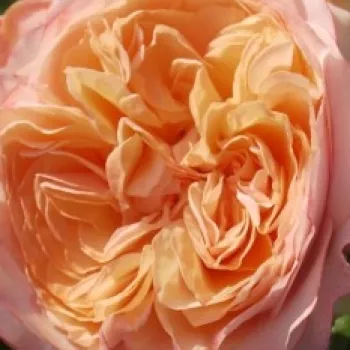
Large, double rosette blooms with 26–39 petals, carried mainly singly on stems; classic hybrid tea form suited to cutting, with reliable remontant flowering and a notably rich second flush. |
| Colour data and phenology |
Apricot–coral buds open to soft powder-pink with a peach-toned centre; tones fade to pastel powder-pink–cream, maintaining a porcelain effect that integrates well into subtle garden palettes. |
| Fragrance and aroma |
Strong, spicy rose fragrance perceptible from a distance in still air; particularly rewarding in positions near paths, doors or seating areas where the scent can be frequently appreciated. |
| Hip characteristics |
Produces moderate quantities of small, ellipsoidal orange-red hips, about 8–12 mm in diameter, offering some late-season ornamental interest without dominating the plant’s overall display. |
| Resistance and winter hardiness |
Very susceptible to powdery mildew, black spot and rust; regular preventative spraying recommended. Winter hardy to approximately −26 to −23 °C, corresponding to RHS H7 and USDA Zone 5b. |
| Horticultural recommendations |
Best in fertile, well-drained soil with regular feeding and disease control; suitable for beds, parks, specimens and large containers, planted 40–75 cm apart depending on desired density. |
PANOLDAP offers romantic cut-quality blooms, season-long repeat flowering and a strong spicy scent on a resilient own-root framework; consider it if you would like a refined, long-term focal rose for your garden.