MICHKA ® – yellow climbing rose - Meilland
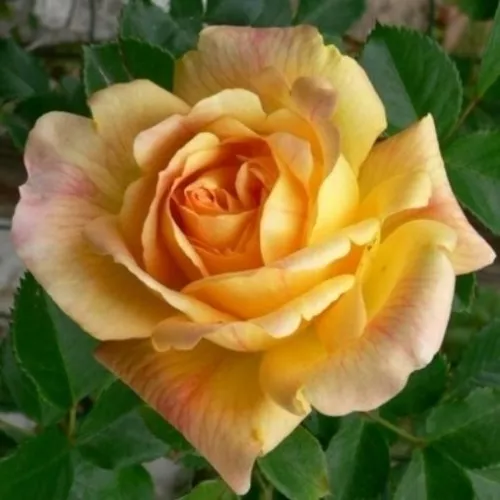
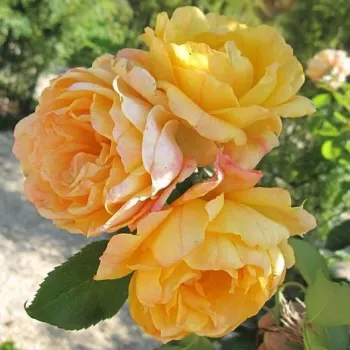
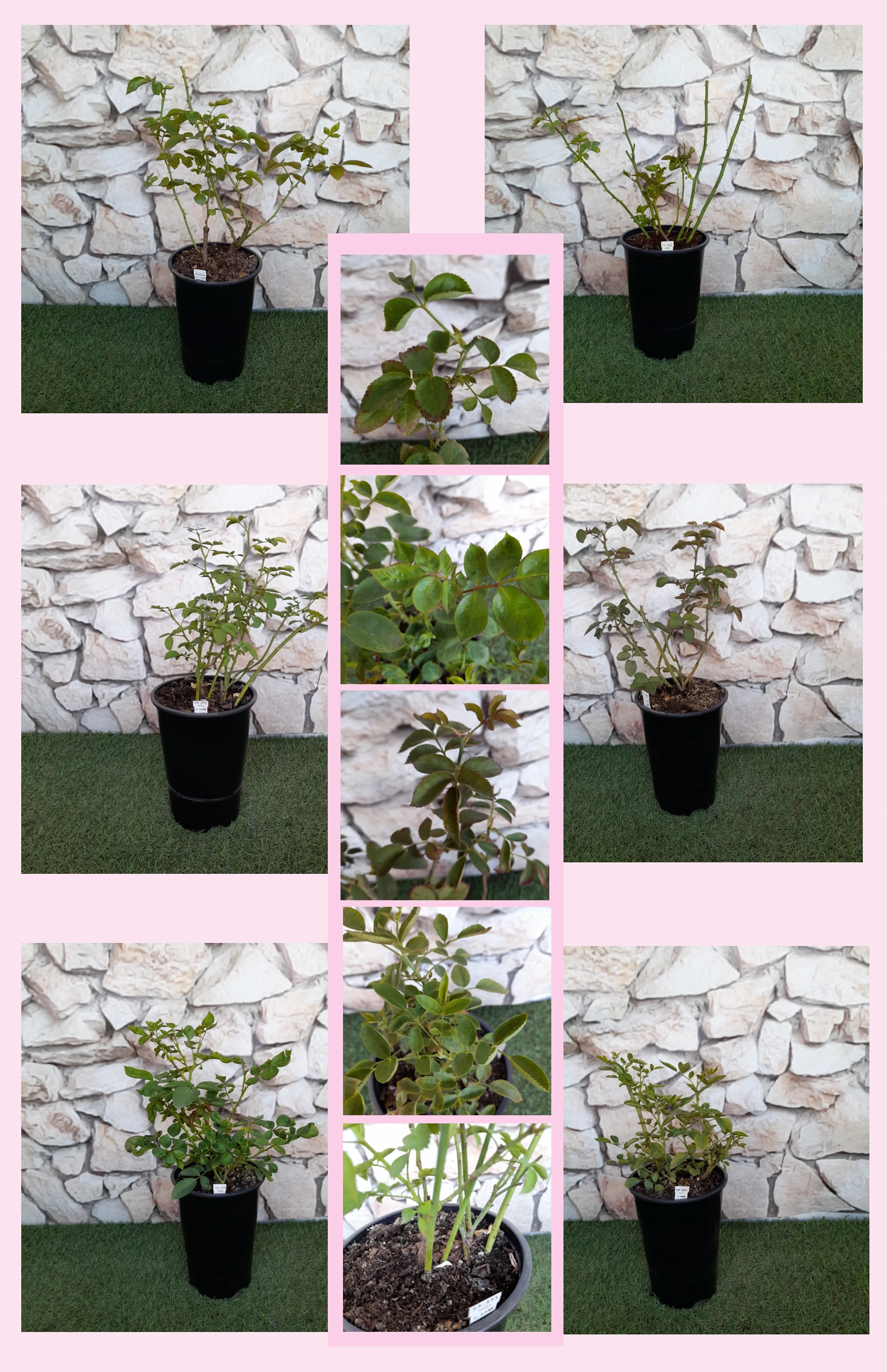
With its romantic, large, cupped blooms and soft citrus fragrance, MICHKA is an inviting climbing rose for family gardens where you want atmosphere rather than effort. The warm golden-yellow flowers with a gentle pink flush create a storybook backdrop for afternoon tea under an arch or pergola, while its upright habit and smaller climbing shoots are easy to guide on trellis or along a sunny wall. Grown on its own roots, it establishes steadily for a long, reliable life in your garden picture, quietly rebuilding itself if stems are damaged and keeping its ornamental value stable over the years. Plantable throughout the season in well-prepared soil, it copes well with blustery, wetter weather near the coast when given decent drainage and support. Over time you will see it progress from a quietly rooting youngster to stronger second-year shoots and, by the third season, a fully developed, flower-laden climber framing your favourite corner. Its remontant display, colour transitions, cottage charm, upright structure, heat tolerance, longevity, own-root resilience and family suitability make it a graceful, easy-care choice for traditional homes.
Usage options
| Target area | Reasoning |
|---|
| Pergola over a seating area |
Ideal where you want a cosy, romantic arbour for afternoon tea: its remontant flowering gives repeated flushes through the season, so the overhead framework stays well-dressed in large, cupped blooms rather than bare canes. Medium maintenance means just occasional tying-in and deadheading to keep the display clean, suited to those who prefer enjoyment over constant tasks. Perfect for the time-poor gardener |
| South- or west-facing house wall |
The warm yellow flowers with their soft pink shading show beautifully against brick or render, and the colour remains attractive as it gently fades rather than spoiling. The upright, relatively compact climbing habit avoids overwhelming small to medium façades, and it responds well to simple fan-training on wires. Ideal for the cottage-style homeowner |
| Traditional garden arch or entrance |
Its cottage charm and full, cupped flowers make a welcoming frame to a front path or kitchen-garden gate. Own-root longevity means that as the years pass, the framework thickens and the arch becomes more characterful, instead of thinning out, so the investment in a structure is rewarded with a lasting, storybook look. Suited to the romantic traditionalist |
| Family seating nook or play-lawn edge |
The restrained, fresh citrus fragrance adds atmosphere without overwhelming small spaces where children and adults sit together. Moderate prickliness helps deter trampling while still being manageable if you show youngsters how to avoid the stems, and the overall effect is soft and inviting rather than formal. Best for the family garden owner |
| Sunny mixed cottage border |
Colour transitions from bright gold to soft cream and pink blend easily with classic perennials and kitchen-garden planting, so the rose knits into yarrow, herbs and late-summer flowers without clashing. Its remontant habit helps anchor the border with recurring focal points when other plants rest. Perfect for the cottage-border enthusiast |
| Warm, exposed or paved spots |
Where sun reflects from paving or walls, its good heat tolerance lets it flower without scorching, as long as you provide regular deep watering during prolonged dry spells. This makes it suitable for small urban gardens and patios that can feel hot in summer, creating softness where other shrubs might flag. Ideal for the city homeowner |
| Coastal or more windswept gardens |
Given a sturdy support and reasonable drainage, it stands up well in gardens that see frequent wind and rain, maintaining its display rather than collapsing at the first autumn storm. This means you can still have a romantic climber even in less sheltered locations that do not behave like textbook dry, inland borders. A good fit for the coastal gardener |
| Long-term feature in established garden plans |
As an own-root climber, if winter, pruning accidents or age remove major canes, it can regenerate from the base, retaining the original variety rather than reverting. Over the years, roots develop first, then stronger second-year shoots and finally the full ornamental effect, giving a dependable, slowly maturing garden structure. Ideal for the long-view planner |
Styling ideas
- Kitchen-garden arch – Train MICHKA over an entry to a potager with low yarrow and herbs beneath, letting its cottage charm soften vegetable rows – for homely, food-loving families
- Storybook pergola – Cover a timber pergola with MICHKA and underplant with Anemone 'Fantasy Belle' to enjoy layered, remontant colour from late summer into autumn – for lovers of romantic retreats
- Warm-toned façade – Pair MICHKA on a sunny wall with blue spires of Verbena hastata and terracotta pots for a mellow, heat-tolerant Mediterranean feel – for urban terrace and townhouse owners
- Soft hedge screen – Plant in a loose line along a boundary, spacing for airy coverage and combining with informal shrubs to create a living screen that ages gracefully – for privacy-seeking garden owners
- Compact courtyard frame – Use a single plant on an obelisk in a 40–50 litre container to anchor a small paved space without domination – for busy gardeners with limited ground
Technical cultivar profile
| Parameter | Data |
|---|
| Name and registration |
Climbing, large-flowered rose marketed as MICHKA ® – yellow climbing rose - Meilland; registered as MEIvaleir, also exhibited under the name Garden Sun in some regions. |
| Origin and breeding |
Bred by Alain Meilland (Meilland International, France) from ‘Meipalsar’ × (‘Korwest’ × ‘Circus’); selected in 1996 and introduced internationally in 1998 as a premium climbing garden rose. |
| Growth and structural characteristics |
Upright climber with smaller climbing shoots, about 145–230 cm high and 100–170 cm wide; densely foliated, medium-green, slightly glossy leaves; densely prickled canes; needs support and periodic tying-in. |
| Flower morphology |
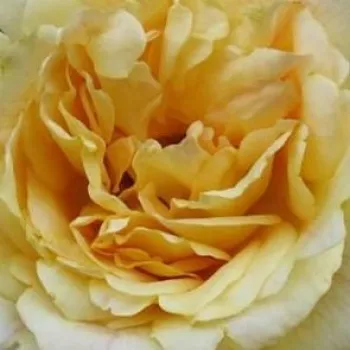
Large, very full, cupped blooms with 40+ petals, usually borne singly on stems; remontant with a generous second flush, suitable for cutting as well as garden display when deadheaded to maintain quality. |
| Colour data and phenology |
Warm golden-yellow ground with orange-red blush; buds deep ochre-yellow with carmine tips; tones soften to cream and pink as flowers age; colour holds longer in cooler weather, fading faster in intense sun. |
| Fragrance and aroma |
Fresh, mild citrus fragrance that is noticeable nearby without overpowering sitting areas; primarily ornamental with double blooms offering limited pollen access, so less significant for pollinator support. |
| Hip characteristics |
Occasionally forms small spherical orange-red hips around 8–13 mm in diameter, mostly after less rigorous deadheading; hips add a discreet seasonal detail but are not a primary ornamental feature. |
| Resistance and winter hardiness |
Rated to about -26 to -23 °C (RHS H7, Swedish zone 4, USDA 5b); medium disease resistance, with possible mildew, black spot and rust in humid seasons; tolerates summer heat if watered in long dry spells. |
| Horticultural recommendations |
Best in sunny spots on pergolas, arches, walls or trellis, at 140–250 cm spacing depending on use; medium maintenance with some deadheading and pest checks; prefers well-drained soil and regular watering. |
MICHKA ® – yellow climbing rose - Meilland offers remontant, colour-shifting blooms on a long-lived, regenerating own-root framework, making it a dependable choice for those planning a romantic family garden; consider it where you value enduring structure and charm.