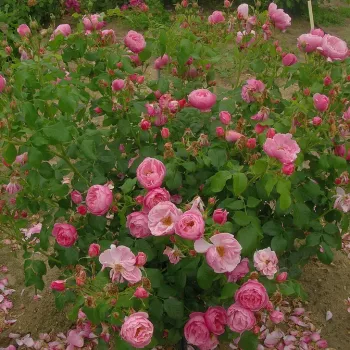
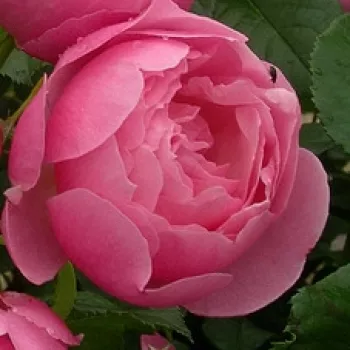
MARIE BLANCHE PAILLÉ – pink bedding floribunda rose
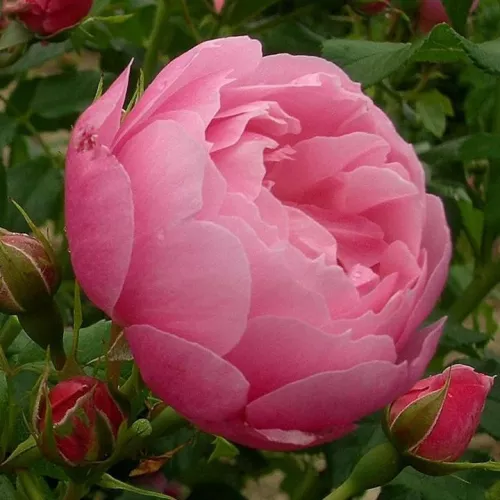
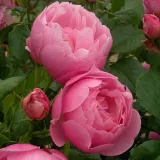
With its softly raspberry-pink blooms and elegant ball-shaped clusters, MARIE BLANCHE PAILLÉ brings a quietly romantic cottage charm to everyday family gardens, creating the feeling of cosy afternoon tea beneath a storybook arbour. This floribunda flowers with generous, reliable flushes through the season, and the good disease resistance keeps foliage attractive with minimal spraying or fuss. Own-root plants establish securely and live for many years, rebuilding from the base after winter and rough weather for stable longevity and ornamental value. In blustery districts it anchors well and tolerates exposure where roses are often needed to cope with persistent wind and passing coastal showers. The airy, upright habit fits easily into borders, hedging or kitchen-garden paths, and its tidy structure and self-cleaning blooms make maintenance pleasantly light work. In the first year it concentrates on roots, the second year on top growth, and by the third year it shows its full flowering performance, helping you plan your developing border with confidence.
Usage options
| Target area |
Reasoning |
| Front or mid flowerbed in a family garden |
The compact, upright habit and 80–120 cm height make it ideal near the front or middle of a mixed border, where its raspberry-pink clusters repeat-flower and stay tidy thanks to good self-cleaning, suiting those wanting floral impact without complex pruning tasks for the busy urban gardener. |
| Small informal hedge along paths or driveways |
Planted at the suggested 50 cm spacing, it forms a low, romantic line of pink that frames paths and driveways without becoming overpowering, and the dense foliage knits together well, giving a soft, traditional look suited to cottage-style boundaries for the family garden owner. |
| Low-maintenance, disease-aware gardens |
Its resistance to black spot, mildew and rust means fewer failed leaves and less need for spraying, which is especially helpful in humid or changeable UK summers, making it a reassuring choice where robust health is valued by the time-poor beginner. |
| Cottage-style beds with mixed perennials and grasses |
The ball-shaped, double pink blooms combine beautifully with airy grasses and cottage perennials, while the steady repeat-flowering keeps borders looking full across the summer, supporting romantic, “girly” planting schemes desired by the cottage-garden enthusiast. |
| Long-lived structural planting in family gardens |
As an own-root rose it does not rely on a graft union, so it can regenerate from its base after harsh winters or accidental damage, helping it remain part of the garden picture for many years and suiting those planning a stable, enduring layout for the long-term homeowner. |
| Lightly shaded or north–east facing borders |
This variety tolerates partial shade, so it can flower well where morning or dappled light reaches the bed, allowing you to brighten less-sunny parts of the garden without constant cosseting, an advantage for the practical home gardener. |
| Exposed and breezy sites |
The upright, well-branched framework and secureown-root anchoring help it stand up to regular wind and passing showers in more open situations, making it a dependable option where roses must cope with changeable, breezy conditions for the coastal-climate resident. |
| Low-fuss cutting and decorative use |
The large, double, cluster-flowered blooms give charming stems for informal vases, and the mild fragrance suits indoor use; because the plant repeat-flowers, you can pick some blooms without sacrificing garden display, which appeals to the home-cut-flower lover. |
Styling ideas
- Kitchen-border romance – Thread along the edge of a kitchen garden with herbs, lavender and low box sections for a soft, pink frame – ideal for cottage-style cooks who like flowers with their vegetables.
- Pastel drift – Mass-plant in groups of five or more with pale catmint and soft ornamental grasses to create a hazy, storybook sweep of pink – for homeowners seeking a gentle, cohesive look from spring to autumn.
- Rose-and-grass duet – Combine with Pennisetum and compact phormiums to contrast the rounded blooms with fine texture and evergreen structure – suited to design-conscious gardeners who prefer modern cottage borders.
- Front-garden welcome – Use as a low hedge along a path to the front door, interplanted with spring bulbs, to offer colour from early summer onwards – perfect for busy families wanting easy charm and kerb appeal.
- Patio focal group – Plant three together in a raised bed or large 40–50 litre containers near seating to enjoy repeat flowers at eye level – for urban balcony or courtyard owners wanting low-effort romance in limited space.
Technical cultivar profile
| Characteristic |
Data |
| Name and registration |
Floribunda bed rose registered as EVEcinage, marketed as MARIE BLANCHE PAILLÉ Flowerbed rose EVEcinage; ARS exhibition name MARIE BLANCHE PAILLÉ, part of the Flowerbed rose collection. |
| Origin and breeding |
Bred by Jérôme Rateau for Roses André Eve in France, from unknown parentage; bred 2009, registered and introduced in 2015, initially distributed by Roses André Eve in the French market. |
| Awards and recognition |
Honoured at Lyon International Rose Competition 2017 as “Plus belle rose de France”, winning first prize in the large-flowered category, plus a certificate in the large-flowered category at Paris–Bagatelle 2017. |
| Growth and structural characteristics |
Compact, upright floribunda, around 80–120 cm tall and 70–100 cm wide, with dense, slightly glossy green foliage, moderate prickles, and a branching habit suitable for bedding, hedging and specimen use. |
| Flower morphology |
Double, ball to pompon-shaped blooms with 26–39 petals, borne in clusters; large-flowered for a floribunda, with good self-cleaning as petals drop naturally, and generous repeat flushes following an abundant second flowering. |
| Colour data and phenology |
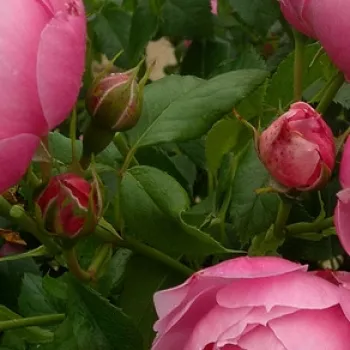
Raspberry-pink buds open to rich pink centres (RHS 65C outer, 62C inner), then soften through medium pink to powder pink; outer petal margins remain paler, giving a delicate pastel halo as each bloom matures and fades. |
| Fragrance and aroma |
Fragrance is mild and discreet, with a gentle, refined character rather than strong perfume; heavily double flowers partly conceal stamens, so the variety is grown mainly for ornament, not for intense scent or pollinator value. |
| Hip characteristics |
Occasional small, spherical rose hips develop in autumn, about 6–10 mm in diameter, coloured orange-red; they can lend a modest decorative effect but are not a primary ornamental feature of the variety. |
| Resistance and winter hardiness |
Rated H7 and hardy to approximately −32 to −29 °C, with resistance reported to black spot, powdery mildew and rust; tolerates normal heat with regular watering, though lengthy drought can reduce flowering quality. |
| Horticultural recommendations |
Recommended for beds, low hedges, specimen planting, parks and urban green spaces; plant 55 cm apart in masses or 50 cm for hedges, allow about 90 cm as a specimen, and provide regular watering in warm, dry spells. |
MARIE BLANCHE PAILLÉ offers repeat romantic pink flowering, low-intervention health and long-lived own-root reliability, making it a thoughtful choice when you wish to add enduring cottage charm with minimal ongoing effort.