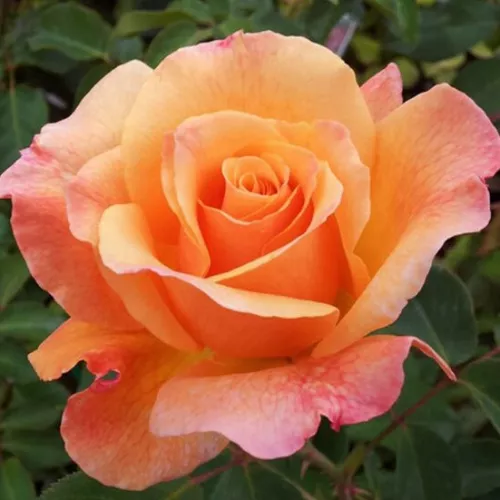
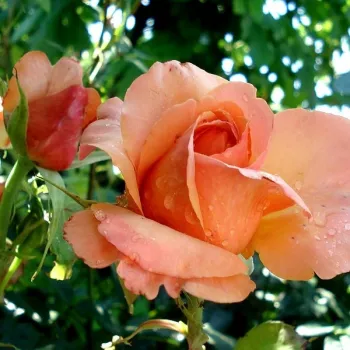
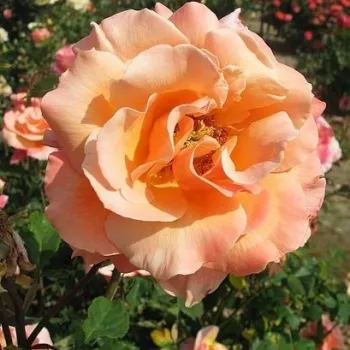
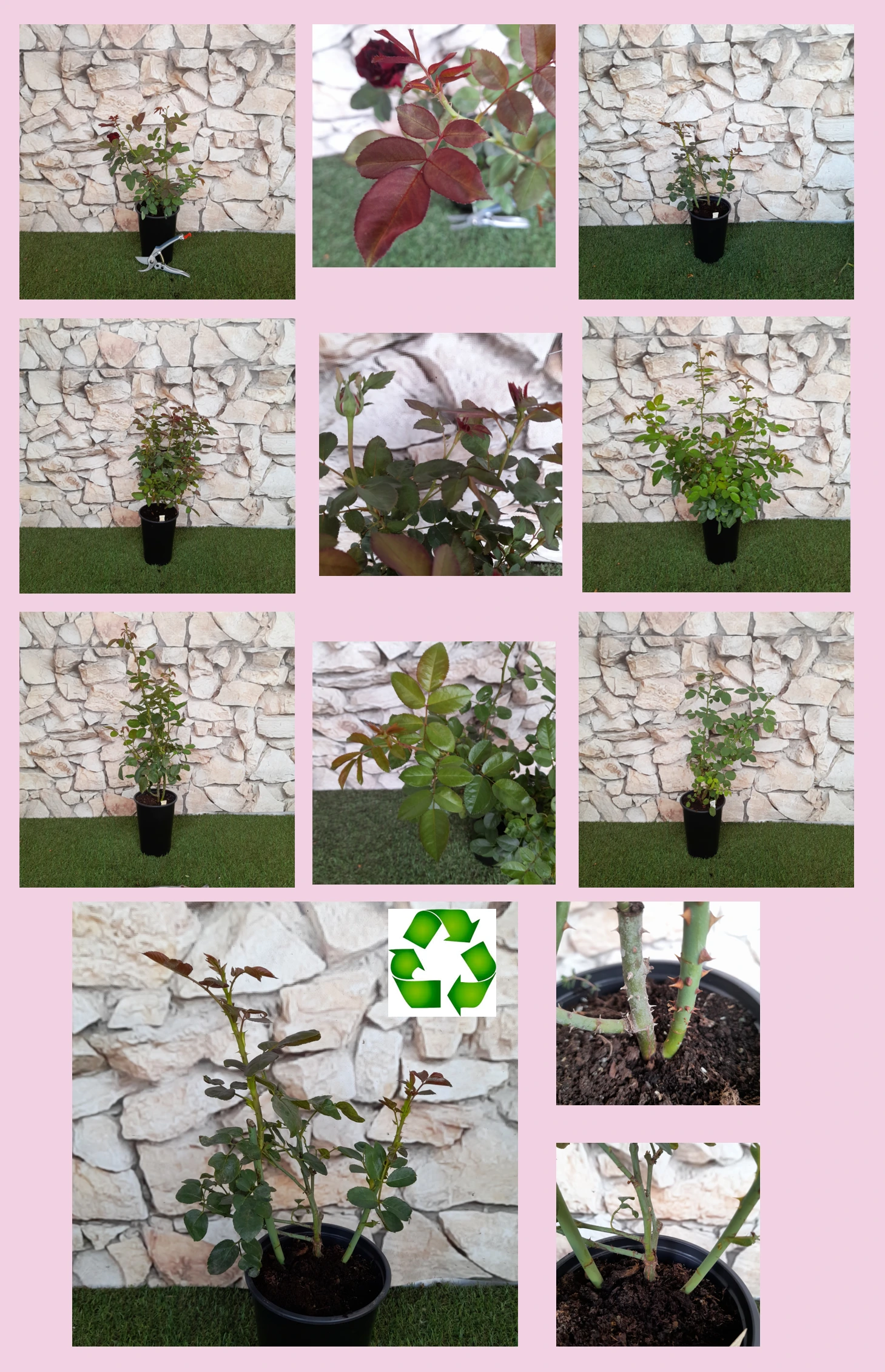
LOLITA – apricot hybrid tea rose – Kordes
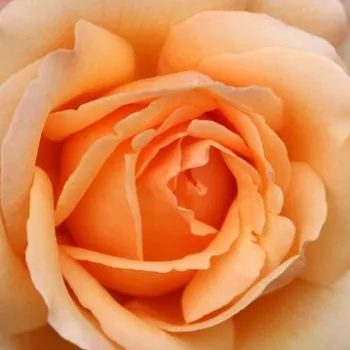
Bring a touch of storybook romance to your garden with LOLITA, a classic hybrid tea whose tall stems and high-centred blooms are perfect for leisurely afternoon tea and vase arrangements indoors. The medium-sized, double flowers unfurl from deep apricot buds into radiant peach-orange, then soften through golden apricot to a pastel, cream-based peach, creating a changing focal point from spring to autumn. Bred by Kordes and recognised in international trials, this variety offers reliable, upright growth with dense, dark green foliage that anchors well even where strong coastal breezes and frequent rain are part of everyday gardening. Its own-root form supports long-term garden stability, with a steady build-up of roots, then framework, then full ornamental presence over the first three seasons.
Usage options
| Target area |
Reasoning |
| Romantic cottage-style border by a sunny terrace |
LOLITA’s tall, upright habit and peach-apricot blooms create a romantic vertical accent that fits beautifully beside seating areas, especially near a terrace where you can appreciate the changing flower colours and medium peach fragrance at close quarters – suitable for homeowners. |
| Cutting bed for home-grown vase flowers |
The long, straight stems and high-centred, exhibition-style flowers are ideal for cutting, providing graceful, elegant blooms that hold their shape well in the vase and bring a traditional hybrid tea look indoors from mid-season onwards – ideal for hobby-gardeners. |
| Feature specimen rose in a family lawn or front garden |
As a solitary specimen at the recommended wider spacing, LOLITA develops into a strong, upright shrub with dense foliage, giving structure and presence that remains attractive even between flushes of bloom, making it a dependable focal point – appealing to families. |
| Low-maintenance rose border in clay or chalk soils |
Planted into improved heavy clay or chalk with good drainage, LOLITA’s own-root system establishes steadily and offers good long-term anchoring, so once settled it copes well with typical UK conditions and needs only moderate routine care – reassuring for beginners. |
| Mixed cottage border with perennials and kitchen-garden edges |
The warm peach tones pair naturally with classics such as lavender, lady’s mantle and oriental poppies, tying ornamental and kitchen-garden areas together in an English cottage style while the upright growth prevents it from smothering neighbouring plants – perfect for cottage-lovers. |
| Rose hedge with traditional character |
At hedge spacing LOLITA forms a loosely formal line of upright plants with dark green foliage and repeat flowering, giving both privacy and seasonal colour while its own-root longevity allows the hedge to remain serviceable and attractive for many years – suitable for planners. |
| Large containers on patios and roof terraces |
In very large containers of at least 40–50 litres, with reliable watering and drainage, LOLITA offers vertical height and classic hybrid tea flowers where border space is limited, giving busy urban gardeners a strong, repeat-flowering feature on hard surfaces – ideal for urbanites. |
| Coastal or exposed family gardens |
LOLITA’s sturdy, upright framework and dense foliage help it stand up to blustery conditions and frequent showers, making it a sound choice for more exposed sites where wind and rain are regular features of the gardening year – reassuring for coast-dwellers. |
Styling ideas
- TEA-GARDEN ARCH – Train LOLITA as a tall focal point near a bench, underplanted with lavender and lady’s mantle to echo the peach-apricot tones – for those creating a sitting-area retreat.
- CUTTING-ROW CHIC – Plant a simple row at cutting distance apart, mixing in oriental poppies for spring drama, to keep vases filled from your own garden – for home florists.
- FRONT-GARDEN WELCOME – Use LOLITA as a specimen beside the front path, framed by low hedging or herbs, to greet visitors with fragrance and soft colour – for traditional entranceways.
- COTTAGE-MIX BORDER – Combine with pastel perennials and cottage favourites near a kitchen garden, letting LOLITA provide height and formal flower shape among softer textures – for lovers of informal structure.
- COURTYARD CONTAINER – Grow one plant in a 50-litre terracotta pot with good drainage and herbs at the rim for a romantic focal point on patios or balconies – for space-conscious gardeners.
Technical cultivar profile
| Property |
Data |
| Name and registration |
Hybrid tea rose; registered as KORlita (syn. LitaKOR), marketed as LOLITA hybrid tea rose; ARS exhibition name LOLITA; belongs to the hybrid tea commercial group. |
| Origin and breeding |
Bred by Reimer Kordes of W. Kordes’ Söhne in Germany before 1972, from Colour Wonder × unknown seedling; first introduced commercially in 1972 via Roy H. Rumsey Pty. Ltd. in Australia. |
| Awards and recognition |
Holds ADR status from the German General Rose Trials (awarded 1973), indicating proven garden performance; awarded a Certificate of Merit at the New Zealand Rose Trials in 1974. |
| Growth and structural characteristics |
Strong, upright shrub 130–170 cm high and 100–140 cm wide, with dense, slightly glossy dark green foliage and moderate thorns; forms a vertical, elegant framework in borders and as a specimen. |
| Flower morphology |
Medium to large, double, high-centred hybrid tea blooms with 26–39 petals, usually carried singly on stems; remontant habit with a generous second flush, making it useful both in borders and for cutting. |
| Colour data and phenology |
Medium-saturated peach-orange with a golden cast; buds deep apricot, opening radiant peach-orange and fading through golden apricot to pastel cream-peach; ARS code AB, RHS 24B outer, 23A inner petals. |
| Fragrance and aroma |
Medium, noticeable fragrance with a distinct peach character; scented enough to be appreciated at close range on patios or when used as a cut flower indoors, without being overpowering in small spaces. |
| Hip characteristics |
Hip set generally poor due to double flowers; where produced, hips are 12–18 mm, ellipsoid and orange-red, adding modest late-season interest but not a primary ornamental feature of the variety. |
| Resistance and winter hardiness |
Hardy to approximately −21 to −18 °C (RHS H7, USDA 6b, Swedish zone 3); good resistance to powdery mildew and black spot, moderate susceptibility to rust; reported to cope well with summer heat. |
| Horticultural recommendations |
Best in full sun with fertile, well-drained soil; medium maintenance, needing occasional plant protection; plant 120 cm apart in mass plantings, 110 cm for hedges, or 200 cm as a specimen. |
LOLITA offers tall, elegant blooms for cutting, season-long cottage-garden colour and reliable structure, all in a durable own-root form that rewards patient gardeners; consider it where you want romance with practical long-term value.