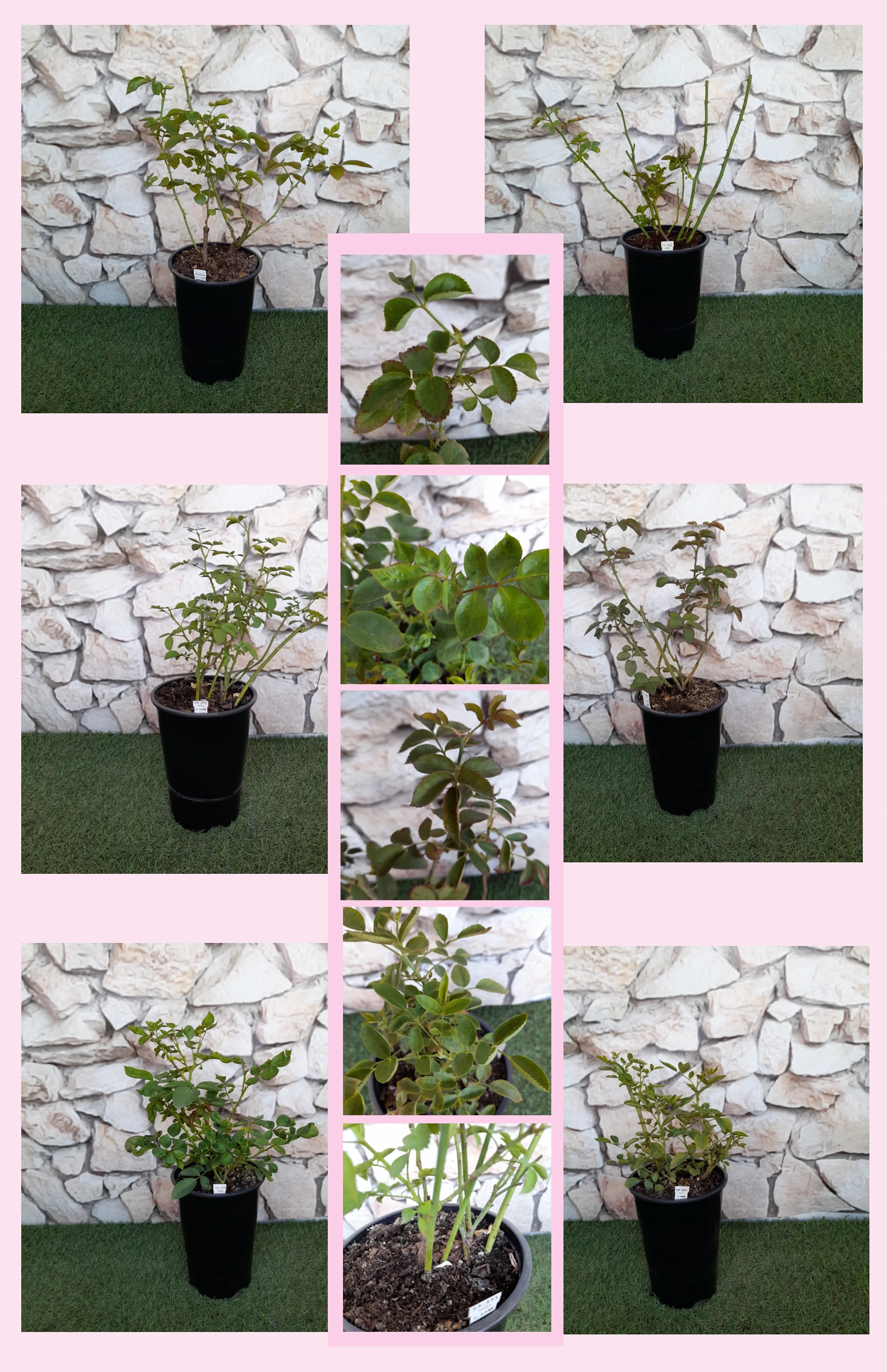
LITTLE WHITE PET – white bedding polyantha rose – Henderson
With its snow-white pompon blooms held in dainty clusters, LITTLE WHITE PET brings a softly romantic, storybook feel to small family gardens while standing up reliably to breezy, moisture-laden days near the coast. This compact polyantha settles quickly and thrives with straightforward, seasonal care, making it ideal if you want cottage charm without complicated routines. As an own-root rose it builds strength gradually, giving you a reassuringly long-lived, regenerating garden feature that copes well with everyday family life. Plant it near a path, seating area or kitchen garden border where its compact habit, cottage character and storybook look can be enjoyed up close, and let its pompon sprays and snow-white colouring drift through low hedges or edging. In a large container it pairs beautifully with herbs and perennials, while its flexible pruning and edging suitability allow you to adapt the planting as your space evolves. Over time the own-root structure supports reliable remontant flowering and keeps your garden picture pleasingly balanced from year to year.
Usage options
| Target area |
Reasoning |
| Front-of-border cottage edging |
The low, compact habit forms a neat white edging that echoes classic cottage gardens without becoming overbearing in a modest plot. Regular repeat flowering keeps paths and borders framed from early summer into autumn, with only light deadheading and seasonal pruning – ideal for a busy urban gardener |
| Small family garden bedding rose |
Used in small groups, it creates a soft white cushion of bloom that reads clearly from the patio yet stays within typical garden dimensions. The own-root plant structure supports a long lifespan and easy renewal if stems are ever damaged, suiting the ebb and flow of an active household – well suited to the practical family buyer |
| Romantic seating corner or tea area |
Planted near a bench or afternoon tea spot, the dense clusters of tiny pompon flowers give a nostalgic, storybook mood rather than a formal display. Moderate fragrance keeps the effect gentle, while repeat flushes mean the area feels looked-after even with minimal intervention – appealing for the romantic cottage enthusiast |
| Low hedge or path edging run |
At the recommended spacing it knits into an informal low hedge, softening hard edges around lawns or kitchen beds. Its steady, compact growth needs only occasional trimming, offering line and structure without the strict maintenance of clipped box or yew – a good match for the low-maintenance gardener |
| Large container on terrace or balcony |
In a 40–50 litre pot it forms a stable, rounded shrub smothered in white clusters, bringing cottage-garden character to paved spaces. The moderate root system is easy to manage in containers, and own-root resilience lets you prune harder if needed without worrying about losing the plant – reassuring for the space-limited homeowner |
| Part-shade corners and north-east aspects |
Suitable for partial shade, it flowers reliably where many roses sulk, brightening cooler corners with reflective white blooms. This makes it practical along side paths, by garden sheds or between taller shrubs where sunlight is filtered but still present for a few hours – ideal for the realistic UK gardener |
| Coastal or wind-exposed family plots |
The naturally compact, well-branched structure helps it stay stable and presentable in everyday breeze, while dense foliage and clustered flowers cope well with spells of wet, humid weather typical of open UK sites. Over its first three years it builds roots, then shoots, then full display – dependable for the long-term planner |
| Traditional mixed cottage and kitchen borders |
Its snow-white clusters weave easily among herbs, salvias and soft perennials, adding continuity of flower between earlier and later-blooming plants. The modest stature leaves room for vegetables and cutting flowers, while own-root longevity lets the rose become a quiet, enduring anchor – attractive to the traditional cottage owner |
Styling ideas
- Cottage-Path Edging – line both sides of a gravel or brick path with LITTLE WHITE PET, underplanting with low thyme for scent and texture – for lovers of informal English cottage routes
- Tea-Corner Border – place two or three plants near a bistro set, backing them with soft pink geraniums to create a gentle, romantic frame around your afternoon tea spot – for homeowners seeking a cosy retreat
- Kitchen-Garden Weave – tuck the rose into the front of vegetable beds with chives and calendula so white clusters soften the productive rows without taking over – for practical gardeners who like charm with crops
- Patio-Pot Feature – grow a single plant in a 40–50 litre clay container, trailing white lobelia at the rim to echo the pompon sprays – for balcony and terrace users wanting classic roses in limited space
- Soft Low Hedge – repeat-plant along a lawn or drive edge, interspersed with lavender for scent and bee interest, creating a light, airy boundary – for families preferring relaxed structure over formal hedging
Technical cultivar profile
| Property |
Data |
| Name and registration |
LITTLE WHITE PET – polyantha bedding rose, also exhibited as ‘White Pet’; unregistered sport of Félicité-Perpétue used in modern gardens mainly under its established trade name. |
| Origin and breeding |
Historic polyantha raised by Peter Henderson (USA) from a sport of the rambler Félicité-Perpétue; bred c. 1879, introduced 1889 via Bennett’s Greenhouses for reliable bedding use. |
| Awards and recognition |
Holds the RHS Award of Garden Merit for dependable garden performance, and recognised as a multiple ARS Polyantha Spray show winner in late twentieth-century American competitions. |
| Growth and structural characteristics |
Compact, bushy shrub reaching about 50–80 cm high and 50–75 cm wide, moderately thorny with dense, slightly glossy mid-green foliage, forming tidy mounds suited to beds and edging. |
| Flower morphology |
Small, very double ball-shaped pompon blooms, 0.5–1.5 inch across, borne in large clusters; over 40 petals per flower with good remontancy providing several flushes each season. |
| Colour data and phenology |
Buds flushed pinkish-red, opening to opalescent cream-white with hints of green, then uniform snow-white; in strong sun may cream and brown slightly towards fall of petals. |
| Fragrance and aroma |
Very light rose fragrance, often barely noticeable in the garden; chosen more for visual effect and flower form than for scent, making it suitable near seating for fragrance-sensitive users. |
| Hip characteristics |
Produces a moderate crop of small, spherical red hips, about 5–8 mm across, adding discreet late-season interest without overwhelming the plant’s primary value as a long-flowering bedding rose. |
| Resistance and winter hardiness |
Hardy to around –26 to –23 °C (H7, USDA 5b, Swedish Zone 4); disease resistance medium, with occasional mildew or black spot, and moderate tolerance of heat and brief dry spells. |
| Horticultural recommendations |
Best with well-drained soil, regular watering in prolonged dry periods, and occasional plant protection; plant 35–65 cm apart depending on use, in beds, edging, low hedges or larger containers. |
LITTLE WHITE PET offers compact, repeat-flowering white pompon sprays and versatile edging or container use, while its own-root form supports long, reliable service in your garden; a thoughtful choice if you prefer gentle, enduring charm.