LEMON RAMBLER – pale yellow rambler climbing rose - Schultheis
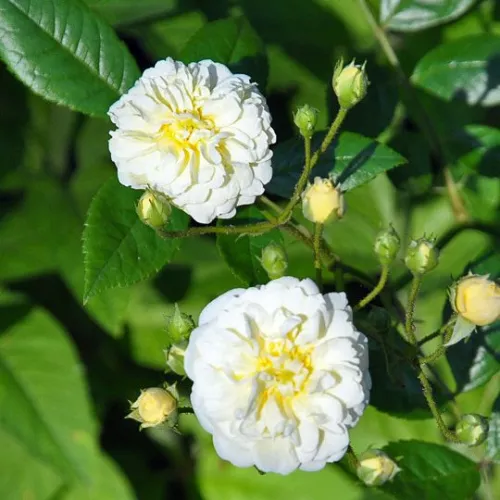
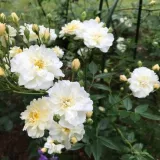
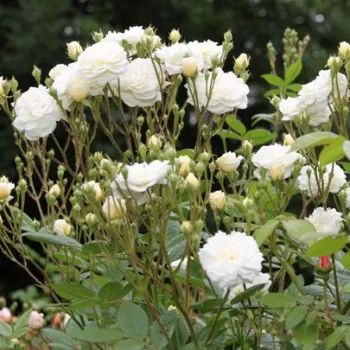
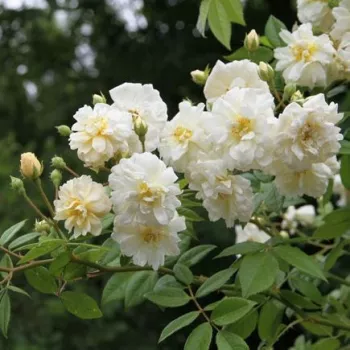
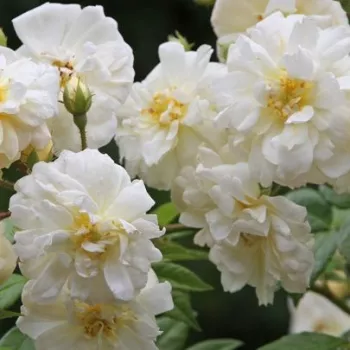
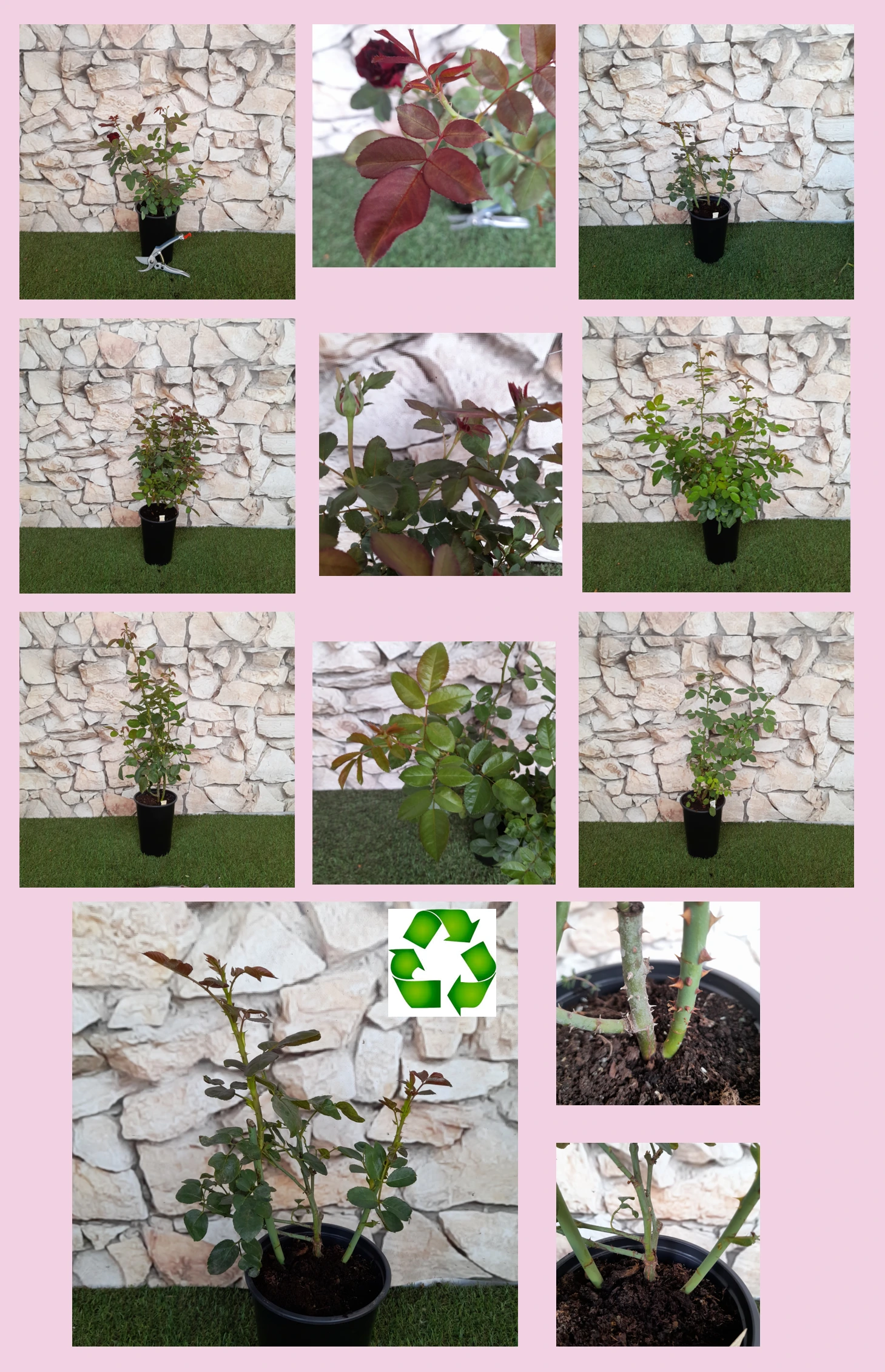
Flood your garden with romantic arches of pale lemon cream, perfect for cottage-style structures where you can sit with afternoon tea and enjoy its strongly citrus fragrance on still evenings. This vigorous rambler rises to pergolas and fences with reassuring height, yet its sparsely thorned canes remain surprisingly manageable for family gardens and narrow side paths. Dense, mid-green, glossy foliage forms a soft backdrop to repeat-flowering, semi-double clusters that fade gently to butter and cream, giving an ever-changing colour palette. Own-root planting promises long-term stability and easy regeneration after winter, building an enduring arbour that feels “grown in” rather than newly installed. Over the first few seasons it quietly strengthens – roots establishing in year one, taller shoots building in year two, and by year three a full, storybook wall of blossom. Even in exposed spots it anchors well and copes reliably with blustery, salt-tinged coastal breezes, giving you a lasting, softly scented retreat with minimal replanting over the years.
Usage options
| Target area | Reasoning |
|---|
| Pergola over a seating area |
The tall, climbing habit and repeat-flowering clusters create a romantic overhead veil of pale yellow blooms with a strong citrus fragrance, ideal for afternoon tea beneath soft shade and flowers for those seeking a cosy-atmosphere. |
| Garden arch at path entrance |
Its vigorous yet manageable canes train readily over arches, forming a welcoming tunnel of blossom that defines boundaries without feeling heavy, perfect where you want a traditional cottage-garden welcome for the family-visitors. |
| Clothed fence in a family garden |
Dense, glossy foliage and a long, climbing framework help cover plain fencing with a soft, leafy screen, while own-root resilience supports long-term structure that matures gracefully for privacy-minded homeowners. |
| Wall-trained accent near a patio |
The long flowering season and generous second flush give months of colour against brick or render, turning a plain wall into a living feature that rewards simple tying-in and light pruning for relaxed hobby-gardeners. |
| Raised bed in heavier clay soils |
Planted into improved or raised ground, its robust, woody framework anchors well and repays good drainage with reliable top growth that copes steadily with exposed, rain-swept, coastal garden conditions for practical UK-gardeners. |
| Part-shaded side passage or alley |
Tolerance of partial shade allows flowering even where the house or hedging steals sun for part of the day, bringing light, creamy tones and fragrance to otherwise overlooked spaces valued by busy-owners. |
| Large container by a doorway |
In a 40–50 litre or larger container, its own-root system builds up gradually and responds well to renewal pruning, giving you a long-lived climbing accent that can move with you, suiting flexible, space-conscious urban-gardeners. |
| Wildlife-friendly cottage border backdrop |
Semi-double, cupped flowers and modest hips provide some seasonal interest for insects and birds, while the airy, climbing habit lets you weave in perennials and herbs for a naturalistic, kitchen-garden look appreciated by cottage-style-lovers. |
Styling ideas
- Cream-lemons – Train along a rustic timber pergola with white clematis and soft pink rambling roses to create a pastel tunnel of blossom – ideal for cottage-style romantics.
- Kitchen-arch – Pair over an arch with lavender, sage and chives below, so pale lemon flowers and fragrance greet you on the way to a kitchen garden – perfect for home cooks.
- Sunset-fence – Cover a fence with this rose, underplanting with Sedum spurium and ornamental grasses for low, warm-toned texture – suited to relaxed family gardens.
- Courtyard-pillar – Spiral it up a sturdy post in a large container, surrounded by terracotta pots of herbs, for a vertical accent by a small terrace – great for compact town plots.
- Soft-screen – Combine with white obedient plant and dark-leaved shrubs to form a gentle privacy screen that feels airy rather than solid – appealing to those wanting subtle enclosure.
Technical cultivar profile
| Parameter | Data |
|---|
| Name and registration |
Rambler-type climbing rose; registered as SCH8056, marketed as Lemon Rambler Climbing rose SCH8056, approved exhibition name Lemon Rambler in the climbing and pergola category. |
| Origin and breeding |
Bred by Christian Schultheis, Rosenhof Schultheis Nursery, Germany, from cross ‘Malvern Hills’ × ‘Penelope’; bred, registered and introduced in 2014 through Rosenhof Schultheis. |
| Growth and structural characteristics |
Strong climbing habit reaching around 240–380 cm in height and 120–220 cm spread, with dense, mid-green, glossy foliage and sparsely thorned canes suited to training on supports. |
| Flower morphology |
Semi-double, cupped flowers with 13–25 petals, medium-sized clusters on the stems; repeat-flowering over the season with a notably generous second flush providing extended display. |
| Colour data and phenology |
Pale creamy-yellow blooms, ARS ly, outer petals RHS 11D, inner 8C; buds open lemon-cream, then soften to buttery tones with silky white margins before petal fall. |
| Fragrance and aroma |
Strongly scented variety with a fresh, citrus character; fragrance is noticeable around seating areas and paths, especially in still, warm conditions typical of sheltered garden corners. |
| Hip characteristics |
Forms moderate quantities of ellipsoid hips, about 9–15 mm in diameter, colouring orange-red (RHS 33A) and adding late-season ornamental interest after the main flowering period. |
| Resistance and winter hardiness |
Hardy to approximately −21 to −18 °C (RHS H7, Swedish zone 3, USDA 6b); disease resistance low, with susceptibility to powdery mildew and rust, so regular protection is advised. |
| Horticultural recommendations |
Best on pergolas, arches, walls, fences or posts; plant 165–300 cm apart; tolerates partial shade; own-root plants benefit from well-drained soil and consistent care for disease prevention. |
LEMON RAMBLER offers romantic height, repeat flowering and strong citrus fragrance on a long-lived, regenerating own-root framework; consider it if you would like a softly scented climbing presence for years to come.