LAVENDER LASSIE – park rose in pink-lilac shades - Kordes
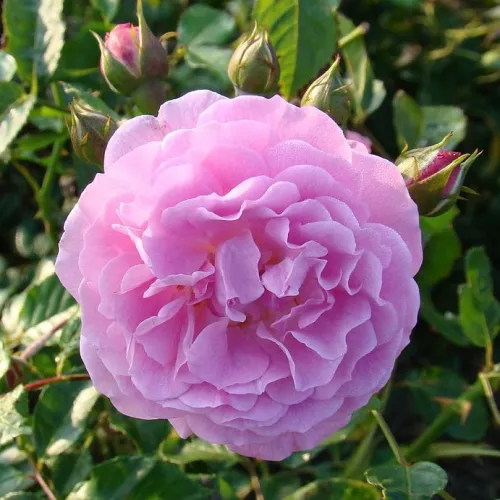
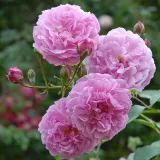
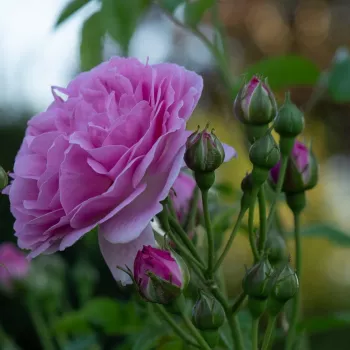
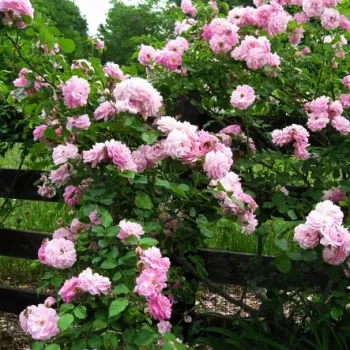
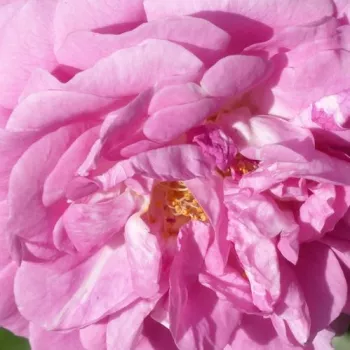
With its nostalgic clusters of pastel blooms, LAVENDER LASSIE creates a romantic, cottage-garden feel that suits pergolas, arches and hedging around a family home. This established, own-root shrub rose settles in reliably even where the soil is challenging, such as areas with heavier ground that benefit from improved drainage. Its vigorous, bushy habit quickly forms a softly rounded structure, while the semi-double flowers repeat generously for long, storybook flowering. The strong, musky fragrance drifts across the garden, enhancing lazy afternoon tea beneath an arbour, and its naturally good self-cleaning habit keeps it looking tidy with little intervention. Once planted and watered in, the permanent own-root system supports a long lifespan and steady regeneration, giving dependable character and colour year after year.
Usage options
| Target area | Reasoning |
|---|
| Romantic cottage-style hedge along a garden boundary |
LAVENDER LASSIE forms a tall, bushy wall of mauve-pink clusters, ideal for a soft, traditional boundary that screens while still feeling airy and informal. The vigorous shrub structure knits together over time, creating a stable, long-lived feature with little need for intricate pruning – a reassuring choice for the cottage-garden loving homeowner. |
| Pergola or garden arch near a seating area |
Trained loosely on canes or wires, the strong, rapid growth will clothe an arch or light pergola with scented flower trusses at eye level. The development arc from establishing roots to increasingly woody shoots brings more height and volume each year, turning a simple structure into a storybook arbour above the chairs of the afternoon-tea loving family. |
| Feature shrub in a mixed cottage border |
The generous, repeat-flowering display makes a reliable focal point among perennials, herbs and cottage favourites without constant spraying or complex care. Semi-double, self-cleaning blooms fall away neatly, so you avoid a bedraggled look after rain and wind, leaving time for other garden tasks for the busy but style-conscious gardener. |
| Near paths, benches and patios for scent |
The strong, sweet, musky fragrance carries well on still evenings, particularly when shrubs are planted close to paths or seating. This creates a clear sensory “destination” in the garden, giving maximum enjoyment of each flowering wave for anyone who values scented plants but wants low-effort impact – the fragrance-seeking beginner. |
| Low-maintenance family border with seasonal colour |
Once established, the shrub’s own-root system supports dependable repeat flowering through summer with only basic feeding and watering during dry spells. Spent blooms generally drop on their own, reducing deadheading to an occasional tidy rather than a weekly task, suiting the time-poor but quality-minded urbanite. |
| Rose planting in partial shade or east-facing sites |
This cultivar performs well where it enjoys morning sun then light shade, helping its soft pastel colour remain fresh rather than bleaching. Such positions are common in UK family gardens with neighbouring houses or trees, making it a reassuring choice for the many plots belonging to the shade-challenged homeowner. |
| Informal screening in exposed or breezier gardens |
The tall, bushy framework provides visual screening and gentle wind filtering, while the shrub maintains its shape without staking in typical suburban breezes. Planted in raised or improved beds, it copes well where the ground is heavier but drains adequately after rain, fitting coastal-fringe or open sites for the privacy-seeking family. |
| Loose, traditional rose hedge near kitchen gardens |
Planted at the recommended spacing, repeated shrubs form a softly billowing line that frames vegetable or herb plots in classic English style. The robust, long-lived own-root base supports sustainable garden design, as plants can be rejuvenated by pruning rather than frequent replacement, appealing to the tradition-minded allotmenteer. |
Styling ideas
- Tea-rose walk – Line a grass path with LAVENDER LASSIE on one side and Alchemilla mollis on the other to catch the pastel petals – ideal for those dreaming of a gentle, romantic stroll from house to patio.
- Kitchen-cottage frame – Use a loose hedge of these shrubs to edge a kitchen garden, threading garden honeysuckle through the line for extra scent – suited to cooks who want beauty and productivity side by side.
- Pastel pergola – Train the vigorous shoots up a light timber pergola, underplant with lady’s mantle and wallflowers for a layered cottage feel – perfect for families creating a cosy outdoor “room”.
- Soft-screen corner – Plant several shrubs in a triangle to screen a play area or compost corner, relying on their self-cleaning flowers to keep maintenance low – good for busy households needing charm and practicality.
- Romantic focal bed – Place a single specimen in a circular bed, surround with low herbs and perennials in dusky pinks and creams – appealing to beginners who want a standout feature without intricate design work.
Technical cultivar profile
| Property | Data |
|---|
| Name and registration |
Lavender Lassie is a park-suitable shrub rose of the Hybrid Musk group, marketed as a garden rose; it is an unregistered cultivar without a separate registered exhibition name. |
| Origin and breeding |
Bred by Reimer Kordes in Germany in 1956 from ‘Hamburg’ × ‘Madame Norbert Levavasseur’, introduced by W. Kordes’ Söhne in 1960 via Roy H. Rumsey Pty. Ltd. in Australia. |
| Awards and recognition |
Recognised early for garden merit with a Trial Ground Certificate from the National Rose Society in the United Kingdom in 1959, reflecting its dependable performance in testing conditions. |
| Growth and structural characteristics |
Bushy, upright shrub 150–230 cm tall and 90–150 cm wide, with dense, glossy dark green foliage and moderate prickliness, forming substantial structural presence in borders, hedges and on light supports. |
| Flower morphology |
Semi-double, cupped blooms of medium size held in clusters, bearing around 13–25 petals; flowers are strongly remontant, giving an abundant second flush after the main early-summer display. |
| Colour data and phenology |
Soft pastel mauve-pink with lilac undertone (RHS 65C outer, 65D inner); colour holds best in partial shade, with blooms fading elegantly to paler pink-purple and near-whitish centres in strong sun. |
| Fragrance and aroma |
Strong, sweet, musky fragrance that is long-lasting and most noticeable in still, mild weather; flowers are semi-double with limited stamen access, so pollinator attraction is only moderate. |
| Hip characteristics |
Occasional ellipsoidal hips, about 10–14 mm in diameter, develop to an orange-red colour, contributing a light decorative effect in late season when present, without significant self-seeding issues. |
| Resistance and winter hardiness |
Hardy to about –26 to –23 °C (RHS H7, USDA 5b), with moderate resistance to black spot, powdery mildew and rust; benefits from good air circulation and timely watering during prolonged heat or drought. |
| Horticultural recommendations |
Use as specimen, hedge, pergola rose or in mixed beds at 100–180 cm spacing; tolerates partial shade, prefers well-drained soil and regular moisture, with occasional plant protection in disease-prone seasons. |
LAVENDER LASSIE offers romantic repeat flowering, a strong musky fragrance and vigorous, long-lived shrub growth on a resilient own-root base; an excellent consideration for those planning a traditional, easy-care family garden.