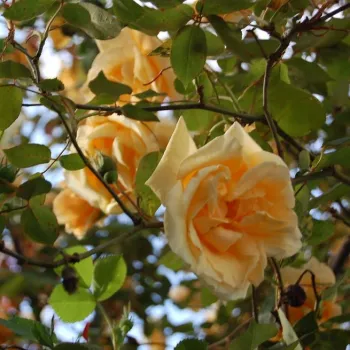
LADY HILLINGDON – yellow climbing rose - Hicks
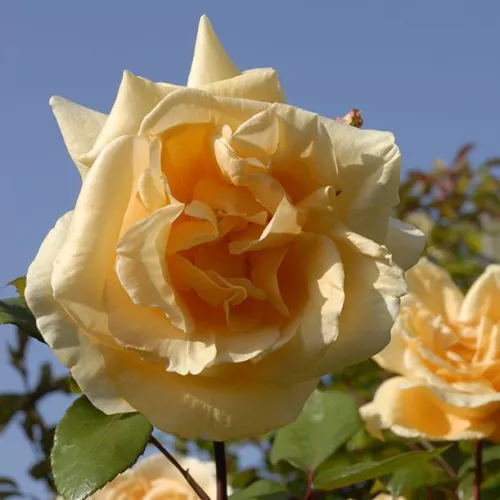
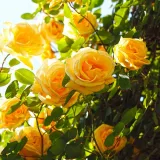
Breathe a sense of romance into your garden with this classic tea-scented climbing rose, ideal for archways, arbours and sunny house walls where its warm peach-yellow blooms create a soft, storybook backdrop. As an own-root plant it settles steadily, building a long-lived framework that copes well with breezy, wetter conditions and typical British winters, so you can enjoy reliable colour with modest effort. Over time the upright, moderately leafy habit clothes structures from head to toe, while the richly perfumed flowers bring a hint of luxury to everyday family life. Plantable throughout the season in well-prepared ground or generous containers, it suits busy gardeners who still want afternoon-tea charm on the patio. Expect the root system to strengthen first, then the framework to extend, and by the third year a full curtain of flower and foliage completes the cottage-garden picture.
Usage options
| Target area | Reasoning |
|---|
| Family pergola or arbour |
The tall, upright growth quickly clothes arches and arbours, giving dappled shade and a romantic tunnel effect at a scale that suits most family gardens without overwhelming them; ideal for those dreaming of afternoon tea beneath a floral canopy for beginners. |
| Sunny house wall or sheltered fence |
This climber anchors well when tied in to wires or trellis, forming a long-lived framework that can be gently renewed from the base thanks to its own-root nature, so gaps are slower to appear over the years for homeowners. |
| Low-maintenance cottage-style border |
Good disease resistance and modest pruning needs mean you can combine it with perennials and shrubs in a relaxed cottage mix, without committing to intensive spraying or complex training regimes, suiting time-pressed gardeners. |
| Fragrant seating area or patio |
The strong tea-scented, peachy fragrance shines where you sit nearby, whether on a small terrace or beside a garden bench, bringing an old-world atmosphere that feels luxurious even in compact spaces for urbanites. |
| Cutting for vases and indoor displays |
Medium-sized, cupped blooms on manageable stems make charming, country-house style cut flowers; harvesting a few stems encourages new growth and does not spoil the overall display, perfect for those who enjoy arranging flowers at home. |
| Partially shaded or east-facing spots |
Its tolerance of partial shade allows planting where morning or late-afternoon sun dominates, such as on east- or west-facing aspects, extending rose growing possibilities around the house for many typical British plots. |
| Coastal or breezier gardens |
The sturdy, upright framework and reliable foliage cope well with gardens exposed to regular rain and wind near the coast, provided the soil drains reasonably, giving colour and structure where other roses can struggle for families. |
| Large containers and courtyard schemes |
When planted in a 40–50 litre or larger container with good drainage, it can be trained up an obelisk or wall trellis, delivering vertical colour and scent on balconies, terraces or paved courtyards for style-conscious collectors. |
Styling ideas
- Cottage Archway – Train along a timber arch with foxgloves, hardy geraniums and Lychnis viscaria ‘Alba’ at the base for a soft, romantic entrance – ideal for lovers of classic cottage gardens.
- Kitchen-Garden Arbour – Cover an arbour beside raised vegetable beds, underplanted with herbs and strawberries, to bring fragrance and shade to practical spaces – perfect for family kitchen-garden owners.
- Golden Wall – Fan the stems along wires with Hypericum ‘Hidcote’ and variegated Caryopteris nearby, blending yellow and blue for a sunny, Mediterranean feel – good for bright, south-facing walls.
- Tea-Terrace Screen – Grow in large containers behind a seating area, using obelisks to create a scented privacy screen for afternoon tea corners – suited to busy urban gardeners with patios.
- Romantic Pergola Walk – Repeat-plant along a pergola, interplanted with white roses and airy grasses, to create a long, softly coloured tunnel – appealing to those planning a more formal garden feature.
Technical cultivar profile
| Parameter | Data |
|---|
| Name and registration |
Lady Hillingdon Climbing rose Hicks; large-flowered climbing rose for pergolas, walls and pillars; ARS exhibition name Lady Hillingdon, Cl.; marketed as LADY HILLINGDON – yellow climbing rose - Hicks. |
| Origin and breeding |
Sport of Tea rose ‘Lady Hillingdon’, discovered by Elisha J. Hicks in the United States c.1917; introduced as a climbing rose in 1920 by E. J. Hicks Nursery, Hurst, Berkshire, United Kingdom. |
| Awards and recognition |
Holds the RHS Award of Garden Merit (1993), indicating dependable performance, sound health and ornamental value under UK conditions when grown with normal care in an appropriate garden position. |
| Growth and structural characteristics |
Vigorous upright climber, around 3–5 m high with 1–1.7 m spread; moderately dense, mid-green glossy foliage; moderately thorny stems suited to training along supports, arches, fences and walls. |
| Flower morphology |
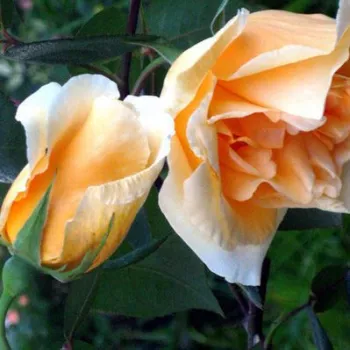
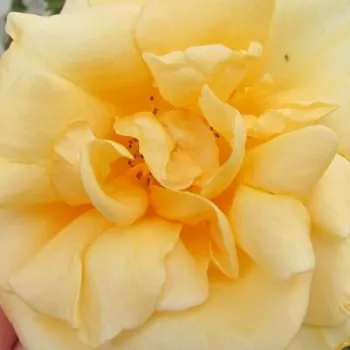
Semi-double, cupped blooms with 13–25 petals, typically medium sized; borne in clusters on repeat-flowering shoots, giving a good second flush in suitable conditions when lightly pruned and deadheaded. |
| Colour data and phenology |
Warm peach-yellow to creamy yellow tones; buds egg-yolk yellow with orange flush, deep peach-orange in full bloom, fading to pale cream; colour fades faster in strong sun yet remains softly attractive. |
| Fragrance and aroma |
Strong, rich tea fragrance with peachy notes; best appreciated near paths, seating areas and entrances; semi-double flowers provide moderate nectar access, offering limited but present interest for pollinators. |
| Hip characteristics |
Forms small, spherical, orange-red hips about 10–14 mm in diameter; moderate production only, adding a discreet autumn accent without significantly affecting the main ornamental display. |
| Resistance and winter hardiness |
Good resistance to powdery mildew, black spot and rust; hardy to approximately −21 to −18 °C (RHS H7, USDA 6b); tolerates heat if watered in dry spells, suitable for many UK and similar climates. |
| Horticultural recommendations |
Best in fertile, well-drained soil with support for climbing; suitable for walls, pergolas, arbours, trellises, specimens and cut flowers; plant 1.5–3 m apart depending on intended coverage and effect. |
LADY HILLINGDON – yellow climbing rose - Hicks offers romantic height, strong fragrance and reliable health in a long-lived own-root form; a thoughtful choice if you would like enduring cottage charm in your garden.