JULIA RENAISSANCE – pink park rose
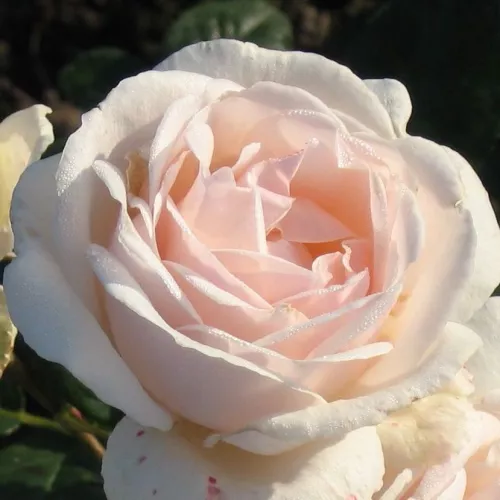
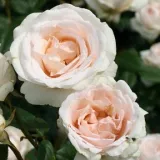
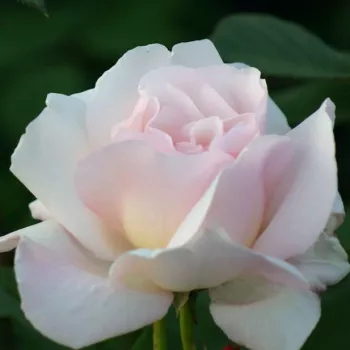
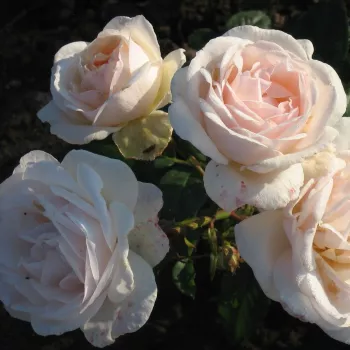
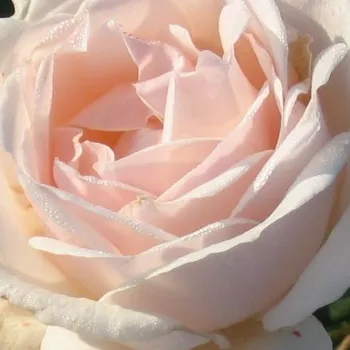
Julia Renaissance wraps a sitting area, archway or boundary into a gently perfumed, cottage-style romance. This upright, bushy shrub carries large, very full rosette blooms that open in creamy, peach‑tinted pink and slowly fade to near cream, bringing a soft pastel glow to family gardens throughout the season. Its strong, classic scent creates the feel of afternoon tea under a rose arbour, while the barely prickly stems are reassuringly child‑friendly in smaller spaces. As an own‑root shrub, it builds a deep, resilient framework with excellent longevity, quietly regenerating after pruning or weather setbacks and holding its shape over many years. It copes well with breezier sites and exposed corners where roses must stand firm against coastal gusts and frequent showers, provided drainage is sensible and soil does not stay waterlogged. In the first year it concentrates on roots, then in the second year on top growth, before revealing its full ornamental potential by the third, giving you a dependable structure to weave into hedges, borders or a kitchen‑garden backdrop with reassuring ease and long‑term value.
Usage options
| Target area | Reasoning |
|---|
| Main feature in a cottage-style mixed border |
The upright, bushy habit and 100–150 cm height give Julia Renaissance enough presence to anchor a mixed border without overwhelming neighbouring perennials. Its season-spanning repeat flushes mean there is always some colour threading through the planting, while the soft pastel palette blends calmly with herbaceous favourites. Ideal for those wanting structure and romance without complex pruning – beginners |
| Low, informal flowering hedge along paths or boundaries |
Planted at around 110 cm spacing, this shrub rose forms a loose, flowery line that frames lawns, vegetable plots or play areas with a traditional, storybook feel. The dense foliage and modest height create a visual screen without feeling heavy, and the relatively low prickliness is kinder near walkways. A good option where you want enclosure and charm together – family |
| Fragrant seating corner or afternoon tea nook |
The strong, classic rose fragrance and large, full blooms are best appreciated up close, making Julia Renaissance perfect beside a bench, arbour or patio table. Regular deadheading here is simple and rewarding, encouraging repeat flowering while keeping the display tidy. Suits gardeners wanting an easy routine with clear, visible payoff – busy‑owners |
| Specimen shrub in lawn or courtyard bed |
As a single specimen at 150–180 cm spacing, the symmetrical, upright form reads as a small flowering shrub, giving a focal point that looks deliberate even in a simple planting. Own‑root vigour supports gradual, long-term development, so the shrub improves year on year rather than becoming leggy. Well suited to those planning a stable, enduring feature – homeowners |
| Roses in smaller urban or front gardens |
Julia Renaissance fits well into modest plots where every shrub must earn its place with looks and reliability. The compact footprint, pastel tones and refined flower shape give a polished appearance without demanding specialist skills. Occasional feeding and deadheading are enough to maintain a high ornamental standard. A sound match for style-conscious yet time-poor gardeners – urbanites |
| Large containers on terraces or by entrances |
In a 40–50 litre or larger container, this variety forms a contained, vertical accent beside doors, gates or terrace edges. Its bushy structure and repeat flowering deliver long seasonal interest close to the house, where fragrance can be enjoyed daily. Container culture also makes monitoring and light maintenance straightforward. Designed for those wanting roses near hard landscaping – porch‑owners |
| Traditional park- or farmhouse-style plantings |
As a park shrub type, Julia Renaissance naturally suits looser, rural layouts: wide beds, farmhouse drives, and mixed shrub groupings. When spaced at 120 cm or more, each plant develops its own rounded outline, giving a relaxed, established look that ages gracefully thanks to the resilient own‑root framework. A dependable choice for long-view planners – estate‑minded |
| Sheltered yet breezy spots in changeable weather |
This shrub’s sturdy build and moderate height help it cope with exposed corners where wind and rain are frequent, as long as soil drains freely and is not persistently waterlogged, an advantage in typical British mixed-weather gardens. The capacity to regrow from its own roots gives extra security after any weather damage. Sensible for pragmatists gardening in lively conditions – realists |
Styling ideas
- Cottage-hedge – Run a loose line of Julia Renaissance along a path, underplanted with catmint and hardy geraniums for a soft, pastel, semi-formal boundary – for families wanting a storybook edge.
- Tea-corner – Flank a small seating area with two shrubs, adding lavender and thyme at the base to echo the fragrance and invite relaxed afternoon breaks – for anyone creating a calm retreat.
- Pastel-border – Combine with white obedient plant, pale coneflowers and airy grasses to build a long-season border where the rose provides structure and repeated colour notes – for lovers of harmonious schemes.
- Courtyard-focus – Place a single plant in a generous terracotta pot of at least 50 litres, with trailing ivy or heucheras around the rim, to make a welcoming focal point by the front door – for small-space gardeners.
- Farmhouse-mix – Group three shrubs at recommended spacing in a larger bed, threading in Crocosmia and cottage perennials so the rose gives height and continuity while others weave seasonal highlights – for those evoking rural charm.
Technical cultivar profile
| Parameter | Data |
|---|
| Name and registration |
Renaissance Collection shrub rose; registered as POUlheart, marketed as Julia Renaissance (Renaissance®). Park-shrub type for garden and landscape use, ARS exhibition name Julia Renaissance. |
| Origin and breeding |
Bred by L. Pernille and Mogens N. Olesen for Poulsen Roser A/S, Denmark. Introduced and registered in 1996 as a park shrub cultivar, with parentage recorded as unknown. |
| Growth and structural characteristics |
Upright, bushy shrub reaching about 100–150 cm in height and spread, with dense, dark green, slightly glossy foliage and comparatively few prickles on the stems. |
| Flower morphology |
Large, very full rosette blooms, typically over 40 petals, produced mainly singly on stems. Flower size around 7–10 cm, repeating well with an abundant second flush in season. |
| Colour data and phenology |
Creamy pale pink with peach tints, ARS lp; outer petals RHS 65C, inner 36D. Buds open pink-cream, then soften towards cream-white with only a light pink glow as flowers age. |
| Fragrance and aroma |
Strong, classic rose scent with a long-lasting presence around the plant in still conditions. Highly ornamental fragrance profile for close seating, entrances and terrace plantings. |
| Hip characteristics |
Hip set generally sparse due to very double flowers. Where formed, hips are small, spherical, about 8–12 mm, with an orange-red tone corresponding to RHS 40A on maturity. |
| Resistance and winter hardiness |
Hardy to approximately −26 to −23 °C (RHS H7; USDA 5b, Swedish zone 4). Disease resistance modest, needing regular protection, especially against rust and powdery mildew. |
| Horticultural recommendations |
Best in well-drained soil with regular feeding and watering in dry spells. Suitable for beds, specimen use, hedging and cutting; performs in partial shade but flowers best in sun. |
Julia Renaissance offers fragrant, pastel rosettes on a well-shaped shrub that matures steadily on its own roots for long-term reliability; an appealing choice if you value romance, structure and ease in your garden.