HERMIPPE – yellow-pink hybrid tea rose – Evers
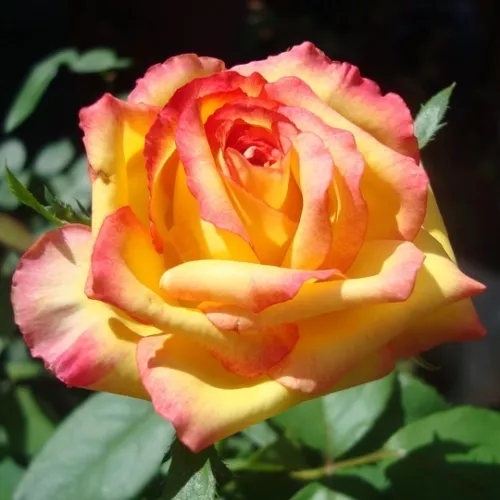
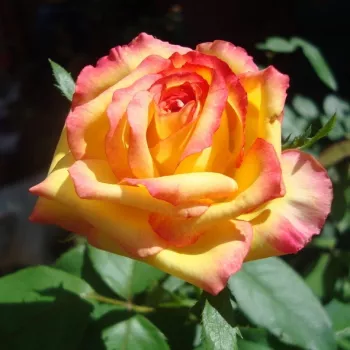
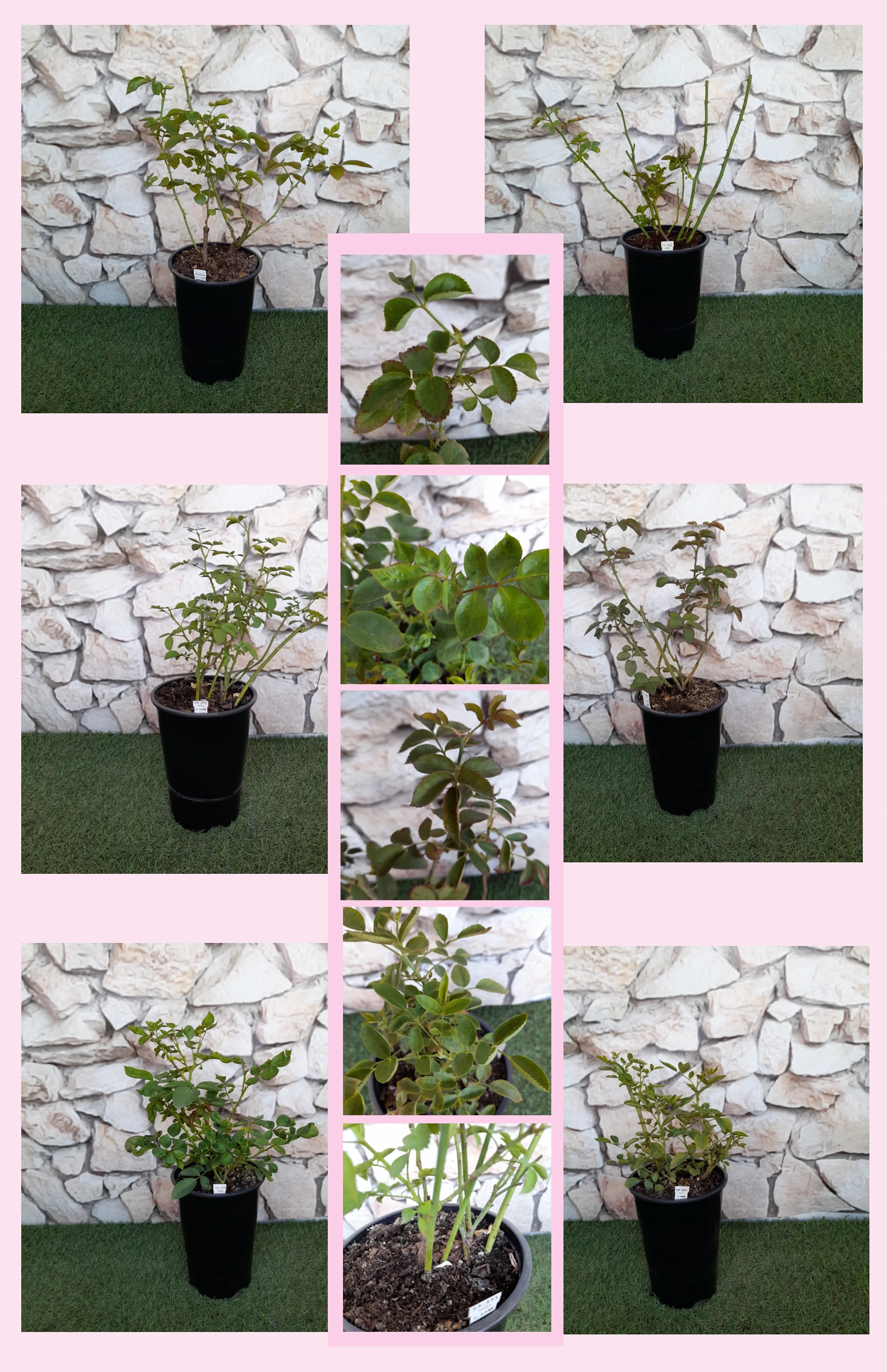
Imagine sitting down to afternoon tea under an arbour, with the finely shaped buds of HERMIPPE opening beside you into elegant, golden-yellow blooms edged in coral pink: an easy-care hybrid tea with a gently spicy fragrance that feels effortlessly romantic. Its upright, compact habit suits smaller family gardens, and this own-root plant is bred for longevity, quietly rebuilding its framework after winters or strong pruning, so its ornamental value stays reassuringly stable over the years. You can plant it throughout the season and, on typical British soils, it copes well as long as heavy clay is eased with drainage or raised beds, even where gardens are exposed to recurring rain and brisk coastal winds. Planted once and cared for simply, HERMIPPE rewards you with repeat, exhibition-style blooms, year after year, developing from strong roots, then confident shoots, to full garden presence over the first three seasons, and bringing a quietly cosy, storybook charm to your cottage-style borders and paths.
Usage options
| Target area |
Reasoning |
| Cottage-style rose border near a terrace or seating area |
The classic, high-centred flowers and upright hybrid tea form give a refined look at eye level, perfect beside a patio or bench where you can enjoy the medium, peppery fragrance in passing; the repeat flushes create a continuous focal point for those who favour a traditional cottage feel, especially beginner-gardeners. |
| Feature rose in a small to medium family front garden |
With a mature height around 75–105 cm and moderate spread, HERMIPPE fits neatly into modest UK front gardens, offering a tidy, vertical accent without blocking windows; its balanced size and structure are easy to integrate into mixed plantings and low hedging, ideal for households wanting impact without over-dominant shrubs, especially homeowners. |
| Romantic cottage path or kitchen-garden edge |
The golden-yellow blooms with coral-pink edging bring a warm, cheerful colour note that blends well with herbs, lavender and soft perennials in a kitchen or cottage border; as the flowers soften in tone with age, the planting gains depth and a storybook atmosphere that suits informal, gently nostalgic gardens, especially cottage-lovers. |
| Cutting corner for home-grown vase flowers |
Originally bred as a hybrid tea for cut-flower use, HERMIPPE produces long-stemmed, solitary blooms that open slowly and hold their form well indoors; this makes it an efficient choice if you like to cut a few stems for the table without losing the garden’s display too quickly, well suited to those who enjoy arranging their own flowers, especially creative-owners. |
| Low-maintenance rose area for busy gardeners |
Moderate disease resistance, especially to powdery mildew and black spot, combined with a medium maintenance requirement, means care is straightforward: basic watering, feeding and occasional plant protection usually suffice; this makes HERMIPPE practical for those with limited time who still want a smart-looking rose bed, particularly busy-urbanites. |
| Long-term structure in a family garden rose scheme |
As an own-root plant, HERMIPPE does not depend on a graft union and can regenerate from its own wood after harder pruning or winter damage, so it maintains its character and flowering over many seasons; this provides reassuring continuity in family gardens planned for the long term, appealing to forward-thinking planners. |
| Border in exposed or weather-prone positions |
The upright habit and moderately dense, mid-green foliage give a robust, anchored feel, and the variety has been selected for reliable performance in production, so with sensible soil preparation it copes steadily with changeable British summers, including frequent rain and unsettled weather in gardens that regularly face brisk onshore breezes, particularly for coastal-dwellers. |
| Large container on a terrace or near a kitchen door |
HERMIPPE’s compact footprint and exhibition-style flowers make it an attractive candidate for a 40–50 litre or larger container, where controlled soil conditions and regular watering are easy to manage; in pots it becomes a movable accent, perfect for renters or those with paved spaces who still want a classic rose presence, especially balcony-owners. |
Styling ideas
- Tea-terrace – Plant HERMIPPE in a trio beside a seating area, underplanted with low lavender and calamint for fragrance layering – ideal for tea-drinkers who like leisurely afternoons outdoors.
- Kitchen-row – Line a path to the kitchen garden with evenly spaced HERMIPPE and edging herbs; the tidy habit and cut-flower potential suit cooks who pick ingredients and blooms together.
- Story-arch – Use HERMIPPE at the base of a light rose arch, with climbers overhead, to provide structured, repeat-flowering anchors – for romantics seeking a picture-book entrance to the garden.
- Pot-parlour – Grow one plant in a 50 litre terracotta container near the back door, combining it with trailing thyme for soft edges – perfect for flat-dwellers with only a terrace to plant.
- Sunset-border – Mix HERMIPPE with warm-toned crocosmia and dusky salvias in a sunny bed; the yellow-pink flowers knit the palette together – for colour-lovers who enjoy rich evening light effects.
Technical cultivar profile
| Property |
Data |
| Name and registration |
Hybrid tea rose, registered as TANitef, marketed as HERMIPPE – yellow-pink hybrid tea rose; also known for exhibition use under the American Rose Society approved name Tantau’s Konfetti. |
| Origin and breeding |
Bred by Hans Jürgen Evers at Rosen Tantau, Germany, in 1991; registered in 1994 and introduced after 1994, with parentage undisclosed and selection originally aimed at quality cut-flower performance. |
| Growth and structural characteristics |
Upright, bushy habit reaching about 75–105 cm high and 50–75 cm wide; moderately dense, mid-green, slightly glossy foliage and moderate prickliness, forming a neat, vertical garden presence. |
| Flower morphology |
Large, double, high-centred flowers with 26–39 petals borne mainly solitary on stems; buds are pointed, opening with the characteristic hybrid tea form and repeating well across the season. |
| Colour data and phenology |
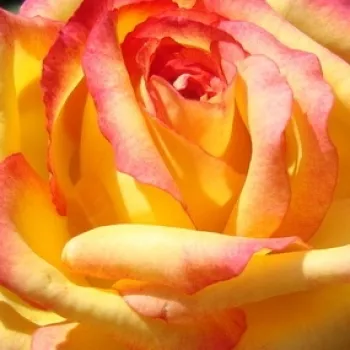
Golden-yellow petals with rose-red edging; newly opened blooms show vivid yellow centres and coral-red edges that soften to creamy yellow with coral-pink margins as the flower ages and fades. |
| Fragrance and aroma |
Medium-strength, clearly noticeable perfume with a delicately peppery, spicy character; fragrance is most appreciable at close range around seating areas, making it well suited to intimate garden spaces. |
| Hip characteristics |
Rose hips form infrequently; when present they are small, spherical, about 10–15 mm in diameter and orange-red, contributing modestly to late-season interest without dominating the shrub. |
| Resistance and winter hardiness |
Hardy approximately to −21 to −18 °C (RHS H7, Swedish zone 3, USDA 6b); generally moderate disease resistance with good tolerance to powdery mildew and black spot, rust susceptibility described as moderate. |
| Horticultural recommendations |
Best at 60 cm spacing in groups, closer for hedging; prefers well-prepared soil and regular feeding, with medium maintenance and occasional plant protection, and is suitable for both beds and large containers. |
HERMIPPE offers elegant, fragrant cut-quality blooms, a compact, upright habit and dependable, long-term garden performance on its own roots, making it a thoughtful choice if you would like a classic hybrid tea that quietly earns its place over time.