Pure, vivid red shade with a slight purple undertone. - park rose - very weak, barely perceptible scented rose - scent description not available
– Vivid, saturated red blooms hold their colour well.
– Upright shrub with dense, glossy dark foliage.
– Reliable remontant flowering with rich second flush.
– Good heat and moderate drought tolerance.
– Bright red hips add autumn and winter interest.
– Special feature: Awarded multiple international quality prizes, including RNRS Certificate of Merit.
Clear professional advice – Vibrant garden scene
darinaROSE® ORIGINAL 2-litre own-root potted rose
18,50 £
Unfortunately, we are currently unable to ship to the United Kingdom; we only deliver to countries within the European Union. For more information, please contact us!
4(6038)
HANSALAND – red park rose - Kordes
With its generous clusters of saturated red blooms, Hansaland creates an instantly romantic cottage-garden atmosphere around pergolas, fences and informal hedges, even where strong breezes and wet weather test garden borders. This upright, well-branched shrub rose builds a dense, glossy green framework that anchors the planting and gives reliable seasonal structure, while naturally self-cleaning flowers keep the display neat between your regular garden rounds. As an own-root rose in our 2-litre container, it is easy to establish and offers reassuring long-term continuity in family gardens, quietly rebuilding from the base if stems are damaged or cut back hard. Once planted in reasonably prepared soil and allowed to settle, you can expect the classic pattern of strong roots, then lengthening shoots, then full ornamental impact across the first three years, for a mature shrub that works as a vivid seasonal backdrop to afternoon tea beneath an arbour and the relaxed charm of an English country garden.
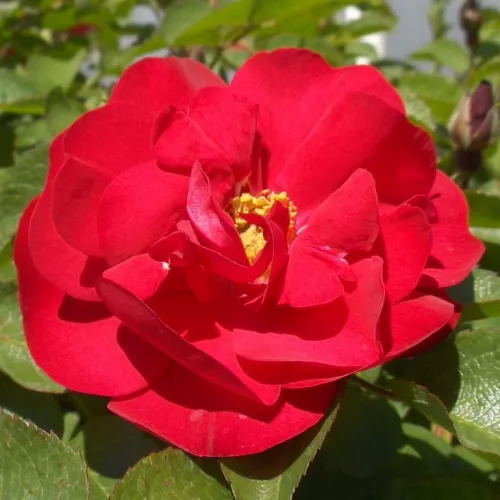
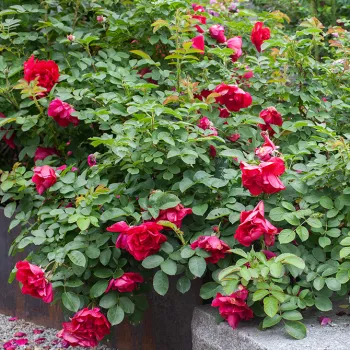
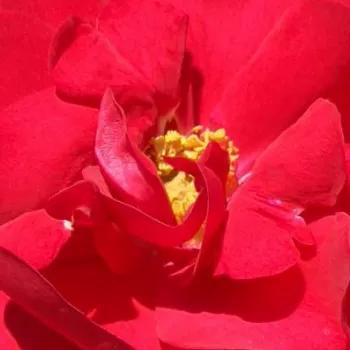
Hansaland shows semi-double, flat red flowers in clustered blooms.
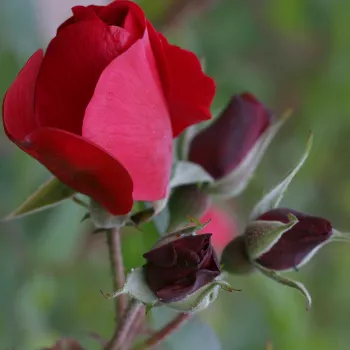
Hansaland rose flowers shown in several opening stages, from bud to full bloom.
Hansaland in full bloom, showing its semi-double red flowers.
Hansaland close-up of densely thorned stems.
Usage options
Target area
Reasoning
Informal flowering hedge along a boundary
The tall, upright habit and dense, thorny growth make Hansaland a characterful, protective boundary that still feels romantic rather than severe, with self-cleaning clusters of red flowers reducing the need for constant deadheading, suiting family gardeners.
Back-of-border structure in a cottage-style bed
Mature plants form a leafy, glossy green framework that gives year-round structure at the back of mixed borders, supporting perennials and climbers while providing reliable height and a consistent red accent without intricate pruning, ideal for busy homeowners.
Feature shrub near seating, arbour or pergola
Planted beside an arbour or garden bench, the upright, arching stems and repeated flushes of vivid red flowers create a storybook focal point that matures steadily without complex training, perfect for those seeking a cosy corner for afternoon relaxation.
Low-maintenance mass planting in a front garden
Used in groups at the recommended spacing, Hansaland reads as a single, full, red-flowering mass, with naturally falling spent blooms and good drought tolerance reducing routine tasks once established, especially appreciated by urban residents.
Raised beds on heavier or more challenging soils
This own-root shrub rose rewards patient establishment: once its strong root system is settled in a well-prepared or raised bed, it delivers dependable top growth and flowering with straightforward seasonal care, suiting practical beginners.
Rural kitchen garden edge or path lining
The robust, thorny, upright bushes mark out paths and plot edges with a clear line of red colour and glossy foliage, while moderate pollinator appeal adds gentle life around vegetables and herbs, a good fit for traditional kitchen-garden keepers.
Large container on terrace or driveway (40–60 litres)
In a generously sized container with regular watering, Hansaland offers vertical interest and a cottage feel near front doors or on patios, with self-cleaning flowers and own-root resilience giving dependable seasonal effect for time-pressed balcony-owners.
Exposed or coastal-leaning sites needing bold colour
Its sturdy shrub framework and good tolerance of challenging weather mean the vibrant red clusters keep their impact even in windier, wetter spots where other roses can flag, a reassuring choice for coastal-influenced gardeners.
Styling ideas
Cottage Hedge – Plant a loose line of Hansaland with herbaceous foxgloves and hardy geraniums threading between the shrubs for a soft, storybook hedge – for families wanting a traditional, friendly boundary.
Arbour Retreat – Pair Hansaland beside a wooden arbour with Clematis viticella weaving through, underplanted with lavender for scent, to frame a quiet tea corner – for romantic souls who savour slow afternoons outdoors.
Kitchen-Garden Edge – Use a row of shrubs along vegetable beds, interplanted with chives and calendula, to knit the productive area into the ornamental garden – for home growers blending utility with charm.
Glossy Backdrop – Create a dense green-and-red background behind pale roses, catmint and cottage perennials so lighter flowers pop against the dark foliage – for design-conscious owners seeking strong structure with minimal fuss.
Front-Garden Welcome – Position a pair in large 50-litre pots by the entrance, underplanting with ivy and violas for year-round softness and repeated red accents – for busy urban households wanting instant, dependable kerb appeal.
Technical cultivar profile
Parameter
Data
Name and registration
Shrub rose registered as KORhassi, marketed as Hansaland – red park rose. Member of the Park – shrub rose collection, approved exhibition shrub rose for park, hedge and landscape use.
Origin and breeding
Rosa rugosa hybrid bred by Wilhelm Kordes III at W. Kordes’ Söhne, Germany, in 1993; registered in 2006 and introduced after 2006 through Kordes’ own distribution channels.
Awards and recognition
Recognised with a Royal National Rose Society Certificate of Merit in 1996, plus Quality Awards at international rose trials in The Hague and Belfast in 1997, and further commendation at Glasgow trials.
Growth and structural characteristics
Upright shrub 140–210 cm tall and 80–130 cm wide, forming dense, dark green, glossy foliage on strongly thorned shoots. Self-cleaning habit, with most spent blooms dropping naturally for a tidy appearance.
Flower morphology
Semi-double, flat flowers with 13–25 petals, medium sized at roughly 4–7 cm, carried in clusters. Remontant habit gives a good second flush, maintaining colour presence over an extended season.
Colour data and phenology
Pure vivid red blooms with a slight purple undertone; outer petals RHS 46A, inner 53A. Colour holds very well, fading only slightly in strong sun from vibrant scarlet buds to deeper crimson tones at full bloom.
Fragrance and aroma
Fragrance is very weak and barely perceptible, so the variety is chosen primarily for colour and structure. Semi-double flowers are moderately attractive to pollinators despite the limited scent profile recorded.
Hip characteristics
Produces moderate numbers of bright red, globular hips, about 18–26 mm in diameter, spherical and coloured around RHS 46A, adding discrete late-season interest where spent flowers are not removed.
Resistance and winter hardiness
Exceptionally hardy shrub rose (USDA 4a, RHS H7, Swedish zone 5) tolerating –34 to –32 °C and coping well with summer heat and moderate drought, but highly susceptible to powdery mildew, black spot and rust.
Horticultural recommendations
Best in full sun with good air circulation and a preventive spray programme. Suitable for beds, hedges, parks and urban green spaces; space at 100–180 cm according to use, avoiding deep shade and stagnant air.
HANSALAND – red park rose – Kordes offers bold seasonal structure, a long-lived own-root framework and self-cleaning clusters of vivid red blooms; consider it where you value dependable cottage character with measured maintenance.
Competition and Show Awards:
Royal National Rose Society (United Kingdom) – Certificate of Merit (1996); International Rose Trial (The Hague/Den Haag, NL) – Quality Award (1997); International Rose Trial (Belfast, UK) – Quality Award (1997); Glasgow International Rose Trials (UK) – C
Pollinator Attraction:
Semi-double flowers with 13–25 petals moderately attract pollinators, as the semi-double form and partially obscured stamens limit easy access to nectar and pollen.
Pollinator-Friendly Rating:
Semi-double (13–25 petals) flowers moderately attract pollinators, making this a partially pollinator-friendly variety.
Maintenance Requirement:
Maintenance requirement high; highly susceptible, so regular pest and disease control and frequent interventions are required.
Primary Uses:
flower bed, park, urban green space, hedge, solitary specimen
Comments
Strengths:
Clear professional advice – Vibrant garden scene
Companion Plants:
Ampelopsis aconitifolia 'Seattle' - variegated porcelain vine Clematis viticella group - Italian clematis Parthenocissus quinquefolia - Virginia creeper
Our product is a rose grown with pharmaROSA®’s unique cultivation technology!
2-litre, own-root, potted rose.
With a shoot system appropriate to the season.
With a root system that thoroughly permeates the growing medium.
Quality compliant with the requirements of the E.N.A. (European Nurserystock Association).
Supplied in unique packaging that prevents damage.
Can be planted during frost-free periods.
True-to-variety rose bush with a unique identifier.
The pharmaROSA® own-root potted rose is a well-rooted plant that supports reliable establishment when planted and cared for properly, so it can be planted whenever the soil is not frozen.
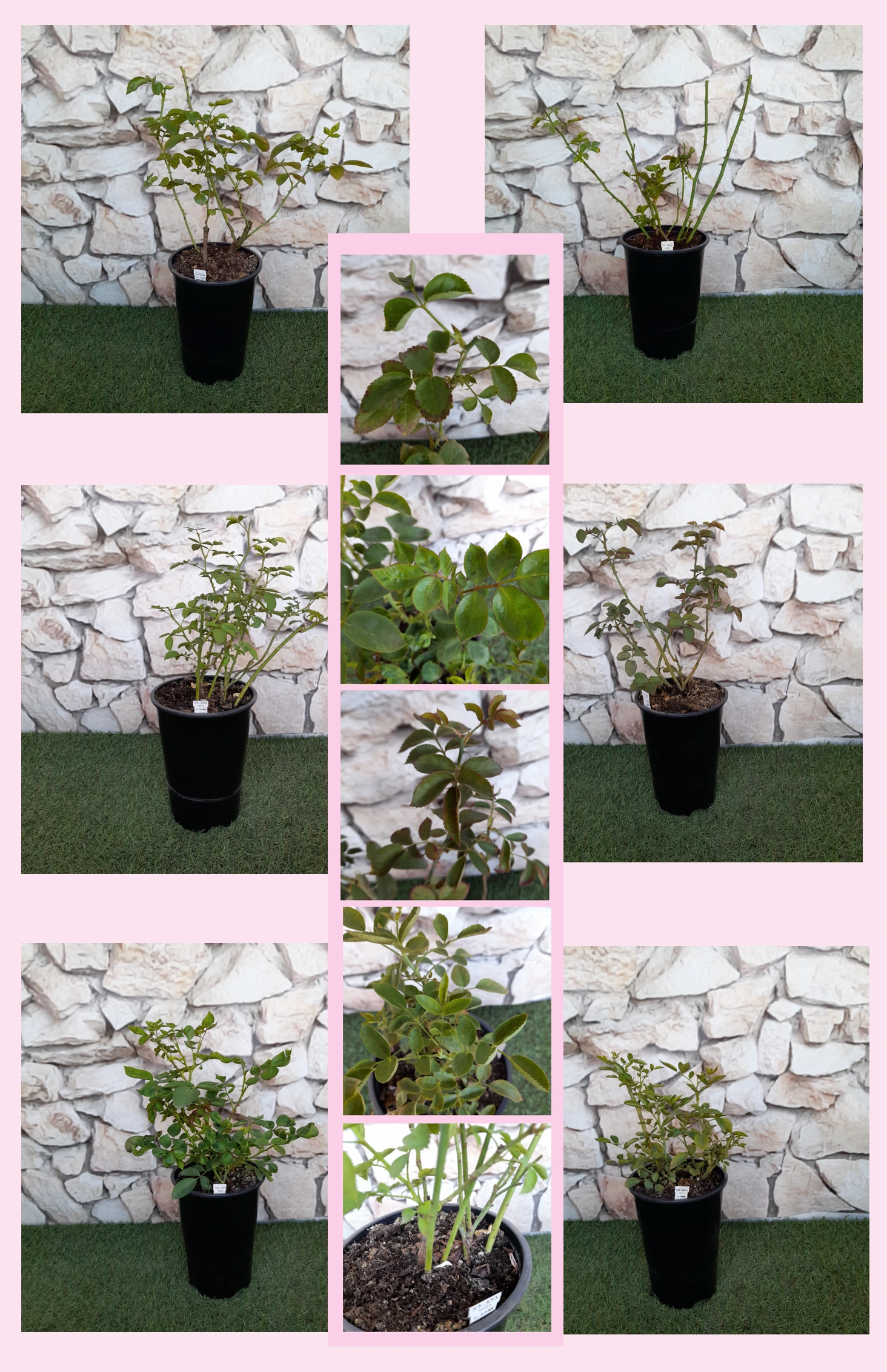
Crop overview: several varieties and growth stages in a short crop section.Shoot system: intensive growth of fresh basal shoots on a young plant.Root system: demonstration of a vigorous root system permeating the growing medium, by removing the pot.Balance: mature plant with root system and shoots in harmony with each other.
Information about the videos
The video series is not a “seasonal showcase”; it illustrates the essence of pharmaROSA® own-root cultivation in a tangible way: how the plant is built up, what the root system is like and how the shoot system regenerates. The recordings were therefore made at different times and with plants at various stages of development, so mixed foliage levels and differing stages of growth may appear in the videos. They are not a ‘sample’ of the batch dispatched, but a visual explanation of how the technology works. The current condition of the rose available to order — typical for the given period and similar to what you can expect to receive in the parcel — is shown in the upper part of the product page.
Pages for private customers Garden roses for the family garden, with minimal care → ORIGINAL® Premium garden roses – instant impact, a truly showpiece garden → EXTRA® Pages for professionals and private customers Roses for public spaces – large areas, sustainable maintenance → NATURAL® Roses for projects – hedge and row planting, fast implementation → RAPID® For professional partners only Production – propagation material for garden roses, wholesale → NEONATAL®
Company details
PharmaRosa Ltd. Company registration number: 01-09-717479 VAT number: 13075314-2-43 Plant health registration no.: HU130721 Bank account (IBAN): HU85117631891388688400000000 BIC (SWIFT): OTPVHUHB Bank name: OTP Bank Nyrt.