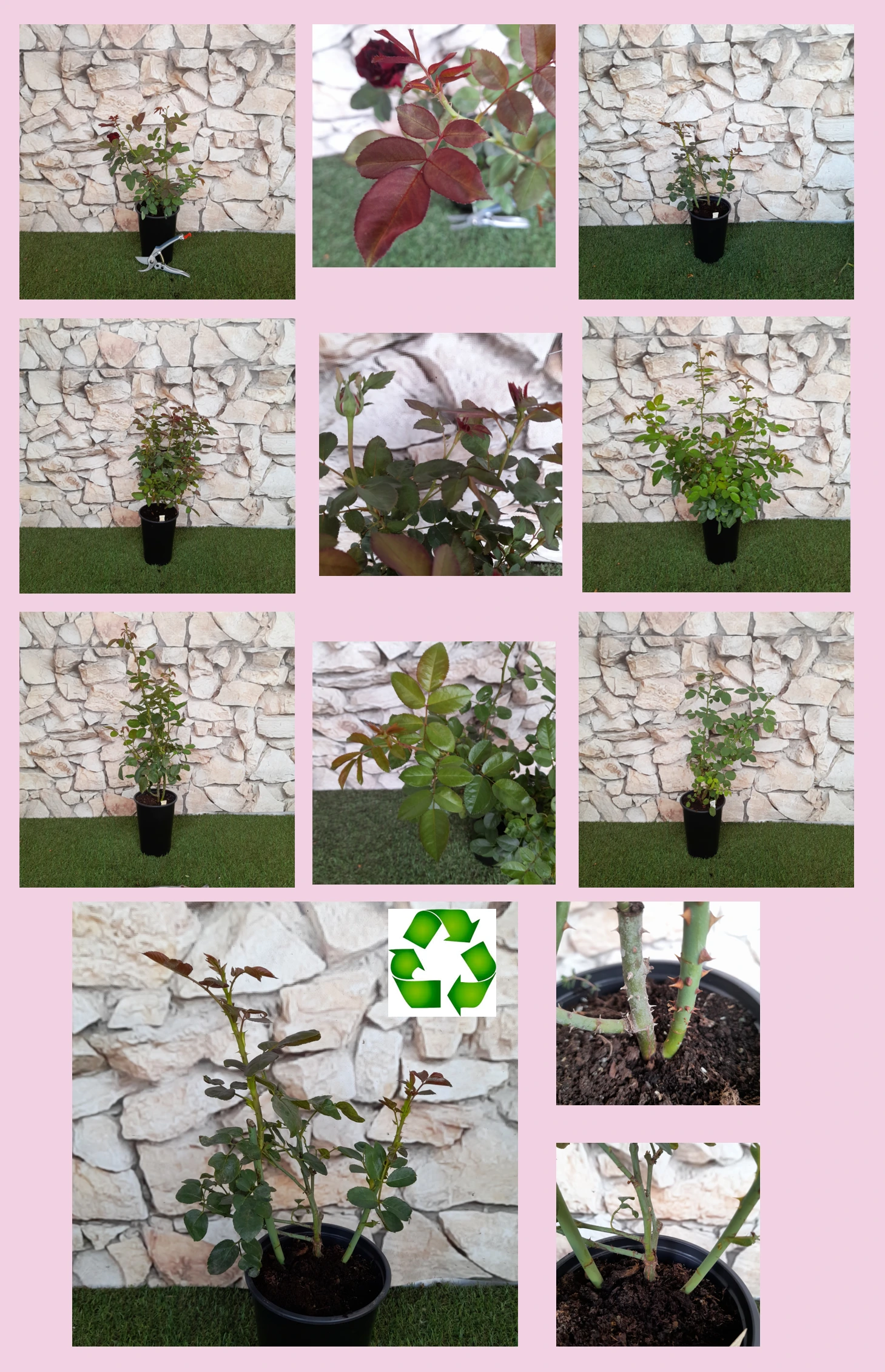
FOOTLOOSE ™ – pink bedding floribunda rose - Evers
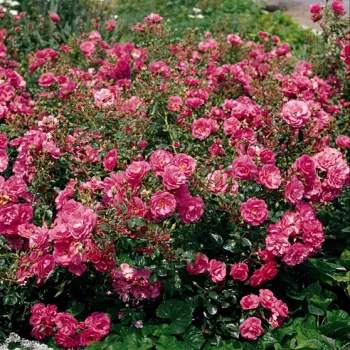
Set the scene for leisurely afternoon tea with Footloose, a floribunda rose that covers the ground in waves of deep pink bloom while remaining reassuringly straightforward to manage. Its naturally spreading habit quickly knits together borders and edges, creating a soft, cottage-style look without demanding constant attention. Dense, glossy foliage stays attractive across the season, supporting clusters of semi-double flowers that renew themselves with good repeat cycles and reliable self-cleaning, so You spend less time deadheading and more time enjoying the garden. Bred for modern landscapes, it offers solid disease resistance even in humid, fungus-prone conditions and copes well where brisk winds and wet spells roll in from the coast. Its own-root constitution underpins a long-lived planting that recovers well from knocks and light pruning, settling in as a dependable groundcover feature. Happy in beds or generous containers, it suits busy homeowners who need an easy rose that simply fits into family life, developing from a young plant to full garden presence over the first few years. In partial shade or sun, this rose quietly supports that romantic, storybook cottage atmosphere You have in mind.
Usage options
| Target area |
Reasoning |
| Informal cottage-style flower bed near a terrace or seating area |
The naturally spreading, low, bushy framework fills front-of-border gaps, creating a soft pink cushion that suits relaxed cottage layouts. Repeat-flowering clusters keep colour running through the season with minimal deadheading, ideal beside family seating areas for beginners. |
| Groundcover on gently sloping or awkwardly shaped parts of the garden |
Footloose knits together in broad, spreading drifts, helping to clothe banks and awkward corners where mowing or frequent maintenance is inconvenient. Dense foliage and self-cleaning flowers reduce visible bare patches, so the area stays tidy-looking with little intervention for busy-owners. |
| Low edging hedge along a path or drive in a family garden |
Regular spacing at hedge distances forms a continuous, low ribbon of colour that frames paths and driveways without blocking views. The structured yet informal height range makes it easy to keep in line with light annual trimming, avoiding complex pruning decisions for home-gardeners. |
| Large containers on patios, balconies or small urban gardens |
Its compact height and spreading habit adapt well to big pots of 40–50 litres or more, giving generous bloom on limited hardstanding space. Disease resistance supports reliable foliage display where air flow may be restricted, supporting city planting schemes for urban-residents. |
| Mixed rose and perennial border in partial shade |
This cultivar tolerates partial shade, so it can be threaded between taller shrubs or perennials where sun hours are reduced. The vibrant pink flowers stand out against deeper greens, maintaining impact even on less-than-ideal sites, which simplifies planning for non-experts. |
| Family play garden requiring robust, long-lived planting |
As an own-root rose, the plant is durable and long-lived, recovering more readily from accidental knocks and responding well to simple renovation pruning rather than intricate shaping. Once established, it becomes a stable part of the backdrop for young-families. |
| Low-maintenance front garden exposed to variable weather |
Bred for public spaces, Footloose combines strong foliage and disease resistance to stay presentable where winds, wet spells and everyday neglect might challenge fussier roses, offering a resilient, low-care option that copes with breezy, rain-swept drives for time-poor. |
| Romantic cottage border with wildlife-friendly touches |
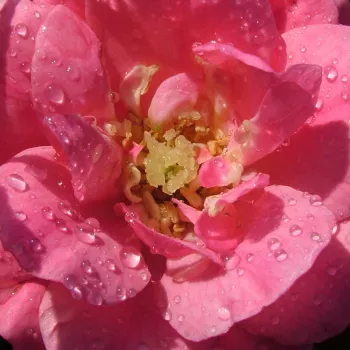
Semi-double, open blooms with exposed stamens offer some benefit to visiting pollinators, all within a shapely, floribunda habit that still reads as ornamental rather than wild. When deadheading is relaxed, modest hips add seasonal interest, suiting wildlife-aware cottage-lovers. |
Styling ideas
- Pale-Pink Tapestry – Mass-plant Footloose in loose drifts, weaving between dwarf lavender and sweet alyssum for a low, fragrant, pink-and-lilac carpet that softens paths and terraces – for cottage-style romantics.
- Container Courtyard – Use one or three plants in a 40–50 litre terracotta pot, underplant with goldmoss stonecrop to spill over the rim, creating a rosy focal point on patios or balconies – for busy urban homeowners.
- Storybook Path Edge – Line both sides of a curving garden path at hedge spacing, letting the spreading habit blur the path edge into clouds of pink for a gentle, fairytale walk – for families who enjoy evening strolls.
- Kitchen-Garden Border – Plant along the outer edge of vegetable beds, pairing the rose with herbs such as chives and thyme so flowers frame the productive area and attract helpful insects – for rustic kitchen-garden keepers.
- Shaded-Corner Rescue – Place Footloose where light is dappled, combining with ferns and hardy geraniums so its bright pink bloom lifts a previously dull corner without complex maintenance – for gardeners with tricky spots.
Technical cultivar profile
| Property |
Data |
| Name and registration |
Floribunda shrub rose from the Cityflor collection, registered as TANotax and marketed as Footloose, a pink bedding floribunda suited to decorative beds, hedging and own-root garden container use. |
| Origin and breeding |
Bred by Hans Jürgen Evers at Rosen Tantau in Germany from unnamed seedling × Rosali 83, bred 1990, registered 1999 and introduced after 1999 following Cityflor series testing for landscape performance. |
| Growth and structural characteristics |
Low, spreading floribunda habit around 70–110 cm tall and 60–100 cm wide, with dense, dark green, glossy foliage and moderate prickliness; designed to form even, ground-hugging bedding and edging plantings. |
| Flower morphology |
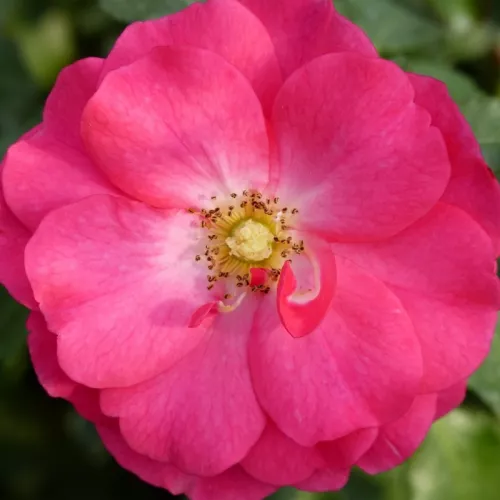
Semi-double, flat, medium-sized clusters with approximately 13–25 petals per bloom, produced repeatedly in large inflorescences, giving abundant flower cover and good self-cleaning of spent flowers through the season. |
| Colour data and phenology |
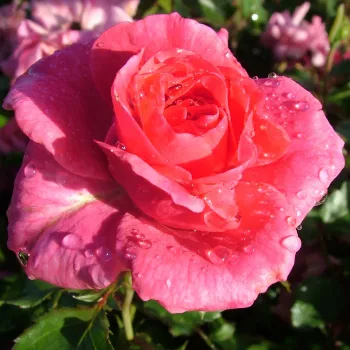
Vibrant deep pink to fuchsia (ARS DPk, RHS 67B–67C) flowers, opening from darker magenta buds, with colour gently lightening in heat and age while generally retaining a pleasing, evenly distributed pink display. |
| Fragrance and aroma |
Fragrance is very weak and discreet, essentially neutral in character, so it will not compete with scented companion plants; emphasis of the cultivar lies in colour, coverage and practicality rather than perfume. |
| Hip characteristics |
If deadheading is relaxed, it sets small, spherical red hips around 4–8 mm across, adding a modest touch of late-season interest without dominating the appearance or significantly reducing flower production. |
| Resistance and winter hardiness |
High resistance to black spot, powdery mildew and rust, with hardiness to approximately −32 to −29 °C (USDA 4b, RHS H7), making it suitable for exposed, cold and low-intervention planting schemes. |
| Horticultural recommendations |
Ideal for beds, edging, mass planting, groundcover and large containers, with low maintenance needs; tolerates partial shade and benefits from regular watering in prolonged dry spells and simple annual pruning. |
Footloose ™ offers easy repeat flowering, spreading groundcover and durable, own-root resilience for family gardens; consider it if You want long-lived pink colour without complicated care.