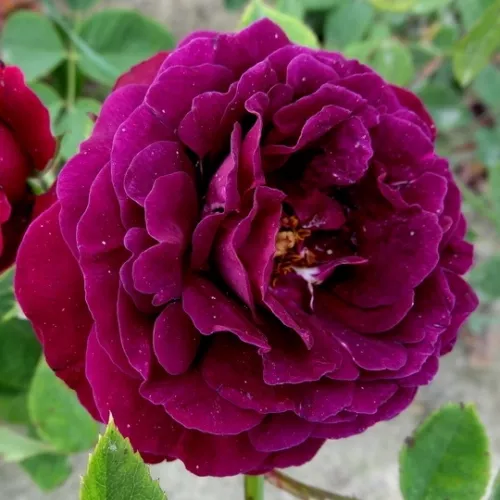
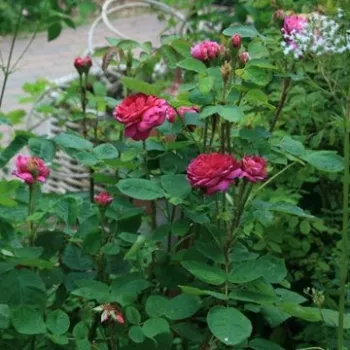
EUGÉNIE GUINOISSEAU – crimson-red historic moss rose
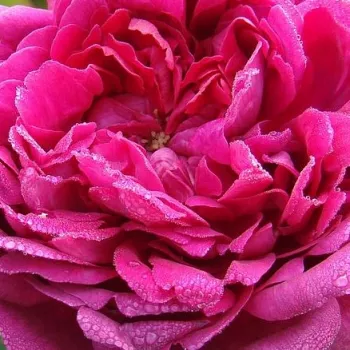
Step into a romantic, storybook corner of the garden with Eugénie Guinoisseau, a moss rose that wraps your cottage-style borders in crimson charm and powerful fragrance. Its upright, well-branched habit forms a leafy backdrop for afternoon tea, while the large, very double blooms unfurl in nostalgic clusters of raspberry-red petals that drift through lavender and silvery tones as they age. On its own roots this heritage shrub offers reassuring longevity and an ability to regenerate from the base, supporting a calm, low-intervention approach over the years. Once established in well-prepared soil it copes reliably with exposed sites where frequent breezes and coastal showers can test less robust plants, giving your family garden a quietly dependable presence and season-spanning romance.
Usage options
| Target area |
Reasoning |
| Cottage-style shrub border in a family garden |
The upright, leafy shrub shape reaches around 150–220 cm, creating a classic cottage-garden anchor without dominating a small to medium family plot. Its structural habit makes it easy to place behind perennials or low hedging, suiting homeowners wanting a traditional, storybook look for family gardeners. |
| Romantic focal point near a seating or tea area |
Large, very double crimson blooms with a berry-fruity scent are ideal beside a bench, pergola or patio, where you can appreciate both flower form and perfume at close quarters. The remontant flush gives repeated interest through summer for lovers-of-scent. |
| Heritage or period-style garden feature |
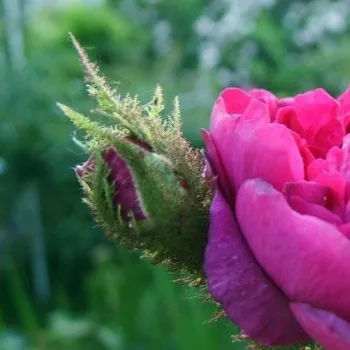
As a moss rose first introduced in 1864, this cultivar brings authentic historic character to Victorian, cottage or period-themed schemes. Its mossy buds and rich colour shifts from raspberry-red to lavender-lilac lend depth and narrative to collections for heritage-enthusiasts. |
| Loose flowering hedge or boundary line |
Planting at 95 cm intervals creates an informal, blossom-rich boundary with dense, dark green foliage that frames paths, driveways or vegetable plots. The upright yet bushy growth offers screening and seasonal charm without demanding complex pruning from busy-homeowners. |
| Mixed border with late-summer perennials |
Clustered flower trusses sit beautifully among airy companions such as threadleaf coreopsis, dwarf asters and annual lobelia, which echo and soften the rose’s shifting crimson and lilac tones. This layered mix keeps borders engaging from midsummer to autumn for colour-seekers. |
| Exposed or breezy garden positions |
The robust shrub structure and dense foliage offer reliable anchoring where wind and regular rain might flatten more delicate plants, especially in open or coastal-feeling plots. Once rooted in sound soil preparation, it remains a steady presence for practical-gardeners. |
| Long-term planting for low-intervention gardeners |
Grown on its own roots, this moss rose can renew growth from the base and age gracefully over many years, helping to maintain its ornamental value even after harder winters or pruning mistakes. This supports a relaxed care regime for time-poor-owners. |
| Feature shrub in large containers |
In a 40–50 litre or larger container with good drainage, its upright habit and generous clusters can dress patios or courtyard spaces where borders are limited, while the manageable size and medium maintenance demands suit keen but non-expert balcony-and-terrace-gardeners. |
Styling ideas
- Cottage-arch – Place Eugénie Guinoisseau just behind a low box or lavender edging to frame a gravel path, allowing crimson blooms to rise above soft green lines – ideal for romantic cottage traditionalists.
- Kitchen-border – Combine with herbs, runner beans and old-fashioned annuals beside a vegetable plot, letting the historic moss rose lend colour and scent to productive spaces – perfect for kitchen-garden families.
- Evening-seat – Position near a simple wooden bench with pale foxgloves and white campanulas so the strong fragrance and rich tones stand out at dusk – suited to after-work relaxers.
- Period-corner – Underplant with lady’s mantle and ferns against brick or stone to evoke a Victorian walled-garden feel that showcases the shrub’s heritage – attractive to history-minded homeowners.
- Colour-drift – Weave among threadleaf coreopsis, dwarf asters and sky-blue lobelia for a tapestry of crimson, gold and blue around a lawn edge – appealing for informal border experimenters.
Technical cultivar profile
| Parameter |
Data |
| Name and registration |
Historical moss rose from the Heritage rose collection; current trade name Eugénie Guinoisseau – crimson-red historic moss rose; ARS exhibition name Eugénie Guinoisseau; unregistered cultivar. |
| Origin and breeding |
Historical French moss rose bred by Bertrand Guinoisseau-Flon and introduced in 1864; parentage and initial distributor unknown, representing a classic nineteenth-century shrub form. |
| Growth and structural characteristics |
Upright, bushy shrub reaching about 150–220 cm high and 90–150 cm wide, densely thorned with dark green, glossy foliage, forming a substantial, leafy backdrop well suited to borders and hedging. |
| Flower morphology |
Large, very double, cup-shaped flowers with more than 40 petals, borne in clusters; remontant with a good main flush and lighter repeat later, adding old-fashioned luxury to the shrub’s overall display. |
| Colour data and phenology |
Crimson-red blooms (ARS mr; RHS 60A–60B) open raspberry red, then soften through lavender-lilac to a silvery veil; colour retention is modest, but the continuous tonal change adds visual interest over time. |
| Fragrance and aroma |
Powerful, sweet berry-fruity fragrance typical of richly petalled historic roses; strongly scented blooms are best appreciated near paths, terraces or seating areas where their perfume can accumulate. |
| Hip characteristics |
Hip set is usually sparse because of very double flowers; where present, expect small red, ellipsoidal hips about 11–17 mm in diameter, adding only a light incidental autumn feature. |
| Resistance and winter hardiness |
Hardy to approximately −21 to −18 °C (RHS H7, Swedish zone 3, USDA 6b); disease profile shows resistance to black spot with moderate susceptibility to powdery mildew and rust in humid conditions. |
| Horticultural recommendations |
Medium maintenance shrub; plant 95–110 cm apart in borders or hedges, or 180 cm as a specimen; prefers well-drained soil, occasional protection treatments, and balanced pruning to maintain shape and flowering. |
Eugénie Guinoisseau offers richly scented, season-spanning crimson blooms on a long-lived, own-root shrub that matures into a reliable structural presence in family gardens; a thoughtful choice if you would like enduring, romantic character.