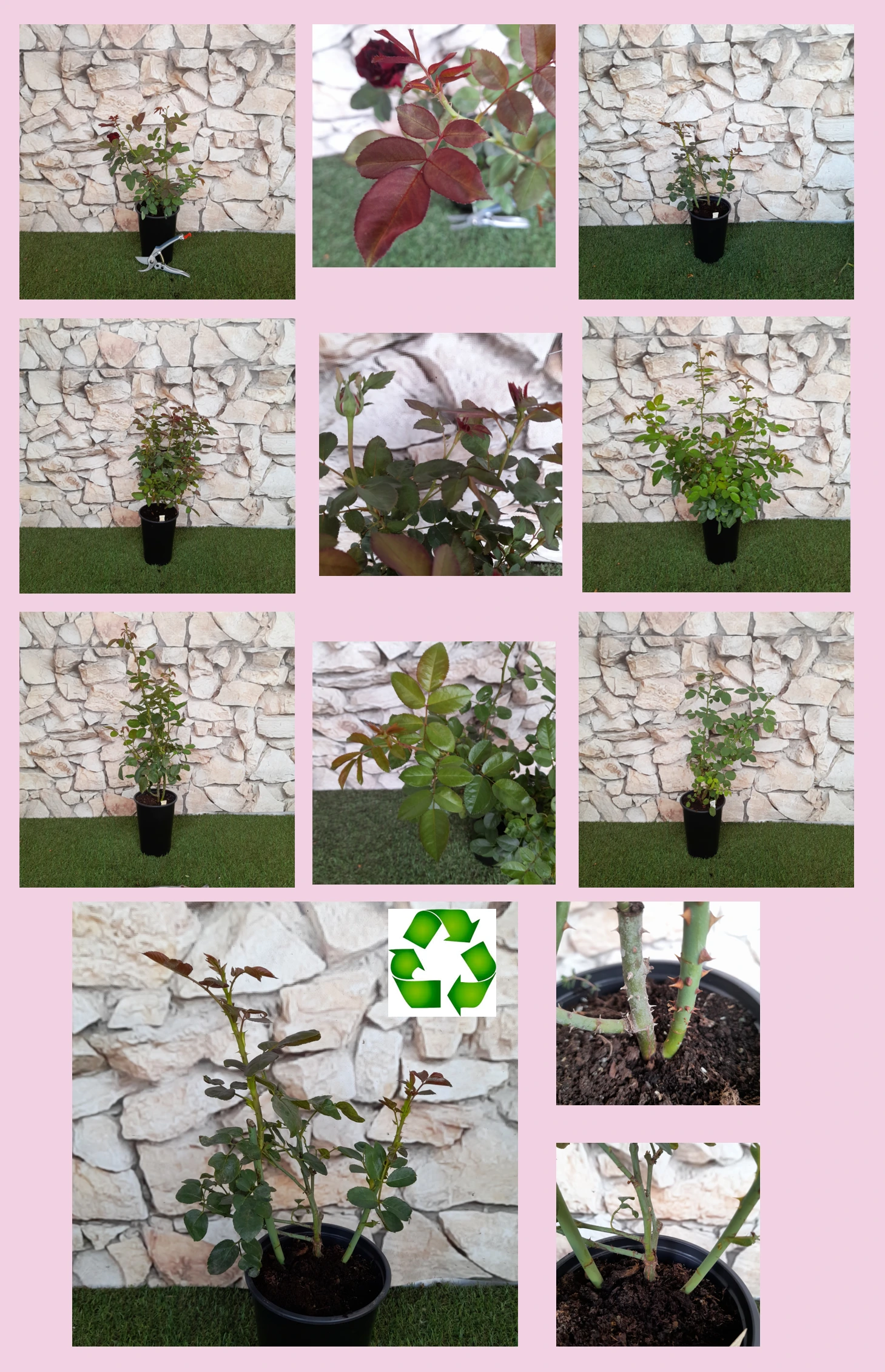
COMTESSE DE PROVENCE – pink hybrid tea rose – Meilland
Bring a touch of French aristocratic romance to an everyday family garden with COMTESSE DE PROVENCE, a tall, erect hybrid tea whose generous, rosette-shaped blooms give a classic afternoon-tea ambience to borders, arbours and paths. The warm, salmon-pink flowers open from high-centred buds into fully double cups, carrying a strong, peachy fragrance that drifts across the lawn towards your seating area, even in a busy urban plot. Supplied as a pharmaROSA® ORIGINAL own-root plant, it is bred for steady longevity and reliable regrowth from the base, so if the top suffers from frost or pruning, the plant re-forms neatly without complicated maintenance. In typical UK conditions it copes well with blustery, damp spells and coastal showers, provided it is planted where surplus water can drain away from heavy clay soils. Medium-height, bushy growth with dense mid-green foliage helps it stand firmly in the wind, while the continuously repeating, XL blooms provide a familiar, “proper rose” presence for many years. As its roots establish in the first year and the framework fills out in the second, by the third season you can expect a fully developed display that anchors a romantic, cottage-style scheme with minimal fuss.
Usage options
| Target area |
Reasoning |
| Classic hybrid tea in a front or mid-border |
The tall, erect habit and XL, exhibition-style blooms create an instantly recognisable “rose garden” look without needing advanced pruning skills, ideal where you want a traditional focal point that stays in character for many years – for lovers of classic, storybook roses |
| Romantic cottage-style seating or arbour corner |
The warm salmon-pink rosette flowers and strong fruity fragrance build a cosy, afternoon-tea atmosphere around a bench or arbour, with repeat flushes ensuring there is usually something in bloom during the main season – for families creating a homely seating nook |
| Cutting bed for home-arranged bouquets |
Long, straight stems and very double, exhibition-type flowers suit casual home cutting; you can take a few stems without spoiling the shrub’s overall shape, giving fragrant, aristocratic-style blooms for vases indoors – for hobby florists who like home-grown stems |
| Own-root specimen for long-lived garden structure |
As an own-root plant, COMTESSE DE PROVENCE rebuilds reliably from its base rather than relying on a graft, supporting decades of ornamental use and reducing the risk of suckering or replant problems in a family plot – for owners planning a stable, long-term garden |
| Feature shrub in small to medium family gardens |
The combination of medium maintenance needs, dense foliage and bushy outline provides a tidy, upright shrub that anchors beds without constant intervention, suiting busy households who prefer predictable, manageable flowering – for busy homeowners wanting impact, not chores |
| Containers and large pots on terraces or patios |
Its vertical, bushy habit and solitary XL flowers perform well in a large container of at least 40–50 litres, where regular watering and feeding are straightforward and spent blooms are easy to deadhead at eye level – for urban gardeners with paved spaces |
| Mixed border with classic cottage companions |
Mid-pink, salmon-toned flowers combine gracefully with peonies, lavender and airy verbena, creating a soft, layered cottage border where the rose provides height and romance while companions fill gaps and extend the season – for admirers of relaxed English-country planting |
| Wind- and rain-exposed family plots |
The sturdy, bushy framework and reliable disease resistance to powdery mildew and black spot help it hold up in changeable British weather, coping well with damp, blustery spells near open fields or coasts – for households in breezy, weather-beaten locations |
Styling ideas
- Arbour-Escape – Train COMTESSE DE PROVENCE loosely up an obelisk beside a bench, underplanting with lavender for scent at foot level – ideal for families who enjoy evening tea outdoors.
- Kitchen-Path – Line a path to the vegetable garden with spaced specimens, interplanted with low catmint to soften edges – suited to cottage-garden cooks who like a romantic walk to their herbs.
- Patio-Saloon – Place one rose in a 50-litre terracotta pot flanked by fragrant herbs, giving vertical interest and perfume on a compact terrace – for urban dwellers wanting a single, showy container rose.
- Peony-Play – Combine with Paeonia lactiflora at the back of a border and airy Verbena bonariensis threaded through, for a layered, pink-toned scene – perfect for those who like soft, feminine planting.
- Hedged-Harmony – Use as intermittent accents in front of evergreen hedging so the salmon-pink blooms float against a dark backdrop – for gardeners seeking year-round structure with romantic summer highlights.
Technical cultivar profile
| Parameter |
Data |
| Name and registration |
Hybrid tea rose, registered as MEIbacus; marketed as COMTESSE DE PROVENCE Romantica. Approved exhibition name COMTESSE DE PROVENCE; part of the Romantica collection of Meilland. |
| Origin and breeding |
Bred in France by Alain Antoine Meilland in 2001 from (‘Centenaire de Lourdes’ × ‘Duke of Windsor’) × ‘Regatta’; introduced 2006 in France, 2007 in the USA, US Plant Patent PP 13 860. |
| Growth and structural characteristics |
Erect, bushy shrub 130–170 cm high and 85–115 cm wide with dense, mid-green, slightly glossy foliage and moderate prickles; weak self-cleaning so regular deadheading maintains a neat appearance. |
| Flower morphology |
Very double, rosette-shaped hybrid tea blooms with over 40 petals, usually borne singly on stems; extra-large flowers around 9 cm or more, with remontant flowering and particularly strong second flush performance. |
| Colour data and phenology |
Warm, salmon-toned mid-pink blooms (RHS 36C–36A) opening from peach-pink buds; colour lightens towards cream-pink as flowers age, remaining richer in cool weather and paling more quickly in hot, dry spells. |
| Fragrance and aroma |
Distinct, strong fragrance with fruity, peach-like overtones typical of romantic hybrid teas; carries well in still air, contributing good scent value for garden seating areas and for home-cut arrangements. |
| Hip characteristics |
Occasionally forms small, spherical hips 10–14 mm across, in orange-red tones; ornamental value is modest and hips are rarely dominant, as regular deadheading is usually recommended to prolong flowering. |
| Resistance and winter hardiness |
Hardy to approximately –21 to –18 °C (RHS H7, roughly USDA 6b, Swedish zone 3); good resistance to powdery mildew and black spot, moderate susceptibility to rust; prefers full sun and regular watering in drought. |
| Horticultural recommendations |
Best in sunny beds or large containers; space 85–160 cm depending on use. Medium maintenance: deadhead spent blooms and monitor rust. Water consistently in hot spells and avoid waterlogging on heavy soils. |
COMTESSE DE PROVENCE offers tall, elegant form, richly scented salmon-pink blooms and dependable repeat flowering on a durable own-root framework; a thoughtful choice for those planning a romantic, long-lived garden feature.