Hybrid tea rose

90-080-1
90-080-2

Candy Stripe

Hybrid tea rose

- – Edward McCummings

The base colour of the petals is mid‑pink, irregularly streaked with fine cream‑white stripes. - hybrid tea rose - strong, long-lasting scented rose - scent description not available

– Strong, long-lasting fragrance for cutting
– Striking pink‑white striped hybrid tea blooms
– Reliable remontant flowering through the season
– Good resistance to mildew and black spot
– Very hardy rose, down to about –21 °C
Special feature: Abundant decorative orange‑red hips in autumn.
Naturalistic style – Built on experience
Candy Stripe
darinaROSE® ORIGINAL 2-litre own-root potted rose
24,90 £
Unfortunately, we are currently unable to ship to the United Kingdom; we only deliver to countries within the European Union. For more information, please contact us!
4.5 (6625)
facebook   twitter

CANDY STRIPE – pink-white hybrid tea rose – McCummings

With its striped, storybook blooms, CANDY STRIPE brings a sense of romance and timeless charm to a family garden, echoing the feel of afternoon tea beneath an arbour. This own-root hybrid tea is raised in a 2‑litre container, so you can plant it throughout the season and it will anchor well even where strong winds sweep in from the coast and heavy soils need careful drainage. Its upright habit is ideal for cottage-style borders or as a focal specimen beside a seating area, while the large, high‑centred flowers are perfect for fragrant cut stems on the kitchen table. Good resistance to common rose diseases supports genuinely easy‑care maintenance, and the plant’s own-root strength underpins a long lifespan, dependable regrowth after hard pruning, and steadily improving performance year after year. Think in terms of a gentle development: first strong roots, then bolder shoots, and by the third season a full, romantic display.


Usage options

Target areaReasoning
Feature rose for cottage-style mixed border The upright, moderately dense growth makes CANDY STRIPE easy to weave into a classic English cottage border among perennials and herbs, while its patterned blooms give a “painted” look that reads beautifully from the terrace. Its own-root construction means it will quietly build structure over the years without complicated care routines, suiting those who prefer to enjoy flowers rather than fuss over them, especially beginners.
Cutting rose for indoor arrangements The large, high-centred flowers on strong, straight stems are ideal for cutting, echoing traditional exhibition-style hybrid teas but in a friendlier, garden form. The strong, long-lasting scent fills a room, so even a few stems in a jug can bring that afternoon-tea atmosphere indoors. Because the plant is own-root, you can cut confidently without worrying about weakening a grafted union, which reassures occasional, time-pressed florists.
Focal point near seating or arbour Planted by a bench, pergola or archway, its striped petals and notable fragrance create a romantic focal point without needing complicated pruning shapes. The upright habit stays reasonably compact, fitting neatly into small to medium family gardens. Over time, the own-root system supports sturdy basal growth, so the display becomes fuller each summer, rewarding patient yet busy homeowners.
Structure and rhythm in family flower beds Regular repeat flowering gives a dependable rhythm of colour from early summer onwards, so beds never look flat for long. Even when blooms are between flushes, the dark matt foliage offers a calm green backdrop for cottage companions. With routine deadheading and light shaping, the rose keeps its form and interest for many seasons, aligning well with families seeking reliable, low-fuss colour.
Traditional rose bed with modest maintenance Good resistance to powdery mildew and black spot makes this cultivar suitable for traditional rose beds where spraying is limited or avoided. In typical British conditions with humidity and summer showers, it keeps presentable foliage with basic hygiene and the occasional check for rust. This reliability, together with own-root resilience, simplifies care for environmentally aware gardeners.
Wind-aware front garden planting This rose establishes a firm, wide root system that helps it stay put where gardens are exposed, such as open suburbs or breezier plots, provided the soil offers reasonable drainage. Its container-grown start lets you plant when convenient, allowing roots to anchor before the worst of winter or summer. This gives confidence to those gardening in unsettled weather, especially coastal-edge residents.
Container rose on patio or balcony In a substantial container of at least 40–50 litres, CANDY STRIPE becomes a striking patio feature, with its striped blooms and fragrance close to hand. The own-root habit copes better with the inevitable fluctuations in watering and temperature that containers bring, recovering well if growth is checked. This makes it a comfortable choice for busy urban balconies.
Wildlife-friendly, decorative autumn corner The rose’s open-centred flowers are accessible to pollinators, offering nectar and pollen through repeat flushes in a mixed kitchen or cutting garden. Later, abundant small orange-red hips add colour and gentle wildlife interest into autumn and early winter, extending the plant’s usefulness beyond summer. Such layered value suits nature-conscious family buyers.

Styling ideas

  • Striped-centrepiece – Place CANDY STRIPE at the heart of a small circular bed edged with lady’s mantle, letting lime-green froth soften its upright structure – ideal for homeowners wanting a simple yet romantic focal point.
  • Kitchen-border – Combine the rose with low daylilies and herbs near a back door, so scented stems are easy to cut for the table – suited to cottage-garden cooks who enjoy effortless bouquets and seasonal colour.
  • Patio-aroma – Grow one plant in a 50-litre terracotta pot by garden seating, underplanting with Mexican daisy for a soft, tumbling edge – perfect for flat dwellers and terrace users seeking fragrance with low upkeep.
  • Storybook-hedge – Space several plants in a loose row along a path, interspersed with lavender, to suggest a low, romantic hedge – appealing to families wanting a traditional look without strict formal clipping.
  • Autumn-echo – Set CANDY STRIPE among late perennials and ornamental grasses so its hips and repeat blooms echo warm tones in September – aimed at gardeners who value long seasonal interest from a single rose.

Technical cultivar profile
PropertyData
Name and registration Hybrid tea rose marketed as CANDY STRIPE – pink-white hybrid tea rose – McCummings; ARS exhibition name Candy Stripe; cultivar name refers to the striped, candy-cane-like petal pattern.
Origin and breeding Sport of the classic Hybrid Tea ‘Pink Peace’, discovered by Edward McCummings in the United States; introduced and first distributed by Conard-Pyle in 1963 for garden and cutting use.
Growth and structural characteristics Upright bush 80–110 cm high and 60–85 cm wide with moderately dense, matt dark green foliage and moderate prickles; weak self-cleaning, so regular deadheading is recommended for best results.
Flower morphology Large, double, high-centred blooms with 26–39 petals, exhibition-style form and solitary presentation; remontant, with a particularly abundant second flush under normal garden conditions.
Colour data and phenology Mid-pink petals irregularly streaked with cream-white; pattern most vivid in cooler weather, softening in strong sun as pink lightens and white areas broaden to cream; very good overall colour retention.
Fragrance and aroma Strong, long-lasting scent typical of scented Hybrid Teas; precise fragrance notes are not documented, but intensity is sufficient for perfume in vases and noticeable aroma around the plant in still air.
Hip characteristics Produces numerous small hips, roughly 8–12 mm across, spherical and orange-red; hips extend ornamental value into autumn and early winter and may provide incidental food for garden wildlife.
Resistance and winter hardiness Hardy to approximately −21 to −18 °C (RHS H7; USDA 6b, Swedish zone 3); resistant to powdery mildew and black spot with moderate rust susceptibility; tolerates heat but needs watering in extended drought.
Horticultural recommendations Best in full sun with fertile, well-drained soil; plant 40–50 cm apart for hedging, 50 cm in masses or 75 cm as a specimen; occasional pest checks, feeding and deadheading keep plants flowering strongly.

CANDY STRIPE offers romantic striped blooms, strong fragrance and dependable repeat flowering on a resilient own-root plant, making it a thoughtful choice for long-lived, easy-care cottage-style planting.

Detailed product attributes

Product Identification Data

Product Name: CANDY STRIPE – pink-white hybrid tea rose - McCummings
Product Type: darinaROSE® ORIGINAL - 2-litre own-root potted rose
Cultivar Authenticity: Verified:03.07.2025
Cultivar Quality Rating: premium gold
Item Number: [1430] 90-080 (14.02.2026) darinarose.co.uk

Name and Registration

Meaning of Cultivar Name: The name 'Candy Stripe' refers to the pink-and-white striping of candy canes.

Original Trade Name: Candy Stripe
Current Trade Name: Candy Stripe Hybrid tea rose McCummings
Rose Group: Hybrid Tea
Commercial Type: hybrid tea rose
Commercial Group: Hybrid tea rose
Exhibition Category: cut flower; exhibition hybrid tea
Collection: Hybrid tea rose

Origin and Breeding

Initial Distributor: Conard-Pyle (USA)
Breeder: Edward McCummings
Breeding Company / Institution: unknown / no data
Breeding Year: United States, 1962
Parentage: sport of 'Pink Peace'

Growth and Structural Characteristics

Height: 2.6-3.6ft (80-110 cm)
Spread: 2-2.8ft (60-85 cm)
Growth Habit: upright
Foliage: The variety has moderately dense foliage. The leaves have a matt surface and a dark green shade (RHS 137A).
Prickliness: moderately thorny
Self-Cleaning Description: Most spent blooms remain on the plant and require manual removal.
Self-Cleaning Intensity: Self-cleaning: weak.

Flower Morphology

Petal Count: 26-39
Flower Fullness: double-flowered
Flower Shape: high-centred, pointed bud (cut-rose type)
Flower Size: L (2,75-3,95 in)
Inflorescence Type: solitary
Colour Code: ARS code: PB RHS code: 62B, 155C
Repeat Flowering: Remontant; its second flowering is also abundant.

Colour Data and Phenology

Colour: pink-white
Flower Colour Description: The base colour of the petals is mid‑pink, irregularly streaked with fine cream‑white stripes.
Closed Bud: Darker pink shade with pale white streaks at the tips.
Newly Opened Flower: The outer petals are vivid pink, with contrasting white streaks inside.
Full Bloom: The pink lightens slightly and the white stripes become more extensive and more pronounced.
Before Fading: The pink fades to a pale pink, and the white stripes become almost cream-coloured.
Colour Fading Description: As the bloom opens, the pink base tone fades to a pale pink, the white streaks broaden and become creamy; in strong sunlight the contrast is reduced, while cooler temperatures make the pattern more vivid.

Fragrance and Aroma

Fragrance Strength: strong, long-lasting scented rose
Fragrance Character: scent description not available
Pollinator Attraction: Open flowers — especially simple or semi-double forms with easily accessible stamens — strongly attract bees.
Pollinator-Friendly Rating: Its full yet open-centred blooms, with readily accessible stamens, particularly attract pollinators and it is therefore considered pollinator-friendly.

Hip Characteristics

Hip Shape: spherical
Hip Colour: orange-red (RHS 037A)
Hip Comment: Abundantly produced, 8–12 mm in diameter, spherical, orange-red (RHS 037A) rose hips with ornamental value.

Resistance and Hardiness

Hardiness (°C): -21–-18 °C
Heat and Drought Tolerance Description: Tolerates heat, but requires regular watering during prolonged dry periods.
Disease Resistance: moderate
  • powdery mildew – resistant
  • black spot – resistant
  • rust – moderate

Horticultural Recommendations

Recommended Planting Distance: for mass planting 50 cm, for hedging 40 cm, as a specimen plant 75 cm
Planting Density: square planting 4,2 plants/m², hexagonal arrangement 4,8 plants/m²
Partial Shade Tolerance: prefers a sunny position
Maintenance Requirement: Maintenance level moderate; occasional pest and disease control required.
Primary Uses: flower bed, cut flower, solitary specimen

Comments

Strengths: Naturalistic style – Built on experience
Companion Plants: Alchemilla mollis - lady's mantle
Erigeron karvinskianus - Mexican daisy
Hemerocallis (low varieties) - low daylily
Comment: -
CANDY STRIPE – pink-white hybrid tea rose - McCummings
The base colour of the petals is mid‑pink, irregularly streaked with fine cream‑white stripes. - hybrid tea rose - strong, long-lasting scented rose - scent description not available
Online rose purchase - hybrid tea rose - Candy Stripe - pink-white - (2.6-3.6ft (80-110 cm))
Inflorescence: solitary Height: 2.6-3.6ft (80-110 cm) Flower shape: high-centred, pointed bud (cut-rose type) Winter hardiness: 5b pink-white - Conard-Pyle (USA) hybrid tea rose - Flower size: L (2,75-3,95 in) Flower size: L (2,75-3,95 in) - Height: 2.6-3.6ft (80-110 cm) Height: 2.6-3.6ft (80-110 cm) - Flower fullness: double-flowered Candy Stripe - Roses in the garden | darinaROSE® Original - premium gold Edward McCummings

We showcase the external appearance of the roses available for online purchase from our webshop.


Which product type is right for you?


Information

In what condition do we send the rose from our online webshop?

Let us ask ourselves the question: What do I want to use the rose for?
Flower? - Location? - Cover? - Fragrance? - Height? - Breeder? - Rose hips?

Rose purchase information
Methods of payment - Delivery charges - Delivery - Complaints handling

Care guide

Our product is a rose grown using the unique PharmaRosa® cultivation technology!

2-litre, own-root, potted rose.
With a shoot system appropriate to the season.
With a root system that permeates the growing medium.
Quality in line with the requirements of the E.N.A. (European Nurserystock Association).
In unique packaging designed to prevent damage.
Can be planted at any time during frost-free periods.
True-to-variety rose plant with a unique identifier.

The own-root, potted PharmaRosa® rose is a fully rooted plant that guarantees reliable establishment for you, so it can be planted at any time of the year during frost-free periods.


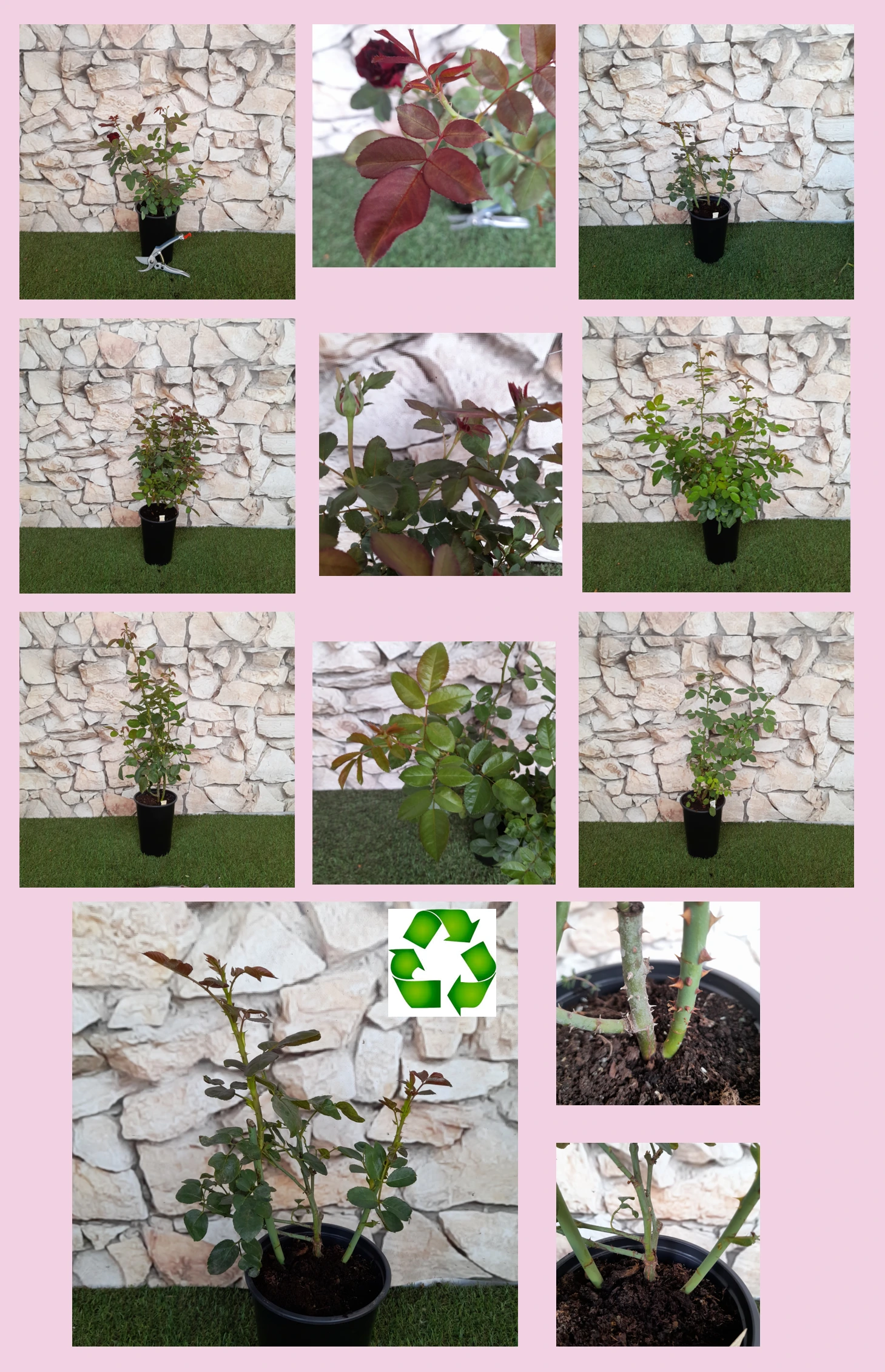
Crop: several varieties and several stages of development in a short crop section.
Shoot system: intensive growth of fresh basal shoots on a young plant.
Root system: presentation of the strong root system permeating the growing medium, with the pot removed.
Balance: mature plant where the development of the root system and the shoot system is in harmony.

Information about the videos
This video series is not a “seasonal showcase”, but a way of making the essence of own-root PharmaRosa® cultivation tangible: how the plant is structured, what the root system is like, and how the shoot system renews itself. The footage was therefore recorded at different times, showing plants at various stages of development, so mixed leaf cover or differing levels of development may appear in the videos. This is not a “sample” of the consignment delivered, but an illustration of how the technology works. The current condition of the rose You are purchasing, characteristic of the given period (the state in which You can expect to receive it in the parcel), is shown in the upper part of the product page.

pharmarosa.atpharmarosa.compharmarosa.depharmarosa.ropharmarosa.sipharmarosa.skpharmarosa.hrpharmarosa.itpharmarosa.frpharmarosa.grpharmarosa.bepharmarosa.dkpharmarosa.nlpharmarosa.iepharmarosa.plpharmarosa.lupharmarosa.ptpharmarosa.espharmarosa.bgpharmarosa.ltpharmarosa.sepharmarosa.lvpharmarosa.eepharmarosa.fipharmarosa.rudarinarose.co.ukpharmarosa.cz

Product types

Pages for private customers
Garden roses for the family garden, with minimal care  → ORIGINAL®
Premium garden roses – instant impact, a truly showpiece garden  → EXTRA®
Pages for professionals and private customers
Roses for public spaces – large areas, sustainable maintenance  → NATURAL®
Roses for projects – hedge and row planting, fast implementation  → RAPID®
For professional partners only
Production – propagation material for garden roses, wholesale  → NEONATAL®

Company details

PharmaRosa Ltd.
Company registration number: 01-09-717479
VAT number: 13075314-2-43
Plant health registration no.: HU130721
Bank account (IBAN):
HU85117631891388688400000000
BIC (SWIFT): OTPVHUHB
Bank name: OTP Bank Nyrt.