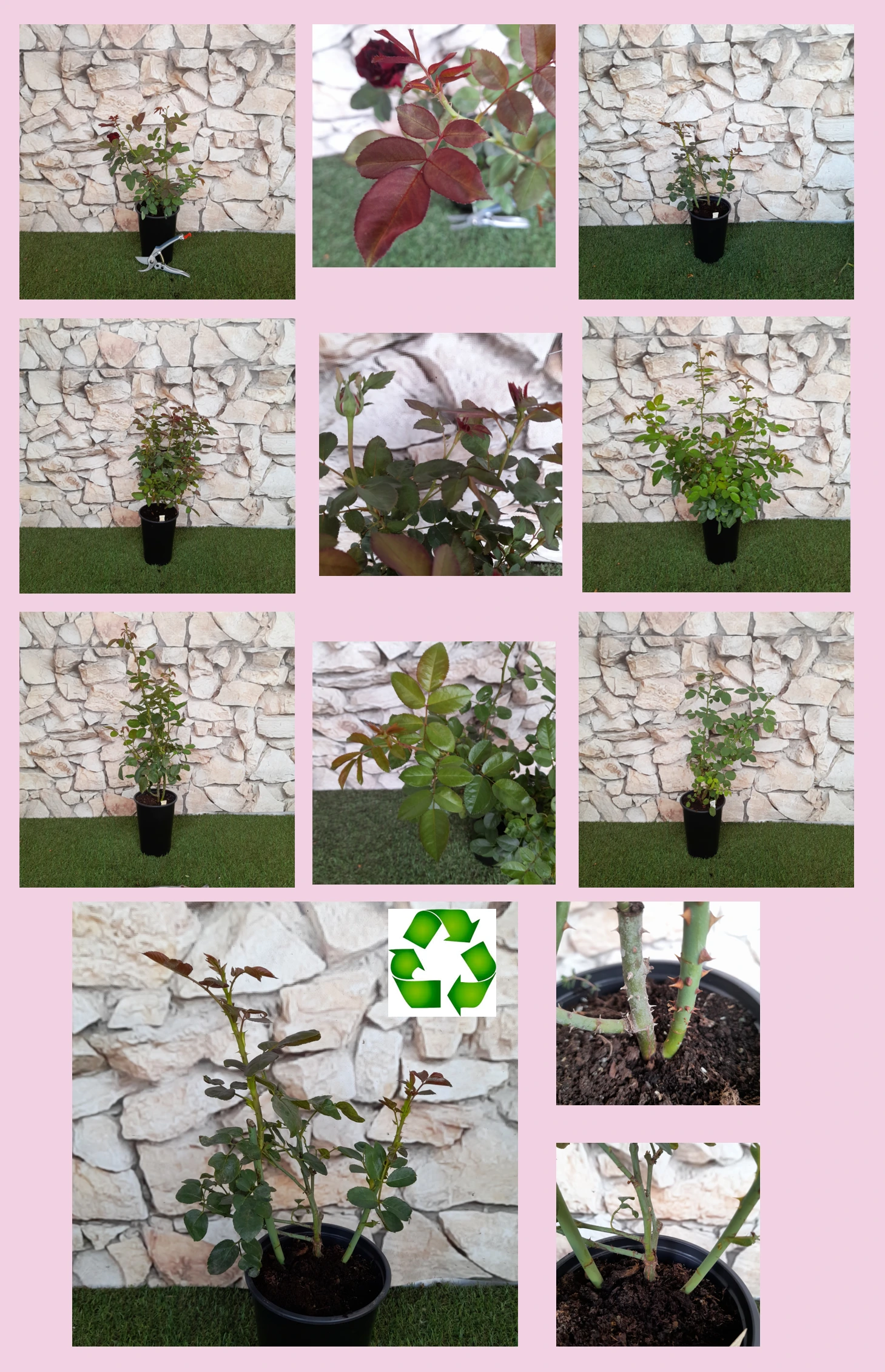
TRIVIANI – purple-white hybrid tea rose – pharmaROSA® ORIGINAL 2-litre own-root
With its richly patterned, crimson and cream petals, TRIVIANI brings an instantly romantic atmosphere to small and medium family gardens, echoing the charm of an English cottage border. This upright hybrid tea fits easily among perennials and kitchen-garden beds, giving your plot a quietly luxurious centrepiece without demanding complicated care. Its medium disease resistance suits typical UK gardens where summers can be damp and breezy, helping it to stand up to humidity and show reliable flowering for many seasons. As an own-root rose, it matures into a stable, long-lived garden feature that can regenerate from its base, rather than depending on a graft. Over time, the dense, glossy dark foliage forms a reassuringly solid structure, ideal for a storybook-style seating nook or a path-side highlight. For those planning ahead, think of it as a gentle progression: first roots, then shoots, then full ornamental splendour, rewarding patient gardeners with an increasingly impressive display that needs only simple, occasional maintenance.
Usage options
| Target area | Reasoning |
|---|
| Main focal point near terrace or seating area |
The upright habit and large, very full flowers make TRIVIANI a natural focal point for a bistro set or bench, creating that afternoon-tea feel with minimal effort. Its patterned blooms draw the eye even in compact plots, giving beginners a dependable centrepiece for homeowners. |
| Cottage-style mixed border with perennials |
Dense, glossy foliage and medium height allow TRIVIANI to knit comfortably into mixed borders with cottage favourites like gypsophila and grasses, providing structure without overwhelming neighbouring plants. This supports an informal, romantic style that is easy to keep tidy for hobby-gardeners. |
| Small family front garden for kerb appeal |
Its repeat-flowering habit keeps colour coming through the season, so even busy households can enjoy a welcoming front garden without intricate scheduling. Simple winter pruning and occasional pest checks are usually enough to maintain a neat, traditional look for family-buyers. |
| Low-maintenance, long-term planting scheme |
As an own-root rose, TRIVIANI forms its flowering framework from its own wood, helping it to recover well after hard pruning or weather damage and to age gracefully in one spot for many years. This offers reassuring longevity and stable ornamental value for long-term-planners. |
| Coastal or exposed, breezy situations |
The medium disease resistance and solid, upright framework help TRIVIANI cope with the damp, changeable air and breezy conditions often found near the coast, where humidity and wind can challenge more delicate plants, giving reliable performance for coastal-gardeners. |
| Classic hybrid tea rose bed or small rose garden |
With solitary, high-centred flowers and medium maintenance needs, TRIVIANI fits neatly into a traditional rose bed layout at the recommended spacing, making it straightforward to weed, mulch and prune while still achieving that classic hybrid tea form for traditionalists. |
| Large containers on patios or roof terraces |
TRIVIANI can be grown in generous containers of at least 40–50 litres, where its upright habit and dark foliage provide vertical interest without dominating limited space. Regular watering and feeding remain simple tasks, even for those with only a balcony for urban-owners. |
| Romantic kitchen-garden boundary or low hedge |
Planted at hedging distances, this variety forms a gently upright, flower-studded line that softens vegetable beds and paths, while the repeat flowering offers colour throughout the productive season without fussy care, perfectly suiting relaxed, storybook-style cottage-gardeners. |
Styling ideas
- Striped-showpiece – Use TRIVIANI as a single specimen among low mounds of lavender and thyme to emphasise its striking, patterned blooms – ideal for homeowners wanting an easy but eye-catching focal point.
- Cottage-hedge – Plant a loose row along a vegetable plot edge, interspersed with gypsophila and herbs, to create a soft, romantic boundary – suited to family buyers who like a traditional kitchen-garden feel.
- Tea-corner – Position TRIVIANI near a small table and chairs, backed by switchgrass and baby’s breath, to evoke a cosy afternoon tea setting – perfect for hobby gardeners seeking a gentle, low-effort retreat.
- Front-doorframe – Flank a path or front step with a pair in large containers, underplanted with trailing campanulas, to add welcoming colour and structure – good for busy urban owners wanting simple kerb appeal.
- Patterned-border – Weave several plants through a sunny mixed border with ceanothus and ornamental grasses, letting the stripey flowers pop against deep greens – attractive for those building a relaxed cottage-style scheme.
Technical cultivar profile
| Property | Data |
|---|
| Name and registration |
Hybrid tea rose marketed as TRIVIANI hybrid tea rose pharmaROSA®, a purple-white, heavily striped garden rose; registered cultivar name not published, offered in the pharmaROSA® ORIGINAL own-root line. |
| Origin and breeding |
Hybrid tea discovered in Hungary and selected by pharmaROSA® in 2020; exact parentage and breeding institution are not documented, with plants distributed commercially by PharmaRosa® Ltd. |
| Growth and structural characteristics |
Vigorous, upright bush rose to around 95–125 cm tall and 75–105 cm wide, carrying dense, dark green, glossy foliage on moderately thorny shoots, forming a solid, decorative framework in borders or beds. |
| Flower morphology |
Large, solitary, high-centred blooms with more than 40 petals, creating a very full, cup-shaped flower; remontant, with an abundant second flush that extends the display across the main growing season. |
| Colour data and phenology |
Closed buds deep carmine-ruby with narrow cream striping; newly opened flowers vivid red-raspberry pink with irregular white streaks, ageing to softer chestnut tones as the pale striping mellows to creamy-yellow hues. |
| Fragrance and aroma |
No reliable fragrance description is currently available; any scent present should be regarded as an unquantified bonus rather than a primary selection criterion when planning garden compositions. |
| Hip characteristics |
Rose hips occur only occasionally because the heavily double blooms and regular deadheading limit fruit set; any hips that form will be sparse and not a major ornamental feature of the shrub. |
| Resistance and winter hardiness |
Rated to approximately −21 to −18 °C (H7, USDA 6b) with medium resistance to black spot, powdery mildew and rust; standard preventative care and good airflow are advisable in humid or enclosed sites. |
| Horticultural recommendations |
Best at 55–65 cm spacing in hedges or groups, or 100 cm as a specimen; suits fertile, well-drained soil, with medium maintenance involving pruning, feeding and occasional pest control in typical home gardens. |
TRIVIANI hybrid tea rose offers long-lived own-root reliability, romantic striped blooms and an easy-care upright habit, making it a thoughtful choice for those planning a traditional, enduring family garden.