BARGIRA® – yellow-pink hybrid tea rose - Barni
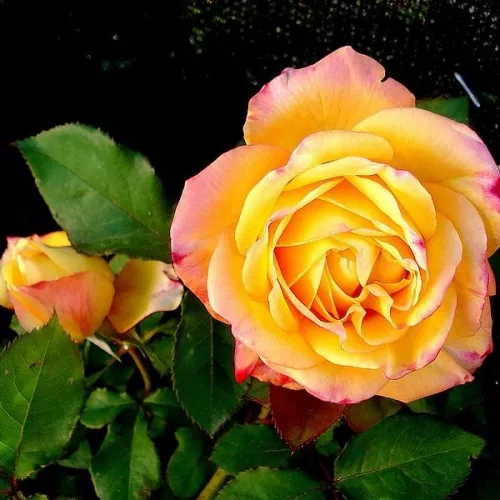
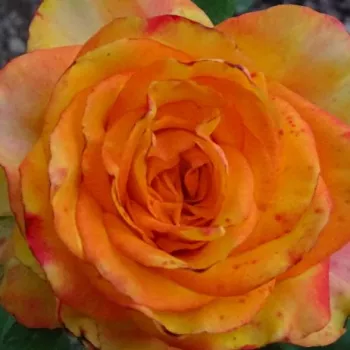
With its lively, colour-shifting blooms, BARGIRA® brings a quietly luxurious, romantic focus to the family garden, perfect beside an arbour or along a cottage-style path where the colour play can really be appreciated. The high-centred, exhibition-quality flowers are ideal for cutting, yet the bush itself remains compact and upright, fitting neatly into smaller plots, front gardens and sunny terraces. In heavier soils it benefits from planting in raised beds or improved drainage, ensuring reliable performance even where winters are cold and damp. As an own-root plant, it is designed for long-term stability, gradually building a strong framework that repays your initial investment season after season. With dense, dark, glossy foliage and only sparse thorns, it looks refined even between flushes and is easier to handle around children and pets. Over time, this rose knits beautifully into an English countryside scheme, rewarding a little regular care with an elegant, storybook display.
Usage options
| Target area |
Reasoning |
| Feature rose for afternoon-tea seating area |
The tall, upright hybrid tea form and large, high-centred blooms give a refined, “occasion” feel beside a bench, pergola or arbour. Regular deadheading and plant protection are needed, but in return you gain a classic, romantic backdrop for relaxed outdoor moments – ideal for the thoughtful homeowner. |
| Cutting bed near the kitchen garden |
BARGIRA® produces florist-style stems with solitary, well-shaped blooms, making it perfect for cutting without stripping the garden of colour. Plant in a sunny row with good air circulation and enjoy the changing yellow-and-pink tones in simple jugs indoors – suited to the creative hobby-gardener. |
| Formal cottage-style front border |
The compact footprint and 75–105 cm height allow structured planting at the front of an average-sized garden without overwhelming paths or windows. Use at recommended spacing for a neat, repeat-flowering line that frames hedging and perennials – attractive for traditionalist garden-owners. |
| Statement container on patio or terrace |
In a 40–50 litre or larger container with quality compost and regular watering, the upright habit and glossy foliage give a smart, tailored look. This suits smaller urban gardens where ground space is limited but a single, refined rose can anchor the seating area – perfect for space-conscious city-dwellers. |
| Mixed cottage-perennial border |
The bright yet sophisticated yellow-to-cream petals with pink edges weave beautifully among blues and whites such as African lily and obedient plant. Its defined form adds structure amid softer perennials, giving a curated, storybook effect – appealing to lovers of romantic cottage-gardens. |
| Planned long-term focal planting |
As an own-root rose, BARGIRA® is intended as a long-horizon garden investment, capable of regenerating from the base if pruned hard or after stress. With consistent care, it can occupy the same spot for many years, maturing into a dependable feature – ideal for forward-planning families. |
| Low-prickle area along narrow paths |
The variety is only lightly armed with prickles, so brushing past it is less likely to snag clothes or skin, a consideration in tight side paths or child-frequented corners. Combine with similarly gentle companions to keep maintenance calmer – reassuring for safety-conscious parents. |
| Sheltered, well-prepared rose bed |
Best results come in a sunny, airy site with improved soil and a regular spraying routine, especially where damp weather can encourage fungus on susceptible roses. In such planned beds, it repays the extra effort with premium garden and vase-quality blooms – rewarding for dedicated rose-enthusiasts. |
Styling ideas
- Cottage Cutting Corner – Plant BARGIRA® in a small block near the kitchen door, underplanted with herbs, to pick sophisticated yellow-pink stems for table vases – for home florists who enjoy seasonal arrangements.
- Romantic Arbour Pair – Flank an arbour with two specimen plants, edging with low St John’s wort to echo the gold tones and create a mellow afternoon-tea setting – for couples curating a cosy retreat.
- Front-Garden Welcome – Combine a short row of BARGIRA® with neatly clipped box or yew and pale perennials for a polished, traditional entrance – for homeowners who like a classic, ordered look.
- Patio Showpiece Pot – Grow a single plant in a generous terracotta container with trailing thyme or lobelia to soften the rim, showcasing each exhibition-style bloom at seating height – for balcony and terrace gardeners.
- Soft-Path Border – Line a narrow path with BARGIRA® interplanted with airy grasses, using its low prickliness to keep access comfortable while still achieving structure – for families using every metre of garden space.
Technical cultivar profile
| Parameter |
Data |
| Name and registration |
Hybrid tea rose from the Le Toscane collection; registered as BARgira, marketed as Bargira® Le Toscane BARgira, yellow-pink exhibition-type blooms suited to cutting and garden display. |
| Origin and breeding |
Bred by Enrico Barni, Rose Barni, Pistoia, Italy, around 2014; parentage not disclosed. Introduced to the market in the 2019/2020 catalogue via Roses Barni as a new hybrid tea cultivar. |
| Awards and recognition |
Audience Award at Alterarosa, Avignon (2020), reflecting strong public appreciation of flower form and colour play in a competitive display setting among contemporary garden roses. |
| Growth and structural characteristics |
Upright, compact bush reaching about 75–105 cm high and 50–70 cm wide, with dense, dark green glossy foliage and relatively few prickles, forming a neat, vertical accent in borders or containers. |
| Flower morphology |
Large, double, high-centred blooms with 26–39 petals, typically borne singly on stems in classic hybrid tea style; remontant habit with a notably abundant second flush when well-maintained and deadheaded. |
| Colour data and phenology |
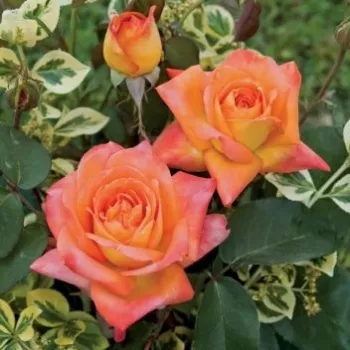
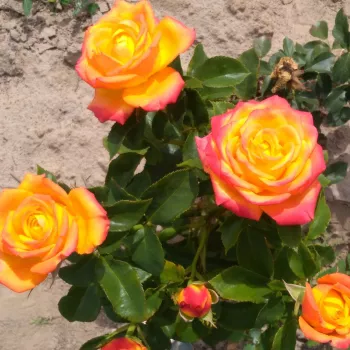
Bright yellow with pink-edged transitions; buds golden yellow with orange-red tips, ageing to buttery yellow and cream with softening pink margins, maintaining good colour retention before gently fading later. |
| Fragrance and aroma |
Essentially unscented hybrid tea; no notable fragrance recorded, and limited pollinator value because the full, double flower form tends to cover the stamens and restrict access to pollen and nectar resources. |
| Hip characteristics |
Rose hip set is generally sparse due to the dense double flowers; where formed, hips are small, ovoid, around 10–14 mm in diameter, and orange-red in colour, adding occasional late-season decorative interest. |
| Resistance and winter hardiness |
Rated to approximately -23 to -21 °C (RHS H7, USDA 6a, Swedish zone 3) but shows moderate susceptibility to powdery mildew and black spot and high susceptibility to rust, requiring regular plant protection. |
| Horticultural recommendations |
Best in sunny, well-drained, fertile soil with consistent watering in heat; suitable for borders, hedging, specimens and large containers, spaced 50–90 cm apart, with ongoing spraying and deadheading for peak display. |
BARGIRA® offers refined exhibition-style blooms, compact upright form and relatively low prickliness in a long-lived own-root plant, making it a considered choice for gardeners ready to invest in a classic feature rose.