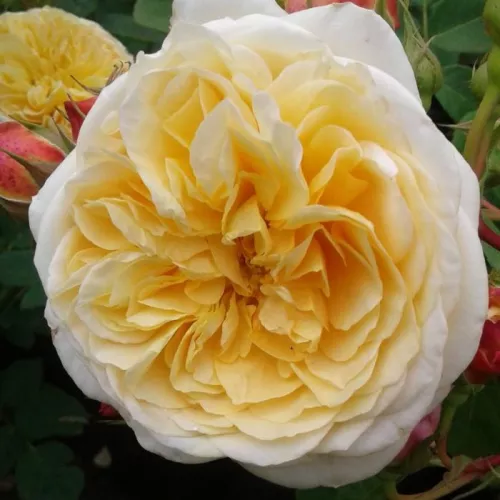
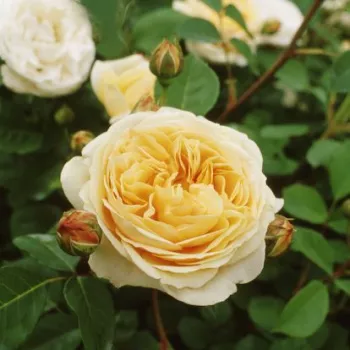
AUSBAKER – yellow climbing rose – English cottage charm for arbours and arches
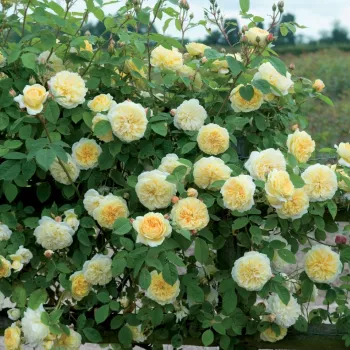
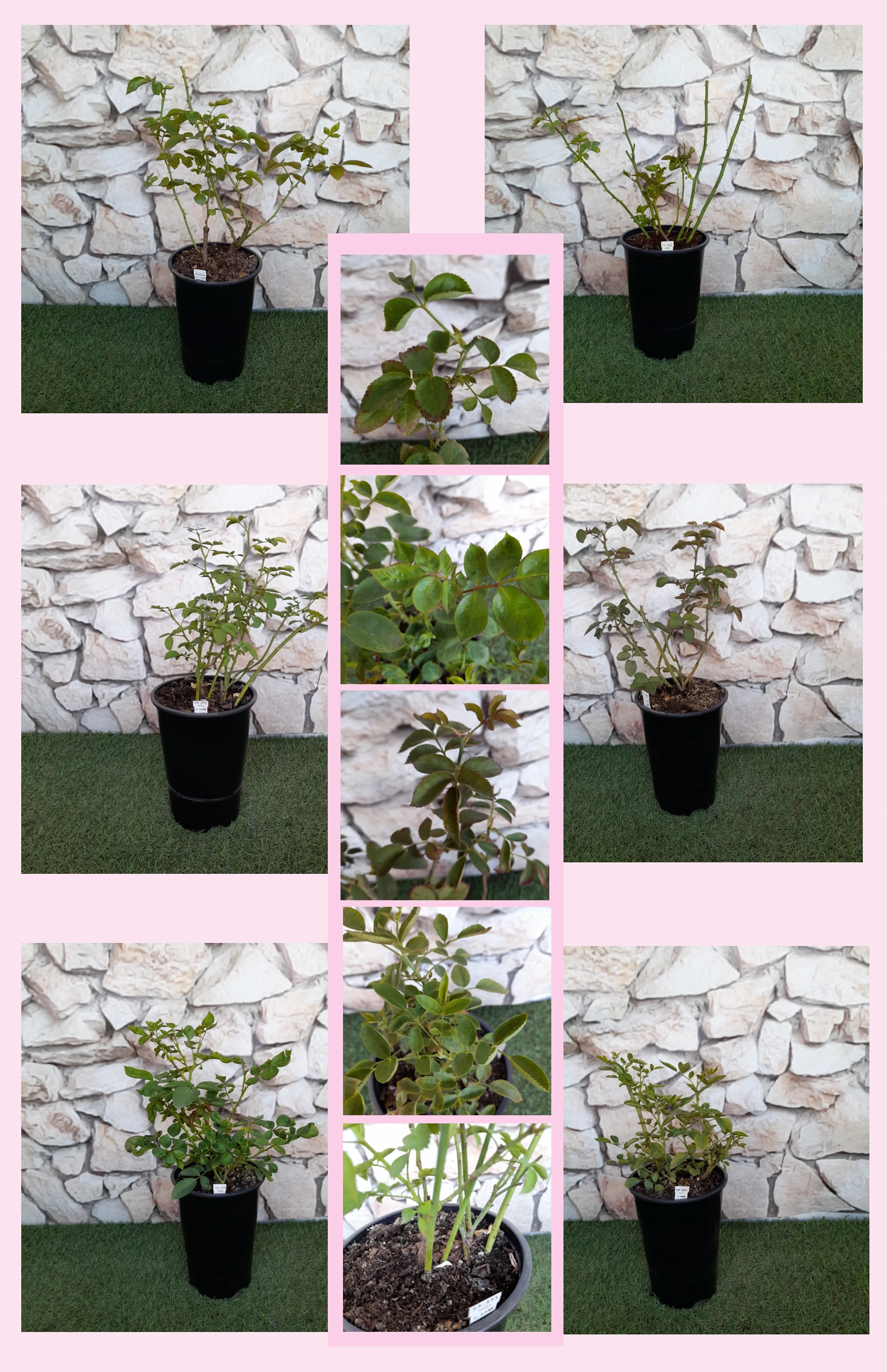
Imagine afternoon tea under an arch of buttery yellow blooms, their fragrance drifting on the breeze while this rose’s naturally bushy stems clothe a wall, arbour or pergola with dark, glossy foliage. AUSBAKER (Teasing Georgia) rewards even time-pressed gardeners with dependable repeat flowering and a graceful, storybook look that suits any traditional cottage-style garden. Planted as a prepared, own-root shrub in our pharmaROSA® ORIGINAL 2-litre container, it establishes steadily and then offers a long, reliable garden life through robust hardiness and easy regeneration. Once settled, its moderate self-cleaning and refined colour changes from deep golden to pale lemon keep the display attractive with simple deadheading. Its strong, award-winning scent and dense foliage also make it ideal for seating areas where you can relax while it copes well with breezy, exposed spots near the coast. Over the seasons, roots establish, shoots build framework, and by the third year this climbing rose reaches its full impact.
Usage options
| Target area | Reasoning |
|---|
| Family seating area or tea corner |
Planted by a bench, terrace or garden table, AUSBAKER delivers strong, classic tea-and-myrrh scent, creating a romantic, intimate atmosphere for everyday use without demanding expert care; ideal for scent-loving family gardeners |
| Arbour, arch or pergola entrance |
Its bushy climbing habit and dense foliage quickly cover arches and arbours, framing paths or entrances with golden to pale yellow rosettes and giving a storybook cottage feel; ideal for romantic cottage-style enthusiasts |
| Sunny house wall or sturdy fence |
Trained against a wall or strong fence, this climber forms a long-lived vertical feature with repeat flushes and moderate self-cleaning, needing only basic tying-in and seasonal pruning; suited to busy, space-conscious homeowners |
| Small to medium family garden border |
Used as a backdrop in a mixed border, its refined colour and dark green foliage combine easily with perennials, giving structure through the season without complex maintenance; perfect for hobby gardeners building character |
| Cottage-style kitchen or cutting garden |
Richly double, long-stemmed blooms work well in informal jugs indoors, while the plant remains productive outside, giving a traditional, “home-grown bouquet” feel; attractive to home decorators and cut-flower fans |
| Partially shaded side path or courtyard |
Its tolerance of partial shade lets you brighten less-sunny walls or paths, maintaining good flowering and colour where many other climbers struggle, particularly in enclosed urban plots; helpful for town gardeners with tricky light |
| Wind-exposed or coastal-style spot |
The dense foliage and flexible, bushy canes anchor well when tied to supports, coping with blustery conditions so petals and framework remain attractive even in unsettled weather; reassuring for gardeners in breezy locations |
| Long-term focal point on its own roots |
As an own-root plant it ages gracefully, can regrow from lower buds after pruning or setbacks, and keeps its ornamental character for many years with straightforward seasonal care; ideal for buyers seeking lasting investment |
Styling ideas
- Arbour-romantic – Train AUSBAKER over a wooden arbour, underplant with lavender and catmint to echo its yellow tones and scent – for couples creating a cosy tea-and-reading corner
- Kitchen-border – Mix this rose with herbs, daylilies and cottage vegetables for a lived-in, farmhouse feel – for families who like ornamental and useful plants side by side
- Creamy-pastel – Combine its soft yellow blooms with white phlox, pale pink roses and silvery foliage for a gentle, feminine palette – for admirers of “girly” English country gardens
- Fence-dresser – Use AUSBAKER to soften a plain fence, adding Lonicera nitida as low evergreen structure – for homeowners wanting quick vertical colour with simple upkeep
- Patio-feature – Grow it in a 40–50 litre container with a sturdy obelisk, close to the house for easy scent enjoyment – for busy urban gardeners with limited planting space
Technical cultivar profile
| Trait | Data |
|---|
| Name and registration |
Climbing English Rose from David Austin, registered as AUSbaker and widely known as ‘Teasing Georgia’; shrub-form climber supplied as a premium own-root plant in a 2-litre container. |
| Origin and breeding |
Bred in 1987 in Albrighton, United Kingdom, from ‘Charles Austin’ crossed with an unnamed seedling; introduced after 2000 by David Austin Roses Ltd and recognised as a classic modern climber. |
| Awards and recognition |
Holds the RHS Award of Garden Merit for dependable garden performance and won the Henry Edland Medal for fragrance in 2000, alongside further national and international show distinctions. |
| Growth and structural characteristics |
Bushy, large-flowered climber reaching about 1.8–2.7 m tall and 0.9–1.4 m wide, with dense, slightly glossy dark green foliage and moderate prickliness; some spent blooms need deadheading. |
| Flower morphology |
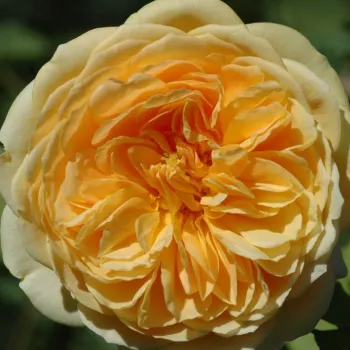
Large, very double rosette blooms with more than 40 petals, usually borne singly on the stem; strongly remontant with a generous second flush that extends ornamental value well into late summer. |
| Colour data and phenology |
Rich golden yellow with paler lemon outer petals; buds open deep yellow, then fade through buttery shades to soft cream, often showing a two-tone effect as outer petals lighten earlier than the centres. |
| Fragrance and aroma |
Strong, noticeable perfume combining classic tea rose notes with a distinct myrrh character, best appreciated near seating or paths; very double flowers mean high ornamental value rather than pollinator support. |
| Hip characteristics |
Occasional small, spherical orange-red hips, around 8–12 mm in diameter; visually interesting late in the season but not produced in heavy quantities, and generally of secondary ornamental importance. |
| Resistance and winter hardiness |
Hardy to approximately −26 to −23 °C (RHS H7; USDA 5b; Swedish zone 4); disease-prone foliage needs regular monitoring and protection, plus consistent watering in warm or dry spells for best results. |
| Horticultural recommendations |
Best on walls, fences, pergolas or arches at 1.4–2.25 m spacing; prefers full sun to partial shade, fertile, well-drained soil, yearly pruning and routine disease control for sustained flowering displays. |
AUSBAKER offers richly fragrant golden rosettes, romantic climbing structure and long-lived own-root resilience; a thoughtful choice if you would like a graceful, enduring feature rose.