APRICOT QUEEN ELIZABETH – apricot-pink bedding grandiflora rose - Verschuren
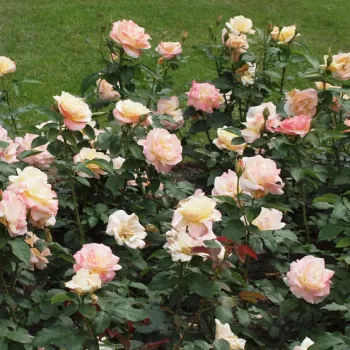
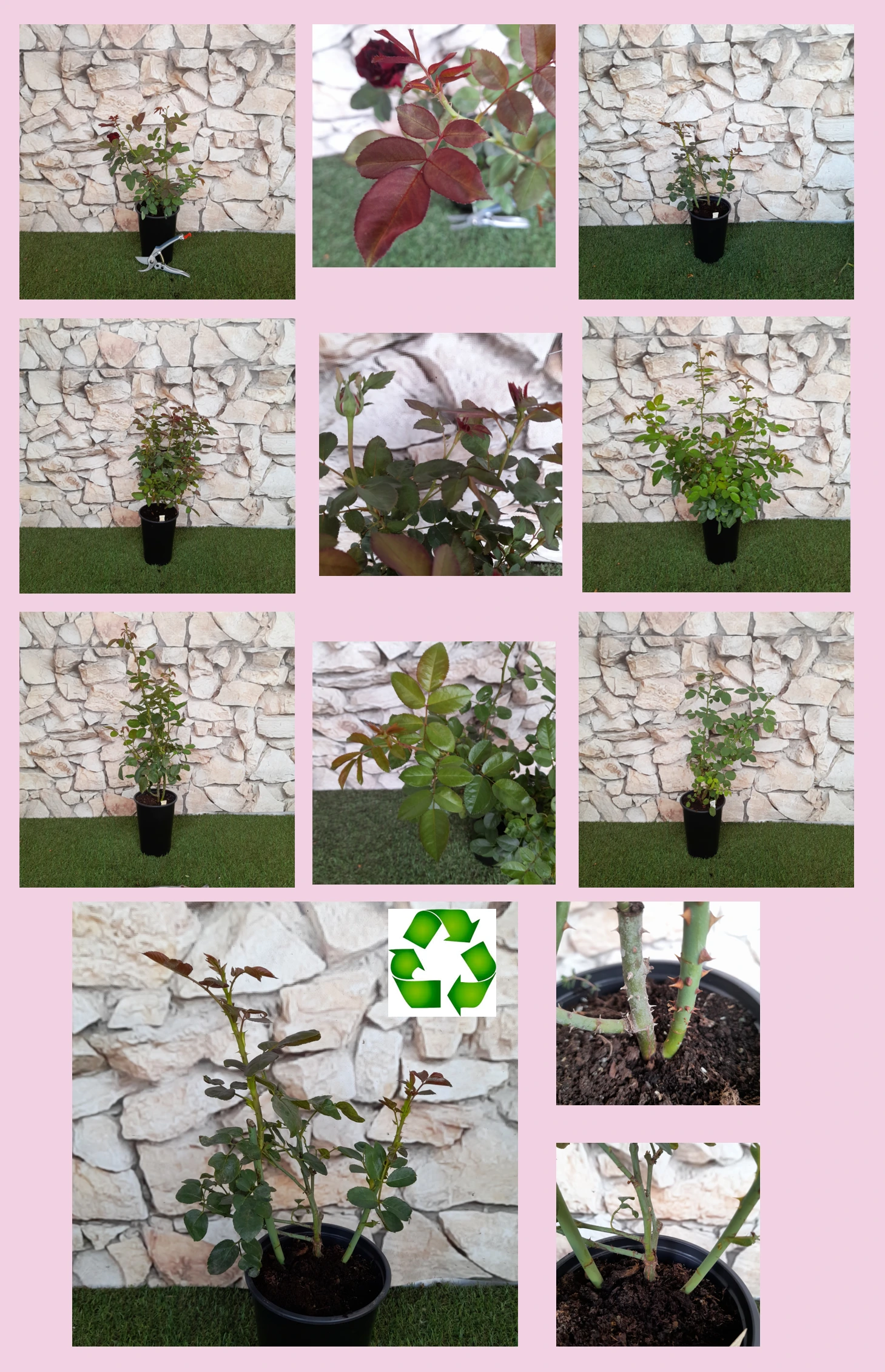
Understated, apricot-toned clusters make APRICOT QUEEN ELIZABETH an inviting focal point for family gardens, bringing a gentle, romantic feel to small borders and mixed cottage-style beds. This compact, upright shrub sits comfortably among herbs, perennials and low hedging, coping reliably even in breezier, wetter sites where careful soil preparation improves drainage on heavy ground. Planted as an own-root rose in the pharmaROSA® ORIGINAL 2-litre form, it offers reassuring stability, regrowing from its own wood if cut back hard and maturing into a long-lived, reliable feature. Large, well-formed blooms appear in generous clusters from early summer, followed by a rich second flush, giving months of soft colour for cutting and for viewing from the kitchen window. The fragrance is surprisingly intense for a bedding rose, with a sweet, lingering scent that suits seating areas and paths. With medium maintenance needs and upright, bushy structure, it fits neatly into modest plots and is suitable for deeper containers of at least 40–50 litres. Over time its glossy, dark foliage and balanced habit help anchor planting schemes, while its own-root resilience promises enduring character in a busy household garden.
Usage options
| Target area |
Reasoning |
| Front garden focal point near the entrance |
The upright, bushy structure stays compact, creating a tidy, formal-looking shrub that frames paths and driveways without overwhelming smaller spaces or needing complex pruning, ideal for a welcoming impression for the homeowner. |
| Classic cottage-style mixed border |
Months of romantic, peach-pink clusters weave easily among perennials and herbs, giving reliable, repeating colour that softens fencing and sheds while suiting relaxed cottage schemes for the cottage-garden enthusiast. |
| Cutting patch beside a kitchen garden |
Long-stemmed clusters and strong, sweet fragrance provide vasefuls of blooms through the season, so you can cut generously without stripping the plant, a pleasure for the home flower-arranger. |
| Low flowering hedge or boundary line |
Regular, remontant flowering and consistent height create a softly formal, low hedge that defines spaces yet remains easy to look after, bringing structure and seasonal charm for the family gardener. |
| Large container on patio or roof terrace |
Its contained habit and dense foliage suit a 40–50 litre pot, where dependable flowering and fragrance enrich seating areas with minimal tasks, a practical choice for the busy urban gardener. |
| Exposed or coastal-leaning suburban plots |
The sturdy, well-branched shrub copes with regular wind and wet spells once established, especially where planting improves drainage on heavier soils, offering reassuring performance for the weather-conscious buyer. |
| Long-term planting in a family garden |
As an own-root plant it can regenerate from its base after hard pruning or damage, building into a durable, future-proof shrub that remains ornamental for many years for the long-term planner. |
| Developing borders over the first three years |
It settles quickly: first focusing on root establishment, then building stronger shoots and branching, before reaching full floral impact around the third year, giving steadily improving results for the patient beginner. |
Styling ideas
- Kitchen-table – Plant in a cutting strip with lavender and sage for scented, pastel bunches carried straight indoors – ideal for the home flower-arranger.
- Cottage-edge – Line a path with alternating plants and low box or dwarf lavender to create a romantic, storybook walkway – perfect for the cottage-garden enthusiast.
- Patio-arbour – Place a large pot beside a simple timber arch, underplanted with thyme, so blooms and fragrance frame your seating – suited to the terrace relaxer.
- Soft-screen – Use as a low, flowering screen in front of taller shrubs, echoing its peach tones with foxgloves and pale salvias – appealing to the privacy-focused family.
- Sunset-bed – Combine with warm-toned perennials like kniphofia and yarrow to build a sunset palette that glows in evening light – ideal for the after-work gardener.
Technical cultivar profile
| Characteristic |
Data |
| Name and registration |
APRICOT QUEEN ELIZABETH, a bedding grandiflora rose from the Grandiflora group; ARS exhibition name APRICOT QUEEN ELIZABETH, marketed in bedding rose collections under the Verschuren trade designation. |
| Origin and breeding |
Sport of the renowned ‘Queen Elizabeth’ cultivar, bred and introduced by H.A. Verschuren & Zonen in the Netherlands around 1980, combining classic grandiflora form with softer apricot-peach colouring. |
| Awards and recognition |
Awarded Top-Rose status in competition, reflecting dependable garden performance, attractive bloom form and overall ornamental value considered suitable for wider bedding and landscape use. |
| Growth and structural characteristics |
Upright, bushy shrub 75–105 cm high and 50–70 cm wide, with dense, glossy, dark green foliage and moderate prickliness; holds its shape well in beds, hedging rows and as a compact specimen. |
| Flower morphology |
Large, double, cup-shaped flowers with 26–39 petals, mostly borne in clusters on sturdy stems; remontant habit gives an abundant second flush of blooms during the main growing season. |
| Colour data and phenology |
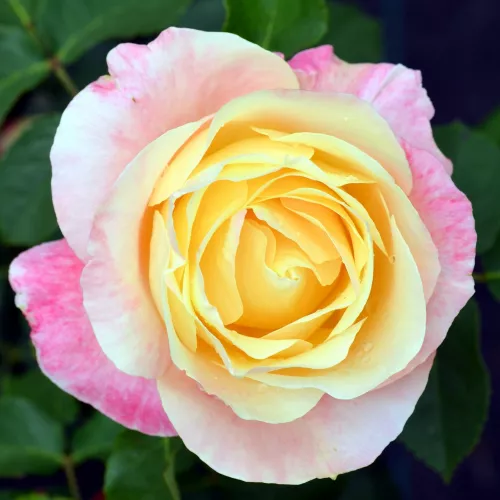
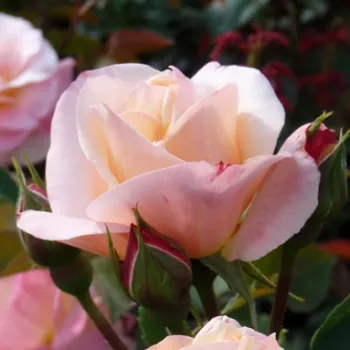
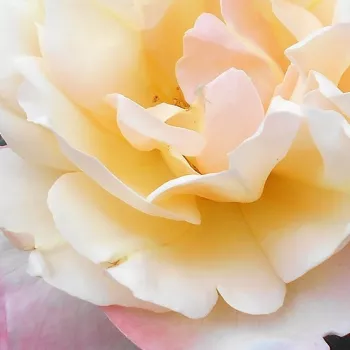
Peach-pink flowers (ARS Ab; RHS 24C outer, 25B inner), opening light peach-orange with salmon flush, then softening to creamy peach-pink with a gentle yellow glow; colour lightens somewhat in strong sun. |
| Fragrance and aroma |
Strong, long-lasting fragrance with a slightly sweet character, noticeable at close quarters and around seating areas; heavily double blooms offer limited pollen access and are mainly ornamental rather than wildlife-focused. |
| Hip characteristics |
Hip production generally low due to double flowers; occasional ovoid, orange-red hips 13–17 mm in diameter may form late season, adding modest seasonal interest without significant self-seeding. |
| Resistance and winter hardiness |
Hardy to approximately −26 to −23 °C (RHS H7, USDA 5b, Sweden zone 4); moderate overall disease resistance with good black spot tolerance, plus reasonable heat and short-period drought resilience. |
| Horticultural recommendations |
Best in full sun with well-prepared, freely draining soil; plant 35–40 cm apart for hedging and bedding, or 65 cm as a specimen. Maintenance moderate, including deadheading and occasional pest and disease checks. |
APRICOT QUEEN ELIZABETH offers romantic, repeat-flowering clusters, a space-efficient upright habit and long own-root resilience, making it a thoughtful, enduring choice for your next garden rose.