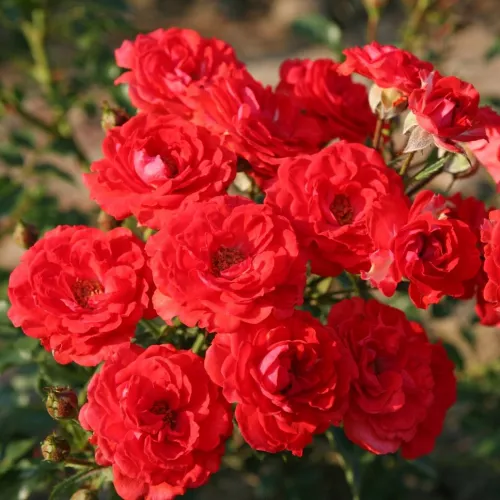
Zwergenfee 09® – raspberry-red Lilliputs® dwarf mini rose
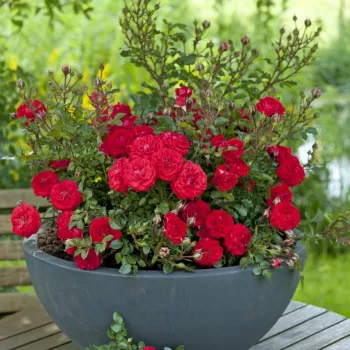
Compact and abundantly flowering, Zwergenfee 09® creates a charming, storybook focus even in the smallest garden corners, settling happily into breezy, coastal-style plots and other gardens where summer showers and stronger winds are a fact of life. Its remontant clusters of raspberry-red blooms give a long, colourful season, while its bushy, low habit fits beautifully beside paths, in front of cottage borders or in larger containers on patios. Own-root durability supports a naturally long-lived, regenerating plant that copes well with family life and busy schedules as it moves from steady establishment to full garden impact across three seasons. The neat shape, glossy foliage and award-winning garden value make this rose an easy choice for relaxed, cottage charm and low-fuss patios, while its dwarf stature is ideal for borders, small gardens and containers, giving colour and a softly romantic feel with minimal effort.
Usage options
| Target area | Reasoning |
|---|
| Front of mixed cottage border |
The low, bushy habit forms a neat edging that hides bare soil and the bases of taller perennials, while continual clusters of raspberry-red blooms keep the border lively between main flowering peaks; ideal for those seeking relaxed structure in a family cottage setting for the home gardener. |
| Patio containers and roof terraces |
The compact size and upright shape suit large pots of 40–50 litres or more, where roots have room to develop and the foliage stays dense; easy to enjoy close to the house with simple watering and a light annual trim for the busy owner. |
| Low formal edging or mini hedge |
Regular spacing creates a tidy, low hedge that frames paths or separates lawn from beds, combining miniature scale with dependable repeat flowering, without demanding complex pruning or constant shaping for the orderly gardener. |
| Family front garden with limited time |
Its naturally compact structure and low maintenance needs keep it looking composed beside driveways and front paths, with self-cleaning blooms reducing deadheading so it remains attractive even when gardening time is short for the time-pressed. |
| Urban courtyard or balcony-style planting |
Tested tolerance of urban conditions and moderate drought resilience mean it fits well into courtyard beds and city planters, provided regular watering in prolonged dry spells, bringing a soft, romantic look to hard landscaping for the city dweller. |
| Small pollinator-friendly corner |
Semi-double, open flowers offer accessible stamens, so bees and other visitors can feed between showers while you still enjoy a refined, ornamental look rather than a wildflower style for the nature lover. |
| Coastal or wind-exposed family plots |
The sturdy, low, bushy framework and dense, glossy foliage help it remain stable and attractive where gusts and summer showers are frequent, bringing reassuring colour and structure when weather is changeable for the practical gardener. |
| Long-term, low-fuss planting schemes |
Own-root growth supports a long lifespan, reliable regrowth from the base and stable ornamental value, making it suitable for schemes where you prefer light annual pruning rather than frequent replacement or intensive care for the planner. |
Styling ideas
- Cottage edging drift – Plant a ribbon along a path and weave between low clumps of Campanula persicifolia for a soft, romantic cottage walk – suited to those who favour gentle structure and easy upkeep.
- Patio tea corner – Place two or three in generous 50-litre terracotta containers beside a small bistro set, underplanted with white violas – ideal for afternoon tea lovers who want impact in a compact space.
- Kitchen-garden frame – Use as a pretty, low edging around raised vegetable beds, interspersed with Liatris spicata 'Alba' to tie flowers and produce together – for gardeners who enjoy a productive yet ornamental plot.
- Urban calm strip – Line a narrow bed by a wall or fence, softening brick and paving while staying neat and manageable – for city households wanting order and colour without complex maintenance.
- Mini meadow accent – Combine with Stipa tenuissima 'Pony Tails' and low white perennials, letting grasses sway around the compact red clusters – for those who like a naturalistic feel in a small area.
Technical cultivar profile
| Parameter | Data |
|---|
| Name and registration |
Zwergenfee 09® (KORzweenu), Lilliputs® collection miniature shrub; ARS exhibition name Zwergenfee 09®, commercial type dwarf mini rose for beds, borders and patio containers. |
| Origin and breeding |
Bred by W. Kordes & Sons, Germany; parentage undisclosed. Introduced to the market in 2009 through W. Kordes’ Söhne, continuing the firm’s focus on healthy, compact garden roses. |
| Awards and recognition |
ADR-certified variety with multiple international patio rose awards, including Tokyo Bronze Medal 2009, Belfast Best Patio 2012, Glasgow Gold Medal 2013 and Australian Silver Medal 2013. |
| Growth and structural characteristics |
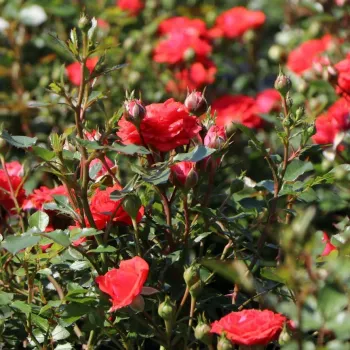
Miniature shrub 35–45 cm high and 30–40 cm wide, bushy upright habit with dense, glossy dark green foliage and moderate prickles; suitable for edging, bedding and container use. |
| Flower morphology |
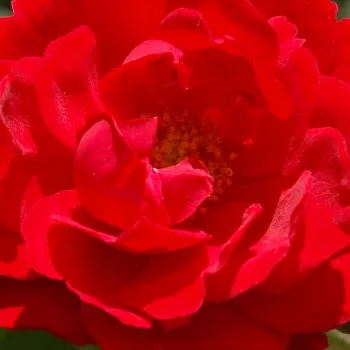
Semi-double, cupped blooms with 13–25 petals, small size in clusters; remontant with generous repeat, especially a strong second flush, partially self-cleaning and responsive to light deadheading. |
| Colour data and phenology |
Bright raspberry-red flowers with slight orange-red undertone; RHS Red 45B outer, 45C inner. Colour lightens gently to rose-red with paler edges as blooms mature and fade, retaining good overall brightness. |
| Fragrance and aroma |
No noticeable fragrance; emphasis is on visual effect, repeat flowering and neat form. Semi-double, open blooms contribute seasonal interest and support pollinator activity in mixed plantings. |
| Hip characteristics |
Produces small, spherical orange-red hips, about 7–9 mm in diameter, in moderate quantities, adding a discreet autumn accent without dominating the compact shrub. |
| Resistance and winter hardiness |
Good overall disease resistance; resistant to powdery mildew, moderate against black spot, resistant to rust. Hardy to around –26 °C (RHS H7, USDA 5b, Swedish Zone 4), suitable for most UK sites. |
| Horticultural recommendations |
Best in full sun with reasonable drainage; low maintenance, needing only occasional deadheading and light pruning. Recommended spacing 25–50 cm depending on use, plus regular watering in extended dry spells. |
Zwergenfee 09® offers compact raspberry-red flowering, container-friendly growth and enduring own-root reliability; a thoughtful choice if you want long-lived colour with very little fuss.