ZENTA – burgundy dwarf mini rose – Márk
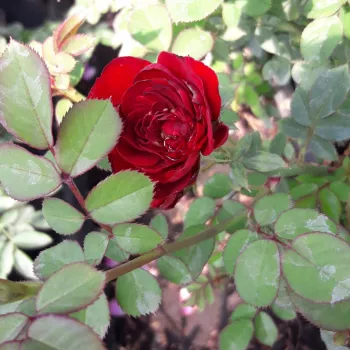
With its compact habit and velvety burgundy blooms, ZENTA brings a touch of romantic cosiness to even the smallest family garden, edging or balcony. This own-root miniature rose is designed for straightforward, low-fuss planting, settling quickly and performing reliably in containers or tight borders where space is at a premium. Once established it offers steady repeat flowering across the season, forming dense, bushy structure that frames paths, rock gardens and cottage-style beds with a neat, storybook look. Its drought-tolerant character supports gardens that face drying winds and spells of weather that challenge watering routines, helping it cope where summers are warmer or busier lifestyles limit hose time. Deep, enduring colour means the flowers hold their rich tone without quickly washing out, remaining a striking foil to herbs and perennials in a kitchen or country-style scheme. In larger pots of at least 40–50 litres it becomes a reliable balcony or patio feature, with tidy maintenance needs and simple seasonal care. As an own-root plant, ZENTA ages gracefully with stable ornamental value, regenerating from the base and rewarding you with many years of dependable performance.
Usage options
| Target area |
Reasoning |
| Small family front garden border |
The dwarf, compact habit (around 35–45 cm high) makes ZENTA ideal for tight front borders where you want structure without blocking windows or paths. Its bushy framework builds a low hedge feel with minimal pruning – suitable for busy homeowners |
| Balcony rail planters and large containers |
As a true miniature rose with dense foliage and clustered blooms, it is perfectly sized for balcony troughs and large pots of 40–50 litres or more, giving a refined cottage look without demanding complex care – ideal for urban balcony gardeners |
| Romantic cottage-style edging |
The regular, small, cup-shaped flowers and neat spread (20–30 cm) create a storybook edging along paths, herb beds or kitchen gardens, echoing English cottage gardens while staying easy to manage – reassuring for traditional-style enthusiasts |
| Low-maintenance rock garden accent |
Good drought tolerance and moderate disease resistance allow ZENTA to cope with sunnier, freer-draining rock garden spots, providing pockets of rich burgundy colour among stones and gravel with only occasional attention – suitable for time-pressed gardeners |
| Season-long colour by patios and seating |
Its good remontant habit means several flushes of bloom from late spring, so a small group near a terrace or bench gives ongoing colour through family summers, with only light deadheading and shaping as optional tasks – attractive to low-fuss buyers |
| Clay or chalky suburban plots |
Once established in well-prepared soil or raised beds, the sturdy root system anchors well and handles drier spells, making it a sound choice where drainage is imperfect and watering is occasional in typical family gardens – reassuring for suburban owners |
| Long-lived structural planting near paths |
The own-root form builds strength gradually, with the first year focusing on roots, the second on top growth and the third delivering full garden presence, so it matures into a durable, easily refreshed edging line – beneficial for long-term planners |
| Colour-coordinated cottage and kitchen gardens |
The stable, velvety burgundy flowers hold their depth well, pairing beautifully with purples, soft pinks and silvery foliage, and standing up to breezier, more exposed corners where wind and rain might dull lighter colours – appealing for cottage-garden lovers |
Styling ideas
- Tea-path edging – Plant a low ribbon of ZENTA along a gravel path leading to your seating area, interplanted with lavender and thyme for scent and a timeless afternoon-tea mood – for cottage-border romantics
- Balcony jewel box – Place two or three plants in a 50-litre container with trailing thyme and dwarf grasses, giving a neat, easy-care focal point outside French windows – for balcony and small-terrace dwellers
- Kitchen-garden frame – Use ZENTA in a single row around raised vegetable beds, its compact, repeat flowering line softly framing salad patches without shading crops – for home-growers who like order and charm
- Rockery accent – Tuck plants among rocks with drought-tolerant companions like Calamintha and Liatris, letting the burgundy flowers punctuate grey stone and gravel – for gardeners seeking colour with little fuss
- Cosy patio trio – Group three containers near a bench, combining ZENTA with soft pink echinacea and airy calamint for a relaxed, storybook sitting corner – for families creating a romantic, low-maintenance retreat
Technical cultivar profile
| Parameter |
Data |
| Name and registration |
ZENTA is a miniature, dwarf rose from the Mini - dwarf rose collection; commercial type dwarf mini rose, ARS exhibition name ‘Zenta’, marketed as Zenta – burgundy dwarf mini rose – Márk. |
| Origin and breeding |
Bred by Márk Gergely in Hungary, 2002; parentage unknown, introduced by PharmaRosa® Ltd., own-root production for reliable identity and long-term garden performance. |
| Growth and structural characteristics |
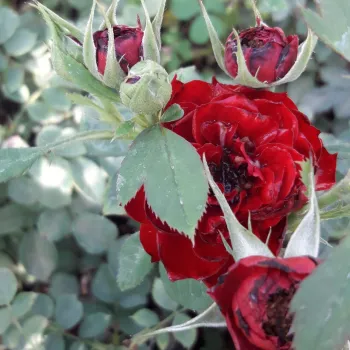
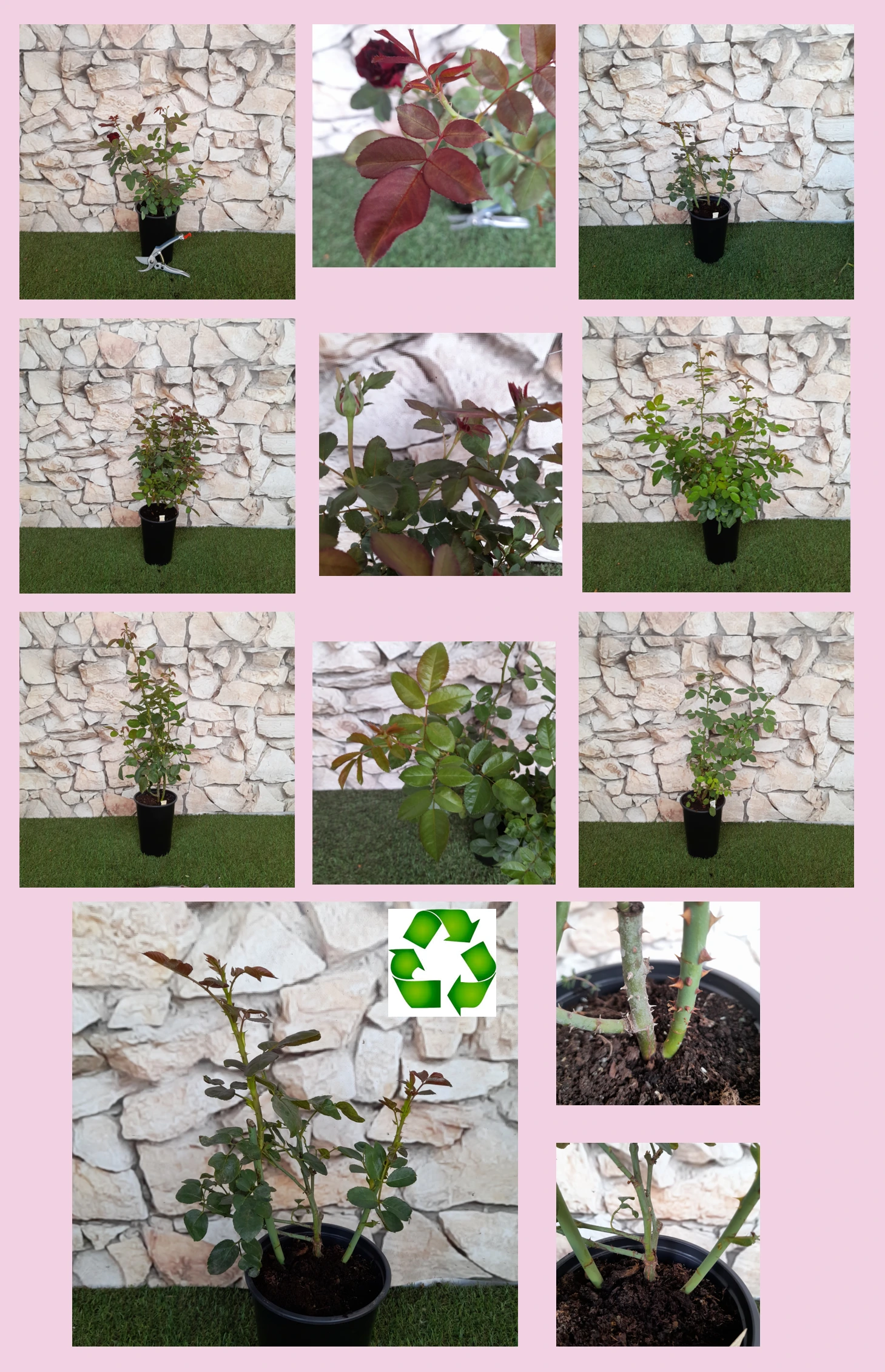
Compact, bushy dwarf plant, around 35–45 cm high and 20–30 cm spread, with dense mid-green, slightly glossy foliage and moderate prickles, forming a neat, low cushion in borders or containers. |
| Flower morphology |
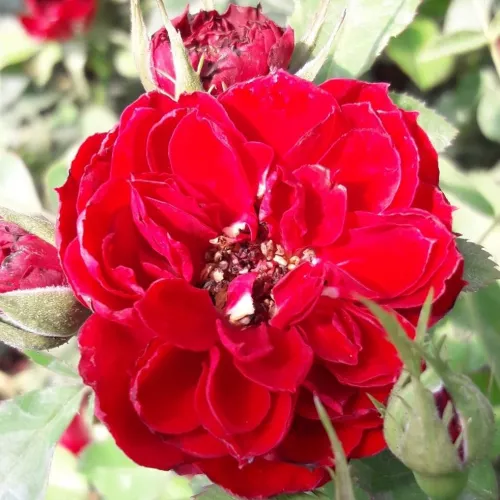
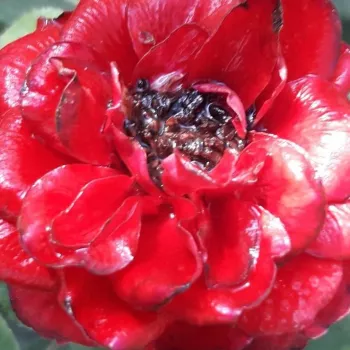
Small, double, cup-shaped blooms (26–39 petals, 0.5–1.5 in), produced in clusters of 3–10 per stem, with good repeat flowering that provides several decorative flushes across the growing season. |
| Colour data and phenology |
Uniform, velvety dark burgundy flowers (RHS 187A–187B) that fade very little, often darkening with a faint purplish or lilac veil toward petal edges before ageing, keeping their richness on the plant. |
| Fragrance and aroma |
No noticeable scent; grown primarily for colour and form rather than perfume. Double blooms partly conceal the stamens, so overall pollinator appeal is modest compared with single-flowered varieties. |
| Hip characteristics |
Occasional, small spherical hips, around 5–7 mm in diameter, bright red (RHS 44A), produced sparsely and of mainly ornamental interest; not a heavy fruiting variety in normal garden conditions. |
| Resistance and winter hardiness |
Moderate disease resistance to black spot, powdery mildew and rust; H5 hardy to about -12 to -9 °C, Swedish zone 1, USDA 8a, with generally good drought tolerance and average heat tolerance. |
| Horticultural recommendations |
Best for containers, balconies, borders and rock gardens, at 20 cm spacing or 23–26 plants/m²; prefers well-drained soil, moderate feeding and occasional plant protection when disease pressure is high. |
ZENTA offers compact, long-lasting burgundy colour with repeat flowering in small spaces, combining durable own-root growth with easy container use; a thoughtful choice if you want dependable charm with modest ongoing care.