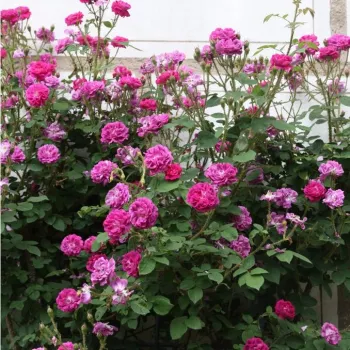
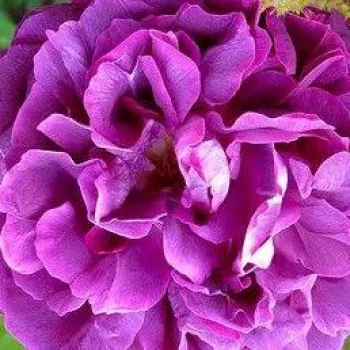
WILLIAM LOBB – deep purple historic moss rose - Laffay
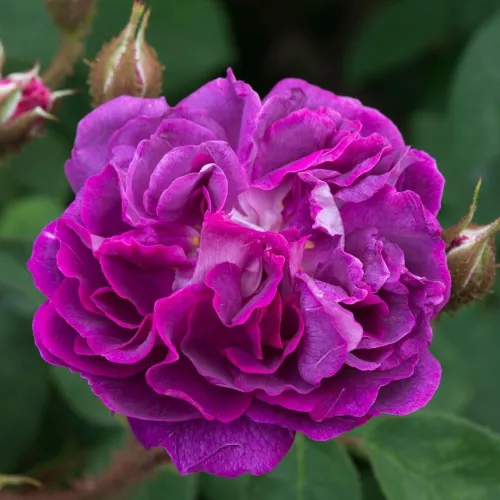
Step into a romantic, storybook corner of the garden with ‘William Lobb’, a historic moss rose whose richly textured buds and deep violet blooms bring instant character to a cottage-style border. This tall, upright shrub creates a natural, slightly arching screen, ideal behind a kitchen-garden bed or framing a seating nook for afternoon tea. Once established, its robust root system helps it cope with blustery, damp British weather and heavier soils, even where wind and rain test plants in exposed gardens close to the sea. Though it flowers once, the generous clusters of large, rosette blooms provide a memorable early-summer spectacle, followed by occasional red–orange hips that extend seasonal interest. Strong, long-lasting fragrance adds a nostalgic ambience, while the own-root form supports steady longevity, reliable regrowth from the base, and a shrub that settles into its place for the long term.
Usage options
| Target area |
Reasoning |
| Romantic cottage-garden backdrop |
The tall, upright, slightly arching habit and 150–230 cm height make ‘William Lobb’ an excellent backdrop for cottage-style borders, pairing beautifully with perennials and herbs while giving long-lived structure for traditional-family-garden buyers who love nostalgic planting for the family. |
| Feature shrub by seating or arbour |
Strong, full-bodied fragrance and large, rosette, deep purple flowers create a dramatic, once-a-year show that makes sitting beneath an arbour or by a bench feel like a special early-summer event for homeowners seeking a scented focal point near their patio. |
| Historic-rose collector’s specimen |
As an 1855 moss rose with an RHS Award of Garden Merit, this cultivar offers heritage value, textured mossy buds and distinctive colour changes that appeal to enthusiasts wanting a characterful, long-term specimen for their collection. |
| Loose flowering hedge in informal gardens |
Planted at 110 cm for hedging, the tall, prickly, moderately dense shrub creates a traditional, slightly wild-looking barrier that suits informal, storybook-style plots and helps define garden “rooms” for cottage-garden lovers who prefer softer, non-formal boundaries. |
| Mixed bed with kitchen-garden plants |
Its historic character and once-flowering habit pair naturally with vegetables, herbs and late-summer perennials, giving early-season height and romance before other crops peak, ideal for rural kitchen-garden owners wanting ornamental structure around their allotment. |
| Partial-shade corner needing height |
Suitable for partial shade, this rose copes where full sun is limited, such as north‑east facing boundaries, still delivering richly coloured blooms and scent for busy householders making the most of awkward corners near their home. |
| Coastal or weather-exposed family garden |
Once established on its own roots, the tall, firmly anchored shrub offers reassuring stability and seasonal presence, even where wind and frequent showers challenge less robust roses, supporting families in blustery areas close to the sea who value resilient planting. |
| Wildlife-friendly, low-intervention corner |
Where spent blooms are left on, occasional red–orange hips appear, adding colour and light wildlife interest into autumn; allowing some natural ageing suits gardeners who like a slightly wilder, relaxed corner away from the high‑maintenance lawn. |
Styling ideas
- Cottage-hedge frame – Create a loose hedge with plants at 110 cm intervals, underplanted with nepeta and hardy geraniums to soften the base – ideal for families wanting a traditional country-garden feel along paths or driveways.
- Arbour showpiece – Position one or two shrubs beside a timber seat or rose arbour, weaving climbers above and letting ‘William Lobb’ provide fragrant, once‑a‑year drama – suited to homeowners who enjoy afternoon tea outdoors.
- Kitchen-garden accent – Place as a tall focal shrub at the end of vegetable beds, backed by hazel hoops and flanked by herbs like sage and chives – perfect for rural kitchen gardeners who like ornament and utility side by side.
- Collector’s corner – Group with other heritage roses and period perennials such as campanula and foxglove for a small historic-rose walk – attractive to enthusiasts curating a character-rich, storytelling planting scheme.
- Shady-border lift – Use in a part‑shade border with ferns, Astrantia and white foxgloves so the smoky purple flowers glow against cool greens – suited to busy urban gardeners seeking impact where sunlight is limited.
Technical cultivar profile
| Parameter |
Data |
| Name and registration |
Historic moss shrub rose marketed as William Lobb – deep purple historic moss rose - Laffay; ARS exhibition name ‘William Lobb’; unregistered cultivar widely treated as a classic heritage rose. |
| Origin and breeding |
Raised in France by Jean Laffay and introduced in 1855; a moss rose seedling believed to descend from ‘Gloire des Mousseux’, maintaining strong moss characteristics on buds and young stems. |
| Awards and recognition |
Holds the Royal Horticultural Society Award of Garden Merit (1993), indicating reliable garden performance, reasonable availability and distinctive ornamental value when grown in suitable conditions. |
| Growth and structural characteristics |
Upright, slightly arching shrub reaching 150–230 cm high and 100–160 cm wide, densely thorned with moderately dense, dark green, slightly glossy foliage; overall effect robust and architectural. |
| Flower morphology |
Large, double, rosette-shaped blooms, 26–39 petals, typically borne in clusters; not remontant, providing one main flowering period, followed by some natural ageing of blooms if not deadheaded. |
| Colour data and phenology |
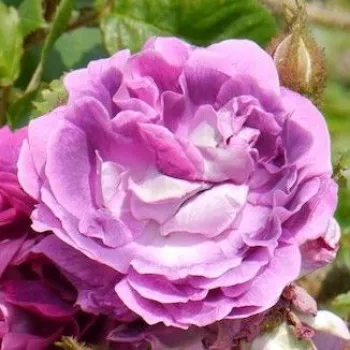
Closed buds dark violet–purple; newly opened blooms deep crimson-purple with pink-lilac sheen; colour softens to smoky greyish-lilac, then silvery tones in strong sun; ARS m, RHS 61B outer, 60B inner. |
| Fragrance and aroma |
Strong, rich, full-bodied fragrance that lingers around the shrub in still air; classic old-rose character that enhances seating areas and cottage-style borders during the main flowering period. |
| Hip characteristics |
Occasionally forms ovoid rose hips, approximately 14–22 mm across, coloured red–orange (RHS 40A); hips extend interest into later season if some spent blooms are left in place. |
| Resistance and winter hardiness |
Very hardy shrub to about −32 to −29 °C (USDA 4b, RHS H7, Swedish zone 5); disease susceptibility medium for mildew and black spot, very susceptible to rust, benefits from regular monitoring. |
| Horticultural recommendations |
Best as specimen, bed or park shrub at 110–180 cm spacing; prefers well-drained soil, responds to winter pruning; maintain airflow and consider protective sprays where rust pressure is high. |
‘William Lobb’ offers a tall, romantic historic presence, richly scented early-summer flowering and enduring structure, with own-root resilience supporting long-term garden value; consider it where you would enjoy a single, memorable flush each year.