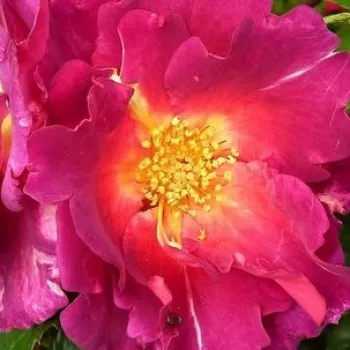
WILD ROVER – deep purple park rose – Dickson
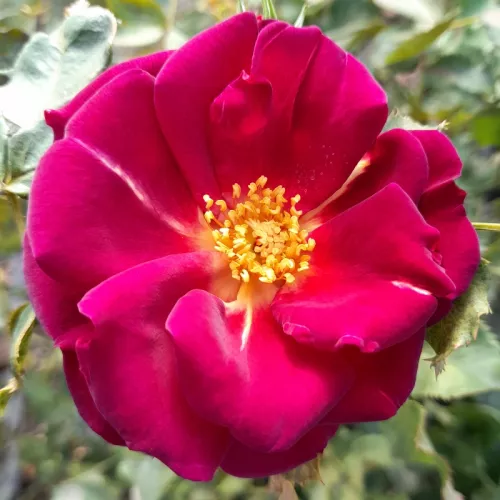
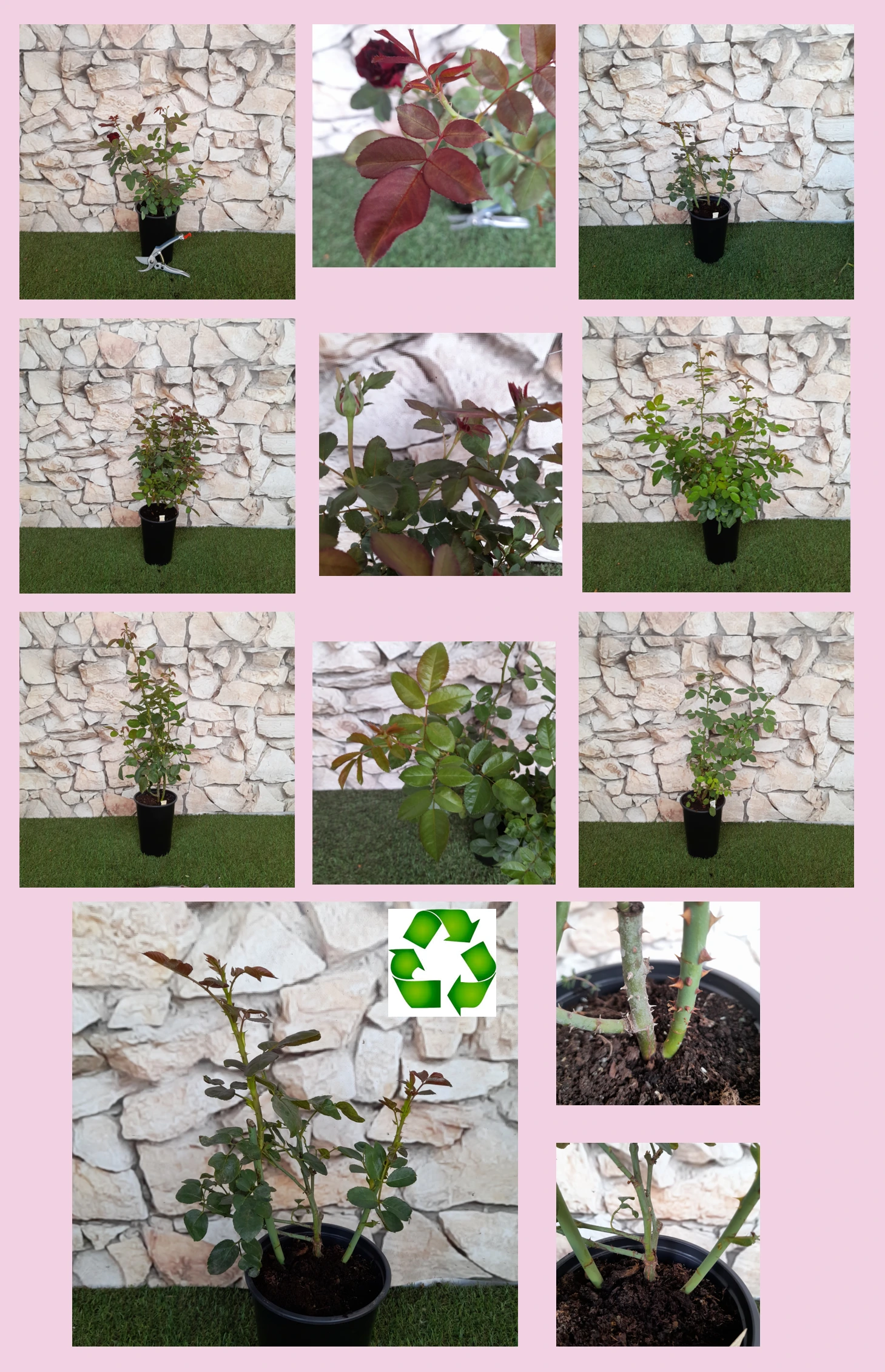
With its storybook purple blooms and glowing golden stamens, WILD ROVER creates a romantic, cottage-garden atmosphere that feels made for afternoon tea in dappled shade. This own-root shrub develops steadily and reliably, ideal for typical family gardens where you want beauty without fuss. Over time it forms a dense, upright framework that anchors borders, coping well even where wind and weather are changeable near exposed, breezy locations. Its remontant, semi-double flowers bring waves of colour through summer, while the strong, sweet-and-spicy scent drifts across lawns and patios. Own-root growth ensures long-term stability in shape and colour, gentle regrowth after pruning or winter damage, and a reassuringly long-lived presence in borders and mixed hedges. You can plant the 2-litre container throughout the season, giving it straightforward establishment in both clay-enhanced beds and looser loams. In its first years it rewards you with a clear development: root-building, then confident shoot and framework growth, and by the third year a rich, fully formed ornamental presence. The shrub’s medium maintenance needs are easily met with simple annual pruning, basic hygiene and occasional watering during prolonged dry spells, leaving you more time to enjoy its fragrance and colour with family and friends.
Usage options
| Target area | Reasoning |
|---|
| Main flowerbed in a family garden |
As an upright, medium–tall shrub, WILD ROVER gives strong structure at the back or middle of a mixed border, creating a clear focal point without overwhelming a small to medium garden; suits hobby gardeners wanting dependable impact. For busy beginners |
| Romantic cottage-style hedge |
Planted at the recommended spacings, this shrub forms a loosely informal flowering hedge that frames lawns, play spaces or kitchen gardens, combining privacy with a soft, traditional look that fits English countryside-inspired planting. For cottage-lovers |
| Low-maintenance park-style grouping |
Repeat-flowering clusters provide colour in several flushes, so even a simple group of three to five plants will read as “well-tended” with only periodic deadheading and an annual tidy, ideal for those wanting seasonal rhythm without complex care. For time-poor owners |
| Fragrant seating and tea area |
The strong, sweet-and-spicy scent carries well in still evening air, making this variety particularly effective near benches, arbours or patios where you sit and unwind; its perfume adds a cosy, storybook atmosphere around outdoor family gatherings. For scent-seekers |
| Exposed or breezy garden corners |
The dense foliage and upright frame give a sense of permanence even where gardens are more open, offering a stable visual anchor that stands up to typical British changeable weather in suburban settings with limited shelter. For suburban families |
| Large containers on terrace or courtyard |
In a stable 40–50 litre or larger container, WILD ROVER’s upright habit and repeat blooms create a vertical accent for paved areas; own-root growth allows you to renew the top growth over time while the base remains reliable and true to type. For patio gardeners |
| Long-term feature shrub in mixed border |
As an own-root rose, the plant maintains its character even after hard pruning or weather damage, gradually building a mature framework that will serve as a long-lived anchor among perennials, herbs and small shrubs in traditional family gardens. For long-term planners |
| Easy-care rose for learners and busy owners |
Medium maintenance needs translate into straightforward annual pruning, basic deadheading and occasional checks for common rose issues; the plant responds well to simple, regular care without demanding advanced skills or a strict routine. For new gardeners |
Styling ideas
- Arbour-border romance – Plant WILD ROVER beside an arbour and underplant with lavender and soft pink geraniums to create a gently structured, upright backdrop to seating – perfect for scent-focused romantics.
- Cottage hedge walk – Use a loose row along a path, interspersed with foxgloves and nepeta, for a repeat-flowering, informal hedge that outlines family routes from house to kitchen garden – ideal for cottage-style enthusiasts.
- Kitchen-garden frame – Position shrubs at the corners of a vegetable plot with herbs at their feet, using their long-term framework to define the space while keeping seasonal tasks simple – suited to practical home growers.
- Patio focal pot – Grow a single plant in a 50-litre container with trailing thyme and violas, letting its height and fragrance define a cosy sitting corner on terraces or balconies – attractive to space-conscious urban owners.
- Storybook mixed border – Combine WILD ROVER with cranesbill, pale roses and small evergreen structure to form a layered, long-lived border that looks considered yet relaxed – appealing to busy families wanting classic charm.
Technical cultivar profile
| Property | Data |
|---|
| Name and registration |
WILD ROVER (Registered: DIChirap), park / shrub rose; ARS exhibition name ‘Harry Potter’; shrub group floribunda-shrub type suitable for garden and exhibition use. |
| Origin and breeding |
Bred by Colin Dickson, Dickson Nurseries Ltd, Newtownards, United Kingdom; cross of ‘Spice of Life’ × ‘Rhapsody in Blue’; introduced and registered in 2007 via C & K Jones. |
| Awards and recognition |
RHS Award of Garden Merit (2012); Silver Medal, Viña del Mar International Rose Competition (2004); Certificate of Merit, Glasgow Rose Trials (2010), confirming solid garden performance. |
| Growth and structural characteristics |
Upright shrub 120–180 cm high, 75–125 cm spread; dense, light green, slightly glossy foliage; moderately thorny stems; moderate self-cleaning, some spent blooms benefit from light grooming. |
| Flower morphology |
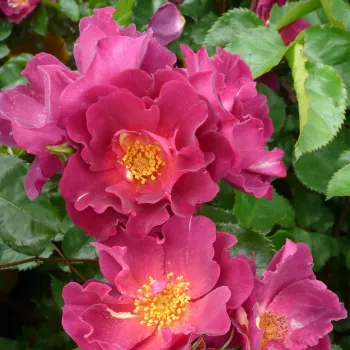
Semi-double, flat flowers with 13–25 petals, medium size clusters; remontant with an abundant second flush; cluster-flowering habit suits borders, hedges and cutting for informal arrangements. |
| Colour data and phenology |
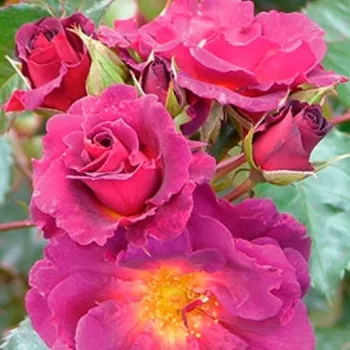
Deep crimson-purple base with mauve tones; burgundy buds opening to purple blooms with lighter edges and golden stamens; does not scorch, lightens slightly under strong sun, fading towards mauve-lilac. |
| Fragrance and aroma |
Strong, long-lasting sweet and spicy fragrance, noticeable around paths and seating; semi-double form offers limited pollinator access compared with single roses, but still draws some insect interest. |
| Hip characteristics |
Occasional small spherical hips, 8–13 mm diameter, red (RHS 40A); mainly ornamental, adding a subtle late-season accent without significantly affecting the shrub’s repeat-flowering display. |
| Resistance and winter hardiness |
Hardy to approximately −21 to −18 °C (RHS H7, USDA 6b, Swedish Zone 3); moderate resistance to black spot, mildew and rust; flowers well in heat but needs watering during prolonged drought. |
| Horticultural recommendations |
Best in fertile, well-drained soil; suitable for beds, hedges, urban greens and cutting; medium maintenance with annual pruning; plant at 90–100 cm for hedges or 1–1.2 plants/m² for mass planting. |
WILD ROVER offers upright structure, repeat purple flowering and strong scent in a reliable own-root form that matures into a long-lived feature shrub; a thoughtful choice if you want character with manageable care.