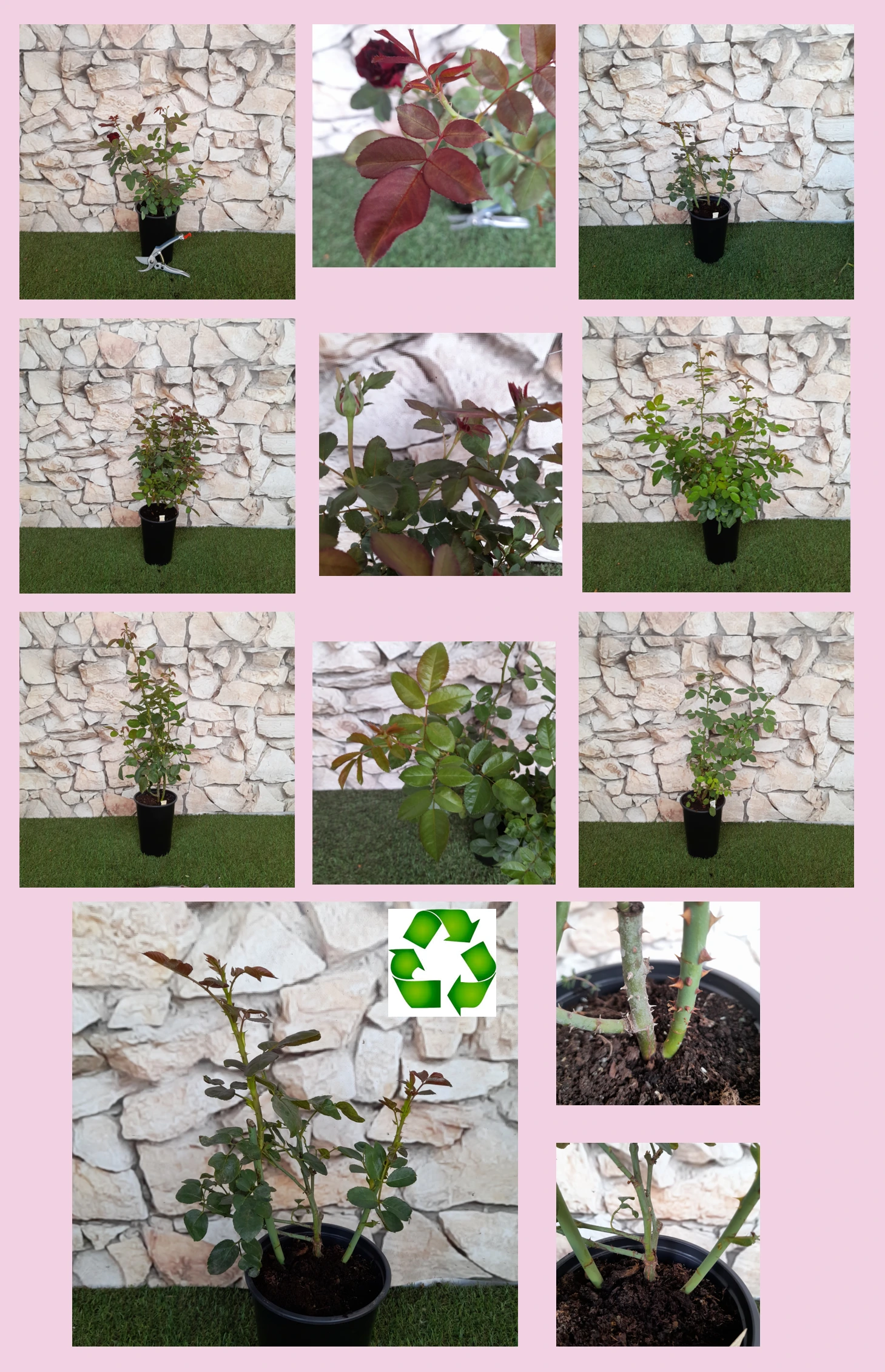
VIOLET VALEDA – violet-purple landscape shrub rose - De Ruiter
Romantic blooms in rich violet-purple shades give Violet Valeda an instantly distinctive cottage-garden presence, while its compact, bushy habit stays naturally neat without constant clipping. Bred for high disease resistance, it remains reliably healthy even in damp summers, coping well with breezy, coastal-style conditions where wind and salt might trouble fussier roses. Simple, open flowers with glowing golden stamens are highly pollinator friendly, followed by generous clusters of vitamin C-rich hips for seasonal harvest in autumn. As an own-root shrub it is quietly durable, building strong underground structure, bouncing back if cut back hard, and developing from settling roots to fuller top growth and then a convincing show of colour over the first three seasons.
Usage options
| Target area |
Reasoning |
| Low-maintenance family flower bed |
The compact, bushy habit and good heat tolerance make Violet Valeda easy to manage in a busy family garden, needing only light annual pruning and modest feeding to perform well year after year for beginners |
| Traditional cottage-style mixed border |
Its romantic violet-purple single blooms sit beautifully among herbaceous perennials and kitchen-garden edges, evoking an English countryside feel while remaining robust and forgiving for cottage-garden |
| Small hedge or informal boundary |
Planted 50–60 cm apart, the dense, glossy foliage knits into a low, flowering hedge that provides structure without complex clipping, anchoring the layout of an average-sized family plot for homeowners |
| Urban front garden or pavement border |
High resistance to black spot, mildew and rust, plus tolerance of heat and moderate drought, keeps the plant looking tidy with minimal care where watering and spraying routines are difficult for urban |
| Coastal or windy situations |
Its sturdy shrub framework and tolerance of salty, windy conditions suit exposed gardens, providing reliable colour and hips where more delicate roses may fail, even under frequent strong breezes for coastal |
| Large container on patio or terrace |
In a 40–50 litre pot with good drainage, the compact size and repeat flowering create a long-season feature near seating areas, while own-root resilience supports recovery if growth is occasionally cut back hard for patio |
| Wildlife-friendly corner or pollinator strip |
Open, single flowers with easily accessible stamens attract bees and other beneficial insects, then plentiful hips extend wildlife interest into autumn and support a more nature-friendly family garden for wildlife |
| Edible and decorative rose-hip border |
Abundant orange-red spherical hips with notable vitamin C content ripen from September to October, giving useful harvests as well as colour, while the shrub’s easy-care nature keeps management straightforward for practical |
Styling ideas
- Kitchen-border romance – Thread Violet Valeda along an informal veg plot with chives, dill and Lupinus ‘Gallery Pink’ to soften edges – for cottage-plot owners who like beauty with useful hips.
- Front-garden welcome – Line the path with a loose row, underplanting with low catmint and pink geraniums – for homeowners wanting instant kerb appeal from a compact, reliable shrub.
- Coastal-cottage mix – Combine with Rudbeckia fulgida and ornamental grasses in a breezy bed – for seaside gardeners seeking resilient colour that still feels soft and romantic.
- Patio-arbour setting – Place a large-container Violet Valeda near a simple wooden seat with pots of lavender and thyme – for tea-drinkers who want an easy, fragrant focal point.
- Wild-edge strip – Plant in a loose sweep with Crocosmia ‘Lucifer’ and meadow-style perennials – for wildlife-minded families who enjoy bees, colour and autumn hip harvests.
Technical cultivar profile
| Characteristic |
Data |
| Name and registration |
Shrub, Hybrid Rugosa rose marketed as Violet Valeda, part of the Valeda series; registered as RUIrj0110A and introduced as a landscape shrub rose for bed and border use. |
| Origin and breeding |
Bred and introduced by De Ruiter Innovations B.V. in the Netherlands, with complex parentage related to ‘Snow Pavement’, ‘Louise Bugnet’ and ‘Short Track’, first commercially available around 2019. |
| Growth and structural characteristics |
Compact, bushy shrub reaching around 60–85 cm in height and 50–75 cm spread, with dense, glossy dark green foliage and moderate prickles, suitable for hedging and mixed plantings. |
| Flower morphology |
Single, flat blooms with 5–12 petals carried in clusters, medium-sized at roughly 4–7 cm across, repeating freely with a strong second flush and moderate self-cleaning followed by hips. |
| Colour data and phenology |
Blooms open deep purplish violet, then bright violet to mid purple-lilac, finally smoky mauve-lilac with a silvery sheen; colour retention is modest, giving a changing palette on the bush. |
| Fragrance and aroma |
Moderately strong, classic rose-like scent that is pleasantly noticeable around the shrub, especially in still, warm weather, adding sensory value near paths, seating areas and frequently used spaces. |
| Hip characteristics |
Produces many spherical orange-red hips, about 20–30 mm across, with high vitamin C content; suitable for autumn decorative effect and culinary use, typically harvested from September to October. |
| Resistance and winter hardiness |
Very hardy shrub (RHS H7, USDA zone 3b, Swedish zone 6), reported to tolerate down to about –37 °C, with strong resistance to black spot, powdery mildew and rust in typical garden conditions. |
| Horticultural recommendations |
Best in full sun with well-drained soil; space 50–90 cm depending on use, with low maintenance needs and only light annual pruning, suitable for beds, borders, hedges and urban green spaces. |
VIOLET VALEDA offers compact, low-maintenance flowering, excellent disease resistance and generous autumn hips as a resilient own-root shrub rose; a thoughtful choice if you prefer long-lived, quietly reliable plants.