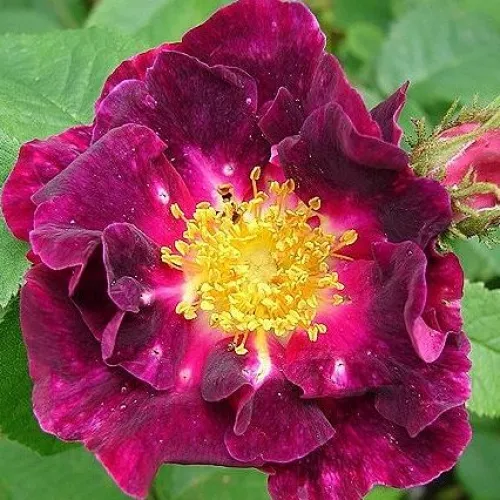
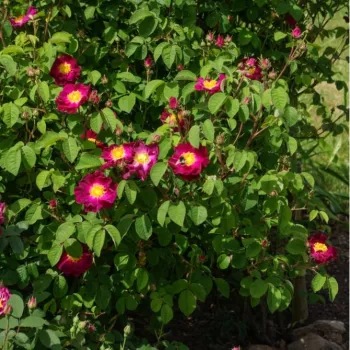
VIOLACEA – deep violet historic Gallica rose
Nestled into a traditional family plot or an urban cottage corner, VIOLACEA creates an intimate, storybook atmosphere with its velvety, violet‑crimson blooms and medium, berry‑like perfume that suits slow afternoon tea and quiet conversation. This historic Gallica rose is easy to manage in ordinary garden soil, even where clay needs better drainage and wind can tug at taller shrubs, building a deep root system that supports long, reliable life on its own roots. With a graceful, upright habit, it forms a natural, moderately dense shrub that sits comfortably among hedging, herbaceous borders and kitchen‑garden paths, needing only straightforward annual pruning and occasional pest checks. Its once‑a‑year summer display is concentrated, dramatic and highly atmospheric, lending your garden a sense of old‑world romance, soft colour harmonies, and quietly maturing structure. Over time, the own‑root form provides dependable regrowth, long lifespan, stable ornament and reassuring durability that rewards patient gardeners who enjoy watching a shrub deepen in character from year to year.
Usage options
| Target area | Reasoning |
|---|
| Cottage-style mixed border |
Placed mid-border, its upright shape and moderate height give a clear vertical accent without overwhelming smaller perennials, while the once-a-year violet display creates a memorable seasonal highlight for those favouring a traditional, low-fuss planting rhythm – hobby gardeners |
| Romantic specimen near seating |
Used as a single specimen by a bench or patio, the concentrated flush of richly coloured, fragrant blooms provides a striking focal point that needs only basic pruning and occasional pest control to remain atmospheric and tidy over many seasons – busy homeowners |
| Loose flowering hedge |
At the recommended hedge spacing, VIOLACEA forms a softly textured, moderately dense screen whose own-root resilience supports long-term structure, suiting family gardens seeking gentle boundaries rather than hard fencing – family buyers |
| Partially shaded side border |
Its tolerance of partial shade allows planting along east- or north-facing fences where many roses struggle, using otherwise underused strips to add period character without demanding constant attention – space-conscious gardeners |
| Historic or heritage-themed planting |
The 18th-century origin and unchanged character of this Gallica suit schemes inspired by period gardens, where a once-flowering, long-lived shrub underlines authenticity while remaining simple to care for over the decades – heritage enthusiasts |
| Low-input “breathing” garden concept |
Medium disease resistance and sparse prickles support a lower-chemical, more hands-on maintenance approach, fitting gardens where robust structure and moderate tolerance matter more than continuous flowers – eco-aware owners |
| Rural kitchen garden edge |
Along vegetable beds or fruit cages, its upright frame and dark, velvety flowers introduce romantic colour and gentle fragrance, yet leave paths navigable and maintenance straightforward within a busy working plot – kitchen gardeners |
| Large decorative container (40–60 litres) |
In a generously sized container, the upright habit and strong root system cope well with wind and heavier soils when drainage is managed, offering a movable feature that matures steadily without complex pruning – urban balcony owners |
Styling ideas
- Cottage ribbon border – Thread VIOLACEA through a narrow border with pink campion, catmint and rock cress to echo its violet tones – ideal for romantic cottage-style lovers
- Heritage focal arch – Plant on either side of a simple wooden arch, underplanted with Coreopsis for summer contrast – suitable for traditional front gardens
- Kitchen-garden frame – Use as a pair flanking the entrance to a potager, with low herbs and dwarf honeysuckle at the base – perfect for rural kitchen gardeners
- Shady side retreat – Combine in partial shade with ferns and hostas to create a cool, scented sitting corner – appealing to small-garden homeowners
- Low-chemical meadow edge – Set VIOLACEA at the edge of a mown path through a naturalised lawn with spring bulbs – suited to eco-conscious families
Technical cultivar profile
| Parameter | Data |
|---|
| Name and registration |
Historical Gallica rose marketed as VIOLACEA – deep violet historic Gallica rose; also known in exhibitions as La Belle Sultane; unregistered cultivar used mainly in heritage collections. |
| Origin and breeding |
Old garden rose of Gallica group, bred in the Netherlands around 1795; exact breeder and parentage unknown; introduced in the United Kingdom by Trevor White Roses for heritage plantings. |
| Growth and structural characteristics |
Upright shrub 120–190 cm tall with 95–150 cm spread; moderately dense, matte medium-green foliage and sparse prickles; forms a well-defined, free-standing bush suitable for beds, hedges or solitary use. |
| Flower morphology |
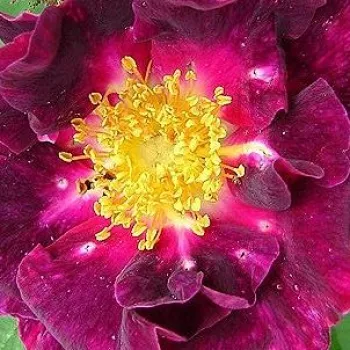
Medium-sized, single to lightly filled, cup-shaped blooms in small corymbs of 2–3 per stem; petals 5–12; once-flowering in early to mid-summer, offering a concentrated display rather than repeat flushes. |
| Colour data and phenology |
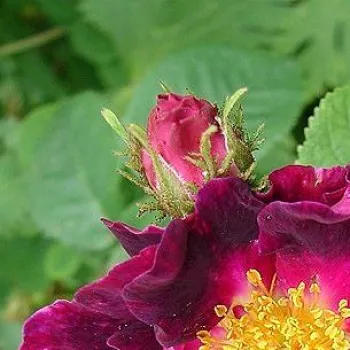
Deep crimson-purple, velvety petals with cool violet sheen and pale centre; buds dark garnet-red; colour darkens to brownish-purple with near-black edges as blooms age, giving a dramatic, moody effect. |
| Fragrance and aroma |
Medium-strength perfume with velvety, discreetly berry-fruity character; noticeable at close range around seating areas, adding to the historic ambience without becoming overpowering in smaller gardens. |
| Hip characteristics |
Occasional small, spherical hips 10–15 mm in diameter; orange-red when ripe and decorative in late season, though not typically produced in heavy quantities on every plant or in all seasons. |
| Resistance and winter hardiness |
Hardy to approximately −32 to −29 °C (RHS H7, USDA 4b, Swedish Zone 5); medium resistance to black spot, mildew and rust; benefits from standard rose care and occasional monitoring in humid summers. |
| Horticultural recommendations |
Suited to beds, parks and specimen use; spacing 110–180 cm depending on purpose; tolerates partial shade; prefers well-drained soil and may need watering in prolonged drought; maintenance considered medium intensity. |
VIOLACEA offers a concentrated season of deep violet bloom, dependable upright structure and long-lived own-root resilience, making it a thoughtful choice for gardeners seeking quietly romantic permanence.