VEILCHENBLAU – purple historic rambler, running-climbing rose - Kiese
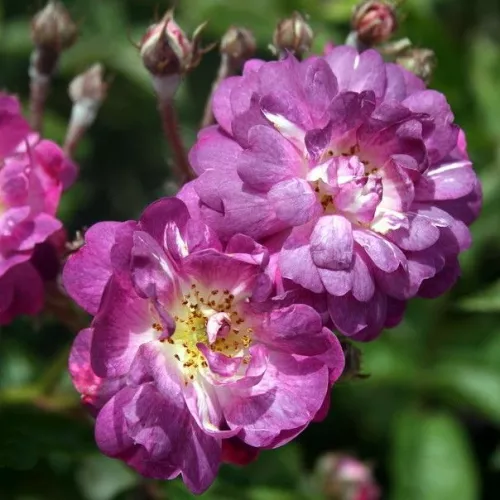
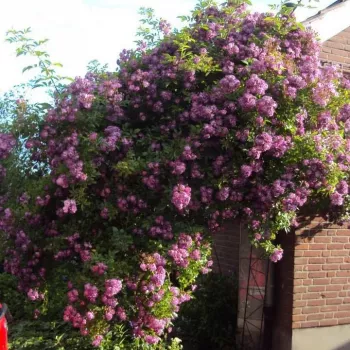
With its cascading, violet-purple clusters and romantic vintage charm, Veilchenblau creates a storybook backdrop of archways, pergolas and cottage-style fences in even modest family gardens. This historic rambler is surprisingly forgiving for beginners: once established, it needs only basic seasonal care, yet offers years of dependable structure and colour. On its own roots it builds strength gradually, living long, regenerating well after pruning and keeping its ornamental value steady over time. You can rely on its vigorous coverage to clothe unsightly walls or sheds, while its bee-friendly, semi-double blooms bring gentle movement and a subtle, sweetly spicy fragrance. Planted into well-prepared soil that copes with breezy, rain-lashed conditions near the coast, it anchors firmly and weaves into a permanent green framework that suits busy households. Give it a simple support, a little room to climb, and in a few short seasons it will turn everyday views into storybook scenes with a soft, lilac-to-slate palette that flatters brick, stone and timber. Veilchenblau’s once-a-year summer display is concentrated and spectacular, giving you abundant flowers with minimal fuss and leaving glossy foliage and graceful structure to enjoy for the rest of the year.
Usage options
| Target area | Reasoning |
|---|
| Family garden arbour or pergola |
Veilchenblau’s vigorous climbing habit quickly clothes a simple wooden or metal frame, giving dense summer shade and a romantic, cottage-style “outdoor room” without complex training. Ideal for those wanting easy ambience for afternoon-tea. |
| Covering fences and boundaries |
Its long, flexible canes provide excellent surface coverage, softening panel fencing or wire boundaries with a thick curtain of mid‑green foliage and lilac-purple flowers. This efficient screening suits time-poor homeowners who prefer low-intervention privacy. |
| Small wall or shed transformation |
The rose’s reliable height and spread allow you to turn a plain garage wall or shed into a feature with limited effort: simple supports, annual tidy and occasional tying-in are usually enough. A good choice for beginners seeking attractive camouflage. |
| Cottage-style mixed border backdrop |
Planted at the back of a border, Veilchenblau’s trailing canes and pastel-fading flowers create a soft, romantic backdrop for perennials, while own-root resilience keeps the framework long-lived. Perfect for lovers of relaxed, traditional cottage-borders. |
| Lightly shaded side passage |
This rambler tolerates partial shade, so it performs well in side passages or north-east aspects where some roses struggle; foliage remains dense and flowering still generous. Suits households wanting dependable beauty in difficult-corners. |
| Pollinator-friendly wildlife corner |
Semi-double, open-centred blooms offer easy pollen access, attracting bees and other beneficial insects through the main summer flush, while occasional hips add autumn interest. A gentle option for families encouraging child-friendly wildlife-watching. |
| Coastal or wind-exposed gardens |
With good anchoring and medium disease resistance, Veilchenblau copes well when planted into improved soil that still faces blustery, rain-laden weather, so it is practical for less sheltered plots. Recommended for gardeners near coasts prioritising resilient screening. |
| Low-input, long-term structure planting |
RHS Award of Garden Merit status reflects its dependable performance and relatively modest care needs; as an own-root rambler it ages gracefully, renewing from the base after harder pruning when required. Well suited to busy owners seeking enduring frameworks. |
Styling ideas
- Tea-Arbour Romance – Train Veilchenblau over a simple arbour with a small table beneath, pairing it with scented herbs like lavender and thyme – for relaxed afternoon tea lovers who enjoy gentle upkeep.
- Cottage Fence Veil – Let its long canes drape along a front-garden picket or wire fence, interplanted with meadow sage and hardy geraniums – for fans of informal, flower-heavy cottage frontage.
- Pastel Wall Tapestry – Combine Veilchenblau on a warm brick wall with bluebeard shrubs and airy ornamental grasses – for homeowners wanting a soft, painterly backdrop with little maintenance.
- Wildlife Nook – Use it to frame a bench in a wildlife corner with pollinator-friendly perennials and a small bird bath – for families keen on gentle nature watching close to home.
- Kitchen-Garden Screen – Grow it along a pergola dividing vegetable beds from the lawn, underplanted with herbs and salad crops – for those seeking a pretty yet practical boundary in a working kitchen garden.
Technical cultivar profile
| Parameter | Data |
|---|
| Name and registration |
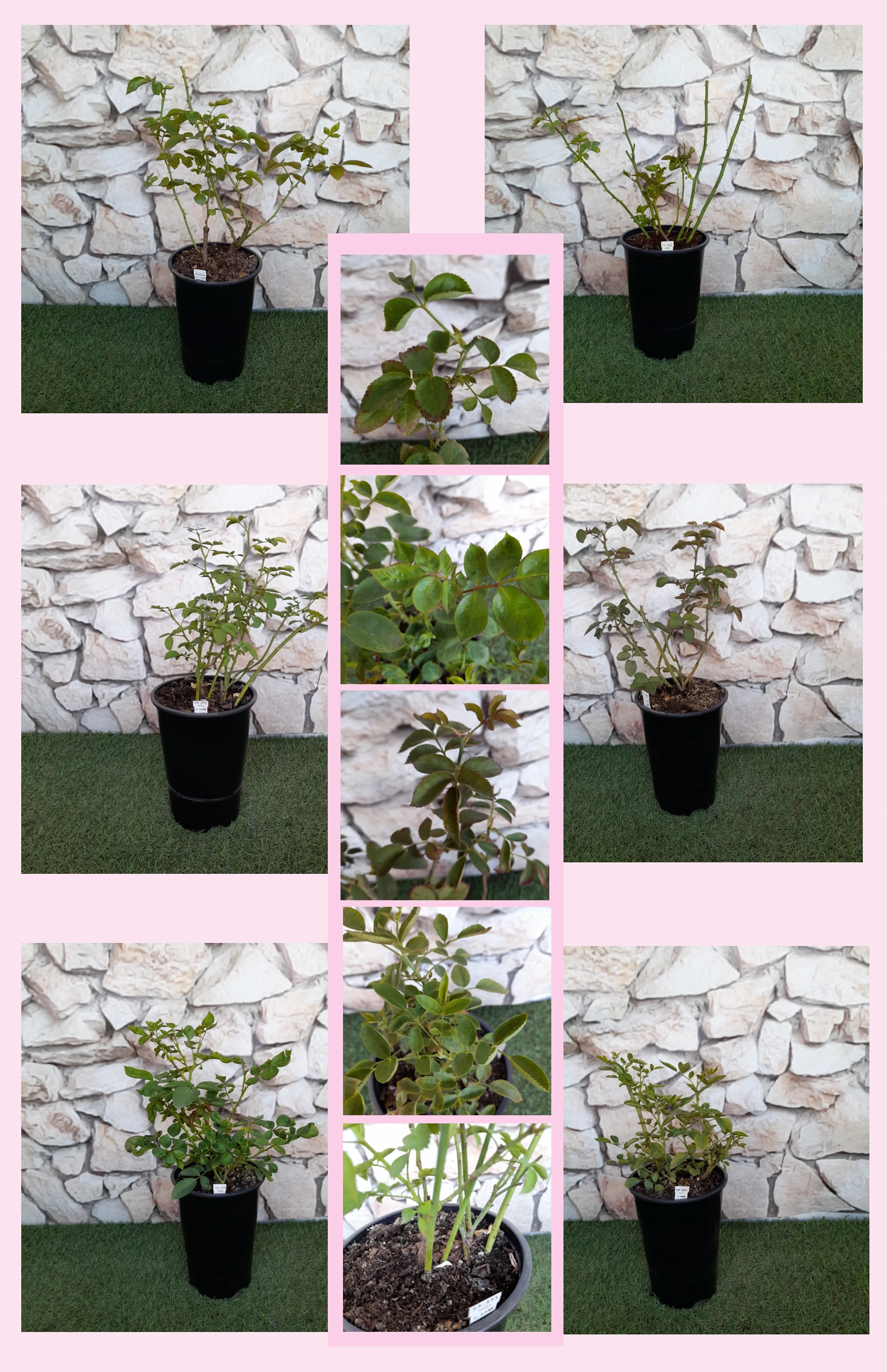
Veilchenblau is a historic rambler rose traded under this name; an unregistered variety within the Historical rose group, grown here as a practical, own-root, 2‑litre container plant. |
| Origin and breeding |
Bred by Hermann Kiese in Germany and introduced in 1909 by Johann Christoph Schmidt; a hybrid Multiflora/Polyantha rambler from ‘Turner’s Crimson Rambler’ × ‘Souvenir de Brod’ parentage. |
| Awards and recognition |
Holds the Royal Horticultural Society’s Award of Garden Merit (1993), signalling reliable garden performance, sound health and good ornamental value under typical UK conditions when sensibly sited. |
| Growth and structural characteristics |
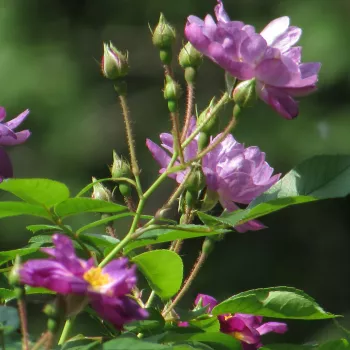
Strong, climbing rambler with 4–6 m height and 2–4 m spread, slightly prickly stems and dense, glossy mid‑green foliage; best grown with supports on arbours, pergolas, fences or substantial walls. |
| Flower morphology |
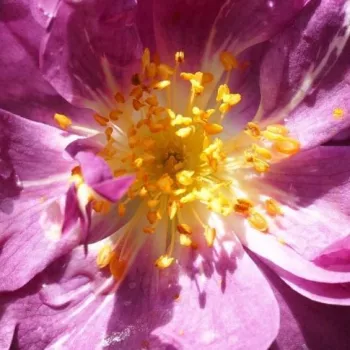
Semi-double, small (approx. 1–3 cm) flat flowers in large clusters; petal count generally 13–20 per bloom. A non-remontant once-flowering rambler giving one concentrated main summer display. |
| Colour data and phenology |
Closed buds deep crimson-purple, opening to bright crimson-purple with paler centre, then lilac tones; in sun it quickly fades towards bluish-grey, creating a soft, pastel effect over the flowering period. |
| Fragrance and aroma |
Sweetly spicy yet mild fragrance, best appreciated at close quarters during peak flowering; open blooms also expose stamens, adding sensory interest for gardeners who enjoy scent and visiting bees. |
| Hip characteristics |
Occasional small spherical hips, about 5–9 mm across, maturing to a brownish-red colour; an unobtrusive but pleasant late-season detail where clusters have not been removed after flowering. |
| Resistance and winter hardiness |
Hardy to around –29 to –32 °C (RHS H7, USDA 4b), with medium resistance to black spot, powdery mildew and rust; benefits from good air circulation and routine hygiene in humid urban gardens. |
| Horticultural recommendations |
Suited to arbours, pergolas, walls and fences; plant 1.8–3.3 m apart depending on use, in reasonably drained soil, watering in prolonged drought and pruning after flowering to manage size and renewal. |
Veilchenblau offers romantic coverage, partial-shade tolerance and bee-friendly summer flowering on a durable own-root framework, making it a considered, long-term choice for structuring a traditional family garden.