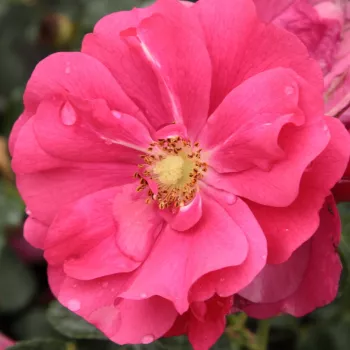
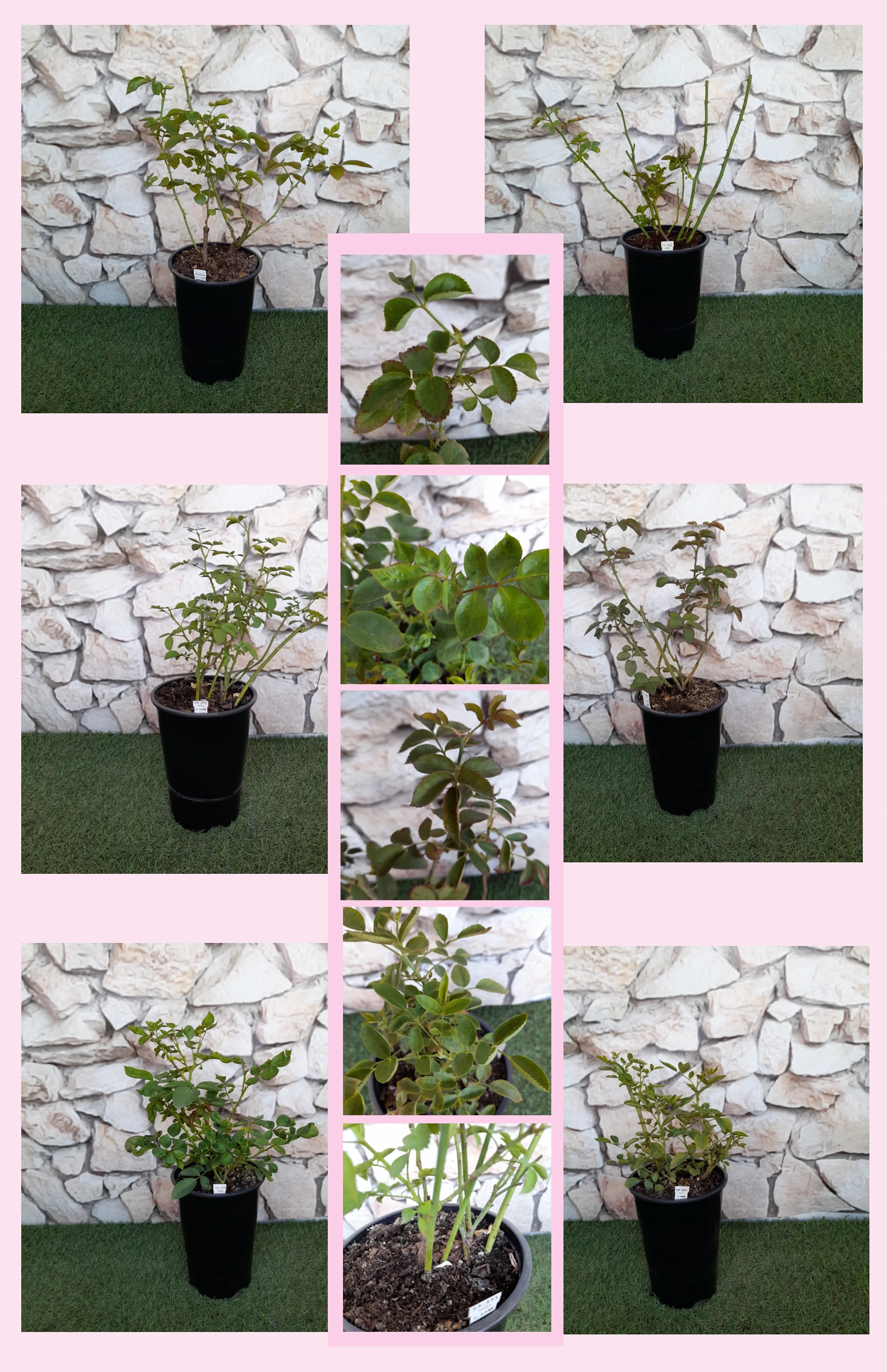
VANITY – pink groundcover rose – Pemberton
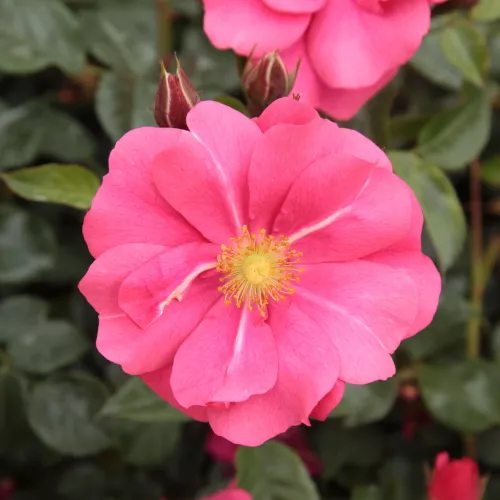
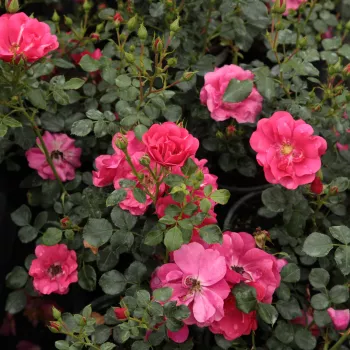
Bring a touch of English garden romance to your family plot with ‘Vanity’, a classic Hybrid Musk shrub that arches gracefully along fences and arbours while offering months of soft pink clusters. Its airy, single blooms are rich in stamens, highly attractive to bees, and carry a fragrance that suits a slow afternoon tea in the garden. Bred in Essex, it copes well with typical British conditions, even where brisk coastal weather and heavier soils demand reliable anchoring and good drainage in borders. As an own-root rose, the plant builds strength steadily, rewarding you with a durable framework, dependable flowering and the ability to regenerate if cut back hard. Over time the glossy, dark green foliage knits into a wide, romantic groundcover, softening pergola legs, edging paths, or spilling from a large 40–50 litre container, with medium-care needs that suit busy but enthusiastic gardeners.
Usage options
| Target area | Reasoning |
|---|
| Relaxed cottage-style border |
The bushy, arching habit and spreading width allow ‘Vanity’ to fill gaps between shrubs and perennials, creating a loose, romantic border with minimal shaping; pruning can stay light and informal, ideal for a relaxed homeowner. |
| Low, flowering groundcover |
Its groundcover classification and 90–150 cm spread help it knit into a flowering carpet that suppresses visual bareness, reducing the need for constant underplanting or frequent replanting, which suits a time-pressed beginner. |
| Fence and pergola softening |
The tall, arching canes can be lightly tied along wires or over a simple structure, giving a soft screen of pink clusters without the strict training demands of climbers, a practical choice for a relaxed family. |
| Partial-shade side garden |
Its suitability for partial shade means it will still flower and leaf up attractively where sun is limited by neighbouring houses or trees, offering colour in awkward corners for an urban gardener. |
| Bee-friendly kitchen garden edge |
With single, stamen-rich blooms and a medium, sweet scent, ‘Vanity’ attracts pollinators that can benefit nearby herbs and vegetables, blending pretty structure with purpose for a nature-minded cook. |
| Container on terrace or patio |
In a stable 40–50 litre pot, its arching habit and repeated clusters create a soft, cottage feel near seating areas, while own-root resilience offers a long-lived focal point for a compact-space dweller. |
| Low-maintenance family planting |
Medium disease resistance and self-cleaning flowers mean less deadheading and spraying, while own-root growth supports gradual regeneration and ornamental stability, reassuring for a busy parent. |
| Long-term structural feature |
Hardy to UK winters and forming a strong shrub framework, it offers a lasting presence that can be lightly refreshed over the years, from early root establishment to a full display by the third season for a forward-planning planner. |
Styling ideas
- Tea-Arbour Romance – Train ‘Vanity’ loosely over an arbour with a simple bench beneath, adding lavender and old-fashioned perennials for fragrance – ideal for lovers of slow, storybook afternoons.
- Cottage Lace Border – Let its arching canes spill through catmint and hardy geraniums along a path, creating a pink, bee-buzzed ribbon – for those who favour an informal English cottage look.
- Kitchen-Garden Edge – Line the outside of raised vegetable beds with ‘Vanity’, underplanted with chives and thyme, to draw in pollinators and soften timber edges – perfect for home cooks who garden.
- Softened Boundary – Plant along a wire fence with Vinca minor at the base, allowing stems to veil the structure in blossom – suited to families wanting privacy without a harsh boundary line.
- Romantic Patio Pot – Grow one plant in a large 50-litre terracotta container, with trailing thyme at the rim, to bring colour and scent up close – appealing to balcony and courtyard gardeners.
Technical cultivar profile
| Parameter | Data |
|---|
| Name and registration |
Groundcover shrub rose from the Vanity collection; registered cultivar and trade name: Vanity; American Rose Society approved exhibition name: Vanity; commercial type: groundcover rose. |
| Origin and breeding |
Hybrid Musk shrub bred by Joseph Hardwick Pemberton at Pemberton Nursery, Havering-atte-Bower, Essex, United Kingdom; parentage: ‘Château de Clos Vougeot’ × unknown seedling; introduced in 1920. |
| Growth and structural characteristics |
Bushy, arching shrub reaching about 150–250 cm in height with a 90–150 cm spread; sparsely thorned; medium-density, glossy, dark green foliage; self-cleaning flowers of medium intensity on cluster-flowered stems. |
| Flower morphology |
Single to semi-double blooms with 5–12 petals; flat flower form on large clusters; small flower size of approximately 0.5–1.5 inches; remontant with a plentiful second flush of blooms after the main flowering. |
| Colour data and phenology |
Deep pink flowers, ARS code DP, RHS 62B outer and 62A inner; newly opened blooms are intense pink with lighter edges, fading in strong sun to paler, silvery pink while maintaining a coloured centre. |
| Fragrance and aroma |
Medium-strength, slightly sweet fragrance typical of Hybrid Musk roses; scented enough to notice along paths or near seating areas without being overpowering; suitable for family gardens and mixed borders. |
| Hip characteristics |
Occasional orange-red, ovoid hips, about 14–22 mm in diameter; decorative in autumn when present, though not typically produced in heavy quantities on well-deadheaded plants. |
| Resistance and winter hardiness |
Medium overall disease resistance, with moderate tolerance to powdery mildew, black spot and rust; winter hardy approximately to −21 to −18 °C (RHS H7, USDA 6b, Swedish Zone 3) under normal garden conditions. |
| Horticultural recommendations |
Suitable for borders, specimens, hedging along fences and pergolas, as well as park and urban plantings; prefers regular watering in prolonged heat; recommended spacings from 110–180 cm, with 0.7–0.8 plants/m² in mass plantings. |
Vanity offers romantic pink clusters, bee-friendly single blooms and durable, own-root resilience for long-term structure in your garden; consider it if you enjoy classic cottage roses with manageable care.