VALENTINA™ – red-yellow hybrid tea rose - Tanjga
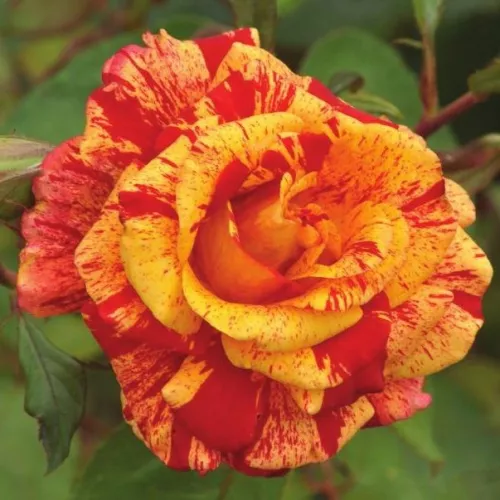
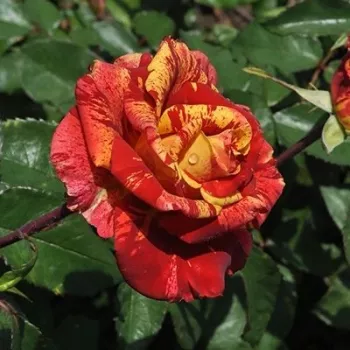
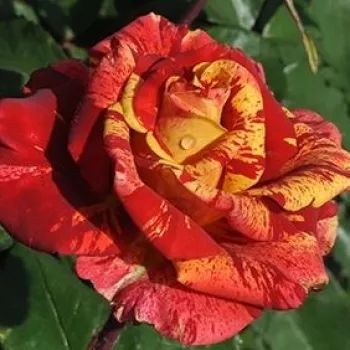
Under an arbour of VALENTINA™ you can imagine afternoon tea and soft laughter, as the velvety blooms open in rich raspberry and lemon marbling that feels instantly romantic and storybook. This medium hybrid tea shrub stays neatly upright and compact, ideal for typical family gardens where paths, lawns and kitchen beds all meet. Grafted plants can tire, but this own-root rose builds strength steadily and is easy to keep attractive even in exposed spots with frequent breezes and showers, helping it feel securely anchored in your layout. Over its long life the plant thickens gradually, offering an ever fuller garden picture without demanding complicated pruning or specialist care, while you enjoy dependable repeat flushes rather than short-lived spectacle.
Usage options
| Target area | Reasoning |
|---|
| Feature rose near a seating area or arbour |
The upright, medium-sized habit and solitary, marbled blooms make VALENTINA™ ideal beside a bench or pergola, where each flower can be enjoyed at eye level without dominating the whole border – helpful for romantic corners sought by cottage-style homeowners. |
| Traditional mixed border in a family garden |
Its 65–95 cm height and 50–70 cm spread fit comfortably between perennials and low hedging, giving structure without blocking views across a small to medium garden, suiting layered borders planned by busy family gardeners. |
| Cutting patch for home arrangements |
The hybrid tea flower form and solitary stems lend themselves to cutting stems for vases, allowing you to bring the raspberry-red and lemon-cream marbling indoors while the shrub continues to bud, appealing to hobby flower arrangers. |
| Low, informal hedge or row along a path |
Recommended planting distances of 50–60 cm allow you to form a loose hedge that guides movement through the garden; repeated colours tie together lawns, kitchen beds and play areas valued by practical family planners. |
| Own-root investment planting for long-term structure |
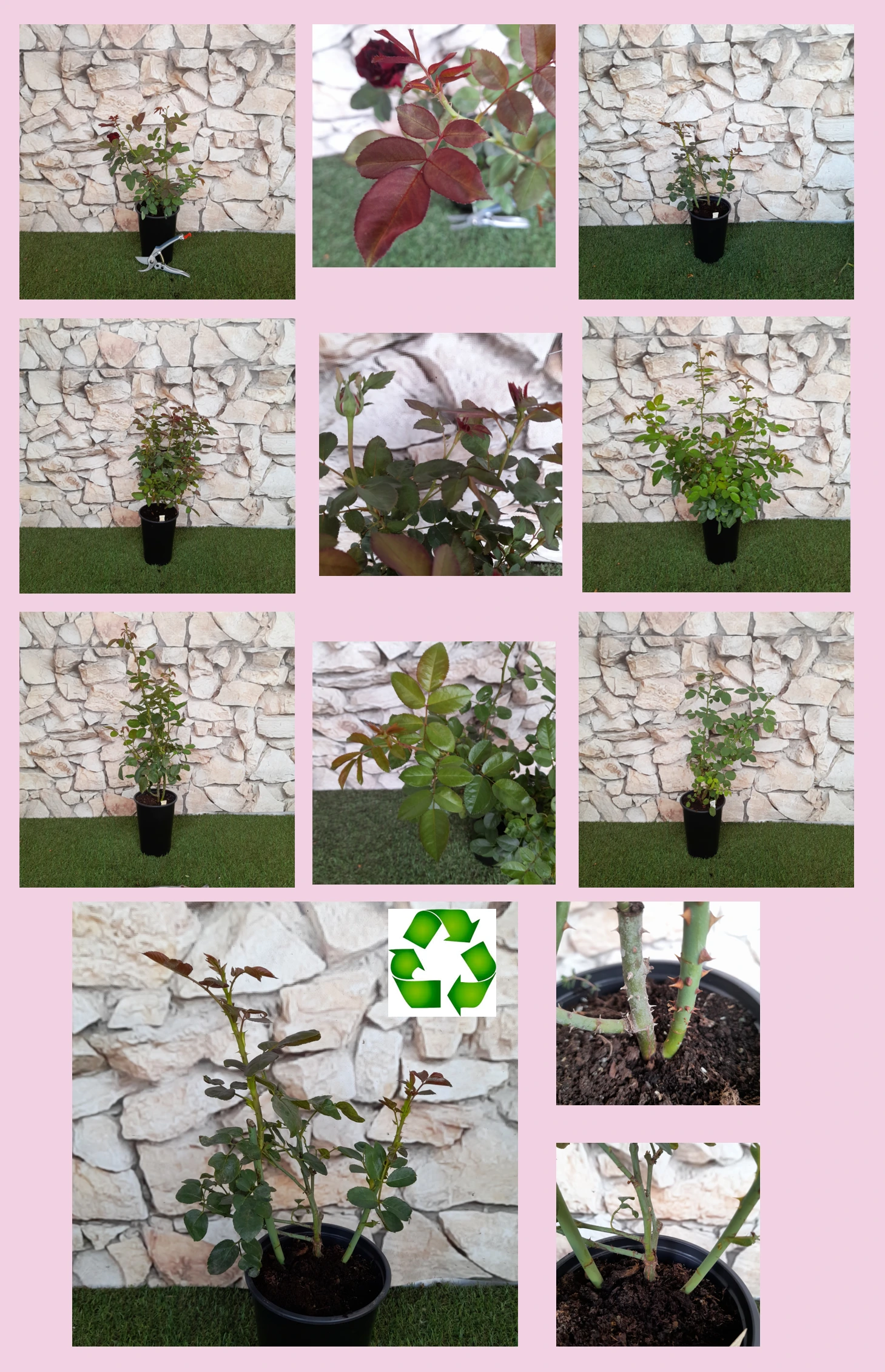
As an own-root rose, VALENTINA™ can regenerate from its base if damaged and is less prone to graft failure, so it keeps its ornamental value over many years, suiting long-view plans made by responsible garden investors. |
| Borders in exposed or coastal-influenced sites |
The moderately dense, dark foliage and medium shrub form help it stand up visually in gardens where wind and regular showers are common, keeping the planting looking settled and composed for UK coastal and windy-site owners. |
| Flexible pruning regimes in low-maintenance gardens |
The upright, medium shrub structure is easy to keep in shape with simple annual pruning; lighter or harder cuts both work, allowing you to adapt effort to your time and confidence level as a time-pressed beginner. |
| Kitchen-garden and cottage-style combinations |
VALENTINA™ partners well with herbs and cottage perennials, and as its own-root framework matures the first year focuses on roots, the second on shoots and the third on a fuller display, matching patient plans made by romantic cottage-garden lovers. |
Styling ideas
- Raspberry Arbour – Train VALENTINA™ as a pair at an arbour entrance, underplant with catmint and soft grasses for a scented, fluttering surround – ideal for romantic cottage-garden lovers.
- Kitchen Walkway – Line a path between house and veg beds with evenly spaced plants, weaving in chives and low lavender to echo the striped blooms – suited to practical home growers.
- Storybook Feature – Place a single specimen in a small lawn island with bupleurum and spring bulbs so each bi-coloured flower reads as a focal point – perfect for small-garden owners.
- Tea-and-Roses Border – Combine VALENTINA™ with dark phormium and pale foxgloves in a narrow border by a terrace for eye-level flowers during afternoon tea – attractive to social entertainers.
- Soft Hedge Line – Create a low, irregular hedge along a play lawn, mixing in catmint and hardy geraniums to blur the edge while keeping views open – good for young families.
Technical cultivar profile
| Parameter | Data |
|---|
| Name and registration |
Hybrid tea rose, medium shrub; registered as BOZvalfre, marketed as Valentina™ Freska® BOZvalfre; exhibition category cut-flower tea hybrid for garden and decorative use. |
| Origin and breeding |
Bred by Biljana Božanić Tanjga, PhenoGeno Roses, Serbia; introduced 2017 by PhenoGeno Roses; parentage unpublished; part of the Freska® collection of patterned hybrid teas. |
| Growth and structural characteristics |
Upright, medium shrub 65–95 cm tall and 50–70 cm wide, moderately thorny; moderately dense, slightly glossy dark green foliage provides a tidy framework in borders or as a short hedge. |
| Flower morphology |
Semi-double, cup-shaped hybrid tea flowers, 17–25 petals, medium size on mostly solitary stems; remontant, with an abundant second flush in good conditions, suitable for cutting and garden display. |
| Colour data and phenology |
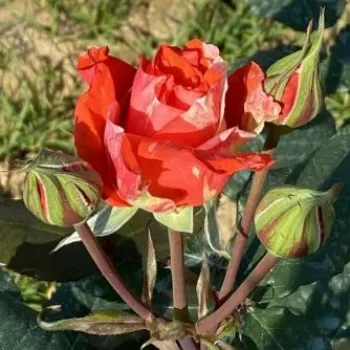
Deep carmine-red buds with butter-yellow striping open to velvety red petals boldly marbled with vivid lemon-yellow and creamy white; colours soften to raspberry and cream before gradually lightening. |
| Fragrance and aroma |
Fragrance is very weak, with a light rosy character only faintly perceptible at close range; grown primarily for its striking bicolour effect rather than for scent-driven garden impact. |
| Hip characteristics |
If spent blooms are left, produces moderately abundant, ellipsoidal orange-red hips 8–12 mm across in autumn, adding discreet seasonal interest and textural contrast to the dark foliage. |
| Resistance and winter hardiness |
Hardy to approximately −21 to −18 °C (RHS H7, Swedish zone 3, USDA 6b); disease profile moderate, with good black-spot resistance and moderate susceptibility to powdery mildew and rust. |
| Horticultural recommendations |
Best in full sun; medium maintenance, with occasional plant protection as needed; recommended spacings 50–90 cm depending on use, allowing 2.8–3.2 plants/m² in mass or hedge plantings. |
VALENTINA™ combines eye-catching marbled flowers, a compact upright habit and long-term own-root reliability, making it a thoughtful choice for cottage-style gardeners seeking lasting structure and colour.