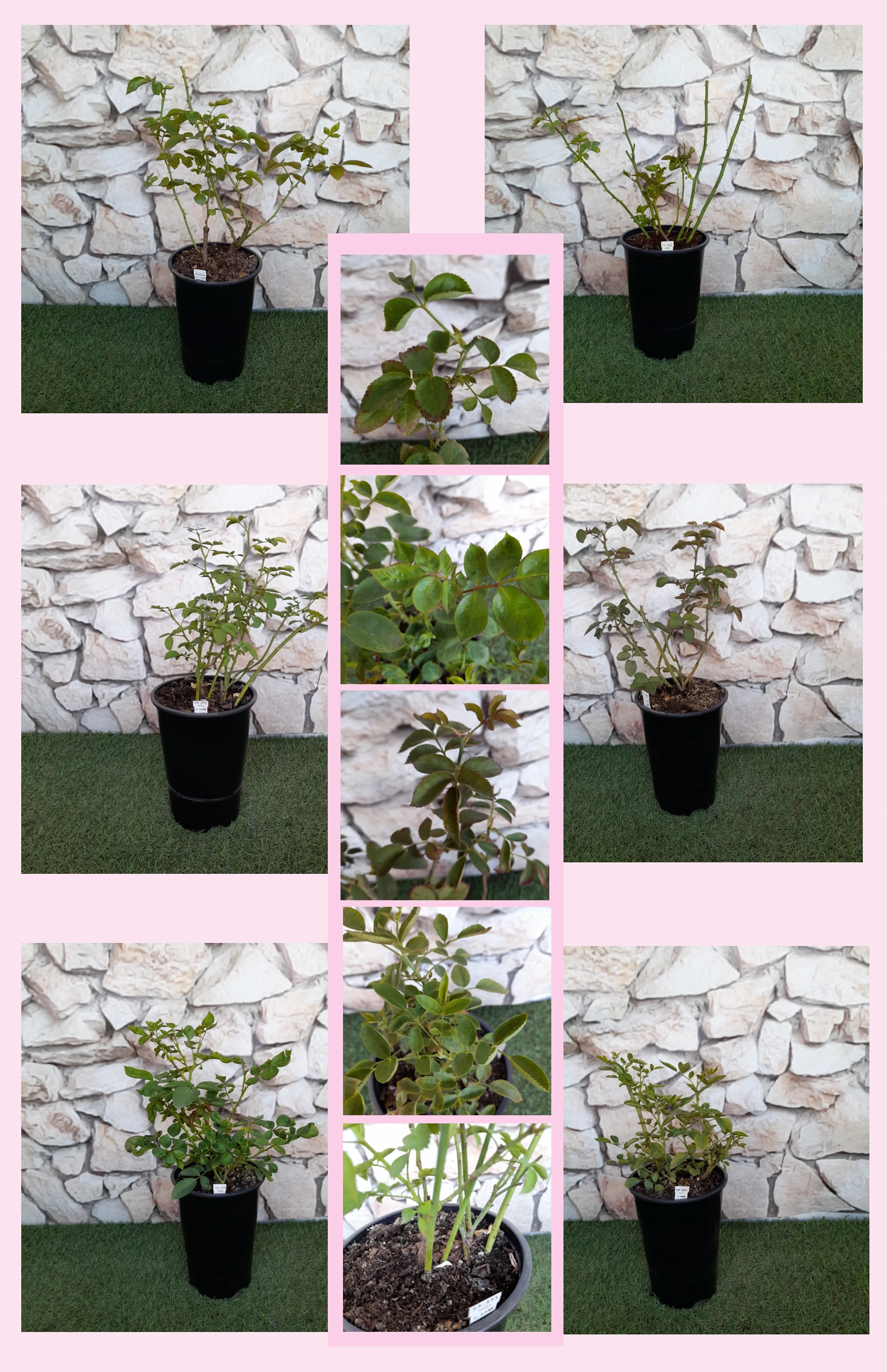
PEONY PINK – pink English rose - Austin
Peony Pink brings a quietly luxurious, cottage-garden romance to everyday family plots, combining the poise of an English shrub rose with a practical, low-effort nature. Its tall, bushy habit forms a soft screen or backdrop, while clusters of large, very full, cup-shaped blooms in delicate pale pink open repeatedly from early summer, creating a storybook setting for afternoon tea beneath an arbour. The strong myrrh fragrance carries across the garden, even on cooler days, and the flowers largely self-clean, keeping borders looking orderly without constant deadheading. Bred with dependable disease resistance for British conditions, it copes reliably with exposed, breezier plots where rainfall and wind are frequent companions. As an own-root rose, it establishes steadily and can regenerate from its base, offering a long, stable presence that fits naturally into an English countryside-style garden as it moves from settling roots to building top growth and finally reaching full ornamental maturity.
Usage options
| Target area | Reasoning |
|---|
| Romantic focal point in a family border |
Tall, bushy growth and large, very full blooms give strong visual presence without feeling formal, ideal as a key feature in a mixed cottage-style bed that still suits practical family use, especially for busy homeowners. |
| Low-maintenance English cottage planting |
Good disease resistance and naturally self-cleaning flowers keep the shrub tidy with minimal intervention, so you gain the charm of an English rose border without the constant grooming often associated with traditional varieties, perfect for beginner gardeners. |
| Perfumed seating or afternoon tea area |
The very strong, myrrh-based scent carries well, so planting near a bench, pergola or terrace turns everyday breaks into fragrant occasions, with repeat flushes ensuring scent through the season for romantic traditionalists. |
| Informal flowering hedge or boundary |
Its upright yet bushy habit and recommended close planting distances allow you to create a soft, flowering screen that fits cottage-style front gardens, gently marking boundaries while remaining friendly and inviting for family garden owners. |
| Statement rose in large containers |
Suitable for container culture when given a generous volume of compost; in a 40–50 litre or larger pot it has space to root well, making it an excellent romantic feature on patios or balconies for urban balcony gardeners. |
| Resilient choice for breezier, wetter sites |
Sound disease resistance and sturdy shrub form help it perform reliably where frequent wet spells and blustery conditions are normal, reducing worries about black spot and mildew for coastal and exposed-plot gardeners. |
| Long-lived, reliable backbone plant |
As an own-root shrub it is not dependent on a rootstock, so it ages gracefully, can regenerate from its base after hard pruning or winter damage, and offers stable ornamental value over many years for long-term planners. |
| Flexible planting in evolving family gardens |
The own-root form settles in steadily, with roots establishing first, then stronger top growth, and by the third year a full garden presence, giving you a forgiving rose that adapts as borders mature for time-poor hobbyists. |
Styling ideas
- Cottage-Border Screen – Plant in a loose row with catmint, lady’s mantle and self-seeding foxgloves to create a soft, semi-transparent hedge – ideal for family gardens wanting gentle privacy.
- Perfumed Arbour – Use Peony Pink as the anchoring shrub at each side of an arch, underplanting with lavender and thyme to enhance its myrrh scent – suited to lovers of atmospheric, scented seating spots.
- Kitchen-Garden Charm – Place near raised beds of herbs and vegetables, with companion perennials like coreopsis and sedges, to bring storybook romance into a productive plot – perfect for rural kitchen-garden owners.
- Patio Centrepiece – Grow in a 50-litre terracotta pot with trailing thyme and low campanulas around the rim for a fragrant, low-maintenance terrace feature – good for busy urban gardeners with limited space.
- Soft Hedge Mix – Combine in a staggered row with other pale English roses and airy grasses to form an informal flowering boundary – recommended for those seeking a traditional, welcoming front garden.
Technical cultivar profile
| Parameter | Data |
|---|
| Name and registration |
English shrub rose from the English Rose Collection, registered as AUSmit, traded as Peony Pink English Rose AUSmit and exhibited internationally under the name ‘St. Cecilia’. |
| Origin and breeding |
Bred by David C. H. Austin in Albrighton, United Kingdom, from a cross of ‘Wife of Bath’ with a seedling of the same, introduced and registered in 1987 as part of his romantic English rose line. |
| Growth and structural characteristics |
Bushy shrub reaching about 120–180 cm in height and 80–110 cm spread, moderately thorny, with matt grey‑green foliage of medium density forming a soft yet substantial outline in mixed plantings. |
| Flower morphology |
Large, very full, cup-shaped blooms with 40 or more petals, borne mainly in clusters, remontant with a generous second flush, providing classic English rose form suitable for cutting and garden display. |
| Colour data and phenology |
Soft, even pale pink with slightly deeper centres, buds creamy pink; colour gradually lightens through creamy tones to near white by the end of flowering, especially in strong sun and warmer conditions. |
| Fragrance and aroma |
Possesses a very strong, distinctive myrrh fragrance that is noticeable from a distance, giving a characteristic English rose perfume around paths, seating areas and open windows when in full bloom. |
| Hip characteristics |
Due to its very double, full flowers it sets few hips; where formed, they are small ovoid orange-red fruits about 9–15 mm in diameter, adding occasional late-season interest without seeding around. |
| Resistance and winter hardiness |
Demonstrates good resistance to powdery mildew, black spot and rust, with hardiness rated to approximately −32 to −29 °C (RHS H7, Swedish zone 5, USDA 4b), suitable for colder UK regions. |
| Horticultural recommendations |
Best for flower beds, edging, specimen use, hedging or large containers; plant 55–100 cm apart depending on effect, in well-drained soil, watering regularly during dry spells and in hot weather. |
PEONY PINK – pink English rose - Austin offers strongly scented, repeat-flowering romance on a healthy, self-cleaning, own-root shrub that settles in for long, reliable service in family gardens, making it a thoughtful choice for your next planting.