UNCLE WALTER – scarlet-red park rose – McGredy
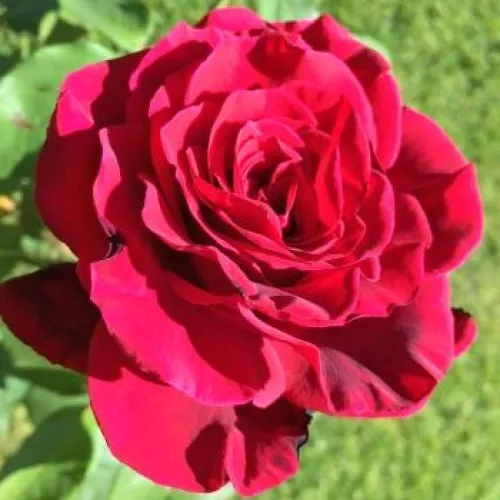
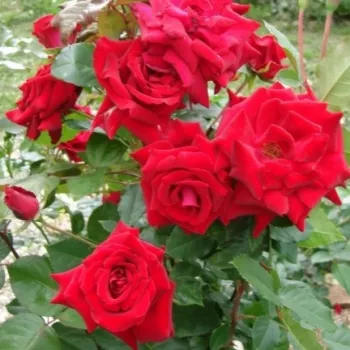
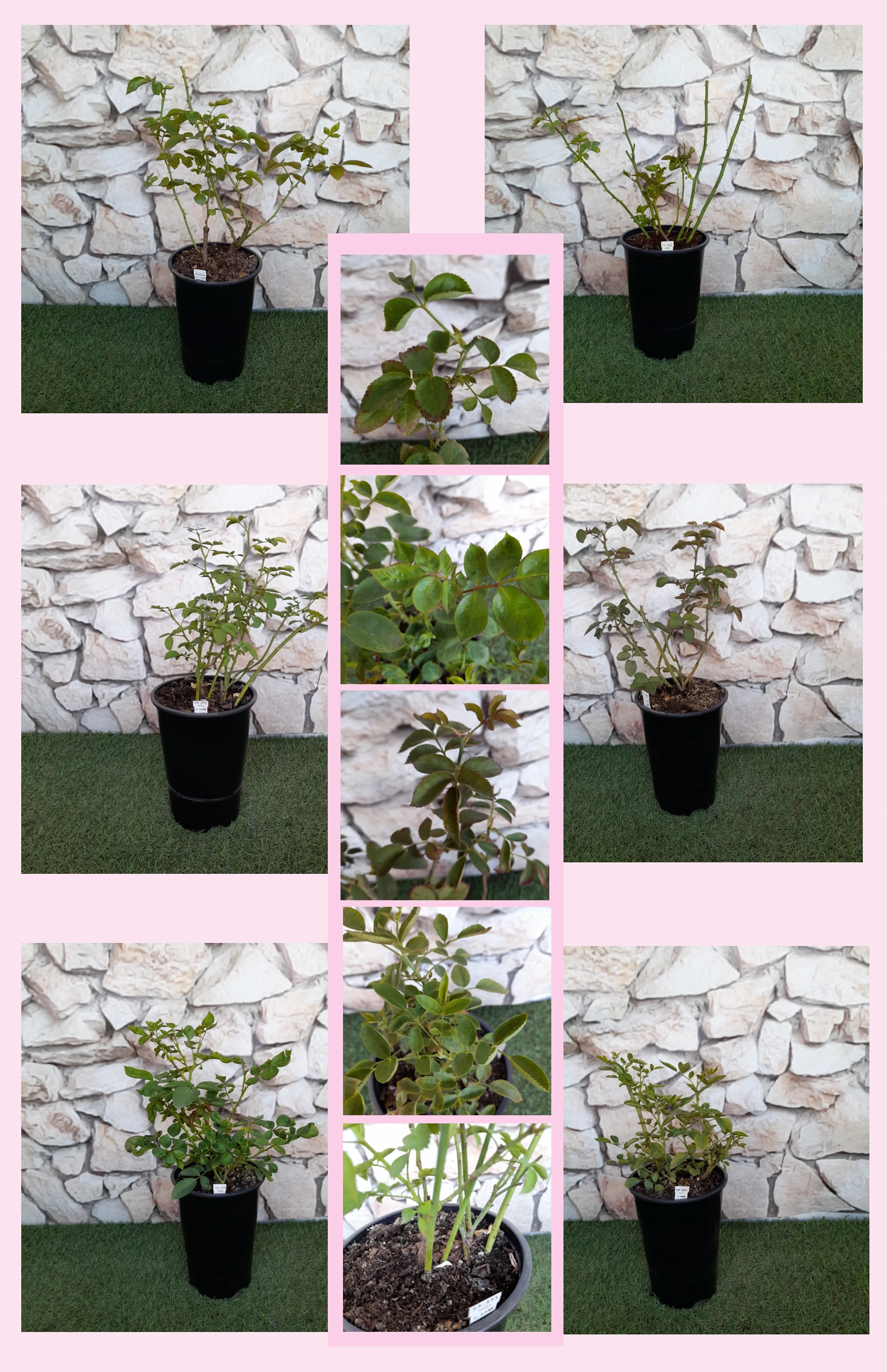
Bring a touch of storybook romance to your garden with Uncle Walter, a tall, upright park shrub that covers itself in velvety, scarlet-red blooms from early summer well into autumn. Its vigorous habit and healthy dark foliage make it a reliable structure plant for family gardens, easily trained over an arch, along a fence or as a free-standing specimen. The remontant flowering gives strong repeat flushes, while its proven disease resistance reduces the need for spraying in typical British humidity. Own-root cultivation supports long-term longevity, calmly regenerating from the base if canes are damaged and keeping your border looking balanced for years. Simple planting and low routine care suit busy gardeners seeking classic cottage-garden impact with minimal fuss, even where you must gently manage heavier soils and improve drainage. In its second and third year you will notice a steady maturing into a full, arching shrub that anchors paths and patios, ideal for pairing with soft grasses and perennials to enhance garden atmosphere.
Usage options
| Target area | Reasoning |
|---|
| Romantic specimen in a small to medium family garden |
Uncle Walter builds into a tall, upright shrub that quickly becomes a focal point, yet needs only light annual shaping. Its dependable repeat flowering and glossy foliage provide long-term structure without complex pruning, suiting time-pressed homeowners. |
| Training over an arch, obelisk or low pergola |
The vigorous, upright growth can easily be guided onto supports, giving dramatic scarlet curtains of bloom at eye level. Flexible canes respond well to tying-in, so even less experienced gardeners can create a classic archway effect enjoyed by cottage-garden enthusiasts. |
| Informal flowering hedge or boundary screen |
Planted at hedge spacing, the dense, dark foliage and abundant clusters of red flowers form an informal screen that softens fences and divides garden rooms. Its own-root stability supports a long-lived hedge with modest upkeep, ideal for practical-minded families. |
| Mixed cottage border with perennials and grasses |
Strong, vertical canes and rich colouring give a reliable backdrop to yarrow, sedges and low grasses, while remontant flowering ensures colour between perennial waves. The shrub’s long life on its own roots means the border framework endures, appealing to planning-focused gardeners. |
| Cut-flower source for the home |
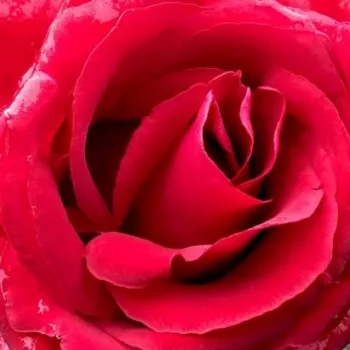
Large, high-centred, double blooms on long, straight stems make Uncle Walter a natural for cutting, bringing deep scarlet tones indoors. Regular picking encourages fresh blooms, giving satisfying return for minimal effort, much appreciated by keen but busy florists-at-home. |
| Low-intervention rose for humid or showery regions |
With good resistance to black spot and powdery mildew, this shrub keeps its foliage presentable even in damp, changeable weather, reducing the need for chemical treatments. Occasional checks for rust are usually sufficient, reassuring cautious beginners. |
| Long-term framework shrub for evolving gardens |
On its own roots, Uncle Walter can regenerate from the base if hard-pruned or weather-damaged, maintaining its outline over many years. As it moves from establishing roots to strong top growth and then full ornamental presence, it rewards patient, forward-looking planners. |
| Urban and coastal-style beds needing visual ‘anchor’ plants |
The tall height and firm, upright habit give a clear vertical accent that holds its own among paving, gravel and structural companions such as sedges or New Zealand flax, while coping well with blustery, rain-lashed conditions in exposed plots valued by city-edge garden-owners. |
Styling ideas
- Storybook-arch – Train Uncle Walter over a simple metal arch, underplant with soft yarrow and catmint for frothy contrast – for romantically inclined cottage-garden lovers.
- Crimson-hedge – Plant a loose hedge along a drive, interspersed with glaucous sedges to cool the rich red flowers – for families wanting a traditional yet low-fuss boundary.
- Kitchen-border – Place as a tall backdrop behind herbs and veg, tying stems to discreet posts for support – for home cooks who like to cut a few roses for the table.
- Urban-anchor – Use a single shrub in a large 40–50 litre container by the front door with gravel mulch – for busy urban dwellers seeking presence without intricate maintenance.
- Gravel-drift – Set amongst ornamental grasses and New Zealand flax in a free-draining bed for a modern, eco-friendly feel – for design-conscious gardeners who enjoy structured yet naturalistic planting.
Technical cultivar profile
| Parameter | Data |
|---|
| Name and registration |
Uncle Walter, registered shrub/park rose; ARS exhibition name Uncle Walter. Commercially offered as a park shrub rose for specimen, hedge and landscape use in family gardens. |
| Origin and breeding |
Bred by Samuel Darragh McGredy IV from ‘Detroiter’ × ‘Heidelberg’, raised in New Zealand in 1959 and introduced in 1962 via Samuel McGredy & Son, Nurserymen, Northern Ireland. |
| Awards and recognition |
Recipient of respected Nordic awards including the Nord-Rose Award in Scandinavia and a Gold Medal at the Copenhagen trials, confirming garden performance and ornamental value. |
| Growth and structural characteristics |
Vigorous, upright shrub to around 240–340 cm high and 90–160 cm wide with dense, glossy dark green foliage with a bronze tint and moderate prickles; can be trained as a low climber. |
| Flower morphology |
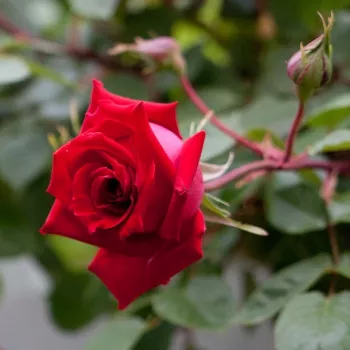
Large, double, high-centred blooms with 26–39 petals, typically carried in clusters. Strong remontant habit gives an abundant second flush and further flowers into late season on well-grown plants. |
| Colour data and phenology |
Deep scarlet-red with velvety sheen; buds open vivid scarlet, deepening towards crimson before a moderate fade in strong sun. Colour remains rich in cool weather, giving striking, stable display. |
| Fragrance and aroma |
Fragrance is very weak and of neutral character; chosen primarily for flower form, colour and garden performance rather than scent. Double blooms offer only moderate attractiveness to pollinating insects. |
| Hip characteristics |
Forms moderate numbers of bright red, ovoid hips around 9–15 mm across, adding late-season interest if spent flowers are not removed, and providing a subtle ornamental effect into autumn. |
| Resistance and winter hardiness |
Rated H6 with approximate tolerance to –15 to –12 °C; good resistance to black spot and powdery mildew, moderate rust sensitivity. Performs well in warmth but needs watering in prolonged dry spells. |
| Horticultural recommendations |
Best in sunny sites with reasonable soil; allow 105–200 cm spacing depending on hedge or specimen use. Suits low-maintenance regimes, with occasional deadheading and light pruning to shape as required. |
Uncle Walter offers tall, repeat-flowering scarlet display, reliable disease resistance and long-lived own-root resilience; a considered choice if you seek lasting structure and colour with minimal fuss.