TUSCANY SUPERB – purple historic Gallica rose – Rivers
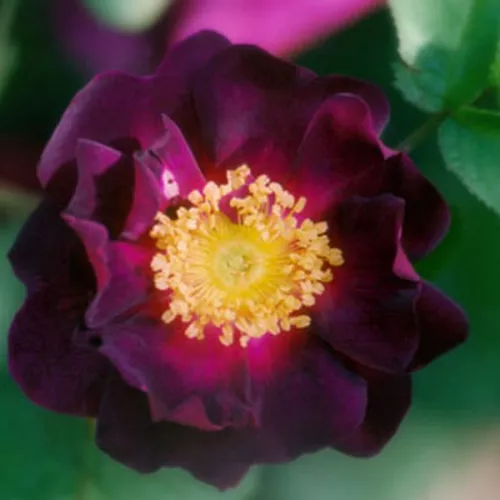
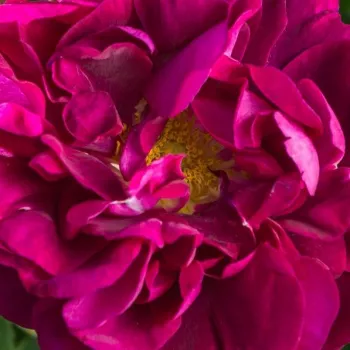
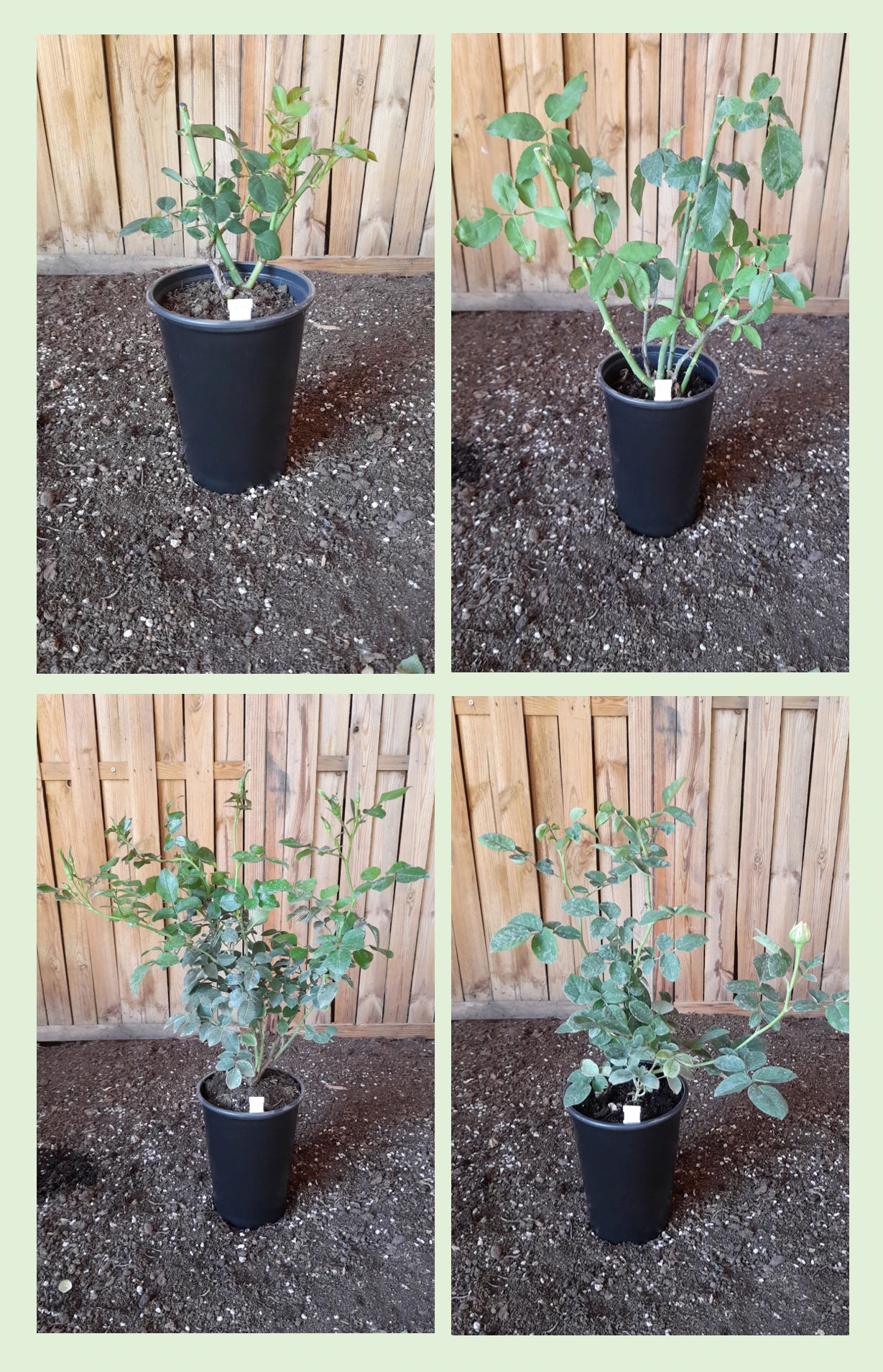
Step into a world of velvet colour and old‑world romance with ‘Tuscany Superb’, a historic Gallica shrub rose whose very strongly scented blooms evoke afternoon tea beneath an arbour in an English cottage garden. Its deep crimson‑purple flowers with golden stamens create a dramatic focal point in mixed borders and informal hedges, while the dense, bushy habit gives a quietly structured backdrop to perennials and kitchen‑garden planting. Grown on its own roots, it settles once and then endures, regenerating from the base for a naturally long‑lived, reliable presence without graft worries. In typical British conditions it copes steadily with blustery, damp spells near the coast and other exposed gardens, especially where soil preparation improves drainage and aeration. Over time you will see a gentle development arc, with roots establishing in the first year, stronger framework of shoots in the second, and by the third year the full character and bloom display shining through across early summer for a truly storybook garden moment.
Usage options
| Target area | Reasoning |
|---|
| Romantic cottage‑style mixed border |
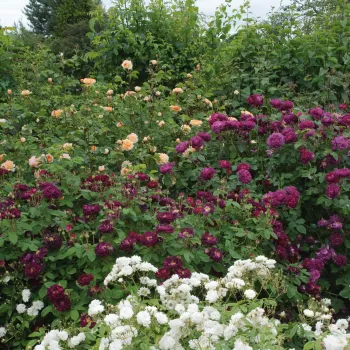
The deep crimson‑purple, semi‑double blooms with golden stamens give a historic, cottage‑garden feel that reads beautifully from a terrace or sitting‑room window, creating that storybook focal point in early summer for lovers of romantic planting and traditional‑style gardens. |
| Feature shrub near seating or terrace |
Its very strong, classic rose fragrance is ideal beside a bench or patio, where the once‑a‑year flowering becomes a seasonal highlight and the dense foliage frames outdoor furniture for those who value scented, atmospheric spaces and cosy‑garden corners. |
| Informal flowering hedge along a boundary |
The bushy, densely foliaged habit and 100–150 cm height make it suitable for loosely clipped, informal hedges, providing privacy and a period of intense colour for families wanting soft, green boundaries and characterful‑hedging solutions. |
| Historic or period‑style garden schemes |
Introduced in 1837 and bred in Britain, it suits Victorian or heritage garden restorations, tying planting to the house’s history for homeowners who appreciate authenticity and heritage‑focused design. |
| Kitchen‑garden edges and productive plots |
The dense, matt mid‑green foliage and richly coloured flowers lend structure around vegetable beds, echoing traditional potager layouts that mix produce and ornament for those who enjoy practical spaces with a distinctly cottage‑garden feel. |
| Exposed or coastal‑influenced family gardens |
Hardy to around –30 °C with a robust shrub framework, it anchors beds in gardens that see wet, windy spells, where careful soil preparation helps it handle long periods of rain and blustery weather for coastal‑region gardeners. |
| Large decorative containers by entrances |
In a generously sized planter of at least 40–50 litres, it forms a bushy, upright shrub whose annual flush of purple‑crimson flowers makes a striking welcome for busy homeowners wanting impact without complex maintenance in potted‑rose displays. |
| Low‑input, long‑term plantings |
As an own‑root rose it can regenerate from the base if stems are damaged, building a stable, long‑lived shrub that rewards a simple yearly prune, suiting gardeners who prefer resilient, enduring plants in their low‑maintenance borders. |
Styling ideas
- Cottage Arbour Romance – Train ‘Tuscany Superb’ loosely around an arch and underplant with foxgloves and ladies’ mantle to frame a seating nook – ideal for cottage‑garden romantics seeking a scented afternoon‑tea corner.
- Kitchen‑Garden Border – Line the edge of a vegetable plot with a short run of shrubs, interplanted with chives and marigolds, to echo traditional potager style – for home growers who like beauty woven through the practical rows.
- Historic Front Garden – Combine with box balls, lavender and brick edging for a period feel that suits older houses – perfect for owners of Victorian or Georgian homes wanting era‑appropriate planting.
- Coastal‑Tolerant Shrub Mix – Plant alongside tough grasses and hydrangeas where wind is an issue, using soil preparation to aid wet‑weather resilience – for coastal or exposed‑site gardeners wanting traditional roses in mixed schemes.
- Entrance Feature Pot – Grow in a 50‑litre container with trailing thyme at the base on either side of a front door – suited to busy urban or suburban households wanting seasonal drama with simple ongoing care.
Technical cultivar profile
| Property | Data |
|---|
| Name and registration |
‘Tuscany Superb’ is a historic Gallica shrub rose, used as an exhibition historic shrub and Gallica class, with this long‑established trade name and no separate registered code. |
| Origin and breeding |
Highly regarded British selection, introduced by Thomas Rivers & Son in 1837, probably a sport or seedling of ‘Tuscany’, representing early UK Gallica breeding tradition. |
| Awards and recognition |
Holds the Royal Horticultural Society’s Award of Garden Merit, indicating dependable ornamental performance and general garden value when grown with appropriate cultural care. |
| Growth and structural characteristics |
Bushy, densely foliaged shrub growing to around 100–150 cm high and 80–120 cm across, forming a compact, thorny framework suited to borders, specimens and low informal hedges. |
| Flower morphology |
Semi‑double, flat blooms of medium size, usually carried in clusters, with 17–25 petals; once‑flowering in early summer, followed by moderate self‑cleaning of spent petals. |
| Colour data and phenology |
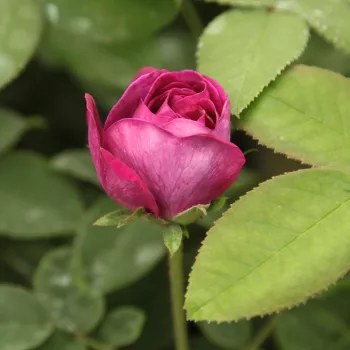
New flowers open rich crimson‑purple with velvety sheen, deepen towards smoky purple, then may fade to bluish tones in strong sun; the golden stamens create a vivid contrasting centre. |
| Fragrance and aroma |
Very strongly scented with a classic old rose character; fragrance is long‑lasting in still air, making it especially suitable for planting close to seats, entrances or garden paths. |
| Hip characteristics |
Hip set is generally light, but some seasons may produce red, spherical hips around 12–18 mm, adding modest late‑season interest without dominating the shrub’s overall effect. |
| Resistance and winter hardiness |
Exceptionally winter‑hardy (approximately USDA zone 4b, RHS H7) but sensitive to black spot and rust; best grown with good airflow, hygiene and regular monitoring in humid areas. |
| Horticultural recommendations |
Suited to borders, hedging and specimen use at 80–170 cm spacing; prefers well‑drained soil, partial shade tolerance, and benefits from preventative disease care and seasonal pruning. |
‘Tuscany Superb’ combines richly coloured, strongly scented historic blooms with a resilient, own‑root shrub habit that matures into a long‑lived feature, making it a thoughtful choice for those shaping a romantic, enduring family garden.