Hybrid tea rose

52-489-1
52-489-2

Tourmaline™

Hybrid tea rose

DELfri – André Delbard -Chabert

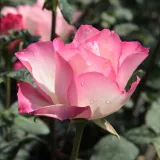
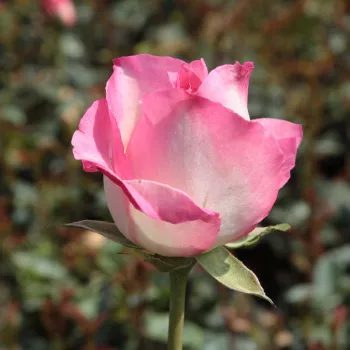
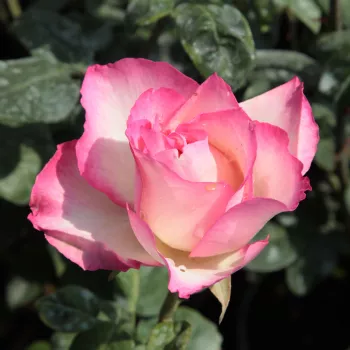
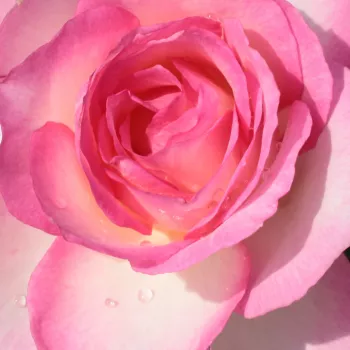
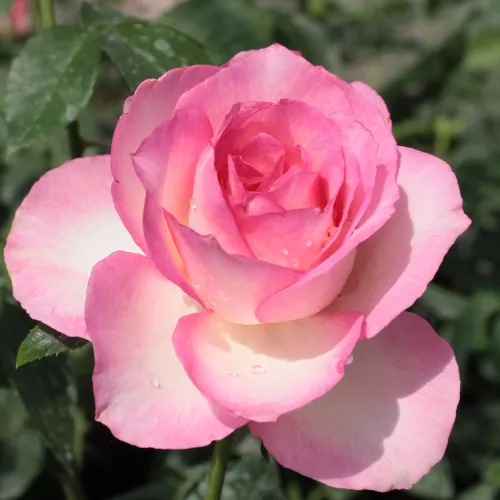
The inner surfaces of the petals are a soft, pastel pink, with the edges distinctly darker in a vivid pink hue. - hybrid tea rose - light, subtly scented rose - subtle, rosy character

– Elegant high‑centred blooms in white‑pink shades.
– Reliable remontant flowering through the season.
– Upright habit, ideal for beds and cutting.
– Proven show winner with multiple top awards.
– Good hardiness to approx. −20 °C, H7 rated.
Special feature: Light, refined rosy fragrance for intimate garden spaces.
Everyday elegance – Meticulous packaging
Tourmaline™
darinaROSE® ORIGINAL 2-litre own-root potted rose
19,30 £
Unfortunately, we are currently unable to ship to the United Kingdom; we only deliver to countries within the European Union. For more information, please contact us!
4.5 (6331)
facebook   twitter

TOURMALINE™ – white-pink tea hybrid rose – Delbard-Chabert

Slip into a romantic, storybook mood with Tourmaline, a hybrid tea rose whose pastel blooms bring a sense of afternoon tea elegance to even the smallest family garden. This upright, moderately tall rose produces refined, high‑centred flowers in soft white‑pink shades that brighten beds and borders while remaining beautifully harmonious with cottage‑style planting. Bred for cut‑flower quality yet easy to look after in the garden, it offers reliable repeat flowering from summer onwards, with each bloom held singly on strong stems that beg to be brought indoors. As an own‑root plant in our 2‑litre container, it settles in quickly, develops a robust framework and regenerates well after pruning, giving stable shape and longevity without complicated care. Over time it builds deep, anchoring roots that cope well with breezier, moisture‑laden conditions near the coast, supporting healthy growth in typical British climate. Light, classic fragrance and moderately thorny, tidy stems make it an inviting choice near paths, seating and kitchen‑garden plots, where its gently glowing pastel tones feel especially welcoming. Expect a natural progression from root establishment to strong shoots and, by about the third year, its full ornamental character in the border, rewarding patient, low‑effort gardening.


Usage options

Target areaReasoning
Feature rose in a small to medium front garden The upright habit and medium height make Tourmaline ideal as a graceful focal point by a front window or entrance, offering refined hybrid tea blooms without dominating the space or demanding complex care, suiting the time‑pressed homeowner.
Cottage‑style mixed border in a family back garden Reliable repeat flowering and romantic white‑pink tones blend effortlessly with perennials and herbs, giving that “English countryside” border look while remaining straightforward to prune and manage, especially valued by relaxed cottage‑garden enthusiasts.
Cutting bed for home‑grown vase flowers Originally bred as an exhibition‑type hybrid tea, Tourmaline produces high‑centred, pointed buds on long, straight stems, perfect for cutting and arranging, adding a touch of classic floristry to the homes of creative hobbyists.
Long‑term structural rose in stable planting schemes As an own‑root rose, Tourmaline builds a durable, regenerating framework that ages gracefully, maintaining its ornamental value for many seasons without the graft issues seen in budded roses, reassuring long‑range‑planning garden planners.
Roses in exposed or breezier family plots A well‑anchoring root system and balanced top growth help Tourmaline remain steady and tidy in windier gardens where moisture and breeze combine, making it a dependable choice for more weather‑challenged plot owners.
Border plant for busy or less‑experienced gardeners Moderate maintenance and good resistance to powdery mildew and black spot keep routine care simple; with basic watering, feeding and occasional checks, it stays attractive, supporting confidence among newer or time‑poor garden beginners.
Season‑round container on terrace or patio Our 2‑litre, own‑root plants establish well into a minimum 40–50 litre pot, where Tourmaline’s upright habit and refined blooms give a long‑lived, moveable feature with manageable pruning needs, ideal for flexible‑space balcony and terrace users.
Soft‑coloured family seating or play area The gentle, light fragrance and pastel, fading‑to‑white flowers create a calm, non‑overpowering backdrop near seats or play spaces, offering visual charm and a mild scent that suits comfort‑seeking families and sensitive‑nose garden visitors.

Styling ideas

  • COTTAGE RIBBON – Plant Tourmaline in a loose row along a path, threading between catmint and low herbs for a soft, storybook edge – for fans of informal, romantic front gardens.
  • TEA TERRACE – Place a large pot with Tourmaline beside a bistro set, underplanting with trailing thyme and violas – for those who like afternoon tea corners on patios.
  • PASTEL PANEL – Combine Tourmaline with lamb’s‑ear, white verbena and blue sedges for a cool, textural border – for homeowners who prefer calm, harmonious colour palettes.
  • VASE GARDEN – Dedicate a narrow strip to several Tourmaline bushes for a steady supply of cutting stems – for creative arrangers who enjoy bringing garden flowers indoors.
  • STORYBOOK ARCH – Flank a simple metal arch or gateway with Tourmaline and repeat‑flowering climbers in matching tones – for families wanting a picture‑book entrance to the garden.

Technical cultivar profile
ParameterData
Name and registration Hybrid tea rose; registered cultivar name DELfri, marketed as Tourmaline™ Hybrid tea rose DELfri; ARS exhibition name Tourmaline, named after the tourmaline gemstone.
Origin and breeding Bred by André Delbard‑Chabert, France, 1965, for Delbard/Georges Delbard SA; parentage Chic Parisien × (Michèle Meilland × Bayadère); introduced and first distributed in 1965.
Awards and recognition Highly decorated 1965 introduction: Certificat de Mérite, Bagatelle (Paris); Lyon First Prize, Gold Medal and “Plus Belle Rose de France”; Madrid “Rose of Madrid” and Gold Medal.
Growth and structural characteristics Upright bush, around 100–140 cm tall with 50–70 cm spread; moderately dense, slightly glossy light‑green foliage and moderate prickliness, giving a tidy, vertical accent in borders.
Flower morphology Classic hybrid tea form with high‑centred, pointed buds; double blooms with 26–39 petals, medium‑sized solitary flowers ideal for cutting; repeat flowering with an abundant second flush.
Colour data and phenology White‑pink bicolour effect: creamy pastel centres with deeper pink edges, buds deeper pink; colour fades through soft pale pink to near‑white with a light pink margin as blooms mature.
Fragrance and aroma Light, refined scent with a subtle rosy character; pleasant near seating yet never overpowering, complementing its visual elegance for gardeners preferring gentle, understated fragrance.
Hip characteristics Occasional small hips form after flowering; spherical, red fruits about 8–12 mm in diameter, adding a discreet seasonal detail without dominating the plant’s ornamental display.
Resistance and winter hardiness Hardy to approximately −21 to −18 °C (RHS H7, Swedish Zone 3, USDA 6b); resistant to powdery mildew and black spot, with moderate rust susceptibility, supporting medium‑effort care.
Horticultural recommendations Space 45–85 cm depending on use, 3.3–3.8 plants/m² for mass effect; medium maintenance with occasional pest and disease checks; suitable for beds, borders and large containers.

Tourmaline™ Hybrid tea rose DELfri offers reliable repeat flowering, a long‑lived own‑root framework and romantic white‑pink blooms; consider it if you want enduring, gently elegant structure with relatively simple care.

Detailed product attributes

Product Identification Data

Product Name: TOURMALINE™ – white-pink tea hybrid rose - Delbard-Chabert
Product Type: darinaROSE® ORIGINAL - 2-litre own-root potted rose
Cultivar Authenticity: Verified:23.08.2025
Item Number: [16] 52-489 (14.02.2026) darinarose.co.uk

Name and Registration

Meaning of Cultivar Name: The word "tourmaline" refers to the semi-precious gemstone.

Original Trade Name: Tourmaline
Current Trade Name: Tourmaline™ Hybrid tea rose DELfri
Rose Group: Hybrid Tea
Commercial Type: hybrid tea rose
Commercial Group: Hybrid tea rose
Exhibition Category: cut flowers; exhibition tea hybrid
Collection: Hybrid tea rose

Origin and Breeding

Initial Distributor: Georges Delbard SA (France)
Breeder: André Delbard -Chabert
Breeding Company / Institution: Delbard; Georges Delbard SA
Breeding Year: France, 1965
Parentage: Chic Parisien × (Michèle Meilland × Bayadère)

Awards and Honours

Competition and Show Awards: Bagatelle (Paris) – Certificat de Mérite (1965); Lyon – 1st Prize (1965); Lyon – Gold Medal (1965); Lyon – "Plus Belle Rose de France" (1965); Madrid – "Rose of Madrid" Award (1965); Madrid – Gold Medal (1965)

Growth and Structural Characteristics

Height: 3.3-4.6ft (100-140 cm)
Spread: 1.6-2.3ft (50-70 cm)
Growth Habit: upright
Foliage: The variety has moderately dense foliage; its leaves are slightly glossy and light green in colour.
Prickliness: moderately thorny
Self-Cleaning Description: No information on self-cleaning.
Self-Cleaning Intensity: No data on self-cleaning strength.

Flower Morphology

Petal Count: 26-39
Flower Fullness: double-flowered
Flower Shape: high-centred, pointed-budded (cut-rose type)
Flower Size: M (1,5-2,75 in)
Inflorescence Type: solitary
Colour Code: ARS code: LP RHS code: 68A (outer), 62C (inner)
Repeat Flowering: Remontant; the second flowering is also abundant.

Colour Data and Phenology

Colour: white-pink
Flower Colour Description: The inner surfaces of the petals are a soft, pastel pink, with the edges distinctly darker in a vivid pink hue.
Closed Bud: Bud with a deep-pink tip and a paler base, with a uniformly glossy surface.
Newly Opened Flower: The outer petals have a vivid, mid‑pink edging, while the inner petals open in a light, creamy pink.
Full Bloom: The colour fades to a pale pink, with a delicate, slightly darker pink outline remaining at the edges.
Before Fading: The petals fade to a pale pink, almost white, with only a faint pink hue visible at the edges.
Colour Fading Description: The pastel pink fades markedly during opening; at full bloom it is light pink, and just before withering it is almost white with a slight pink margin.

Fragrance and Aroma

Fragrance Strength: light, subtly scented rose
Fragrance Character: subtle, rosy character
Pollinator Attraction: Double (26–39 petal) flowers attract pollinators only to a limited extent, as the double flower form and reduced accessibility of the stamens restricts pollinators’ access to nectar and pollen.
Pollinator-Friendly Rating: The descriptions do not specifically mention pollinator-friendly.

Hip Characteristics

Hip Shape: spherical
Hip Colour: red
Hip Comment: Occasionally produced, 8–12 mm in diameter, spherical, red rose hips.

Resistance and Hardiness

Hardiness (°C): -21–-18 °C
Heat and Drought Tolerance Description: No data are available on heat–drought tolerance.
Disease Resistance: moderate
  • powdery mildew – resistant
  • black spot – resistant
  • rust – moderate

Horticultural Recommendations

Recommended Planting Distance: for mass planting 55 cm, for hedging 45 cm, as a solitary specimen 85 cm
Planting Density: in square planting 3,3 plants/m², in hexagonal arrangement 3,8 plants/m²
Maintenance Requirement: Maintenance requirement medium; occasional pest and disease control required.
Primary Uses: no data

Comments

Strengths: Everyday elegance – Meticulous packaging
Companion Plants: Verbena hastata ‘White Spires’ - profusely flowering white verbena
Stachys byzantina - woolly lamb's-ear
Carex flacca 'Blue Zinger' - glaucous sedge
Comment: -
TOURMALINE™ – white-pink tea hybrid rose - Delbard-Chabert
The inner surfaces of the petals are a soft, pastel pink, with the edges distinctly darker in a vivid pink hue. - hybrid tea rose - light, subtly scented rose - subtle, rosy character
Online rose order - hybrid tea rose - Tourmaline™ - white-pink - (3.3-4.6ft (100-140 cm))
Inflorescence: solitary Height: 3.3-4.6ft (100-140 cm) Flower shape: high-centred, pointed-budded (cut-rose type) Winter hardiness: 5b white-pink - Georges Delbard SA (France) hybrid tea rose - Flower size: M (1,5-2,75 in) Flower size: M (1,5-2,75 in) - Height: 3.3-4.6ft (100-140 cm) Height: 3.3-4.6ft (100-140 cm) - Flower fullness: double-flowered Tourmaline™ - Roses in the garden | darinaROSE® Original - standard André Delbard -Chabert

We showcase the external appearance of the roses available for online purchase from our webshop.


Which product type is right for you?


Information

In what condition do we send the rose from our online webshop?

Let us ask ourselves the question: What do I want to use the rose for?
Flower? - Location? - Cover? - Fragrance? - Height? - Breeder? - Rose hips?

Rose purchase information
Methods of payment - Delivery charges - Delivery - Complaints handling

Care guide

Our product is a rose grown with pharmaROSA®’s unique cultivation technology!

2-litre, own-root, potted rose.
With a shoot system appropriate to the season.
With a root system that thoroughly permeates the growing medium.
Quality compliant with the requirements of the E.N.A. (European Nurserystock Association).
Supplied in unique packaging that prevents damage.
Can be planted during frost-free periods.
True-to-variety rose bush with a unique identifier.

The pharmaROSA® own-root potted rose is a well-rooted plant that supports reliable establishment when planted and cared for properly, so it can be planted whenever the soil is not frozen.


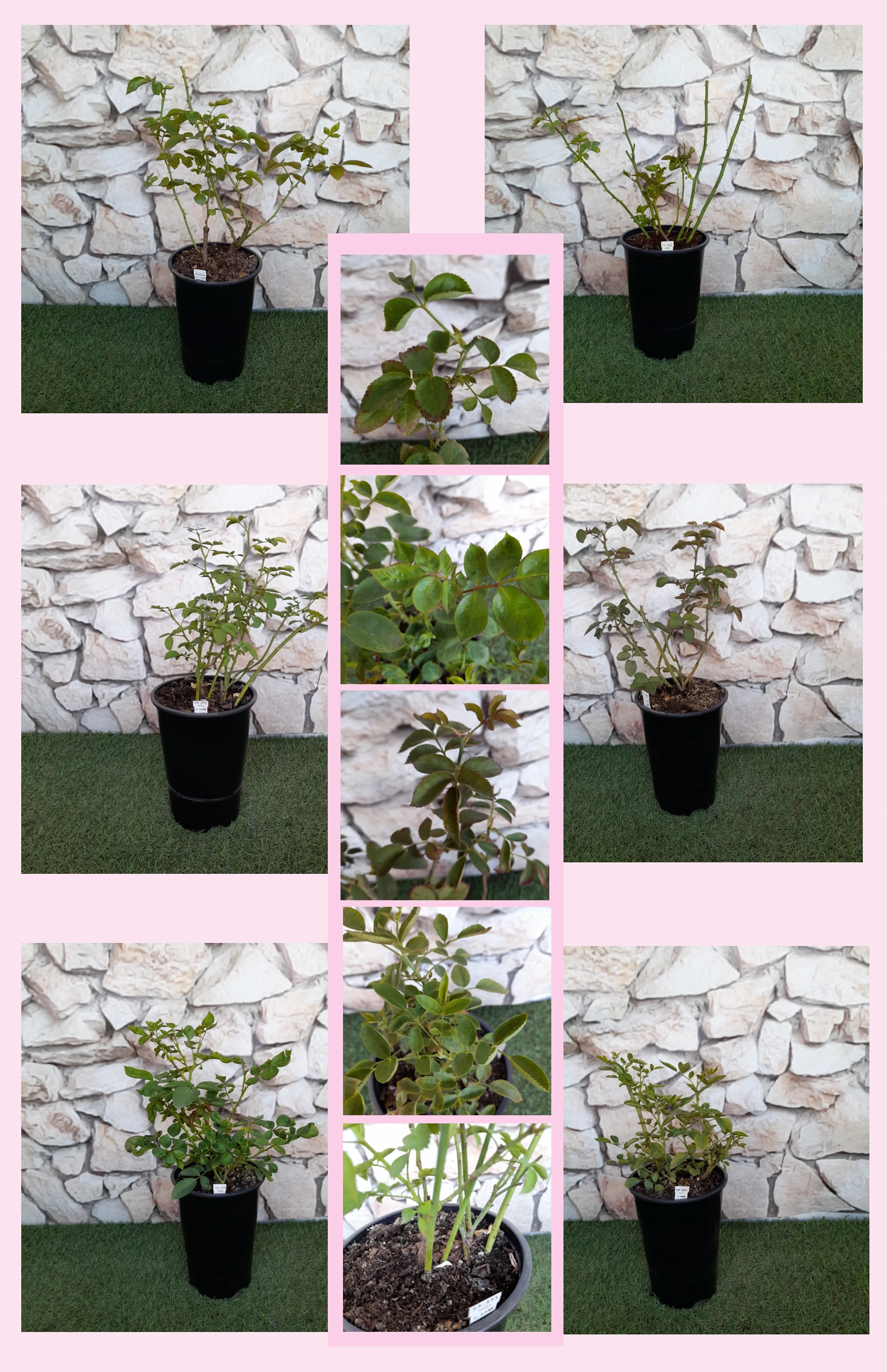
Crop overview: several varieties and growth stages in a short crop section.
Shoot system: intensive growth of fresh basal shoots on a young plant.
Root system: demonstration of a vigorous root system permeating the growing medium, by removing the pot.
Balance: mature plant with root system and shoots in harmony with each other.

Information about the videos
The video series is not a “seasonal showcase”; it illustrates the essence of pharmaROSA® own-root cultivation in a tangible way: how the plant is built up, what the root system is like and how the shoot system regenerates. The recordings were therefore made at different times and with plants at various stages of development, so mixed foliage levels and differing stages of growth may appear in the videos. They are not a ‘sample’ of the batch dispatched, but a visual explanation of how the technology works. The current condition of the rose available to order — typical for the given period and similar to what you can expect to receive in the parcel — is shown in the upper part of the product page.

pharmarosa.compharmarosa.skpharmarosa.ropharmarosa.depharmarosa.co.ukpharmarosa.sipharmarosa.czpharmarosa.atpharmarosa.plpharmarosa.hrpharmarosa.frpharmarosa.espharmarosa.bepharmarosa.nlpharmarosa.iepharmarosa.grpharmarosa.bgpharmarosa.ltpharmarosa.lvpharmarosa.lupharmarosa.rufrancescarose.itpharmarosa.dkpharmarosa.ptpharmarosa.sepharmarosa.eepharmarosa.fi

Product types

Pages for private customers
Garden roses for the family garden, with minimal care  → ORIGINAL®
Premium garden roses – instant impact, a truly showpiece garden  → EXTRA®
Pages for professionals and private customers
Roses for public spaces – large areas, sustainable maintenance  → NATURAL®
Roses for projects – hedge and row planting, fast implementation  → RAPID®
For professional partners only
Production – propagation material for garden roses, wholesale  → NEONATAL®

Company details

PharmaRosa Ltd.
Company registration number: 01-09-717479
VAT number: 13075314-2-43
Plant health registration no.: HU130721
Bank account (IBAN):
HU85117631891388688400000000
BIC (SWIFT): OTPVHUHB
Bank name: OTP Bank Nyrt.