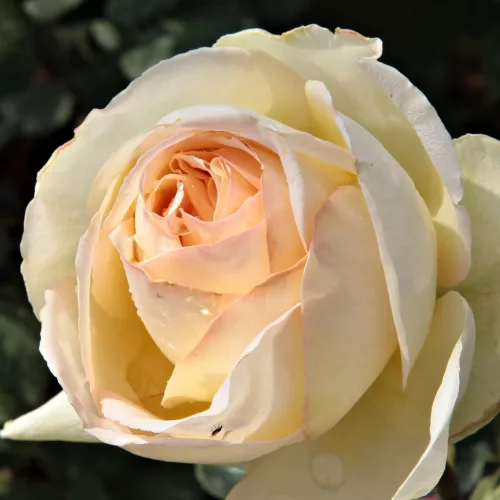
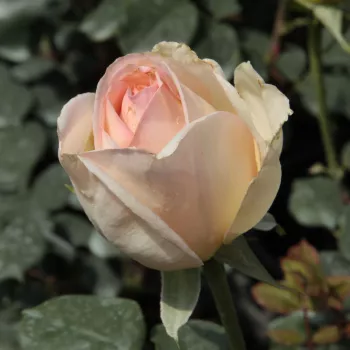
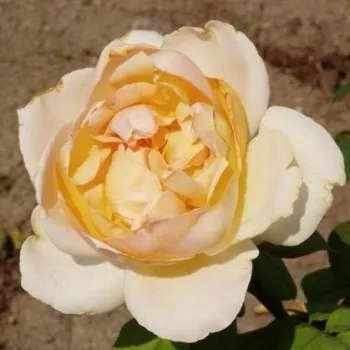
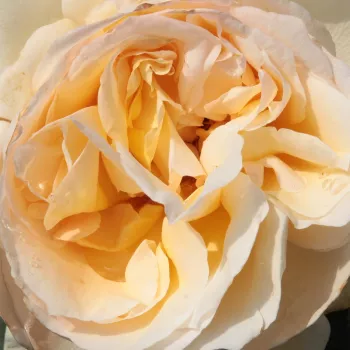
Its creamy base colour is enriched with vivid yellow tones and a delicate pink veil. - hybrid tea rose - medium-strength, noticeably scented rose - scent description not available
– Cream‑yellow blooms with delicate pink veil
– Very full, elegant pompon‑shaped flowers
– Reliable remontant rose with plentiful repeats
– Tall, upright growth for beds and cutting
– Ornamental orange‑red hips in autumn
– Special feature: Classic Delbard hybrid tea from 1965, ideal as a nostalgic specimen.
In harmony with nature – Safe in the long term
darinaROSE® ORIGINAL 2-litre own-root potted rose
17,90 £
Unfortunately, we are currently unable to ship to the United Kingdom; we only deliver to countries within the European Union. For more information, please contact us!
4.5(6897)
TOPAZE ORIENTALE™ – cream‑yellow hybrid tea rose – Delbard‑Chabert
Gracefully combining classic form and contemporary reliability, Topaze Orientale™ brings a sense of romance to family gardens, especially where you dream of afternoon tea beneath an arbour. Its upright habit and dense, matt mid‑green foliage provide a refined structure for cottage‑style borders, while the very full, ball‑shaped blooms offer enduring elegance as cut flowers or as a focal point by a path or terrace. The creamy‑yellow petals brushed with a pink veil create a soft palette that flatters brickwork, hedging and kitchen‑garden plantings alike. On its own roots, this rose is bred for long lifespan and dependable regrowth after pruning or minor mishaps, helping it to settle securely even where breezes test garden stability. With thoughtful watering during prolonged dry spells and simple deadheading, you can enjoy its remontancy from early summer to autumn, steadily building up a fuller display over the first three seasons as roots, then shoots, and finally the complete garden picture develop. Its moderate height and contained spread make it particularly versatile for small and medium British family plots, including raised beds and well‑drained heavy clay.
The upright habit and 130–170 cm height give Topaze Orientale™ enough presence to act as a focal point without overwhelming a modest border. The dense foliage creates a structured backdrop for airy perennials, while remontant flowering ensures repeated waves of interest through the season for romantic cottage gardeners.
Cutting patch beside a kitchen garden
Very full, ball-shaped blooms with over 40 petals and a noticeable fragrance make this cultivar ideal for cutting, providing classic hybrid tea stems for vases. Its repeat flowering allows regular harvesting while maintaining garden display, and own-root vigour supports long-term productivity for home flower arrangers.
Single specimen near seating or terrace
Planted as a specimen at around 90 cm spacing, the refined cream-yellow and pink-toned flowers bring a soft, storybook atmosphere to patios and seating areas. Moderate height keeps blooms at eye level, while the own-root form supports steady regeneration after pruning for busy family homeowners.
Traditional rose hedge in a front garden
Used at about 50 cm intervals, its upright growth and dense foliage create a classic, semi-formal rose line that frames drives or paths. Repeated flowering and reliable regrowth from the rootstock help maintain a consistent look over many years for lovers of traditional frontage.
Raised bed on heavy clay soils
Where soil is heavy, this rose suits raised beds with improved drainage, allowing its roots to establish steadily and support long-term growth. Once settled, the own-root system copes well with routine pruning and seasonal weather shifts for gardeners on challenging ground.
Large container on balcony or small terrace
In a minimum 40–50 litre container with quality compost, its moderate spread and upright habit make an elegant vertical accent. The long-lived, own-root nature means that with periodic repotting and feeding, it can remain a stable feature of compact outdoor spaces for urban balcony owners.
Sheltered spot in coastal or breezy gardens
Once anchored, its upright, moderately thorny framework and dense foliage give a stable shape that sits comfortably in gardens occasionally tested by wind, especially when combined with simple staking in exposed years, offering dependable form and flower for coastal and windy-site gardeners.
Low-input family border with seasonal care
While it needs regular protection against rust and some disease monitoring, basic routines of watering in dry weather, feeding, and deadheading are straightforward. Over the first three seasons it matures from establishing roots to a full ornamental display, well suited to time-pressed hobby gardeners.
Styling ideas
Tea-Table Charm – Position Topaze Orientale™ by a bench or arbour and underplant with low Gypsophila and herbs for a soft, frothy base – ideal for those creating an afternoon-tea corner.
Kitchen-Plot Classic – Line a kitchen-garden path with spaced specimens, weaving between rows of sage and chives to link productive beds with romantic cut flowers – perfect for cottage-vegetable growers.
Pastel Hedge – Form a loose hedge and alternate with lavender or Nepeta to blur the boundary and provide a scented, bee-friendly foreground – suited to front gardens seeking gentle privacy.
Container Focus – In a 50 litre terracotta pot, combine this rose with trailing thyme and violas to soften the rim and frame its creamy blooms – ideal for small patios and balconies.
Storybook Border – Place as a vertical accent among clustered bellflower and low grasses, letting the round blooms rise above a textured understorey – for those curating a romantic, picture-book border.
Technical cultivar profile
Parameter
Data
Name and registration
Hybrid tea rose Topaze Orientale™; registered cultivar name Topaze Orientale, ARS exhibition name Topaze Orientale; group: Hybrid Tea; commercial type and group: hybrid tea rose.
Origin and breeding
Bred by André Delbard-Chabert, Delbard (France), from cross ‘Sultane’ × ‘Queen Elizabeth’; bred and introduced in France in 1965 by Delbard / Georges Delbard SA.
Growth and structural characteristics
Upright habit, 130–170 cm tall and 70–90 cm spread, moderately thorny; dense, matt, mid-green foliage (RHS 137A); spent flowers persist and require manual removal.
Flower morphology
Very full, ball to pompon-shaped solitary blooms, over 40 petals; medium flower size (about 1.5–2.75 in) on classic hybrid tea stems; remontant with a strong second flush.
Colour data and phenology
Cream-yellow base enriched with vivid yellow and delicate pink veil; ARS YB, RHS 11D outer and 36C inner; tones fade to pastel, especially in strong sun, but retain good overall colour effect.
Fragrance and aroma
Medium-strength, noticeably scented hybrid tea; fragrance character not formally classified but clearly perceptible around seating or cutting areas in warm, still conditions.
Hip characteristics
Moderately abundant ovoid hips, about 12–18 mm diameter, orange-red (RHS 40A); provide additional ornamental interest in late season if flowers are not deadheaded.
Resistance and winter hardiness
Hardy to about −21 to −18 °C; RHS H7, Swedish zone 3, USDA 6b; moderate tolerance of heat and drought with watering in prolonged dry periods; disease sensitive, especially to rust.
Horticultural recommendations
Best in full sun with well-drained soil; needs regular fungicidal protection and deadheading; recommended spacings: 55 cm for beds, 50 cm for hedges, 90 cm as specimen; 3.3–3.8 plants/m² in mass plantings.
Topaze Orientale™ offers elegant, fragrant blooms, reliable repeat flowering and long-term, own-root resilience for family gardens; a thoughtful choice if you value classic roses with enduring presence.
Our product is a rose grown with pharmaROSA®’s unique cultivation technology!
2-litre, own-root, potted rose.
With a shoot system appropriate to the season.
With a root system that thoroughly permeates the growing medium.
Quality compliant with the requirements of the E.N.A. (European Nurserystock Association).
Supplied in unique packaging that prevents damage.
Can be planted during frost-free periods.
True-to-variety rose bush with a unique identifier.
The pharmaROSA® own-root potted rose is a well-rooted plant that supports reliable establishment when planted and cared for properly, so it can be planted whenever the soil is not frozen.
Crop overview: several varieties and growth stages in a short crop section.Shoot system: intensive growth of fresh basal shoots on a young plant.Root system: demonstration of a vigorous root system permeating the growing medium, by removing the pot.Balance: mature plant with root system and shoots in harmony with each other.
Information about the videos
The video series is not a “seasonal showcase”; it illustrates the essence of pharmaROSA® own-root cultivation in a tangible way: how the plant is built up, what the root system is like and how the shoot system regenerates. The recordings were therefore made at different times and with plants at various stages of development, so mixed foliage levels and differing stages of growth may appear in the videos. They are not a ‘sample’ of the batch dispatched, but a visual explanation of how the technology works. The current condition of the rose available to order — typical for the given period and similar to what you can expect to receive in the parcel — is shown in the upper part of the product page.
Pages for private customers Garden roses for the family garden, with minimal care → ORIGINAL® Premium garden roses – instant impact, a truly showpiece garden → EXTRA® Pages for professionals and private customers Roses for public spaces – large areas, sustainable maintenance → NATURAL® Roses for projects – hedge and row planting, fast implementation → RAPID® For professional partners only Production – propagation material for garden roses, wholesale → NEONATAL®
Company details
PharmaRosa Ltd. Company registration number: 01-09-717479 VAT number: 13075314-2-43 Plant health registration no.: HU130721 Bank account (IBAN): HU85117631891388688400000000 BIC (SWIFT): OTPVHUHB Bank name: OTP Bank Nyrt.