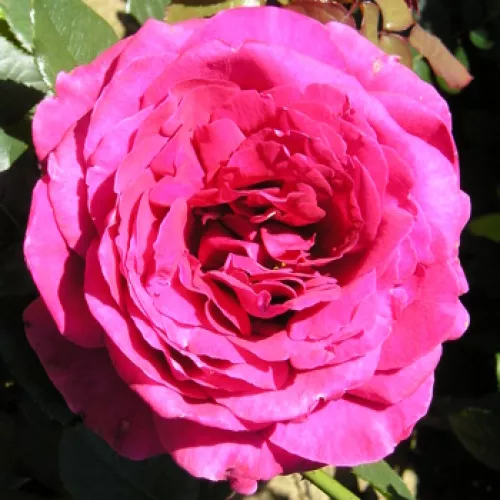
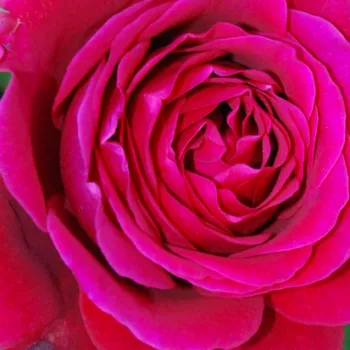
Vivid fuchsia–magenta pink petals with a deep raspberry-red tone. - hybrid tea rose - very strongly scented, garden-filling rose - scent description not available
– Very strongly scented, garden‑filling blooms
– Dark pink, velvety hybrid tea flowers
– Reliable repeat flowering through the season
– Upright, compact habit for borders and pots
– Excellent disease resistance in garden use
– Special feature: Award‑winning rose with a Glasgow Fragrance Award and Monza Gold Medal pedigree.
Customer-centric focus – Climate-conscious choice
darinaROSE® ORIGINAL 2-litre own-root potted rose
19,10 £
Unfortunately, we are currently unable to ship to the United Kingdom; we only deliver to countries within the European Union. For more information, please contact us!
3.5(5654)
Thomas Barton PERFUMELLA® MEIhirvin – deep pink hybrid tea rose
Imagine afternoon tea among raspberry petals and glossy foliage as Thomas Barton PERFUMELLA® settles into your family garden, thriving even where coastal breezes and wet spells demand reliable resilience. This compact, upright hybrid tea delivers sumptuous, very double blooms with a romantic form and a very strong, garden-filling fragrance, ideal for picking as long-stemmed cut flowers for the table. Its naturally healthy foliage and solid disease resistance keep maintenance pleasantly simple, while the own-root structure supports a long-lived, regenerating shrub that fits beautifully into a cottage-style border or raised bed.
Freshly opened bloom of Thomas Barton, showing vivid fuchsia-magenta petals.
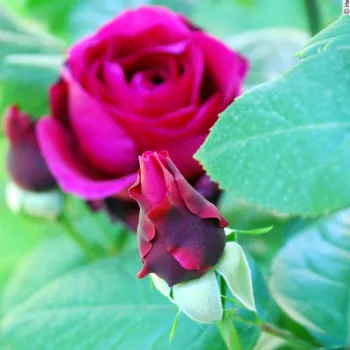
Thomas Barton in closed bud, showing a dark burgundy-crimson, velvety bloom.
Usage options
Target area
Reasoning
Feature rose by the patio or seating area
Compact height and upright growth make Thomas Barton PERFUMELLA® easy to place near a terrace or bench without overwhelming the space, while the very strong scent drifts around your seating, creating a cosy, storybook feel for those who want romance with little fuss, especially beginners.
Cottage-style mixed border in a family garden
The rich raspberry-pink flowers and medium-green, glossy foliage sit perfectly among perennials and kitchen-garden herbs, giving the soft, “girly” English countryside look with reliable flowering on a sturdy own-root plant that builds presence year by year for homeowners.
Low-maintenance rose hedge or row
Even spacing at the recommended planting distances creates a neat, scented line along paths or boundaries; the good disease resistance and moderate height mean pruning can stay simple and informal, suiting those who want structure without complex care as busy families.
Solitary specimen in a lawn or front garden
A single bush offers exhibition-style blooms in everyday surroundings, with the very double flowers and glossy foliage forming a tidy, upright dome that holds its shape, so even minimal pruning keeps the plant handsome and balanced for style-conscious urbanites.
Cutting corner for home flower arrangements
The hybrid tea form produces long, straight stems with large, cup-shaped, very double flowers ideal for vases; remontant flowering offers a dependable second flush, providing regular bunches of strongly scented blooms through the season for enthusiastic decorators.
Raised bed or improved clay border
Upright growth and moderately dense foliage respond well to deeper, better-drained soil in raised beds, helping the plant cope with heavy ground while still flowering freely, making it a sound option where drainage is tricky for cautious gardeners.
Large container planting near the back door
In a 40–50 litre pot, its compact dimensions and upright habit give a vertical accent with luxurious blooms and fragrance close to the house; own-root growth helps recover if winter or pruning set it back, offering stable value in limited space for balcony owners.
Traditional rose-and-shrub combination planting
Its disease-resistant foliage and strongly coloured blooms pair well with hardy shrubs such as cornus or viburnum, forming a long-lived framework where the rose supplies colour and scent even when weather swings between rain and wind, appealing to long-term planning buyers.
Styling ideas
Patio-Tea-Nook – Position Thomas Barton PERFUMELLA® by a bistro set, under an arbour or pergola, so the intense scent and rich pink blooms frame relaxed afternoon tea – ideal for fragrance-focused romantics.
Raspberry-Ribbon-Border – Plant in a loose row with soft foxgloves, catmint and cottage perennials to create a flowing, pink-accented border that feels informal yet composed – perfect for lovers of classic cottage gardens.
Cup-and-Saucer-Corner – Combine this rose with lavender and low box edging beside the kitchen door, where its cuttable stems are within reach for quick indoor bouquets – suited to practical home florists.
Storybook-Front-Garden – Use a single bush as a focal point in gravel or lawn, with pale violas or hardy geraniums at its feet for a neat but romantic first impression – appealing to house-proud front-garden curators.
Fragrant-Companion-Frame – Pair with shrub dogwoods or viburnums at the back of a bed so the rose’s raspberry-pink flowers glow against their foliage, extending interest from spring to winter – ideal for long-term planners.
Technical cultivar profile
Parameter
Data
Name and registration
Hybrid tea rose, registered as MEIhirvin, marketed as Thomas Barton PERFUMELLA® MEIhirvin; ARS exhibition name Thomas Barton; part of the PERFUMELLA® collection for strongly scented roses.
Origin and breeding
Bred by Alain A. Meilland, Meilland International, France; breeding completed 1987, registered 1988, introduced 1991 via Meilland Richardier, continuing a long line of exhibition-quality hybrid teas.
Awards and recognition
Gold Medal at Monza rose trials in 1987 and Fragrance Award at the Glasgow rose trials in 1995, acknowledging both its exhibition-level flower form and its outstanding, garden-filling scent.
Growth and structural characteristics
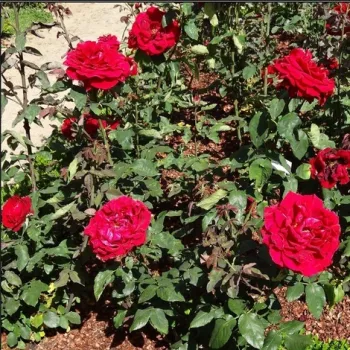
Compact, upright bush 75–105 cm high and wide, with moderately dense, medium-green glossy foliage and moderate prickliness; maintains a tidy outline suitable for borders, low hedging and containers.
Flower morphology
Large, very double, high-centred to cupped blooms with 40+ petals, mainly borne singly on stems; remontant with a generous second flush, giving repeated display and good stems for cutting through the season.
Colour data and phenology
Dark burgundy-crimson buds open to vivid fuchsia-magenta with deep raspberry tones (RHS 60B outer, 53A inner), then soften to raspberry-rose with a lilac veil; colour retention moderate, lending subtle variation over time.
Fragrance and aroma
Very strongly scented hybrid tea, rated garden-filling in strength; fragrance character not formally described but sufficient to win dedicated fragrance awards and to perfume nearby seating or open windows effectively.
Hip characteristics
Hip set generally low due to regular deadheading of double blooms; when allowed, produces small spherical red hips 12–18 mm wide (RHS 44A), offering modest additional late-season interest without seeding issues.
Resistance and winter hardiness
Good overall disease resistance, with noted tolerance to black spot, powdery mildew and rust; hardy to approximately −15 to −12 °C (RHS H6, Swedish zone 2, USDA 7b) with medium heat and drought tolerance.
Horticultural recommendations
Best in full sun with well-prepared soil and regular watering in dry spells; suitable for borders, low hedging, specimens, cutting and large containers, with low maintenance needs and straightforward pruning options.
Thomas Barton PERFUMELLA® MEIhirvin offers richly coloured, strongly scented blooms on a compact, disease-resistant, own-root plant that matures into a dependable garden feature; a thoughtful choice if you value long-lived, easy elegance.
Detailed product attributes
Product Identification Data
Product Name:
THOMAS BARTON – deep pink hybrid tea rose - Meilland
Product Type:
darinaROSE® ORIGINAL - 2-litre own-root potted rose
Closed Bud:
Dark burgundy–crimson, velvety surface, with a deeper tone at the edges.
Newly Opened Flower:
Vivid fuchsia–magenta pink petals, with a more intense raspberry colour in the centre, slightly darkening towards the outer edges.
Full Bloom:
Uniform mid-deep raspberry pink, the edge of the outer petal zone cooler, slightly purplish.
Before Fading:
The pink lightens, fading to a raspberry–rose shade with a delicate purplish veil.
Colour Fading Description:
As the flower opens, the mid–deep raspberry-pink gradually fades to a lighter raspberry–rosy shade with a delicate lilac veil.
Pollinator Attraction:
Its very double, high‑centred blooms (double form) with stamens that are not readily accessible mean it attracts few pollinators.
Pollinator-Friendly Rating:
The very double, cup-shaped flowers enclose the stamens, so it is primarily an ornamental variety.
Hip Comment:
Hip formation is negligible due to the regular removal of double flowers and spent blooms; occasionally spherical, red (RHS 44A) hips 12–18 mm in diameter may form.
Our product is a rose grown with pharmaROSA®’s unique cultivation technology!
2-litre, own-root, potted rose.
With a shoot system appropriate to the season.
With a root system that thoroughly permeates the growing medium.
Quality compliant with the requirements of the E.N.A. (European Nurserystock Association).
Supplied in unique packaging that prevents damage.
Can be planted during frost-free periods.
True-to-variety rose bush with a unique identifier.
The pharmaROSA® own-root potted rose is a well-rooted plant that supports reliable establishment when planted and cared for properly, so it can be planted whenever the soil is not frozen.
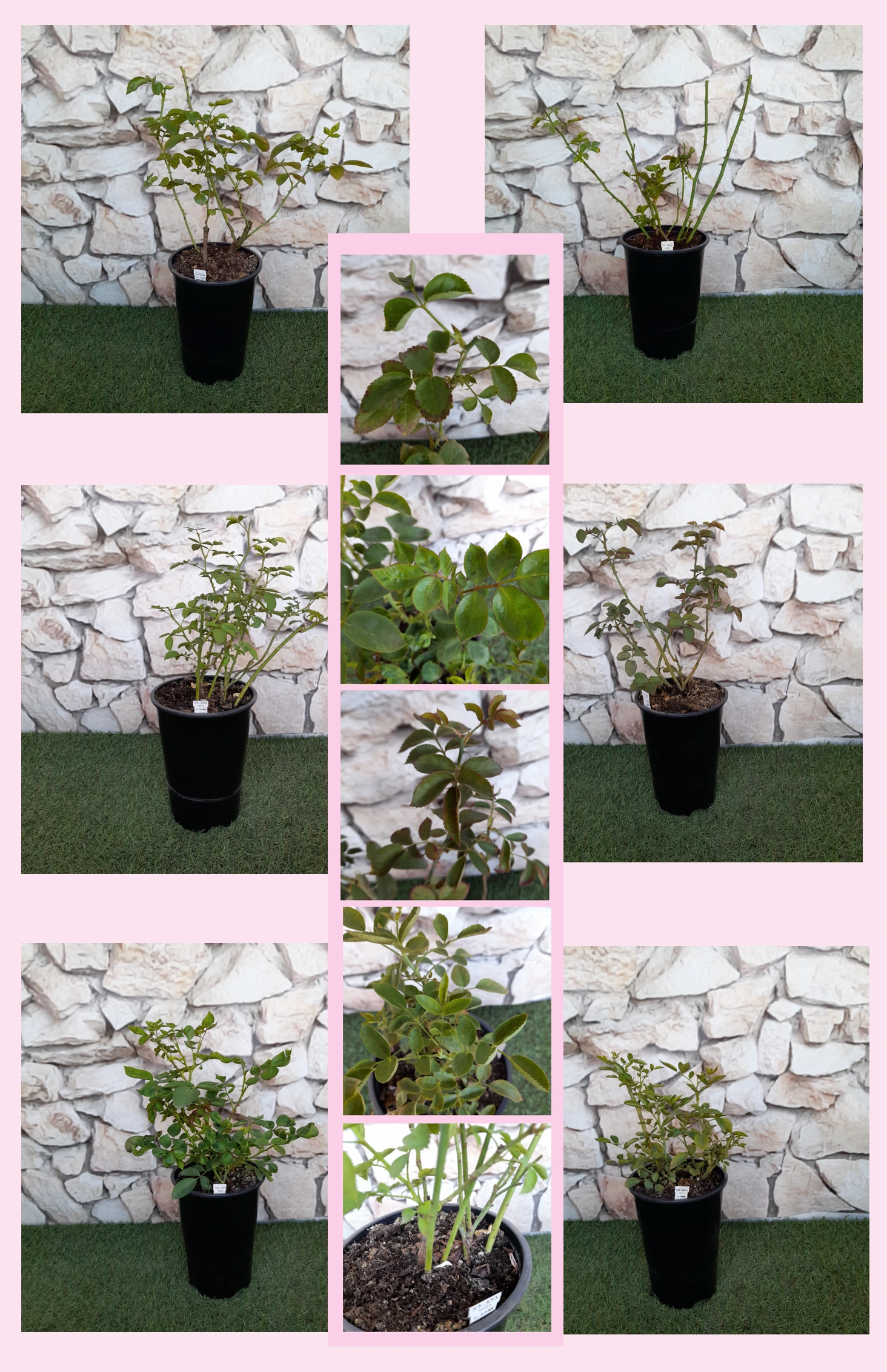
Crop overview: several varieties and growth stages in a short crop section.Shoot system: intensive growth of fresh basal shoots on a young plant.Root system: demonstration of a vigorous root system permeating the growing medium, by removing the pot.Balance: mature plant with root system and shoots in harmony with each other.
Information about the videos
The video series is not a “seasonal showcase”; it illustrates the essence of pharmaROSA® own-root cultivation in a tangible way: how the plant is built up, what the root system is like and how the shoot system regenerates. The recordings were therefore made at different times and with plants at various stages of development, so mixed foliage levels and differing stages of growth may appear in the videos. They are not a ‘sample’ of the batch dispatched, but a visual explanation of how the technology works. The current condition of the rose available to order — typical for the given period and similar to what you can expect to receive in the parcel — is shown in the upper part of the product page.
Pages for private customers Garden roses for the family garden, with minimal care → ORIGINAL® Premium garden roses – instant impact, a truly showpiece garden → EXTRA® Pages for professionals and private customers Roses for public spaces – large areas, sustainable maintenance → NATURAL® Roses for projects – hedge and row planting, fast implementation → RAPID® For professional partners only Production – propagation material for garden roses, wholesale → NEONATAL®
Company details
PharmaRosa Ltd. Company registration number: 01-09-717479 VAT number: 13075314-2-43 Plant health registration no.: HU130721 Bank account (IBAN): HU85117631891388688400000000 BIC (SWIFT): OTPVHUHB Bank name: OTP Bank Nyrt.