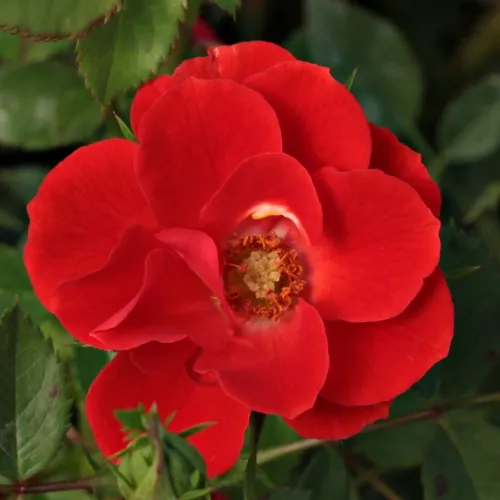
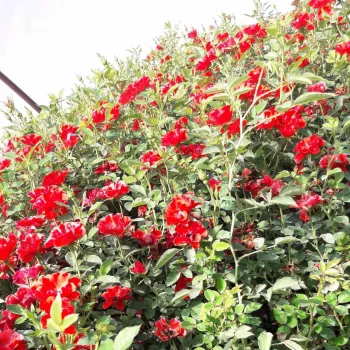
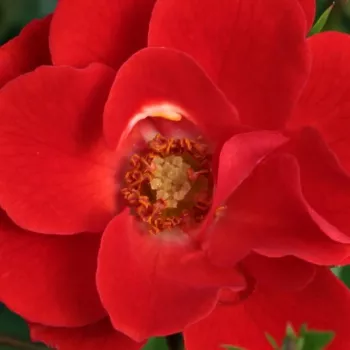
Vivid scarlet‑orange‑toned, intense, pure hue. - dwarf, mini rose - mild, subtle-scented rose - scent description not available
– Compact, bushy form for small garden spaces.
– Vivid orange-red blooms with lasting colour.
– Reliable repeat flowering through the season.
– Resistant to black spot, mildew, rust.
– Low maintenance, suitable for busy gardeners.
– Special feature: Ideal miniature choice for neat, colourful borders.
Low maintenance – Quality-conscious choice
darinaROSE® ORIGINAL 2-litre own-root potted rose
17,40 £
Unfortunately, we are currently unable to ship to the United Kingdom; we only deliver to countries within the European Union. For more information, please contact us!
4.5(6801)
Tara Allison™ mini – orange-red dwarf garden rose
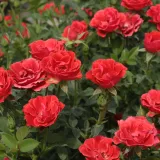
Compact and storybook-pretty, Tara Allison™ brings an abundance of bright orange-red blooms to even the smallest family garden, while coping steadily with coastal breezes and unsettled weather. This bushy miniature forms a neat, low mound that suits front borders, paths and kitchen‑garden edging, with flowers appearing in generous flushes all summer. Its naturally disease-tolerant foliage keeps maintenance pleasantly light, while the own-root form means the plant matures reliably and recovers well if knocked back by frost or pruning. Over time, you gain a long‑lived, dependable and stable feature in the garden, especially valuable where you want colour but have limited space or time. Ideal in the ground or in larger containers from around 40–50 litres, it delivers romantic cottage-garden colour with straightforward care, making it an easy choice for busy households and beginner gardeners who still dream of an intimate, afternoon-tea atmosphere.
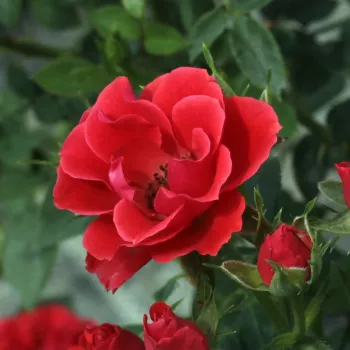
Closed bud of Tara Allison™ showing a deep orange-red tone.
Side-by-side flower opening stages of Tara Allison™.
Tara Allison™ shows small, semi-double, cupped blooms with a flat-opening form.
Usage options
Target area
Reasoning
Front of mixed borders in family gardens
The bushy, low-growing habit forms a tidy, colourful edging that will not overwhelm nearby perennials or herbs, giving long-season structure with minimal shaping. Its manageable size suits hobby gardeners seeking reliable results without complex pruning, especially beginners.
Path and patio edging around seating areas
Frequent, eye-catching flower clusters in vivid orange-red create a welcoming ribbon of colour along paths and patios, enhancing the cosy, afternoon-tea feel of small outdoor rooms. Light deadheading is usually enough to keep it smart, suiting busy owners.
Low, informal mini-hedges in cottage-style layouts
Regular spacing produces a gentle, low hedge that frames vegetable beds or lawns without blocking views, while repeat flowering keeps the line animated throughout summer. The own-root form builds longevity and resilience, ideal for long-term planning homeowners.
Feature container on terraces and balconies
Its compact stature and dense branching adapt well to a large pot of at least 40–50 litres, where roots can develop steadily and the plant resists rocking in wind. Dependable repeat flowering provides impact for small spaces valued by urban gardeners.
Low-maintenance family beds in sunny front gardens
Strong natural disease resistance reduces spraying and fuss, while remontant flowering keeps the display going between routine tasks like mowing and watering. This makes it a practical, good-looking choice for time-pressed families.
Exposed sites with wind and rain
The sturdy, compact framework anchors well in the soil, and the small, semi-double blooms cope better with summer downpours than large, heavy flowers, so the display stays neat even in breezy, showery conditions that challenge many coastal gardens.
Traditional cottage garden with kitchen-plot edging
The clear orange-red colour partners beautifully with vegetables and herbs, giving a cheerful, “girly” cottage look beside beans, lettuces and chives. The semi-double form and moderate self-cleaning keep maintenance gentle for style-conscious cottage lovers.
Long-term planting in small to medium plots
As an own-root rose, it develops steadily into a durable, non-grafting-dependent shrub that remains true to type, with good capacity to regenerate from the base after harsh winters or renovation pruning, reassuring cautious first-time rose buyers.
Styling ideas
Cottage-border ribbon – run Tara Allison™ along a front border with catmint and low lavender to frame a lawn or vegetable patch – ideal for families wanting a traditional English look.
Kitchen-garden edge – plant as a neat edging around raised beds with chives and parsley for cheerful colour against produce – suited to home cooks who love a pretty potager.
Arbour approach – line the path to a rose-covered arch with this compact mini for a fairy-tale entrance – perfect for romantic gardeners planning afternoon tea outdoors.
Container focal point – use a single plant in a 50-litre terracotta pot with trailing thyme to brighten balconies or small patios – good for urban owners wanting low-upkeep charm.
Colour-contrast corner – combine with creamy mock orange and variegated dogwood for a soft, textural backdrop to its orange-red flowers – best for design-conscious gardeners seeking layered planting.
Technical cultivar profile
Parameter
Data
Name and registration
Miniature rose Tara Allison™ (MACwaiwer), a dwarf, exhibition-class mini from the Mini - dwarf rose group, registered with the American Rose Society under the exhibition name Tara Allison.
Origin and breeding
Bred by Samuel Darragh McGredy IV of McGredy Roses International from ‘Wanaka’ × ‘Eyepaint’, introduced in 1987 via Justice Miniature Roses, representing compact modern breeding.
Growth and structural characteristics
Bushy miniature shrub, around 50–65 cm high and 40–55 cm wide, moderately thorny, with moderately dense, mid‑green, slightly glossy foliage forming a compact, well-filled outline.
Flower morphology
Semi-double, cupped to flat-opening blooms of small size, produced in clusters, with roughly 13–25 petals and a remontant habit that ensures a generous, repeating second flush.
Colour data and phenology
Vivid scarlet-orange blooms (RHS 40A–40B) open bright and intense, then fade gradually to a softer orange-red; colour retention is moderate yet main orange-red tonality remains evident.
Fragrance and aroma
Fragrance is described as mild and subtle, sufficient to add a gentle rose note at close range without dominating nearby plantings or seating areas in smaller garden spaces.
Hip characteristics
Hip set is generally low, with occasional small, spherical orange-red hips around 7–9 mm in diameter, adding minor seasonal interest but not a major ornamental feature.
Resistance and winter hardiness
Shows good resistance to black spot, powdery mildew and rust, with hardiness rated approximately to −21 to −18 °C (RHS H7), suitable for most temperate UK garden conditions.
Horticultural recommendations
Performs best in full sun with regular watering in dry spells; space 30–50 cm apart depending on use, keep soil well-drained, and deadhead spent blooms to encourage continued flowering.
Tara Allison™ offers compact, repeat flowering in vivid orange-red, strong disease tolerance and long-term stability from its own-root form, making it a thoughtful choice for easy-going, romantic gardens.
Detailed product attributes
Product Identification Data
Product Name:
TARA ALLISON™ – orange-red dwarf mini rose - McGredy
Product Type:
darinaROSE® ORIGINAL - 2-litre own-root potted rose
Full Bloom:
Saturated orange-red with uniform petals.
Before Fading:
Fading orange-red with a subtle reddish hue.
Colour Fading Description:
During opening, the vivid scarlet‑orange shade gradually fades from a saturated orange‑red to a lighter orange‑red, while the main tone remains throughout.
Our product is a rose grown with pharmaROSA®’s unique cultivation technology!
2-litre, own-root, potted rose.
With a shoot system appropriate to the season.
With a root system that thoroughly permeates the growing medium.
Quality compliant with the requirements of the E.N.A. (European Nurserystock Association).
Supplied in unique packaging that prevents damage.
Can be planted during frost-free periods.
True-to-variety rose bush with a unique identifier.
The pharmaROSA® own-root potted rose is a well-rooted plant that supports reliable establishment when planted and cared for properly, so it can be planted whenever the soil is not frozen.
Crop overview: several varieties and growth stages in a short crop section.Shoot system: intensive growth of fresh basal shoots on a young plant.Root system: demonstration of a vigorous root system permeating the growing medium, by removing the pot.Balance: mature plant with root system and shoots in harmony with each other.
Information about the videos
The video series is not a “seasonal showcase”; it illustrates the essence of pharmaROSA® own-root cultivation in a tangible way: how the plant is built up, what the root system is like and how the shoot system regenerates. The recordings were therefore made at different times and with plants at various stages of development, so mixed foliage levels and differing stages of growth may appear in the videos. They are not a ‘sample’ of the batch dispatched, but a visual explanation of how the technology works. The current condition of the rose available to order — typical for the given period and similar to what you can expect to receive in the parcel — is shown in the upper part of the product page.
Pages for private customers Garden roses for the family garden, with minimal care → ORIGINAL® Premium garden roses – instant impact, a truly showpiece garden → EXTRA® Pages for professionals and private customers Roses for public spaces – large areas, sustainable maintenance → NATURAL® Roses for projects – hedge and row planting, fast implementation → RAPID® For professional partners only Production – propagation material for garden roses, wholesale → NEONATAL®
Company details
PharmaRosa Ltd. Company registration number: 01-09-717479 VAT number: 13075314-2-43 Plant health registration no.: HU130721 Bank account (IBAN): HU85117631891388688400000000 BIC (SWIFT): OTPVHUHB Bank name: OTP Bank Nyrt.