TANLEDOLG – golden-yellow dwarf mini rose - Evers
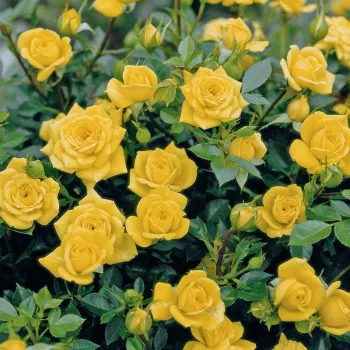
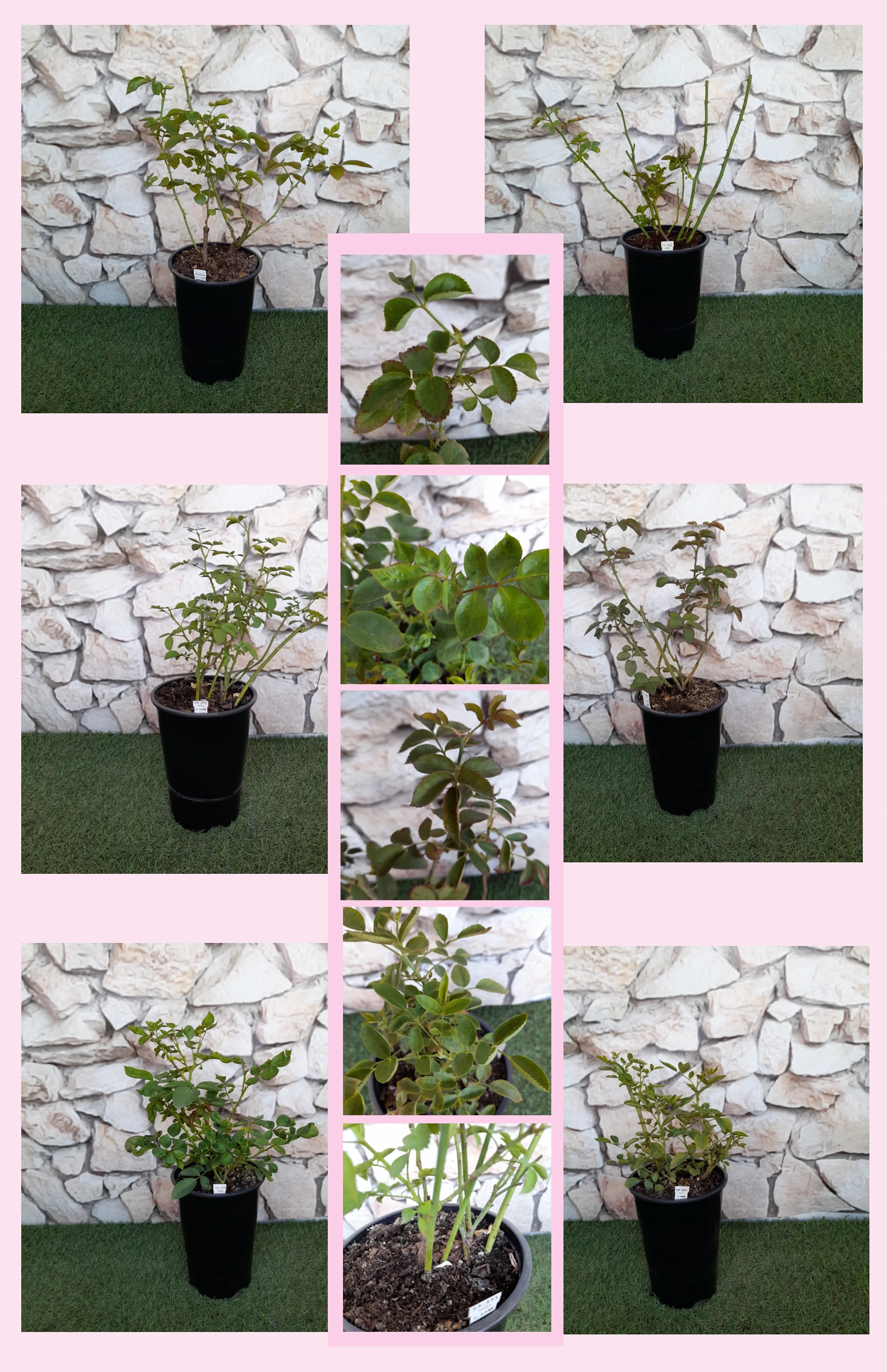
Planted near a favourite bench or along a path, this compact miniature rose creates a quietly romantic, cottage-garden ambience with its rich golden-yellow clusters. As an own-root plant it offers reassuring longevity, steadily rebuilding itself from the base for many seasons, ideal where winds off the sea demand a well-anchored, resilient structure. Its neat, bushy habit slips easily into small borders, kitchen gardens or children’s corners, bringing a gentle sparkle of colour without dominating the space. You can simply keep it watered, especially in warmer spells, then shape it as you please, from low edging to container feature, while enjoying a natural development from first rooting through leafy growth to full cottage-garden impact over the first few years.
Usage options
| Target area |
Reasoning |
| Front of a mixed cottage border |
The compact, bushy habit and modest height keep this rose neatly at the front of beds, edging paths and framing vegetable plots without overshadowing other plants. It works especially well with herbs and low perennials where you want a defined, tidy outline but a soft, romantic look. Ideal for homeowners. |
| Small family garden beds and low hedging |
Regular golden-yellow flowering and a dense dwarf structure make it suitable for short, child-friendly hedges along lawns or play areas. Own-root planting means that if stems are damaged, the plant regenerates true to type from below the soil, supporting a long, dependable lifespan. Suits cautious beginners. |
| Containers on terrace or patio (40–50 L+) |
Its shallow spread and limited height fit comfortably into larger pots, where a 40–50 litre container provides enough soil to retain moisture for this water-sensitive variety. Planted once, it can remain for years with simple feeding and pruning, giving consistent structure and colour near seating areas. Recommended for busy urbanites. |
| Rock garden and raised beds |
The miniature size and compact growth suit rock gardens and low raised beds, where drainage can be controlled on heavier clay soils. In these positions it forms bright golden cushions above stone or gravel, while own-root resilience supports gradual thickening into a long-lived, stable feature. Good for detail-loving collectors. |
| Traditional kitchen garden edging |
Along vegetable beds or fruit cages, its orderly, mid-green foliage and small, cupped flowers provide a gentle, storybook frame without excessive shade. Medium disease resistance and occasional care keep it presentable, while the own-root system allows hard pruning if required after renovation or replanting. Suitable for practical gardeners. |
| Low-maintenance family front garden |
This dwarf rose needs only moderate upkeep: watering in dry spells, basic deadheading and seasonal pruning. Over time, the own-root base thickens into a durable, woody framework that copes well with routine trimming and simple reshaping near drives, paths or windows. Well-suited to time-poor families. |
| Coastal or exposed sites with wind |
The naturally low, bushy form and relatively narrow spread help it stand firm in breezy spots, reducing rocking and wind damage compared with taller roses, which is particularly valuable where regular coastal winds require a robust, anchoring structure in the planting. Designed for weather-aware owners. |
| Partial-shade seating areas |
Tolerant of partial shade, it performs well near arbours, pergolas or north-east facing patios, where full-size roses might struggle. The recurring, gently scented blooms provide colour in softer light, while own-root strength supports reliable regrowth after harder pruning to keep sightlines open. Ideal for contemplative sitters. |
Styling ideas
- Honey-Path Edging – Line a cottage-style path with these dwarf roses, underplanting with thyme and sedum for a low, glowing ribbon of gold – for relaxed family walkers.
- Terrace Jewel Pot – Place a single plant in a 50 litre clay pot with trailing ivy and white bacopa to frame a bistro table – for balcony and patio dwellers.
- Kitchen-Garden Trim – Mark vegetable beds with short rows, pairing with chives and marigolds for a productive yet pretty potager – for practical home growers.
- Rockery Gleam – Tuck among boulders with stonecrops and dwarf grasses so the compact, bushy form becomes a sunny focal cushion – for lovers of detailed rock gardens.
- Storybook Front Border – Combine with low catmint, dwarf lavender and a picket fence to give a small front garden a classic English cottage feel – for romantically inclined homeowners.
Technical cultivar profile
| Property |
Data |
| Name and registration |
Miniature, dwarf rose; registered cultivar name TANledolg, often marketed as Goldjuwel. Belongs to the Mini - dwarf rose collection, verified cultivar authenticity and suited to exhibition mini rose classes. |
| Origin and breeding |
Bred by Hans Jürgen Evers for Rosen Tantau in Germany, with breeding completed in 1991; introduced commercially in 1993, with parentage not recorded but selected for compact growth and golden colour. |
| Growth and structural characteristics |
Compact, bushy dwarf shrub reaching around 35–45 cm in height and 30–40 cm spread, with moderately dense, mid-green, slightly glossy foliage and moderate prickliness, forming a tidy, low mound. |
| Flower morphology |
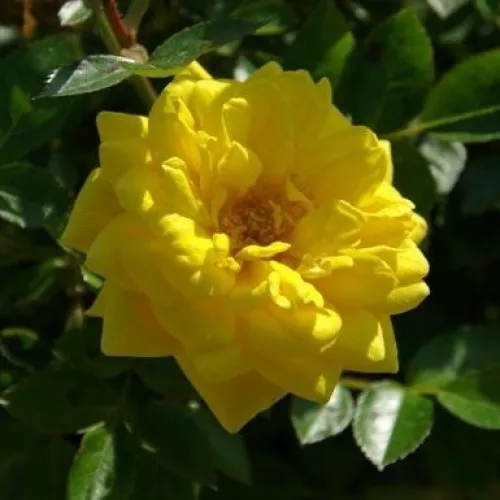
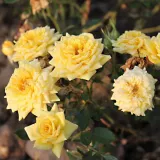
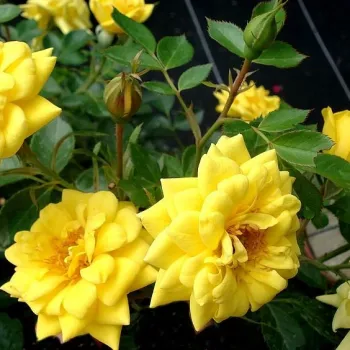
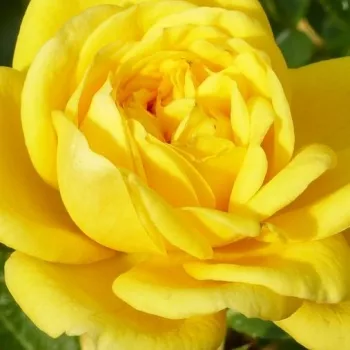
Small, cupped, double blooms, 0.5–1.5 inches across, carried in clusters. Each flower has roughly 26–39 petals, producing a full miniature effect with remontant flowering that repeats generously in good conditions. |
| Colour data and phenology |
Rich golden-yellow petals (RHS 14A outer, 14B inner) hold colour well, then fade to creamy yellow with buttery edges as blooms age; colour remains warm and even from bud through to the final stages. |
| Fragrance and aroma |
Light, delicately sweet scent that is usually only noticeable at close range or in still air; fragrance is secondary to colour and form, so the variety is chosen primarily for visual rather than aromatic impact. |
| Hip characteristics |
Produces small numbers of spherical rose hips, about 5–7 mm in diameter, coloured orange-red. Hips are mainly ornamental and may appear sparsely after flowering if some spent blooms are left unpruned. |
| Resistance and winter hardiness |
Medium resistance to powdery mildew, black spot and rust, needing occasional protection in humid seasons. Hardy to around −21 to −18 °C (USDA 6b, RHS H7, Swedish zone 3), coping well with typical UK winters. |
| Horticultural recommendations |
Suitable for beds, borders, rock gardens and containers on terraces or balconies, planted about 25–55 cm apart. Needs regular watering in heat and moderate maintenance, performing reliably even in partial shade. |
TANLEDOLG offers compact golden-yellow flowering, reliable dwarf structure and long own-root resilience, making it a thoughtful choice for those shaping a cosy, enduring family garden.