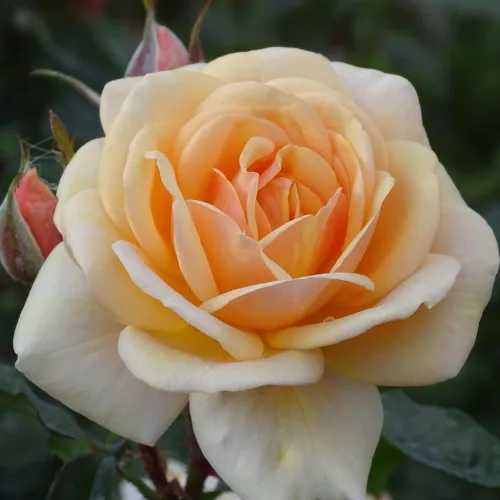
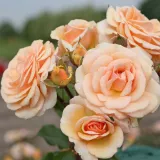
SWEET HONEY ® – honey-yellow bedding floribunda rose – Kordes
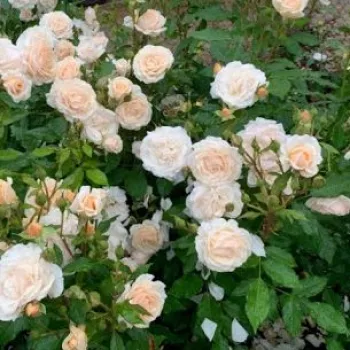
Imagine afternoon tea in a cottage-style garden, your seating edged with clouds of honey-yellow blooms that glow softly even on dull days and cope calmly with coastal breezes and frequent rain. SWEET HONEY ® forms a bushy, upright structure with dense, glossy foliage that anchors beds and borders without sprawling, while its very double flowers constantly refresh themselves thanks to reliable self-cleaning – spent blooms simply drop away. As an own-root plant it offers reassuring longevity, regenerating from its base and keeping a stable shape year after year, ideal for busy gardeners who just want dependable flowering rather than complex care. In typical British soils it performs well in mixed cottage borders or larger containers, and over three seasons its roots, then shoots, then full floral display steadily build the relaxed romance and storybook cosiness many families dream of.
Usage options
| Target area |
Reasoning |
| Front-of-border cottage planting |
The bushy, upright habit and dense foliage give a neat, low hedge-like edge that frames perennials and herbs without hiding them. Regular self-renewing flower clusters keep a soft, honey-yellow ribbon of colour through summer for lovers of romantic cottage style |
| Low-maintenance family flowerbed |
Good self-cleaning means fewer deadheading rounds, making it realistic for busy households to keep beds looking tidy. With robust health and ADR recognition, it copes well with everyday oversight while still rewarding you with reliable flowering for busy urban garden owners |
| Small hedge along paths or drives |
The upright, structured growth and recommended closer spacing allow a continuous, clearly defined line of plants. This creates a welcoming, traditional look along front paths or drives, with glossy foliage providing year-round presence for homeowners seeking kerb appeal |
| Large pots on terrace or patio |
Its compact, bushy form and abundant clusters suit a generous 40–50 litre container, where roots have space to stabilise and support long-term performance. This brings cottage-garden charm right up to seating areas for balcony and small-patio gardeners |
| Mixed cottage border with perennials |
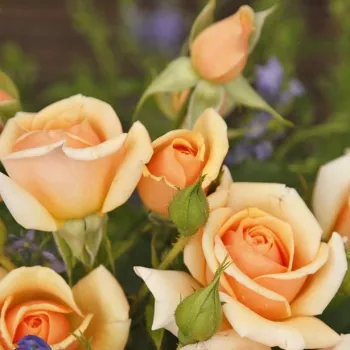
The warm honey-yellow and peach tones blend beautifully with blues, mauves and soft pinks, adding a gentle glow without overwhelming subtler plants. Repeat flowering sections the season and pulls the mixed planting together for gardeners curating a soft colour palette |
| Rose and shrub combinations in heavier soils |
Once established, the own-root system supports long-term vigour and resilience, working well where thoughtful soil preparation or raised beds manage heavier clays; over time, the plant matures steadily into a stable, durable feature for planners of long-lived plantings |
| Long-season colour in public-facing beds |
The floribunda-style clusters and remontant habit keep colour returning from early summer into autumn, while the flowers fade gracefully from deeper to paler honey tones. This extended display supports attractive entrances and front gardens for those wanting dependable summer colour |
| Low-intervention traditional rose corner |
As an own-root floribunda, it can regenerate from the base if damaged by frost or pruning errors, avoiding issues with suckers and helping preserve the original variety; coupled with good disease resistance, this supports simpler care for beginners and cautious hobby gardeners |
Styling ideas
- Kitchen-border charm – Plant SWEET HONEY ® with chives, lavender and sage along a vegetable plot edge to soften the transition from crops to flowers – ideal for cottage-style kitchen gardeners.
- Romantic path edging – Line a gravel path with a single row at hedge spacing, underplanting with low catmint to blur the edges – perfect for homeowners creating a storybook garden walk.
- Pastel terrace pots – Use one rose per 50 litre terracotta container with trailing thyme and white lobelia – suited to small-space gardeners wanting low-fuss, long-season colour.
- Soft sunset border – Combine with blue nepeta, pale pink foxgloves and airy grasses so the honey-yellow flowers glow in evening light – for those crafting a gentle, romantic evening seating area.
- Front-garden welcome – Group three plants in a triangle near the front door with a small box or honeysuckle backdrop – recommended for families seeking a tidy, traditional first impression.
Technical cultivar profile
| Parameter |
Data |
| Name and registration |
Floribunda bedding rose, registered as KORmecaso, marketed as SWEET HONEY ® Bedding rose KORmecaso; ARS exhibition name Sweet Honey; bush rose / exhibition floribunda category. |
| Origin and breeding |
Bred by Tim-Hermann Kordes in Germany (2004), introduced by W. Kordes’ Söhne in 2015; parentage officially unknown, developed within the Kordes landscape and bedding rose programme. |
| Awards and recognition |
ADR rose (2015) with strong garden performance, Rose of the Year in the United Kingdom (2020), and multiple medals from international trials in Baden-Baden, Belfast, Courtrai, Lyon and Paris. |
| Growth and structural characteristics |
Bushy, upright shrub 85–115 cm high and 55–85 cm wide, with dense, dark green glossy foliage and moderate prickles; forms well-branched, compact plants suitable for bedding or low hedging. |
| Flower morphology |
Very double, high-centred, pointed blooms with over 40 petals, carried in corymbose clusters; large-flowered floribunda type with abundant first flush and strong remontant repeat later in the season. |
| Colour data and phenology |
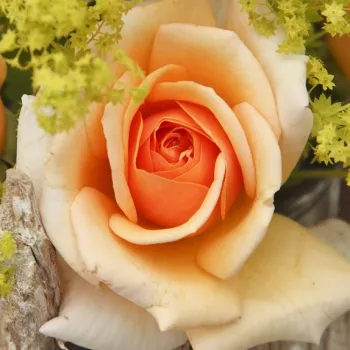
Honey-yellow with subtle peach hues (RHS 22D outer, 23C inner); buds pale yellow with peach tips, deepening then gently paling in strong sun, maintaining a soft, even tone across the bloom surface. |
| Fragrance and aroma |
Light, sweet, restrained fragrance complementing its warm colouring; mainly ornamental, with very double flowers concealing stamens and providing limited value for pollinating insects in mixed plantings. |
| Hip characteristics |
Hip set is usually slight because of the double flower form; where present, small spherical orange-red hips around 8–12 mm diameter may develop, adding modest late-season interest. |
| Resistance and winter hardiness |
Good overall disease resistance, notably to black spot and rust, moderate susceptibility to powdery mildew; hardy to around -23 to -21 °C (RHS H7, USDA 6a, Swedish zone 3) with solid heat tolerance. |
| Horticultural recommendations |
Best in sunny positions with well-drained soil; spacing 40–75 cm depending on use, 4.2–4.8 plants/m² for mass planting; responds to regular pruning, feeding and routine health monitoring for top display. |
SWEET HONEY ® offers bushy structure, self-cleaning honey-yellow blooms and dependable repeat flowering on a durable own-root plant, making it a thoughtful, long-lived choice for relaxed cottage-style gardens.