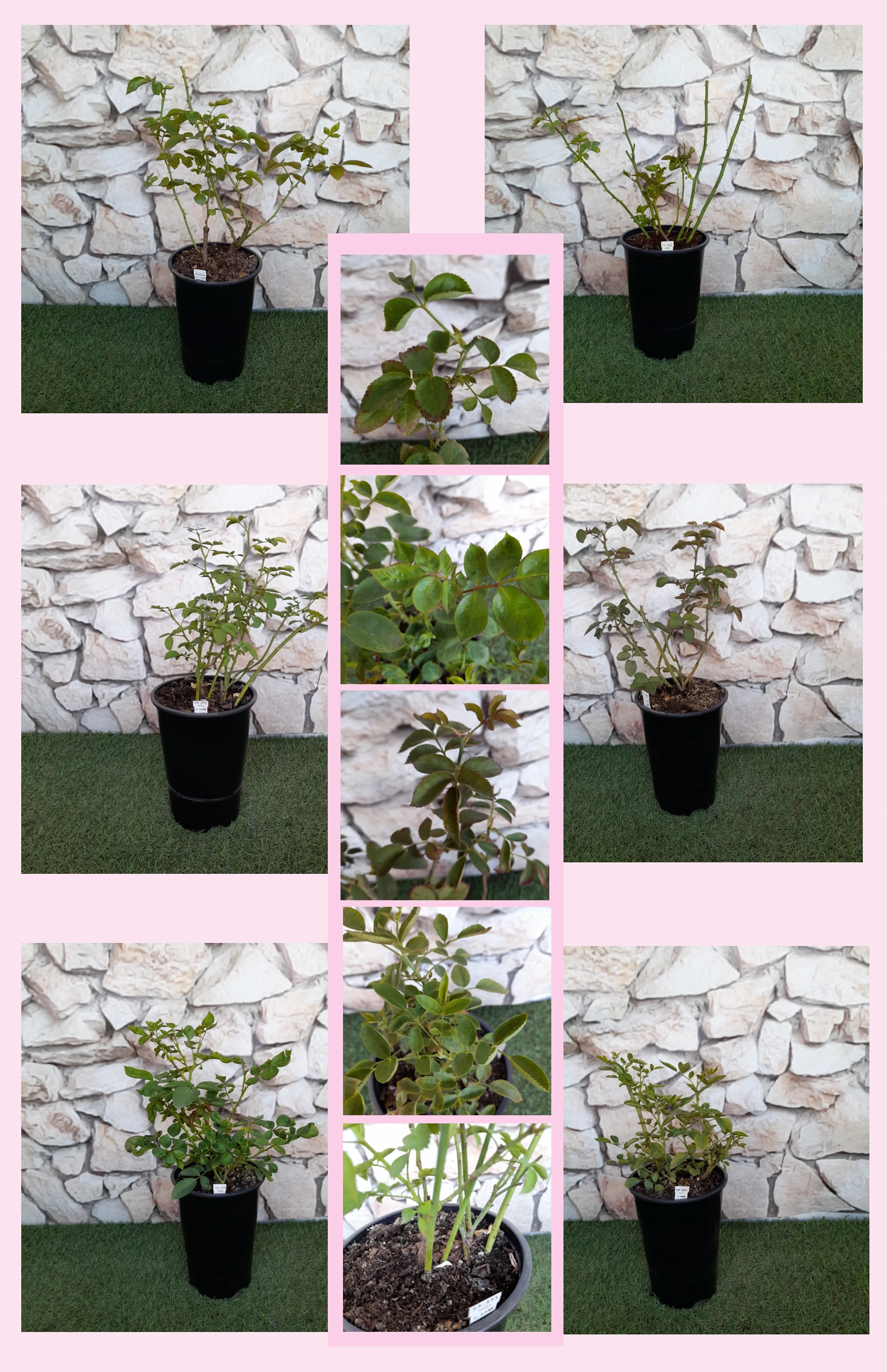
Botanical Rose

52-539-1
52-539-2

Stanwell Perpetual

Botanical rose

- – C. Brown

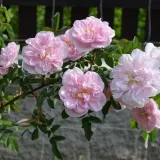
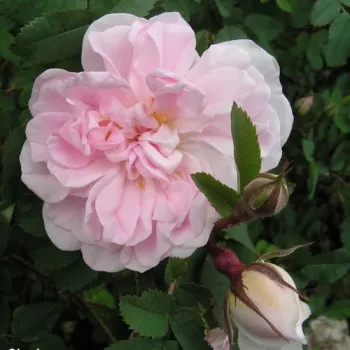
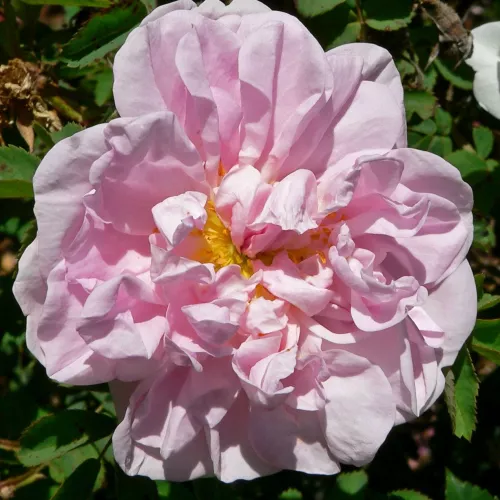
Uniform soft pastel pink with a tone leaning towards white. - wild rose - very strong, garden-filling fragrance rose - deep, damask-scented

– Very strong, deep damask fragrance rose
– Long-season, remontant flowering display
– Hardy to around –35 °C, reliable in cold areas
– Tolerates heat, moderate drought and partial shade
– Bushy, spreading habit, ideal for hedges
Special feature: Historic 1830s cultivar with RHS Award of Garden Merit
Eco-friendly garden design – Low maintenance
Stanwell Perpetual
darinaROSE® ORIGINAL 2-litre own-root potted rose
21,20 £
Unfortunately, we are currently unable to ship to the United Kingdom; we only deliver to countries within the European Union. For more information, please contact us!
3.5 (4769)
facebook   twitter

STANWELL PERPETUAL – pale pink wild rose – Brown

This historic, pale pink wild rose brings a distinctly romantic, old-fashioned charm to family gardens while remaining reassuringly straightforward to live with. Its bushy, spreading shape settles into mixed borders and hedging with little fuss, giving you season‑long interest and a soft, cottage‑style backdrop even where gardens are exposed to frequent rain and wind. The strongly damask fragrance drifts across the garden, particularly on still evenings, making it a natural choice near seating areas or a small arbour where you can unwind. As an own‑root shrub it offers reassuring longevity, quiet reliability and steady regrowth after harder pruning, so you can adjust its size without specialist knowledge. The plant is broadly forgiving of pruning styles, needs only moderate routine care, and forms an attractive, informal screen or backdrop over time. Well suited to UK conditions, it copes with variable summers and, given reasonable drainage, anchors itself firmly in heavier soils as it matures.


Usage options

Target areaReasoning
Fragrant seating corner or afternoon tea arbour Planted close to a bench or pergola, its very strong damask perfume creates a classic “afternoon tea” atmosphere without needing meticulous pruning to perform well each year, particularly appealing for beginners.
Low, romantic hedge along a boundary or path The bushy, spreading habit and dense foliage allow it to knit into an informal, flower‑laden hedge that needs only occasional shaping, a practical choice for busy households.
Cottage-style mixed border in a small to medium garden Its medium height and soft pastel flowers blend easily with perennials and herbs, giving instant period charm while tolerating simple, once‑a‑year pruning, ideal for cottage‑style enthusiasts.
Own-root replacement for older, tired shrub roses The own‑root form supports a long service life, stays true to type after hard pruning, and gradually rebuilds a full, bushy outline when older grafted shrubs have declined, reassuring for long‑term‑minded owners.
Clay or chalky soil family gardens with basic preparation Once established, its robust shrub character anchors well even in heavier or more alkaline soils, provided drainage is improved a little, making it realistic for typical suburban gardens.
Lightly shaded corners near walls or mature shrubs Tolerant of partial shade, it continues to flower and scent the air where many modern roses sulk, suiting side‑return paths or overlooked spots valued by space‑conscious residents.
Large container on terrace or paved courtyard In a generously sized pot of at least 40–50 litres with regular watering, it forms a fragrant, romantic feature rose that can move with you, attractive for flexible‑layout tenants.
Low-maintenance heritage feature in front gardens Its moderate care needs, good self‑cleaning flowers and historic character give a refined look with limited deadheading, despite the cooler, changeable UK climate with blustery showers, valued by traditional‑style homeowners.

Styling ideas

  • COTTAGE HEDGE – Run a loose line of plants along a front boundary, underplanting with catmint and ladies’ mantle for soft edging – ideal for lovers of informal, storybook front gardens.
  • TEA CORNER – Place one or two near a bistro set, with pots of lavender and thyme, to frame an afternoon tea spot with fragrance – perfect for those curating a scented retreat.
  • HERITAGE BORDER – Combine with foxgloves, alliums and old-fashioned pinks in a mixed border to echo a Victorian kitchen garden feel – suited to fans of historic planting schemes.
  • SCREENING CLOUD – Use several shrubs staggered along a fence, letting them arch naturally with minimal clipping, to soften boundaries – helpful for families wanting gentle privacy.
  • COURTYARD FEATURE – Grow one in a 50-litre terracotta container with trailing violas and heucheras at the base – attractive for compact patios and balcony-style outdoor rooms.

Technical cultivar profile
ParameterData
Name and registration Stanwell Perpetual, botanical rose collection; hybrid perpetual, Damask and Spinosissima background; commercial wild rose type, long in cultivation as an unregistered heritage shrub.
Origin and breeding Bred by C. Brown in the United Kingdom around 1834, from Rosa spinosissima crossed with ‘Quatre Saisons’; introduced by Lee Nursery, Hammersmith–Stanwell, from 1838 into wider gardens.
Awards and recognition Holds the RHS Award of Garden Merit and is regularly recommended by several historic rose gardens, reflecting dependable garden performance and longstanding popularity with rosarians.
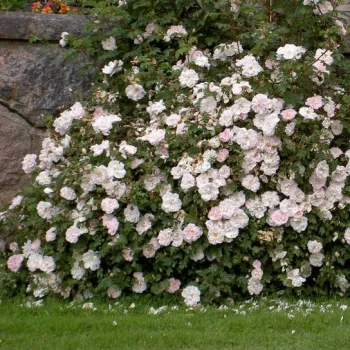
Growth and structural characteristics Bushy, spreading shrub rose reaching about 80–130 cm in height and 120–200 cm in width, with dense, grey‑green matt foliage and notable thorniness, forming a full, informal garden presence.
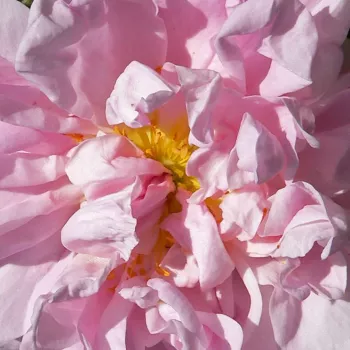
Flower morphology Very double, rosette‑shaped blooms of medium size, typically borne in clusters; abundant first flush followed by a lighter repeat, with good natural self‑cleaning of spent flowers over the season.
Colour data and phenology Pale, powder‑pink flowers tending towards milky white with subtle blush tones; colour fades more quickly in strong sun, retaining slightly rosier tints in cooler or less exposed conditions.
Fragrance and aroma Powerful damask character with a deep, traditional rose perfume; a garden‑filling scent that carries well in still air and is particularly noticeable near paths, doors and outdoor seating areas.
Hip characteristics Hip set is generally modest due to the very double blooms; where formed, decorative small spherical hips appear in dark crimson to purplish‑black tones, offering subtle late‑season interest.
Resistance and winter hardiness Extremely hardy shrub rose tolerating temperatures down to around −37 °C; overall disease resistance is medium, benefiting from routine hygiene and occasional preventive care in humid spells.
Horticultural recommendations Suited to hedges, specimen use and mixed borders; plant 90–165 cm apart depending on purpose, in reasonably drained soil; tolerates partial shade and moderate drought once well established.

STANWELL PERPETUAL offers historic charm, strong fragrance and adaptable shrub growth in a durable own-root form, making it a considered choice for those planning a long-lived, romantic garden feature.
Detailed product attributes

Product Identification Data

Product Name: STANWELL PERPETUAL – pale pink wild rose - Brown
Product Type: darinaROSE® ORIGINAL - 2-litre own-root potted rose
Cultivar Authenticity: Verified:28.03.2025
Cultivar Quality Rating: premium bronze
Item Number: [198] 52-539 (14.02.2026) darinarose.co.uk

Name and Registration

Meaning of Cultivar Name: The name combines the village name Stanwell and the meaning of the word "Perpetual", namely that it is continuously flowering.
Cultivar Synonym: Rosa pimpinellifolia ’Stanwell Perpetual’; Rosa spinosissima ’Stanwell Perpetual’
Original Trade Name: Stanwell Perpetual
Current Trade Name: Stanwell Perpetual Botanical rose Brown
Rose Group: Hybrid Perpetual, Damask, Spinosissima
Commercial Type: wild rose
Commercial Group: Botanical rose
Exhibition Category: bush rose; old garden rose (OGRS)
Collection: Botanical rose

Origin and Breeding

Initial Distributor: Lee Nursery (England)
Registration Year: unregistered cultivar
Breeder: C. Brown
Breeding Company / Institution: Lee Nursery, Hammersmith–Stanwell (United Kingdom)
Breeding Year: United Kingdom, 1834
Parentage: Rosa spinosissima × ‘Quatre Saisons’

Awards and Honours

Horticultural Ratings and Recommendations: RHS AGM; Variety recommended by multiple historic rose gardens
Competition and Show Awards: RHS Award of Garden Merit; Variety recommended by several historic rose gardens

Growth and Structural Characteristics

Height: 2.6-4.3ft (80-130 cm)
Spread: 3.9-6.6ft (120-200 cm)
Growth Habit: bushy, spreading
Foliage: The variety has dense foliage. The leaves have a matt surface and a grey‑green hue.
Prickliness: densely thorned
Self-Cleaning Description: Most spent blooms fall off naturally, so post-bloom cleaning is generally not necessary.
Self-Cleaning Intensity: Self-cleaning: good.

Flower Morphology

Flower Fullness: very double-flowered
Flower Shape: rosette
Flower Size: M (1,5-2,75 in)
Inflorescence Type: clustered
Colour Code: ARS code: lp RHS code: 65D (outer), 65D (inner)
Repeat Flowering: Remontant; its second flush of flowers is not as abundant.

Colour Data and Phenology

Colour: pale pink
Flower Colour Description: Uniform soft pastel pink with a tone leaning towards white.
Closed Bud: Creamy pink hue with a subtle pearlescent finish.
Newly Opened Flower: Silky, delicate powder-pink overlay with a cool undertone.
Full Bloom: Fading to porcelain white, with a subtle pink centre.
Before Fading: Milky white with a barely perceptible pale pink rim.
Colour Fading Description: In strong sunlight it fades quickly to a paler colour, while in cooler conditions it retains a more pink hue.

Fragrance and Aroma

Fragrance Strength: very strong, garden-filling fragrance rose
Fragrance Character: deep, damask-scented
Pollinator Attraction: Its strongly double flower form and reduced stamen accessibility make it poorly attractive to pollinators.
Pollinator-Friendly Rating: Its very double flowers conceal the stamens, making it more of an ornamental cultivar.

Hip Characteristics

Hip Shape: spherical
Hip Colour: dark-crimson-black
Hip Comment: Rose‑hip formation is expected to be limited due to the double flowers; occasionally spherical, dark purplish‑black hips 10–16 mm in diameter may appear.

Resistance and Hardiness

Hardiness (°C): -37–-34 °C
Heat and Drought Tolerance Description: Tolerates heat and moderate drought well; requires watering during prolonged droughts.
Disease Resistance: medium
  • powdery mildew – medium
  • black spot – medium
  • rust – medium

Horticultural Recommendations

Recommended Planting Distance: for mass planting 105 cm, for hedging 90 cm, as a solitary specimen 165 cm
Planting Density: square planting 0,91 plants/m², hexagonal arrangement 1,05 plants/m²
Partial Shade Tolerance: suitable for partial shade
Maintenance Requirement: Maintenance requirement medium; occasionally requires pest control.
Primary Uses: specimen, hedge, park, flower bed, urban green space

Comments

Strengths: Eco-friendly garden design – Low maintenance
Companion Plants: Hypericum patulum Hidcote - evergreen St John's-wort
Aster dumosus 'Apollo' - dwarf Michaelmas-daisy
Weigela florida Sunny Princess - dwarf variegated-leaved weigela
Comment: Shade- and heat-tolerant.
STANWELL PERPETUAL – pale pink wild rose - Brown
Uniform soft pastel pink with a tone leaning towards white. - wild rose - very strong, garden-filling fragrance rose - deep, damask-scented
Online rose purchase - wild rose - Stanwell Perpetual - pale pink - (2.6-4.3ft (80-130 cm))
Inflorescence: clustered Height: 2.6-4.3ft (80-130 cm) Flower shape: rosette Winter hardiness: 4b pale pink - Lee Nursery (England) wild rose - Flower size: M (1,5-2,75 in) Flower size: M (1,5-2,75 in) - Height: 2.6-4.3ft (80-130 cm) Height: 2.6-4.3ft (80-130 cm) - Flower fullness: very double-flowered Stanwell Perpetual - Roses in the garden | darinaROSE® Original - premium bronze C. Brown

We showcase the external appearance of the roses available for online purchase from our webshop.


Which product type is right for you?


Information

In what condition do we send the rose from our online webshop?

Let us ask ourselves the question: What do I want to use the rose for?
Flower? - Location? - Cover? - Fragrance? - Height? - Breeder? - Rose hips?

Rose purchase information
Methods of payment - Delivery charges - Delivery - Complaints handling

Care guide

Our product is a rose grown with pharmaROSA®’s unique cultivation technology!

2-litre, own-root, potted rose.
With a shoot system appropriate to the season.
With a root system that thoroughly permeates the growing medium.
Quality compliant with the requirements of the E.N.A. (European Nurserystock Association).
Supplied in unique packaging that prevents damage.
Can be planted during frost-free periods.
True-to-variety rose bush with a unique identifier.

The pharmaROSA® own-root potted rose is a well-rooted plant that supports reliable establishment when planted and cared for properly, so it can be planted whenever the soil is not frozen.


Crop overview: several varieties and growth stages in a short crop section.
Shoot system: intensive growth of fresh basal shoots on a young plant.
Root system: demonstration of a vigorous root system permeating the growing medium, by removing the pot.
Balance: mature plant with root system and shoots in harmony with each other.

Information about the videos
The video series is not a “seasonal showcase”; it illustrates the essence of pharmaROSA® own-root cultivation in a tangible way: how the plant is built up, what the root system is like and how the shoot system regenerates. The recordings were therefore made at different times and with plants at various stages of development, so mixed foliage levels and differing stages of growth may appear in the videos. They are not a ‘sample’ of the batch dispatched, but a visual explanation of how the technology works. The current condition of the rose available to order — typical for the given period and similar to what you can expect to receive in the parcel — is shown in the upper part of the product page.

pharmarosa.compharmarosa.ropharmarosa.skpharmarosa.co.ukpharmarosa.depharmarosa.sipharmarosa.czpharmarosa.atpharmarosa.plpharmarosa.frpharmarosa.hrpharmarosa.espharmarosa.bepharmarosa.nlpharmarosa.iepharmarosa.grpharmarosa.bgpharmarosa.lvpharmarosa.ltpharmarosa.lupharmarosa.itpharmarosa.ptpharmarosa.sepharmarosa.eepharmarosa.fipharmarosa.rupharmarosa.dk

Product types

Pages for private customers
Garden roses for the family garden, with minimal care  → ORIGINAL®
Premium garden roses – instant impact, a truly showpiece garden  → EXTRA®
Pages for professionals and private customers
Roses for public spaces – large areas, sustainable maintenance  → NATURAL®
Roses for projects – hedge and row planting, fast implementation  → RAPID®
For professional partners only
Production – propagation material for garden roses, wholesale  → NEONATAL®

Company details

PharmaRosa Ltd.
Company registration number: 01-09-717479
VAT number: 13075314-2-43
Plant health registration no.: HU130721
Bank account (IBAN):
HU85117631891388688400000000
BIC (SWIFT): OTPVHUHB
Bank name: OTP Bank Nyrt.