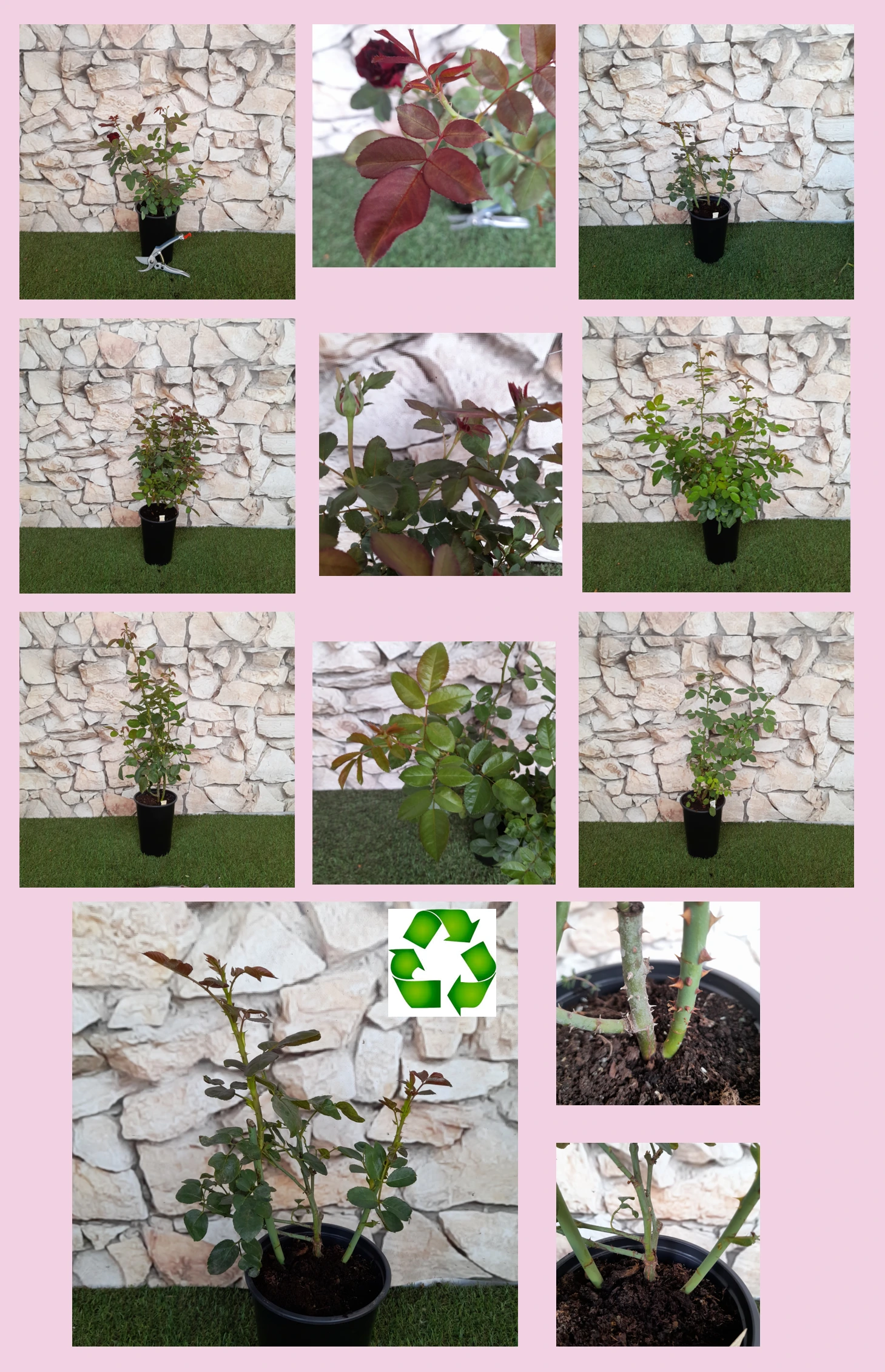
SAKURAGASUMI – light pink bedding floribunda rose - Suzuki
Drifting like a spring cloud of cherry blossom, SAKURAGASUMI brings a softly romantic focus to small and medium gardens, creating an inviting backdrop for afternoon tea and storybook corners. Its bushy, well-branched habit makes it ideal for low hedges, borders and path edging, settling reliably even where soils are not perfect and drainage needs a little attention in wetter, heavier plots. Clustered, double blooms open in generous flushes, first porcelain pink, then gently peach-powder as they age, giving weeks of colour with minimal effort. As an own-root rose it is naturally long-lived, rebuilding from its base after harsh winters and keeping a stable shape without fussy pruning. With a measured, medium growth rate and dense foliage, it knits neatly into cottage-style planting, whether in flowerbeds or large containers of at least 40–50 litres, where regular watering is simpler to manage on busy days. Over its first seasons it quietly establishes – focusing on roots, then framework, then full display – so your investment develops into enduring garden structure, dependable summer flowering and year-on-year reliability for relaxed family gardens.
Usage options
| Target area |
Reasoning |
| Front-of-border cottage bedding |
Cluster-flowered heads and a bushy outline create a soft, low-mounded edge that reads instantly “cottage garden” without needing complex layout or staking, ideal along paths or in front of shrubs for a romantic, storybook feel for the homeowner |
| Light formal edging or low hedge |
With planting distances around 80–90 cm, plants link into a loose, continuous edging that visually tidies lawns and vegetable plots, adding gentle structure while remaining easy to trim back in winter for the busy gardener |
| Large container on patio or terrace |
Performs well in a 40–50 litre or larger pot, where controlled soil and watering make care simple; repeated flowering and compact growth give long seasonal interest beside seating or doors for the urban balcony-owner |
| Mixed family flowerbed |
Medium height and dense dark-green foliage slot neatly among perennials and herbs, so you gain soft pink colour without overwhelming nearby plants, suiting family gardens that need beauty alongside play space for the young family |
| Relaxed “girly” pink theme border |
The light, candy-toned pink blends effortlessly with whites and pastels, making colour-matching straightforward for beginners who want a feminine, airy look around seating areas or kitchen gardens for the romantic gardener |
| Low-maintenance traditional rose corner |
Medium maintenance needs and own-root resilience mean routine deadheading and a simple annual prune are usually enough to keep plants productive, supporting those who want classic roses without complex regimes for the hobby gardener |
| Coastal or open, breezy garden |
Handles wind and rain reasonably well once established, especially if given decent soil preparation so roots anchor firmly and cope better with blustery, exposed family plots near the coast for the seaside resident |
| Long-term garden framework planting |
As an own-root floribunda it can regenerate from the base after damage, avoiding problems with grafted suckers and giving a stable, repeat-blooming shrub that earns its place over many seasons for the long-term planner |
Styling ideas
- COTTAGE RIBBON – Run a loose ribbon of SAKURAGASUMI along a path, weaving between catmint and low salvias to frame a lawn in soft pink and blue haze – ideal for relaxed family front gardens
- TEA-TIME NOOK – Flank a small bistro set with two large container-grown plants underplanted with lavender and thyme to perfume summer afternoons – perfect for compact patios
- KITCHEN-GARDEN EDGE – Use a short hedge beside vegetable beds, interspersed with chives and calendula, to soften productive rows with blossom-like colour – suited to rustic kitchen gardens
- PASTEL CARPET – Combine with white Lychnis and obedient plant for a low, shimmering pastel tapestry in front of darker shrubs – good for those chasing a “girly”, airy border
- ROMANTIC ENTRANCE – Plant on either side of a gate or path, backed by taller roses, to create a welcoming blush-pink threshold into the main garden – appealing to traditional-style homeowners
Technical cultivar profile
| Parameter |
Data |
| Name and registration |
Floribunda bedding rose, collection Bedding rose, registered as Sakura-Gasumi, marketed as SAKURAGASUMI – light pink bedding floribunda rose - Suzuki; ARS exhibition name Sakura-Gasumi. |
| Origin and breeding |
Bred by Seizo Suzuki at Keisei Rose Nursery, Japan; cross of ‘Fabergé’ with a polyantha-origin seedling, bred 1988, registered 1988, introduced commercially in 1990. |
| Growth and structural characteristics |
Bushy shrub rose, 80–160 cm high and 90–180 cm wide, with dense, glossy dark-green foliage and moderate prickliness; suitable for beds, edging and structural planting in family gardens. |
| Flower morphology |
Large, double, cup-shaped flowers, 26–39 petals, carried mainly in clusters; remontant habit with generous repeat flowering and a plentiful second flush under typical UK garden conditions. |
| Colour data and phenology |
Light pink overall (RHS 65C outer, 65D inner), opening porcelain blush with deeper edges, then fading to peach–powder tones with a creamy-white centre and visible golden stamens in full bloom. |
| Fragrance and aroma |
Sweet, rose-scented character but very faint overall; fragrance is usually only noticeable at close range on warm, still days, so the variety is chosen mainly for colour and form. |
| Hip characteristics |
Produces few hips due to double flowers; occasional small, spherical, bright-red hips about 5–9 mm across may develop, adding a discreet autumn accent without seeding around. |
| Resistance and winter hardiness |
Hardy to about -21 to -18 °C (RHS H7, Swedish zone 3, USDA 6b); medium resistance to black spot, mildew and rust, benefiting from good hygiene and occasional preventive care where pressure is high. |
| Horticultural recommendations |
Prefers sunny positions with prepared soil; plant at 80–90 cm for edging or mass effect and up to 180 cm as a specimen; water regularly in heat and deadhead to encourage sustained blooming. |
SAKURAGASUMI offers soft, romantic pink clusters, adaptable bedding form and dependable own-root longevity, making it a graceful, low-fuss choice for long-lasting cottage-style planting you can enjoy for many seasons to come.