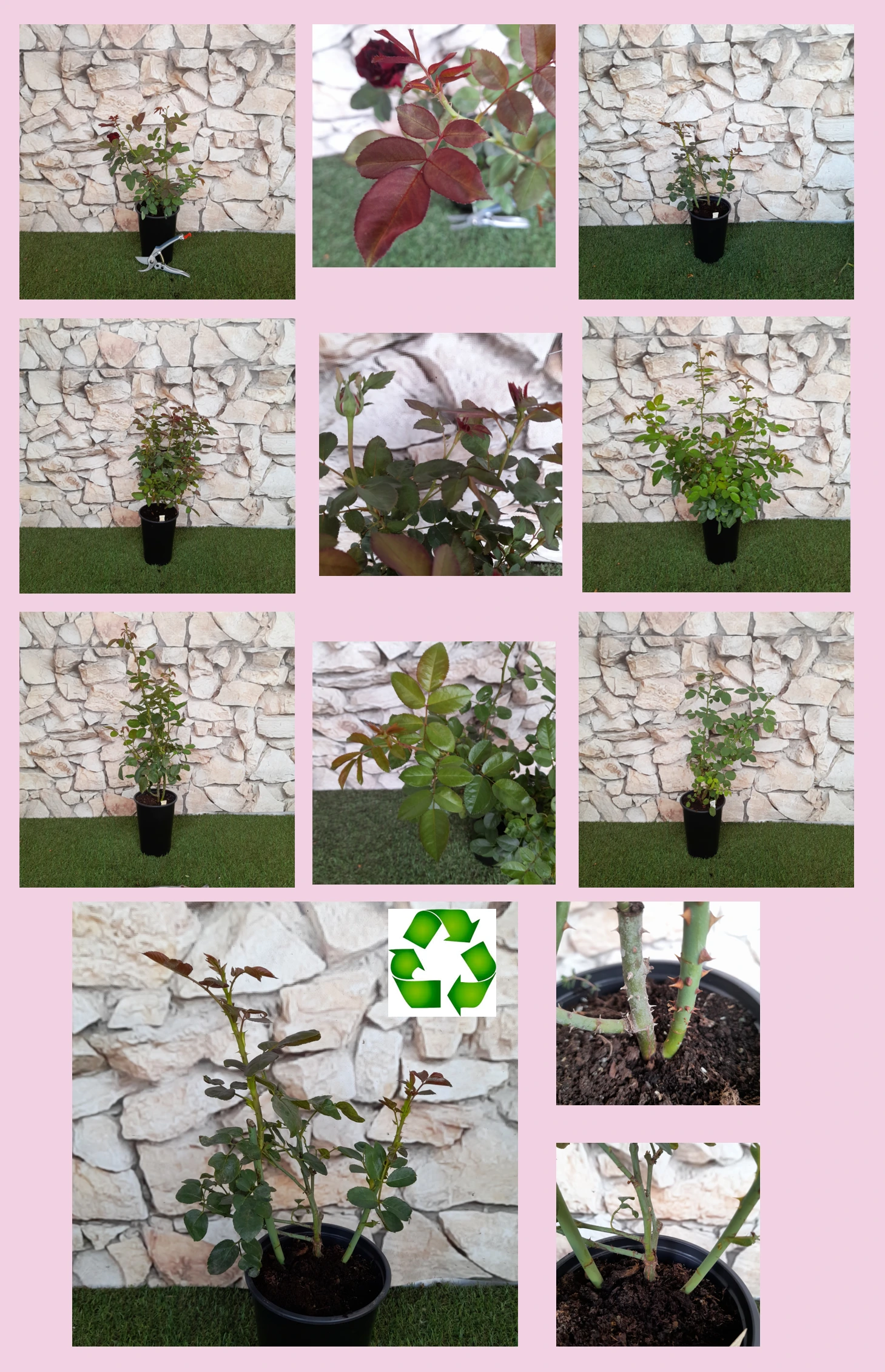
WAKANA – greenish-white hybrid tea rose – Kimura
With its distinctive greenish-white blooms, WAKANA brings a quietly romantic cottage charm to family gardens, evoking the feeling of afternoon tea under an arbour. This hybrid tea rose forms an upright, compact silhouette that fits beautifully into smaller borders and front gardens, while its dense, dark foliage provides an elegant backdrop to the softly shaded flowers. Own-root cultivation means it matures into a resilient, long-lived investment that can regenerate from below ground if the top growth is damaged, helping it cope reliably even in gardens with frequent wind and rain near the coast. Over the first few seasons it settles in steadily, with roots establishing first, then stronger shoots, and by the third year delivering its full ornamental display. The plentiful, ball-shaped blooms are ideal for cutting, allowing you to bring this serene colouring indoors, while remontant flowering keeps the border lively across summer. In containers of at least 40–50 litres, it becomes a graceful centrepiece, adding a storybook atmosphere with minimal fuss for busy households.
Usage options
| Target area | Reasoning |
|---|
| Small cottage-style front garden bed |
Its upright, compact habit and controlled spread make WAKANA easy to place in modest UK front gardens, where space is limited but you still want a focal hybrid tea rose. Simple deadheading and seasonal pruning keep the neat silhouette, suiting beginners. |
| Romantic cutting patch near the kitchen garden |
Ball-shaped, medium-sized blooms on strong stems are excellent for cutting, with their unusual greenish-white shade complementing herbs and vegetables nearby without clashing. Repeating flushes through summer keep vases filled, ideal for homeowners. |
| Feature rose in a mixed cottage border |
The dense, dark foliage forms a handsome backdrop to perennials, while the soft, opalescent petals blend easily with pastels, whites and blues. Moderate disease resistance reduces spraying in family spaces, appealing to health-conscious gardeners. |
| Large patio container or terrace pot |
Grown in a 40–50 litre container, the upright structure and repeat flowering create a tidy yet romantic accent beside seating areas. Container culture allows better drainage in heavy clay soils and straightforward watering routines, helpful for urban residents. |
| Low, informal hedge or boundary accent |
Planted at 50–60 cm intervals, WAKANA forms an airy, flowering line that guides the eye without feeling rigid. Its moderate height keeps sight-lines open while still giving privacy around seating or children’s play areas, suited to family-focused buyers. |
| Calming focus in a predominantly green scheme |
The lime-to-cream blooms subtly echo young foliage tones, so they sit naturally among clipped shrubs and grasses. This restrained colouring avoids visual clutter and brings a serene, grown-up feel to gardens where you prefer a peaceful ambience. |
| Rose bed in mixed weather, including breezier sites |
Heat-tolerant growth and reliable structure, supported by own-root vigour, help WAKANA to cope with varied British summers, while its ability to re-sprout from the base adds security in exposed, rain-swept gardens, reassuring cautious planters. |
| Long-term focal point for evolving family gardens |
As an own-root rose, WAKANA is bred to build strength year after year, maintaining its characteristic flowers without graft-related suckers, so it can adapt as borders are redesigned, offering lasting value and continuity for settled households. |
Styling ideas
- Kitchen-border elegance – Pair WAKANA with herbs and vegetables for a traditional cottage feel, letting its cut-friendly stems serve the house – ideal for practical cooks who love homegrown bouquets.
- Green-and-white calm – Combine with white foxgloves, Astrantia and silver foliage for a soothing palette that highlights the rose’s opalescent tones – perfect for those seeking a restful evening garden.
- Romantic front welcome – Underplant with low catmint and soft pink cranesbills to frame a path or doorway – appealing to homeowners who want a gentle, storybook first impression.
- Patio focal pot – Use a 40–50 litre terracotta container with trailing thyme and lobelia around the base – suited to balcony and terrace gardeners with limited ground space.
- Mixed cottage ribbon – Weave WAKANA through a border of Lychnis, Scabiosa and hardy geraniums for a loose, blooming ribbon – attractive to fans of informal English-country planting.
Technical cultivar profile
| Parameter | Data |
|---|
| Name and registration |
Hybrid tea rose from the Rosa Orientis collection; registered cultivar name ‘Wakana’, marketed as WAKANA – greenish-white hybrid tea rose – Kimura for garden and cutting use. |
| Origin and breeding |
Bred in Japan in 2006 by Takunori Kimura from ‘Tineke’ × ‘Princesse de Monaco’; introduced by Keihan Gardening Co., Ltd., representing modern Japanese hybrid tea breeding. |
| Growth and structural characteristics |
Upright, bushy plant reaching about 85–120 cm high and 50–70 cm wide, moderately thorny, with dense, slightly glossy dark green foliage that provides a strong structural presence. |
| Flower morphology |
Medium-sized, double, 26–39 petalled flowers carried mostly singly; ball to pompon shaped blooms repeat well through the season, with an abundant second flush after the main flowering. |
| Colour data and phenology |
Greenish-white flowers; lime-green buds open to creamy, pale greenish-white, then fade toward silvery-white edges, with colour intensifying to lime shades in cooler conditions before ageing. |
| Fragrance and aroma |
Very weak tea-like fragrance, generally only noticeable at close quarters; primarily chosen for its unusual colour effect and garden form rather than for strong scent character. |
| Hip characteristics |
Rose hip set is usually sparse due to double flowers; where present, hips are ellipsoidal, around 12–18 mm in diameter, and ripen to an attractive orange-red late in the season. |
| Resistance and winter hardiness |
Hardy to around −21 to −18 °C (RHS H7; Swedish zone 3; USDA 6b); generally resistant to powdery mildew and black spot, with moderate rust sensitivity requiring occasional monitoring. |
| Horticultural recommendations |
Best in sunny positions with well-prepared soil; medium maintenance with deadheading and periodic pest and disease checks, suitable for beds, specimen planting, hedging and larger containers. |
WAKANA offers compact structure, repeat flowering and a calm greenish-white palette on a durable own-root plant; consider it if you want a long-lived, quietly distinctive rose for a family garden.