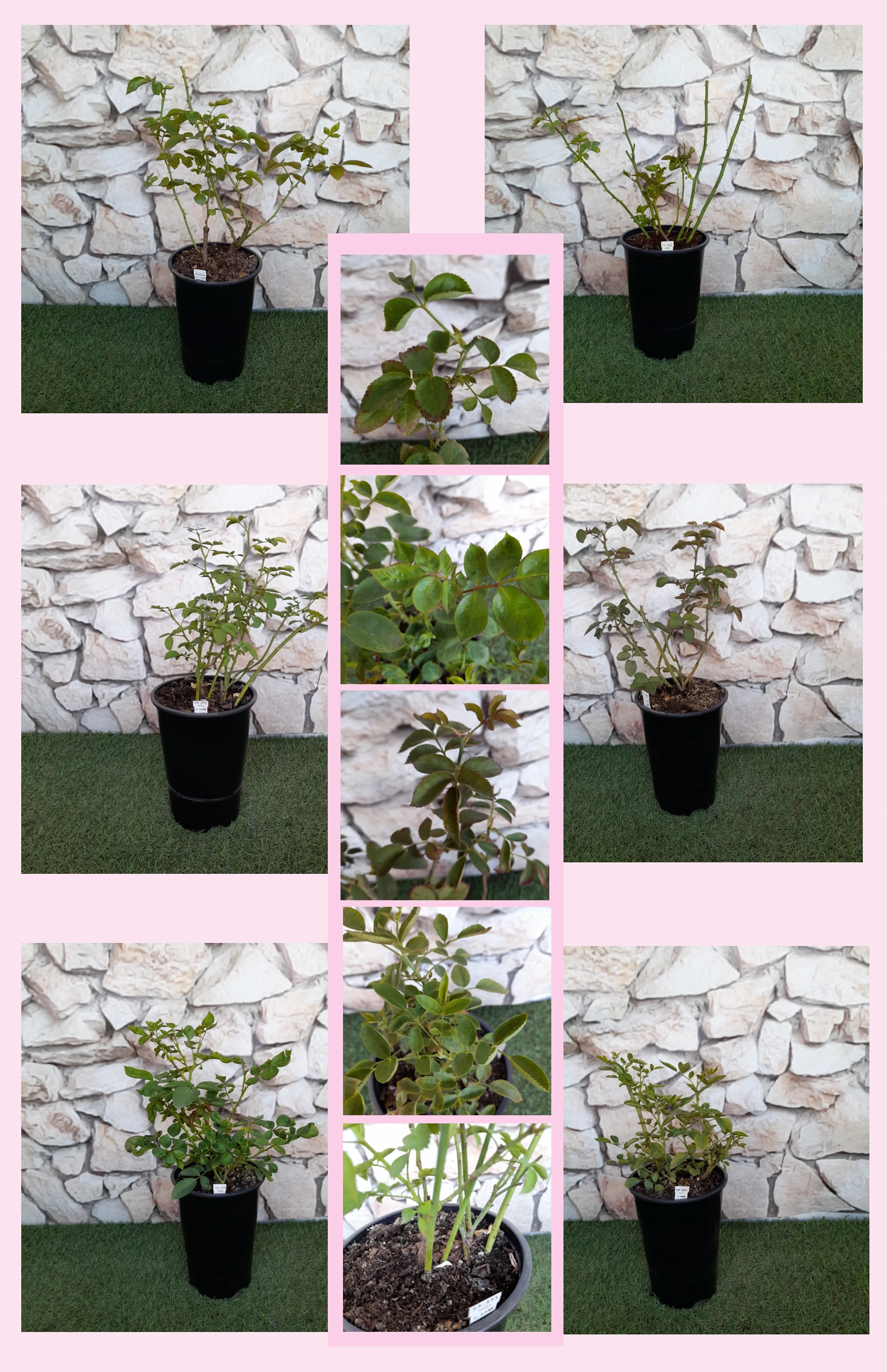
ROSA PIMPINELLIFOLIA MON AMIE CLAIRE – pink landscape shrub rose - Ivan Louette
With its softly fading pink-and-cream blooms, Mon Amie Claire brings a romantic, storybook atmosphere to cottage-style beds and informal hedges, while staying reassuringly straightforward to look after. This compact shrub rose flowers generously from late spring into autumn, its semi-double cups opening for bees and hoverflies and then dropping cleanly to reveal decorative, bird-feeding hips for winter interest. Own-root plants establish steadily and naturally, building a long-lived framework that copes well with breezy, changeable weather near the coast and typical family-garden conditions. In an average UK garden it offers a dependable rhythm: roots settling in the first year, shoots filling out the second, and by the third year a stable, fully developed display that needs only light, occasional pruning to keep its shape. Plant singly as a focal point or repeat along a boundary for a low, romantic screen that stays pleasingly compact, obligingly resistant, quietly hardy and reliably remontant.
Usage options
| Target area | Reasoning |
|---|
| Low, romantic cottage hedge along a front or side boundary |
The bushy, compact habit and repeat flowering make it ideal for a low, informal hedge that feels welcoming rather than imposing, with neat foliage and good self-cleaning so spent blooms rarely need deadheading; in winter, dark hips add structure and bird food for family gardeners. |
| Wildflower-style or naturalistic border near a lawn or seating area |
Strong disease resistance and minimal maintenance needs suit relaxed, naturalistic planting where you prefer to stand back rather than fuss, while pastel flowers and blackish hips tie in beautifully with meadow grasses and perennials for busy homeowners. |
| Pollinator-friendly cottage garden bed by the kitchen or patio |
Semi-double flowers with exposed stamens and a strong, clearly perceptible fragrance are highly attractive to bees and other beneficial insects from May into autumn, adding life and gentle scent close to everyday living spaces for wildlife lovers. |
| Feature shrub in a small to medium family garden |
Its compact, dense growth and slow, steady own-root development make it easy to place in limited space, offering a long-lived framework that responds well to light pruning or more decisive cutting back, depending on your style as beginner gardeners. |
| Coastal or more exposed suburban garden position |
This shrub rose copes well with breezy, changeable weather and typical British coastal exposure, holding its foliage and flower colour without demanding constant care, which makes it reassuring in less sheltered plots for urban and coastal owners. |
| Large container on a terrace, courtyard or roof garden |
Suitable for cultivation in a roomy container of at least 40–50 litres, where its tidy size, good drought tolerance once established and minimal pruning needs allow you to enjoy classic roses in paved or rooftop spaces as time-pressed residents. |
| Informal pastel-toned cottage border with traditional companions |
Soft pink-to-cream flowers harmonise with lavenders, campanulas and low hedging plants, giving a coherent pastel palette without clashing; good colour retention in sun means your border looks consistently gentle and romantic for cottage-style enthusiasts. |
| Rock garden edge or woodland-margin planting |
The botanical heritage and tough root system suit lighter, well-drained soils and slightly wilder plantings; it knits into rock garden edges or woodland margins, flowering reliably with little intervention and anchoring the scene for nature-focused gardeners. |
Styling ideas
- Pastel Hedge Walk – plant a loose single-row hedge and underplant with catmint and soft geraniums for a scented, child-friendly path edge – ideal for cottage-style families
- Kitchen Door Welcome – position a specimen by the back door with chives, thyme and campanula to link ornamental and kitchen garden areas – perfect for home cooks who love romance
- Bee Lover’s Corner – group several shrubs with lavender and alliums near seating to create a long-season pollinator haven – suited to wildlife-conscious gardeners
- Coastal Cottage Bank – use on a sunny, slightly sloping bed with grasses and sea thrift, relying on its resilience and low care – good for breezier, exposed plots
- Courtyard Statement Pot – grow in a 50‑litre terracotta container with trailing thyme and violas at the base for a classic look – convenient for busy urban terrace owners
Technical cultivar profile
| Parameter | Data |
|---|
| Name and registration |
Rosa pimpinellifolia Mon Amie Claire, a botanical landscape shrub rose for garden and park use; current trade name as listed, breeder attribution to Ivan Louette confirmed. |
| Origin and breeding |
Belgian shrub rose bred in 2005 by Ivan Louette, from ‘Stanwell Perpetual’ crossed with a dwarf Rosa pimpinellifolia form collected on the Quiberon peninsula, Brittany. |
| Growth and structural characteristics |
Compact, bushy shrub with dense, matt, dark bluish-green foliage and relatively sparse prickles; self-supporting framework well suited to hedging or specimen use in small gardens. |
| Flower morphology |
Semi-double, cup-shaped flowers with 13–25 petals, medium size around 4–5 cm across, produced in clusters of three to five per stem and repeating generously through the season. |
| Colour data and phenology |
Soft pale pink blooms (RHS 65C outer, 65D inner) gently fade to white or cream-white; the pastel tone holds well in sun, giving a light, delicate effect from late spring to autumn. |
| Fragrance and aroma |
Clearly perceptible, strong rose fragrance; although detailed scent notes are not recorded, the aroma is noticeable around the plant, enhancing nearby seating areas and paths. |
| Hip characteristics |
Produces abundant small, spherical hips 10–15 mm across, dark red to blackish in colour, highly decorative in autumn and winter, edible and a valuable natural food source for birds. |
| Resistance and winter hardiness |
Robust shrub with good tolerance of sun and moderate drought, strongly resistant to black spot, powdery mildew and rust, and reliably hardy in cold climates down to about −29 °C (RHS H7). |
| Horticultural recommendations |
Best for low hedges, specimens, rock gardens and naturalistic beds; plant 60–150 cm apart; low-maintenance, responding to light pruning; suits partial shade and larger containers. |
Rosa pimpinellifolia Mon Amie Claire offers compact, low-maintenance, disease-resistant romantic flowering on a long-lived own-root framework, making it a thoughtful choice for anyone planning a relaxed, enduring family garden.