RUBRIFOLIA – pink wild rose - Pourret
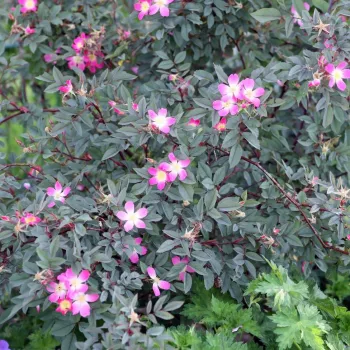
This graceful wild shrub rose brings a quietly romantic, storybook presence to family gardens, combining airy pink blooms with unusually coloured blue‑green, purplish foliage for all-season structure and charm. As an own‑root plant it matures into a long‑lived, reliable feature that copes well with the demands of everyday life, from busy schedules to exposed plots where strong breezes and persistent showers test lesser shrubs. Over time it develops into a tall, arching backdrop for relaxed cottage borders, hedges and kitchen‑garden corners, rewarding light, regular care with consistent ornamental value year after year. The flowers are once‑blooming but generous, followed by dark red hips that extend interest well into winter and encourage wildlife. Its natural, slightly untamed character is ideal for gardeners who prefer soft lines and informal planting schemes, especially where hedge, privacy, structure, wildlife, colour, resilient, cottage and low‑maintenance planting are priorities.
Usage options
| Target area |
Reasoning |
| Loose boundary hedge along a family garden fence |
Tall, upright, arching growth and moderate thorniness make this rose an effective, visually soft boundary hedge that discourages access without feeling harsh. Plant at 90 cm spacings for an informal, slightly see‑through screen that keeps its shape with light trimming and offers flowers, hips and seasonal foliage colour to delight the eye of the family buyer. |
| Privacy screen near patios or seating areas |
Reaching 200–300 cm in height with a 120–190 cm spread, this cultivar quickly builds vertical cover around terraces or garden benches, creating a sense of enclosure without heavy pruning regimes. Its airy habit filters views rather than blocking them, ideal where you want seclusion but still enjoy light and sky as a busy homeowner. |
| Structural backdrop for cottage and kitchen borders |
The bushy, species‑rose character forms a stable green backdrop for perennials, herbs and vegetables, giving beds an anchored, established look in medium‑sized family gardens. Once the shrub has settled you mainly need occasional thinning, making it a dependable “framework” plant for the cottage‑style gardener. |
| Wildlife‑friendly planting and naturalistic corners |
Single, pollen‑rich flowers support bees and other pollinators, followed by dark red hips that feed birds and extend visual interest into winter. Because the plant is naturally robust and needs only medium intervention, it suits low‑input, wildlife‑encouraging schemes valued by the nature‑conscious owner. |
| Colour and foliage contrast in mixed shrub borders |
The deep pink, once‑a‑season flower flush combines with glaucous blue‑green to purplish leaves, providing a striking foil for greens, silvers and variegated plants. Even when out of bloom the foliage keeps borders lively, an asset for the colour‑oriented gardener. |
| Sites exposed to sun, heat and lighter drought |
This species shrub tolerates heat very well and becomes drought‑tolerant once established, so it stays presentable when watering is less frequent during school holidays or dry spells. Its resilience on tougher sites reduces replacement risk for the time‑pressed household. |
| Soft screening in windy, rainy, more exposed plots |
The flexible, arching canes move with the wind rather than snapping, and the shrub copes better than many garden roses with open aspects where breezes and regular showers are the norm, making it a practical choice for the coastal‑area gardener. |
| Low‑input family gardens with limited maintenance time |
Self‑cleaning flowers drop petals cleanly and hips require no special attention, so most years you only need occasional shaping and basic health checks. As an own‑root shrub it can regrow if cut back hard, supporting a long service life for the relaxed hobbyist. |
Styling ideas
- Cottage‑hedge – Run a loose row along a front boundary, underplanting with catmint and hardy geraniums for a romantic, slightly informal hedge – for lovers of classic cottage frontage.
- Kitchen‑garden – Place a single shrub at the edge of a vegetable plot with chives and marigolds; it marks the garden entrance and gives seasonal colour and hips – ideal for family kitchen‑garden owners.
- Woodland‑edge – Combine with Hakonechloa and coral bells in partial shade to highlight the tinted foliage and natural form – suited to gardeners softening paths and shady corners.
- Winter‑focus – Pair with Cornus sanguinea 'Midwinter Fire' and evergreen shrubs so hips and stems shine against coloured bark – appealing to those wanting interest beyond summer.
- Urban‑screen – Use as a tall, narrow screen in small city gardens, letting the arching habit blur neighbouring views while keeping a light feel – for busy urban owners needing privacy.
Technical cultivar profile
| Parameter |
Data |
| Name and registration |
Wild species shrub rose marketed as Rosa rubrifolia Botanical rose Pourret, also known as Rosa glauca; sold here as RUBRIFOLIA – pink wild rose - Pourret, a verified, premium silver selection. |
| Origin and breeding |
Natural species of unknown parentage, attributed to Pierre André Pourret and in cultivation since around 1830; unregistered variety widely used as a reliable botanical garden and landscape rose. |
| Awards and recognition |
Recognised for garden reliability with the RHS Award of Garden Merit (1993) and chosen as a Great Plant Picks selection (2002) for consistent performance in temperate garden conditions. |
| Growth and structural characteristics |
Strong, upright to arching shrub reaching 200–300 cm tall and 120–190 cm wide, moderately thorny with medium‑dense, matt foliage; forms a gently spreading, bushy outline ideal for hedges and backdrops. |
| Flower morphology |
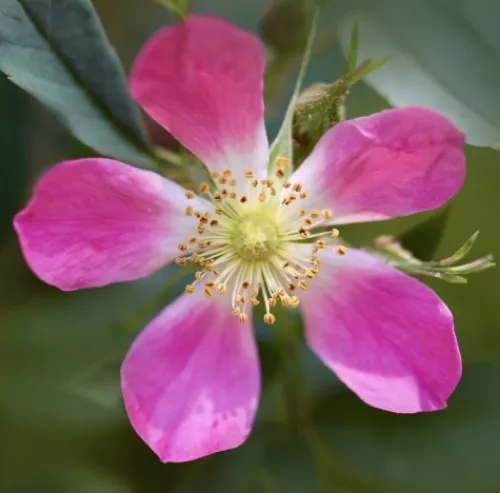
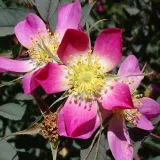
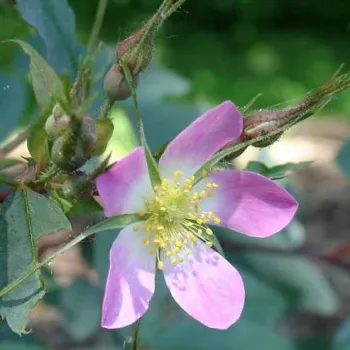
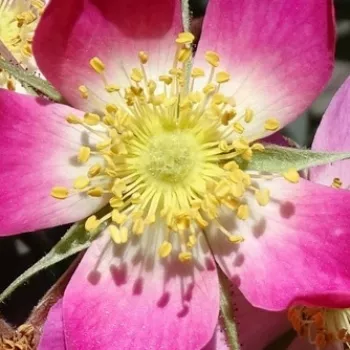
Once‑flowering species rose with small, flat, single blooms (5–12 petals) in clusters; flowers are self‑cleaning, with petals dropping cleanly to reveal attractive, later decorative dark red hips. |
| Colour data and phenology |
New buds open deep pink with pale centres, then medium to pale pink before fading towards white; colour retention is modest, but flowering is generous in season, followed by plentiful hips for autumn effect. |
| Fragrance and aroma |
Flowers offer a mild, delicately rosy scent rather than a strong perfume; fragrance is best enjoyed at close range, suiting paths, seating areas and mixed borders where subtlety is appreciated. |
| Hip characteristics |
Produces moderately abundant, spherical dark red hips around 12–18 mm in diameter; hips add wildlife value and decorative autumn and early winter interest on both solitary shrubs and informal hedges. |
| Resistance and winter hardiness |
Exceptionally hardy, tolerating around −46 to −43 °C (RHS H7, Swedish Zon 7, USDA 2a). Disease resistance is medium, typically requiring only occasional monitoring and light intervention in humid summers. |
| Horticultural recommendations |
Best in sun or light shade with reasonable soil; plant at 105 cm for massing, 90 cm for hedges, 165 cm as specimen. Needs medium maintenance and suits parks, naturalistic gardens, hedges and urban green spaces. |
RUBRIFOLIA – pink wild rose - Pourret offers tall, structural screening, wildlife‑friendly flowers and hips, and durable own‑root growth that suits relaxed, long‑term family gardens; it is well worth considering for your next planting decision.