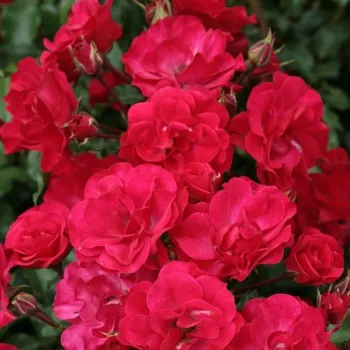
ROTILIA® – carmine-red bedding floribunda rose – Kordes
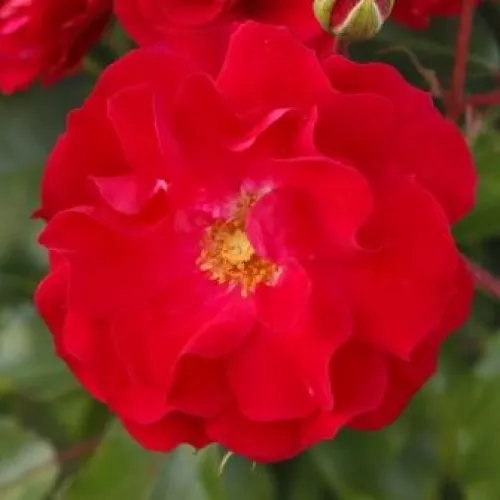
Planted near a sunny terrace or along a path, Rotilia® wraps everyday life in cottage-garden romance, its cool carmine-red clusters creating a softly glowing hedge of colour from early summer well into autumn. This compact floribunda forms a low, bushy border that suits small family gardens and busy owners, with reliably healthy foliage that shrugs off typical British fungal problems even where summers are humid and breezy with frequent showers. Its self-cleaning blooms mean less deadheading and more time for afternoon tea under an arbour, while the own-root form settles deeply, regenerates if cut back hard and supports a long-lived, stable display. Ideal for clay or chalk soils once drainage is improved, it copes well with urban heat, needs modest watering, and looks equally at home in raised beds, front gardens and larger containers of at least 50 litres for a long-season display. Over time its dense, glossy foliage and carpeting habit knit planting together, providing structure, colour rhythm and an easy-care backdrop to perennials, herbs and cottage favourites, building up from strong roots through leafy shoots to full ornamental value over the first three seasons. With semi-double flowers that invite visiting bees, low maintenance and award-winning reliability, Rotilia® becomes a quietly confident companion in any romantic, family-friendly garden.
Usage options
| Target area | Reasoning |
|---|
| Low front-of-border strip in a family garden |
The compact, bushy habit (around 60–85 cm) makes Rotilia® ideal for edging mixed beds without crowding paths or windows, while still giving generous, season-long clusters of carmine-red flowers – perfect for busy beginners |
| Informal flowering hedge along a path or drive |
Planted 30–35 cm apart, plants knit into a low, continuous hedge that hides bare soil and softens hard edges, with self-cleaning blooms that keep the line colourful without constant pruning or deadheading – ideal for time-poor homeowners |
| Raised beds on heavier clay or chalky ground |
Rotilia® establishes strongly on improved clay or chalk when drainage is managed, its own-root vigour supporting long-term flowering structure and reducing replacement needs in typical suburban soils – reassuring for practical planners |
| Large containers on patios or small terraces |
In planters of 50 litres or more, the compact root system and upright, floriferous growth give a dense mound of foliage and colour, turning paved terraces into cottage-style seating corners with minimal care – attractive to urban gardeners |
| Mass bedding in cottage-style flowerbeds |
With planting densities of 8–9 plants/m², Rotilia® forms a carpet of repeat-flowering colour that covers ground, suppresses weeds and offers reliable impact even in mixed weather with regular wind and rain – ideal for family gardens |
| Partial-shade corners near seating or play areas |
Tolerating partial shade, Rotilia® still flowers well near north-east aspects or beside taller shrubs, bringing light, cool-toned red colour and glossed foliage to spaces where many roses underperform – welcome for shady plots |
| Low-maintenance public-facing front gardens |
Strong disease resistance, ADR and Gold Standard recognition mean tidy foliage with few treatments, keeping front gardens smart and colourful with very modest care and only occasional formative pruning – ideal for image-conscious owners |
| Wildlife-friendly, yet tidy family borders |
Semi-double, open blooms with accessible stamens attract bees while the bushy form and moderate hips stay neat, giving a gentle wildlife benefit without a messy look, suiting child-friendly, well-kept plots – perfect for cottage romantics |
Styling ideas
- Cottage-Edge – Line a front border with Rotilia® and weave between clumps of lavender and catmint for a low, romantic ribbon of cool red and blue – for homeowners who like traditional kerb appeal
- Kitchen-Path – Plant alternating groups of Rotilia® and herbs such as thyme and sage along a vegetable garden path for colour and scent that feel like an old English potager – for rural cooks and kitchen gardeners
- Patio-Nook – Use a single Rotilia® in a 50–60 litre terracotta pot, underplant with trailing thyme and violas to frame a bistro set in a small courtyard – for balcony and terrace dwellers
- Meadow-Rim – Create a clear, low ring of Rotilia® around a looser grass-and-perennial mix with switchgrass and daylilies, giving a tidy red frame to naturalistic planting – for those wanting order beside informality
- Family-Play – Set a curved ribbon of Rotilia® between lawn and play area, pairing it with tough perennials like Agastache ‘Blue Fortune’ to keep colour high while leaving open, usable space – for families with active children
Technical cultivar profile
| Parameter | Data |
|---|
| Name and registration |
Floribunda bed rose, registered as KORvillade, marketed as Rotilia® (RigoRosen® collection); ARS exhibition name Rotilia®, commercial use as a compact, carmine-red bedding floribunda. |
| Origin and breeding |
Bred by Wilhelm Kordes III, W. Kordes’ Söhne, Germany, around 1992; registered 2006 and introduced after 2006 as a robust landscape and bedding rose suitable for wider European climates. |
| Awards and recognition |
Highly decorated: multiple Gold and Silver Medals in Dublin, Kortrijk, Geneva, Madrid, Monza and Potsdam, plus Den Haag Gold Rose; ADR certification (2002) and Gold Standard award (2008) for garden performance. |
| Growth and structural characteristics |
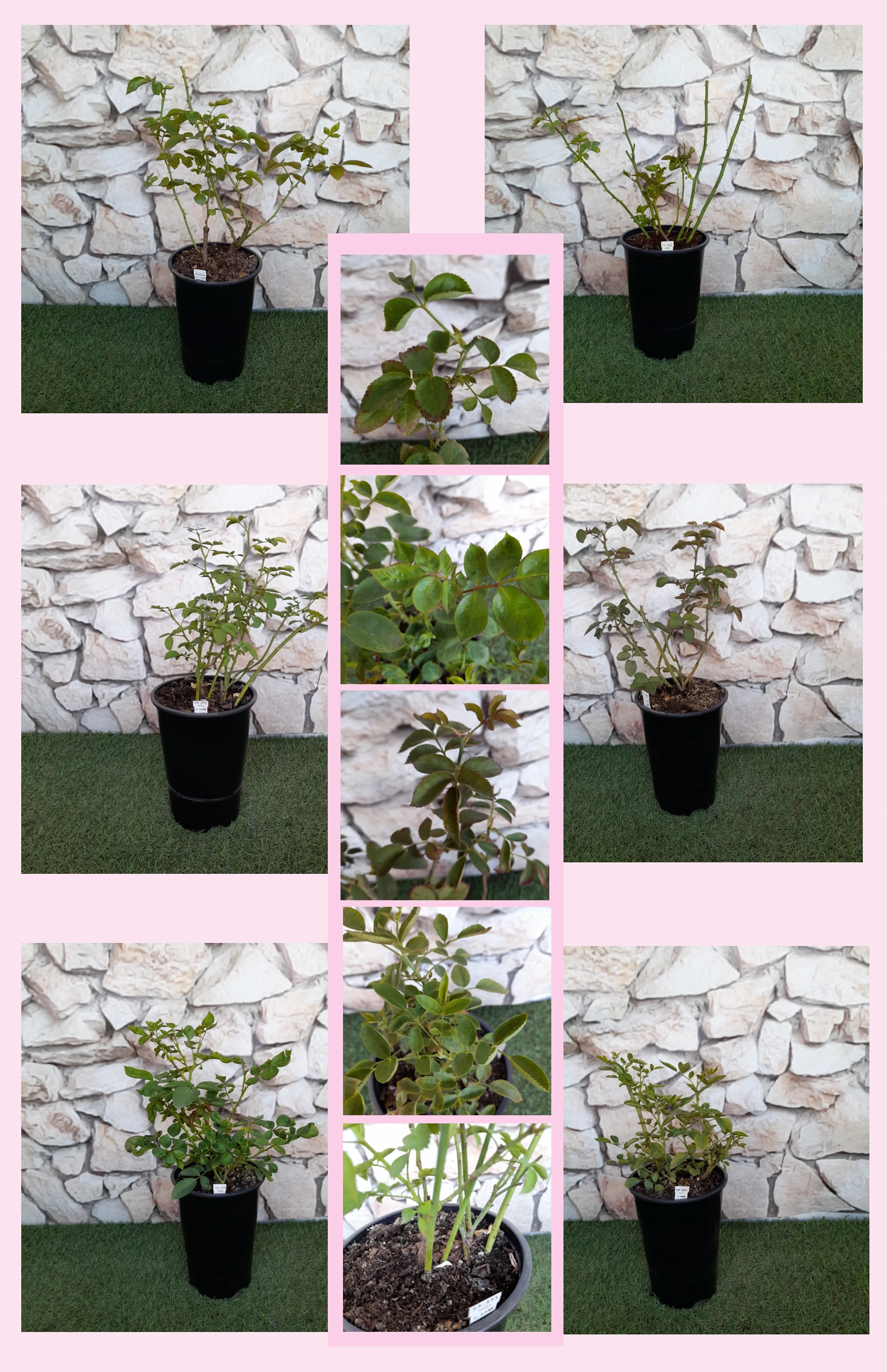
Compact, upright, bushy shrub reaching about 60–85 cm high and 40–60 cm across, with dense, glossy, dark green foliage and moderate prickles, forming a low, cohesive, well-branched mound for beds and borders. |
| Flower morphology |
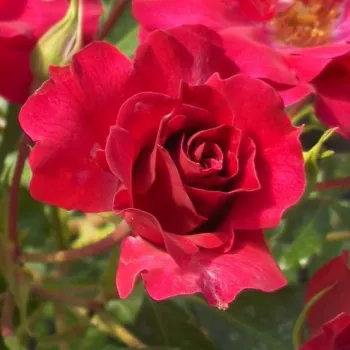
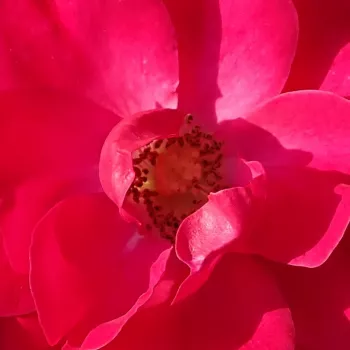
Semi-double, flat, cluster-flowered blooms of medium size (about 4–7 cm), with 9–16 petals, produced freely in flushes; remontant character ensures abundant second flowering and good self-cleaning of spent blooms. |
| Colour data and phenology |
Vibrant, cool-toned carmine-red (RHS 53B–53C), fiery when newly opened, lightening slightly to raspberry with a silvery edge in strong sun; overall colour retention moderate, with long-lasting, homogeneous display in clusters. |
| Fragrance and aroma |
Fragrance is very light and brief, with a simple wild-rose character rather than heavy perfume; flowers prioritise colour and display over scent, making it suitable where fragrance is not the primary selection criterion. |
| Hip characteristics |
Produces moderate numbers of small, spherical hips, about 7–10 mm in diameter, coloured scarlet-red (RHS 46A), adding a subtle seasonal accent without significantly affecting the shrub’s neat, compact appearance. |
| Resistance and winter hardiness |
Rated H7 and hardy to approximately −21 to −18 °C (USDA 6b; Swedish Zone 3); very good resistance to powdery mildew, black spot and rust, with foliage that remains healthy in typical British garden conditions. |
| Horticultural recommendations |
Suited to beds, edging, groundcover and urban planting; low maintenance and tolerant of heat and moderate drought once established; plant 30–55 cm apart, at 8–9 plants/m² for mass effect or looser for specimen use. |
Rotilia® RigoRosen® KORvillade offers compact, low-maintenance, repeatedly flowering colour on a healthy, long-lived own-root shrub; consider it wherever you want reliable romance in a modest family space.