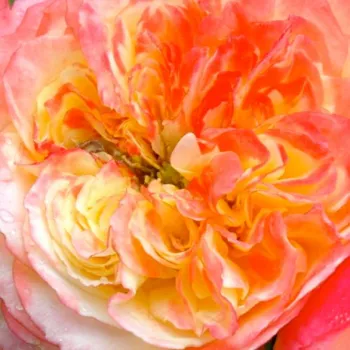
ROS'ODILE™ – yellow-pink flower-bed shrub rose – Dominique Massad
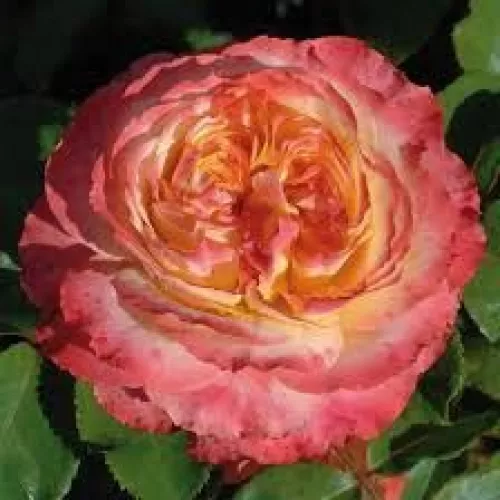
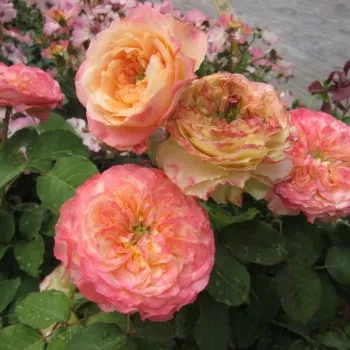
Softly coloured and classically shaped, ROS'ODILE™ settles into a family garden with a quietly romantic presence, forming a bushy, mid‑sized shrub that works beautifully beside a lawn, path or kitchen garden beds and copes steadily with brisk coastal breezes and wet, blustery days. Its cup-shaped blooms open in clusters from warm apricot-yellow to a delicate pink, giving a long, repeat display across the season with very little fuss, while dense, glossy foliage helps the plant read as a tidy, reassuring backdrop even between flushes. As an own-root rose it offers dependable longevity, reliable regrowth after pruning or weather damage and a stable mature shape, so you can prune more freely without worrying about losing its character. In a typical British family plot it slides easily into cottage-style borders or low hedging, suiting busy gardeners who prefer robust structure, adaptable planting distances, understated fragrance, soft colour transitions and relaxed maintenance that leave more time for enjoyment and less time for complicated tasks during your weekends.
Usage options
| Target area | Reasoning |
|---|
| Front-of-border flower bed in a family garden |
The compact, bushy habit and 100–140 cm height form a neat, generous shrub that will not overwhelm a small or medium border, while the soft yellow-pink flowers give a storybook cottage feel from a practical, own-root plant that matures gracefully over several seasons, with Year 1 focused on rooting, Year 2 on stronger shoots and Year 3 bringing full ornamental impact for beginners. |
| Low informal hedge along a path or drive |
Planted at 55 cm intervals, ROS'ODILE™ knits into a glossy, mid‑green line with romantic, cup-shaped clusters softening edges without creating a hard, formal barrier, and the moderately thorny stems provide a gentle deterrent without feeling aggressive for families. |
| Mixed cottage border with perennials and herbs |
The pastel transition from apricot-yellow to pink blends harmoniously with cottage plants such as common sage or obedient plant, while the dense foliage fills gaps and the remontant flowering ensures repeat colour without demanding complex pruning for cottage-lovers. |
| Specimen shrub near a seating area or terrace |
As a solitary rose at around 1–1.4 m, it offers a romantic focal point beside seating, with discreet, fruity fragrance that never overwhelms, making it suitable for close quarters and regular family use, even where scent sensitivity is a concern for tea-drinkers. |
| Urban front garden or narrow bed |
The relatively narrow 70–90 cm spread and upright, dense habit allow you to create a welcoming, traditional frontage in limited space, and the own-root form means long-term stability without worrying about suckers from a grafted rootstock for homeowners. |
| Raised beds on heavier clay soils |
Where drainage is improved, this shrub copes well with typical British conditions, its dense structure anchoring firmly and keeping an ordered look even after heavy rain and wind that can flatten looser planting schemes, ideal for clay-gardeners. |
| Larger patio container or courtyard planter |
In a 40–50 litre or larger container with good compost, ROS'ODILE™ becomes a manageable, long-lived feature for paved spaces, its repeat clusters providing colour close to the house while the own-root constitution supports regeneration if stems are cut back harder for balcony-owners. |
| Wildlife-friendly long-term planting scheme |
Moderately produced spherical red hips add subtle autumn interest and support birds later in the year, while robust foliage and black spot resistance suit low-intervention, long-horizon planting where you prefer durable structure to constant replacements for planners. |
Styling ideas
- Cottage-Hedge – Plant a loose single-row hedge, underplant with catmint and soft geraniums for a pastel, billowing edge – ideal for romantic front gardens.
- Kitchen-Nook – Place one or two shrubs by a vegetable patch with sage and chives, linking productive and ornamental areas – perfect for kitchen-garden enthusiasts.
- Pastel-Island – Use three plants in a triangular island bed with white obedient plant and low euonymus for a calm, structured focal point – suited to neat family lawns.
- Courtyard-Rose – Grow in a 50 litre terracotta pot with gravel mulch and lavender nearby, creating a low-care, long-lived accent – good for busy urban courtyards.
- Pathway-Frame – Alternate ROS'ODILE™ with small evergreen shrubs along a path to frame views and guide movement – thoughtful for welcoming entrance walks.
Technical cultivar profile
| Parameter | Data |
|---|
| Name and registration |
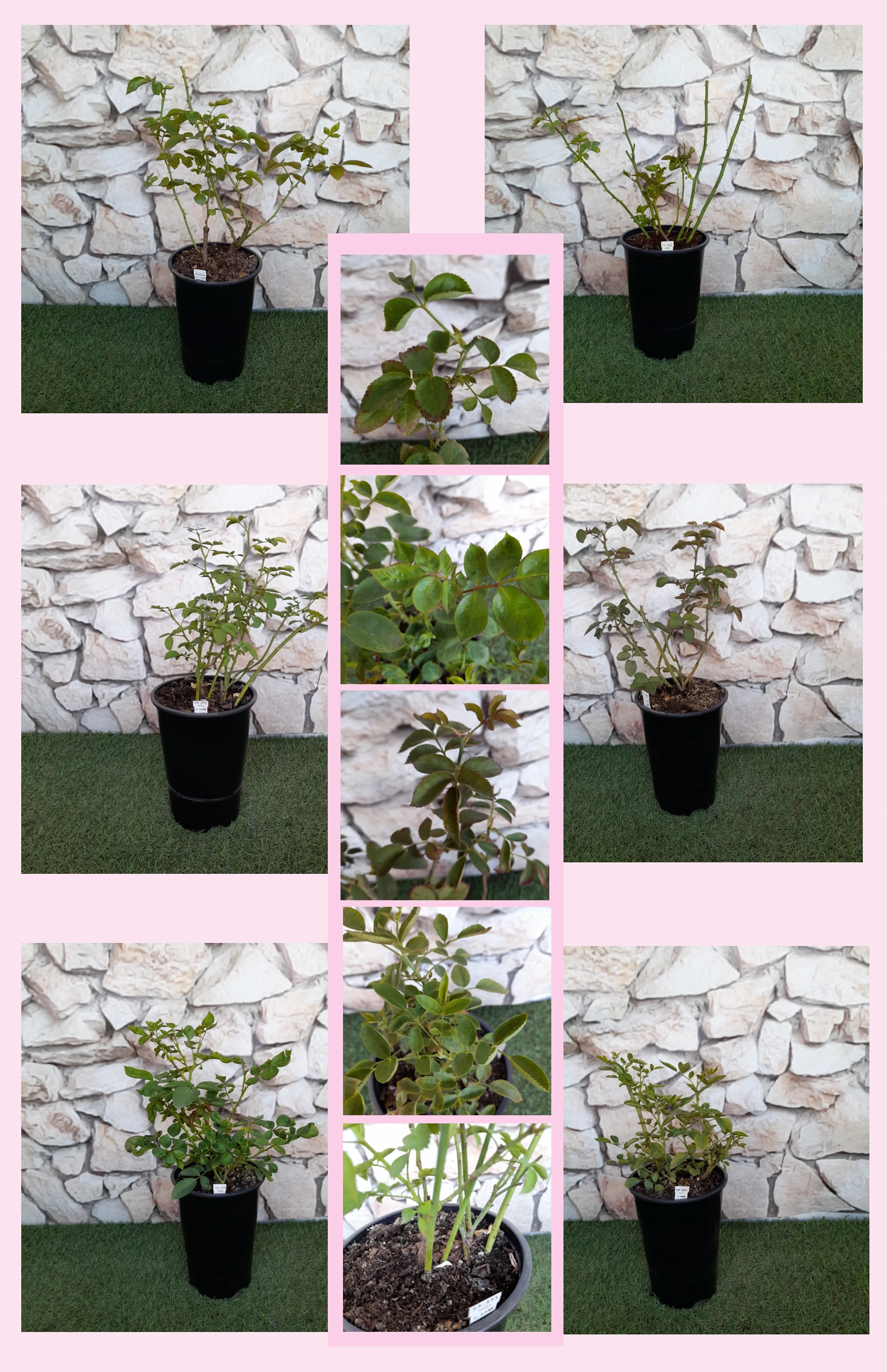
Ros'Odile™ Les Provençelles®, shrub bed rose; registered as MASdile, ARS exhibition name Ros; own-root, 2-litre container-grown plant for garden use. |
| Origin and breeding |
Bred in France in 2011 by Dominique Massad (Rose Petals); ‘Monique Lestournelle’ × ‘Emilien Guillot’; initially distributed by Pétales de Roses and Les Chemins de la Rose. |
| Growth and structural characteristics |
Bushy, erect shrub 100–140 cm tall and 70–90 cm wide, with dense, glossy mid‑green foliage (RHS 137A) and moderately thorny shoots, forming a full, balanced outline. |
| Flower morphology |
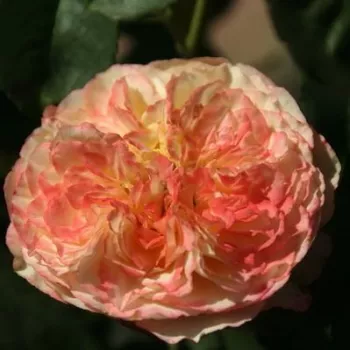
Very full, double, cup-shaped blooms with 40+ petals, medium sized (approximately 4–7 cm), produced in clusters, with strong remontancy and a generous second flush. |
| Colour data and phenology |
Warm apricot-yellow centre with pink outer petals; ARS yb, RHS 14B outer and 36C inner; colour softens to an even pastel pink while retaining a fresh, refined appearance. |
| Fragrance and aroma |
Discreet, fruity fragrance of very weak intensity, noticeable only at close range, making it suitable for seating areas where a light, unobtrusive scent is preferred. |
| Hip characteristics |
Moderate crop of small, spherical red hips, 10–14 mm in diameter, adding quiet seasonal interest and a subtle wildlife resource in late summer and autumn. |
| Resistance and winter hardiness |
Hardy to approximately −21 to −18 °C (RHS H7, USDA 6b, Swedish zone 3); good black spot resistance, moderate tolerance to powdery mildew, rust, heat and summer drought. |
| Horticultural recommendations |
Best in full sun; plant 65 cm apart in beds, 55 cm for hedging, 100 cm as specimens; medium maintenance, occasional plant protection, regular watering during dry periods. |
ROS'ODILE™ offers soft cottage-garden colour, a bushy, space-efficient habit and reassuring long-term stability from its own-root form, making it a thoughtful choice for relaxed, traditional family gardens.