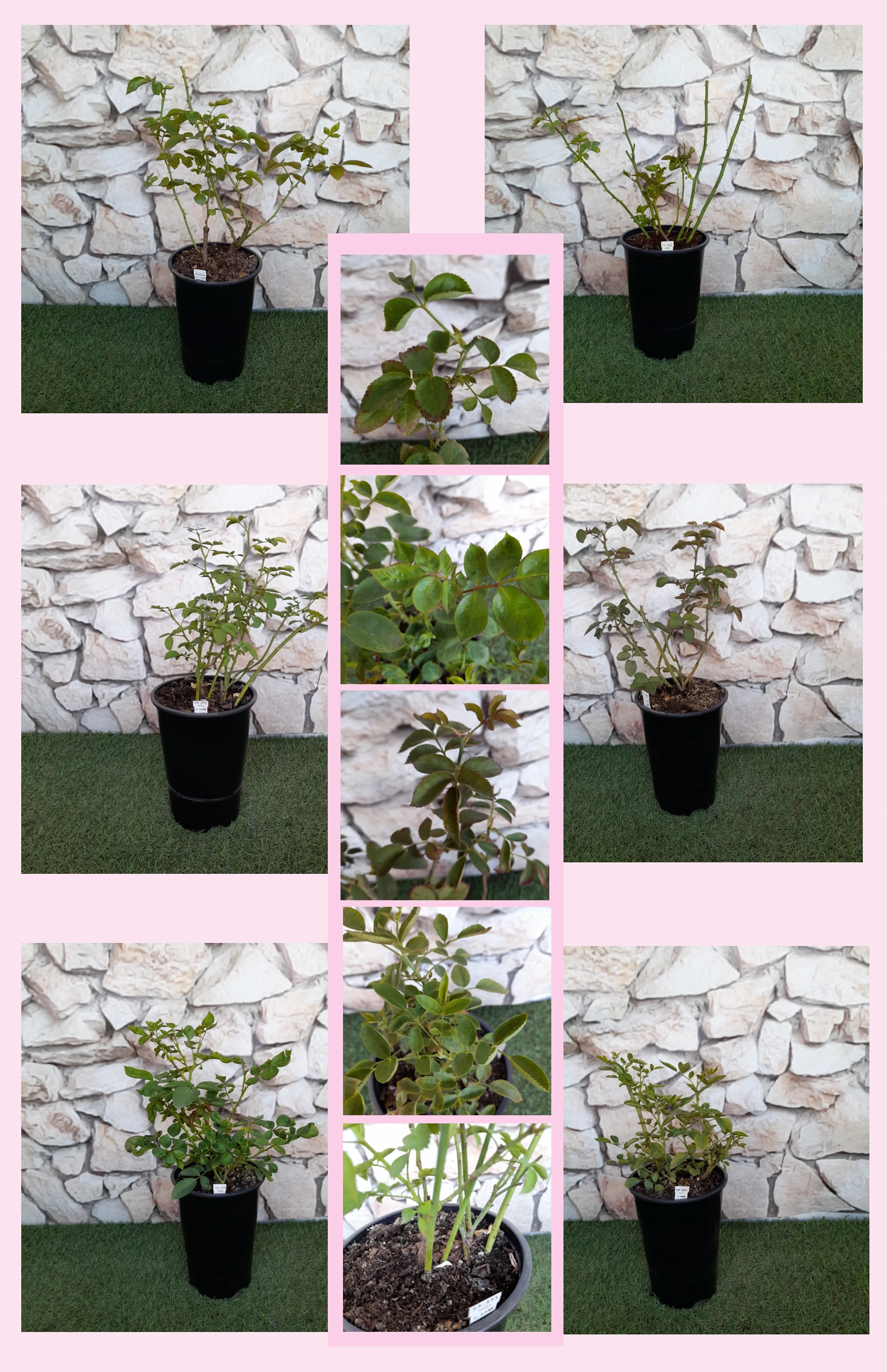
RENAISSANCE DE FLÉCHÈRE – golden-yellow hybrid tea rose – Ducher
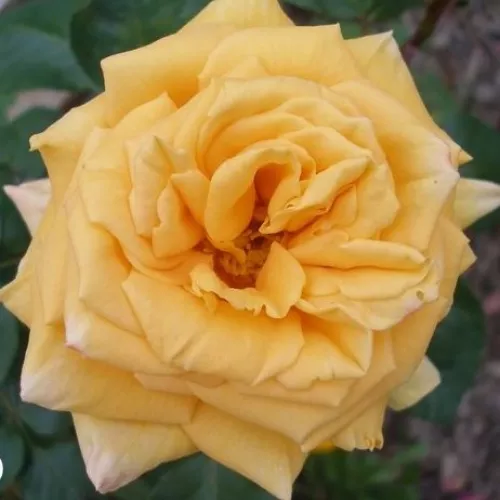
Imagine the gentle glow of afternoon tea beneath a rose-covered arbour: Renaissance de Fléchère brings a softly romantic, storybook feel to even the smallest family garden, with elegant, medium-sized, cup-shaped blooms in golden-yellow tones that fade delicately to cream. Bred by Ducher, this upright, bushy hybrid tea forms a compact, reliable shrub that fits beautifully into “girly” cottage borders, edging a kitchen garden path or anchoring a cosy seating corner. On its own roots it is naturally long-lived and capable of regenerating from the base, keeping its shape and colour show with fewer complicated tasks over the years. Its moderate, fresh-fruity fragrance feels quietly luxurious rather than overpowering, and its good tolerance of summer heat means it continues to flower steadily even in exposed spots where strong winds and driving rain can quickly test less robust roses. With repeat flushes through the season and steady structure, it settles in as a dependable, low-fuss companion for everyday family life, maturing from a well-rooted young plant into a full feature over several seasons. This makes it especially reassuring if you want classic hybrid tea blooms without needing expert-level rose skills.
Usage options
| Target area |
Reasoning |
| Front-of-border cottage planting |
The compact 80–110 cm height and bushy habit keep Renaissance de Fléchère at a friendly, visible level along paths or in front of hedges, creating that soft cottage-garden look without taking over the bed. Its reliable repeat flowering gives consistent colour between perennials with minimal intervention, suiting those who like traditional schemes but want to avoid high-maintenance borders – ideal for the time-pressed homeowner. |
| Sunny terrace in a large container |
With upright growth and medium-sized, cup-shaped blooms, this rose works well as a focal plant in a generous pot of at least 40–50 litres, where roots have enough room to stabilise and support repeat flowering. Own-root plants re-shoot from the base if winter or drought ever cause dieback, extending the life of your container display and protecting your investment – particularly reassuring for a busy urbanite. |
| Family seating and “afternoon tea” corner |
The moderate, fresh, fruity fragrance and warm golden-yellow flowers create a welcoming, cosy mood around benches, arbours or small pergolas without becoming overpowering at close quarters. The tidy height range makes it easy to position beside seats so blooms sit at eye level, adding a sense of occasion to everyday tea breaks – perfect for the comfort-loving family. |
| Low-maintenance mixed rose bed |
Renaissance de Fléchère offers repeat flowering with only moderate maintenance: light seasonal pruning keeps the shrub in shape, while its resistance to black spot and powdery mildew reduces the need for frequent spraying. Own-root growth means it recovers steadily after harder pruning, maintaining a full outline year after year – suited to the practical, eco-aware gardener. |
| Kitchen garden edge or path lining |
The recommended 50–60 cm spacing allows you to form a neat, low hedge along vegetable beds or paths, giving structure and romance to a productive garden without shading crops. Upright, not sprawling, growth keeps access routes clear while the golden blooms tie beautifully with herbs and cottage perennials – an attractive choice for the style-conscious grower. |
| Small suburban front garden feature |
Its moderate size and bushy habit create a clear focal point in tight spaces without dominating windows or drives. Own-root planting gives a long lifespan and stable ornamental value, so once it is settled you mainly deadhead and enjoy, rather than constantly replacing tired plants – appealing for the practical, budget-aware householder. |
| Warm, exposed or heat-prone sites |
Good heat tolerance means this variety continues to perform in south-facing or slightly exposed spots, provided it receives regular watering during prolonged dry spells. Its structure copes well when coastal winds and heavy rain test softer plants, keeping the display presentable across changeable seasons – a sound option for the climate-conscious planner. |
| Developing long-term garden framework |
As an own-root hybrid tea introduced in 2004, Renaissance de Fléchère is well suited to forming part of a long-term planting plan, gradually settling into a stable, upright shrub that responds flexibly to different pruning styles. Over the seasons it knits into surrounding planting, providing continuity of form and flower colour – attractive to the long-view planner. |
Styling ideas
- COTTAGE-RIBBON – Plant in a loose ribbon along a path with low catmint and yarrow, letting the golden-yellow blooms hover above a soft blue and cream carpet – for lovers of romantic cottage borders.
- TEA-ARBOUR – Position near a bench or simple arbour, underplant with evergreen St John’s-wort and soft grasses to frame an afternoon tea nook – for those creating a cosy seating corner.
- KITCHEN-EDGE – Line vegetable beds at 50–60 cm spacing, interweaving chives and parsley so the rose gives structure while herbs provide everyday usefulness – for home cooks who enjoy a pretty potager.
- GOLDEN-FOCAL – Grow one plant as a specimen in a 50-litre terracotta pot on the terrace, surrounding the base with low thyme to contrast foliage textures – for balcony and patio container gardeners.
- SOFT-SUNSET – Combine with apricot and cream roses plus airy perennials like gaura to build a warm, sunset-coloured bed that glows on summer evenings – for colour-focused garden stylists.
Technical cultivar profile
| Parameter |
Data |
| Name and registration |
Renaissance de Fléchère is a hybrid tea rose marketed as a golden-yellow shrub for garden and cut-flower use; current trade name as supplied by Roseraie Ducher to consumer growers. |
| Origin and breeding |
Bred by Fabien Ducher at Roseraie Ducher, Châteauneuf, Loire, France, from unknown parentage; introduced in 2004 and distributed primarily as a premium garden rose. |
| Growth and structural characteristics |
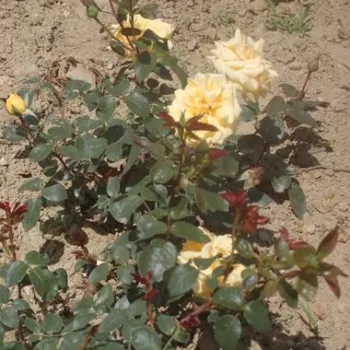
Upright, bushy habit reaching around 80–110 cm in height and 50–70 cm spread, with moderately dense, slightly glossy dark green foliage and a moderately thorny framework over time. |
| Flower morphology |
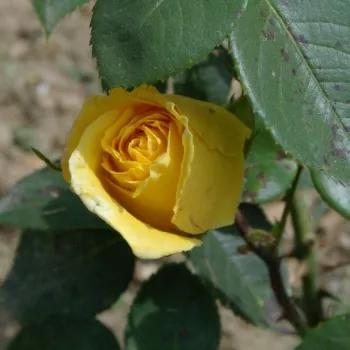
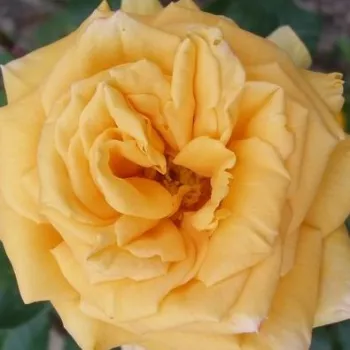
Medium-sized, double, cup-shaped blooms with roughly 26–39 petals borne mainly singly on stems; remontant habit with a particularly abundant second flush in suitable conditions. |
| Colour data and phenology |
Medium-saturated golden-yellow flowers (RHS 11A–12B) open intense, then soften through creamy yellow with a retained warm centre, holding colour well before gently fading as blooms age. |
| Fragrance and aroma |
Moderate, fresh, fruity fragrance that is clearly noticeable at close range without becoming overpowering; well suited to seating areas and paths where people pass nearby or linger. |
| Hip characteristics |
Forms moderately abundant, small spherical red hips around 12–18 mm in diameter, adding discreet late-season interest if spent blooms are not removed for extended flowering. |
| Resistance and winter hardiness |
Hardy to approximately −21 to −18 °C (RHS H7, USDA 6b), with good resistance to black spot and powdery mildew and moderate susceptibility to rust under high disease pressure. |
| Horticultural recommendations |
Best in a sunny, well-drained position with regular watering in dry spells; plant around 50–60 cm apart in beds or hedging, allowing 90 cm for specimen use and good air circulation. |
Renaissance de Fléchère combines compact, upright growth, repeat golden-yellow flowering and fresh fragrance with the resilience and long lifespan of an own-root rose, making it a thoughtful choice for a relaxed, enduring garden feature.