PRÉSIDENT DE SÈZE – lilac-pink historic Gallica rose - Hébert
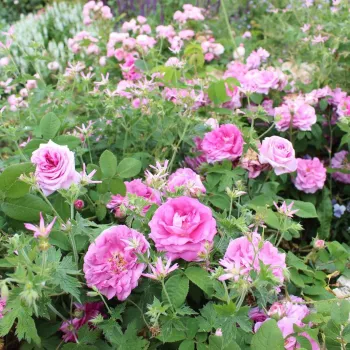
Imagine afternoon tea beneath an arbour, surrounded by romantic lilac-pink rosettes and a perfumed haze: PRÉSIDENT DE SÈZE is a bushy, historic Gallica shrub that lends a storybook charm to small and medium family gardens with minimal fuss. Its strong, long-lasting scent and once-a-summer mass of very double blooms create a theatrical focal point in borders, along hedges or as a solitary specimen. On its own roots it knits into the soil for a long life and easy recovery, well suited to breezier gardens that often face strong rain and wind near the coast. Give it a season to anchor, another to build, and by the third year you have a mature, settled shrub that holds its shape. Medium maintenance needs and good winter hardiness make this timeless rose a reassuring choice for busy households wanting traditional charm without constant fuss.
Usage options
| Target area | Reasoning |
|---|
| Main cottage-style border in a family garden |
The bushy, medium-height habit and once-a-season flush of very double lilac-pink blooms give a classic cottage look with clear structure, ideal for mixing with perennials and herbs in front or behind, with straightforward annual pruning suiting a beginner gardener. |
| Romantic hedge or boundary screen |
Planted at the recommended hedge spacing, its moderately dense foliage and upright, thorny shoots form a traditional, informal barrier that flowers impressively once a year and then settles into a soft green screen, ideal for a family garden backdrop. |
| Solitary specimen near terrace or seating area |
The strong, long-lasting fragrance and large rosette blooms are best appreciated close up, so a single shrub near a bench, terrace or lawn edge becomes a seasonal highlight that rewards simple, occasional deadheading by a homeowner who values scent. |
| Mixed historic rose collection bed |
As a historic Gallica with documented 1828 French origin, it brings authenticity and period character, its once-flowering habit making it a good structural anchor among other heritage roses for the collector who enjoys traditional varieties. |
| Lightly shaded border with morning or dappled sun |
Suitability for partial shade means it can be used where many roses struggle, such as east-facing fences or among taller shrubs, maintaining flowering and foliage quality for the urban gardener working with constrained light conditions. |
| Raised bed or improved heavy-clay area |
Own-root planting in well-prepared soil lets the shrub establish a durable framework and cope more steadily with wetter periods and drainage-improved heavy clay, giving reassuring stability to the busy gardener who cannot constantly adjust conditions. |
| Large container on patio (40–60 litres) |
In a very large pot it remains manageable in size yet still offers historic charm and fragrance, allowing renters or small-garden owners to enjoy a long-lived shrub that can be moved if needed, which particularly suits the time-poor city dweller. |
| Naturalistic park-style or informal planting |
The moderately dense, matte grey-green foliage and spherical red hips lend a quietly wild, nature-inspired look outside peak bloom; this understated structure suits looser planting schemes favoured by the nature-loving gardener. |
Styling ideas
- Cottage Arbour Focus – Train PRÉSIDENT DE SÈZE as a loose, shrubby presence at the base of a wooden arch, underplanted with Nepeta x faassenii and soft grasses – ideal for those seeking a scented, romantic entrance to a family garden.
- Pastel Hedge Mix – Combine as a flowering section within a mixed hedge of box, yew and flowering shrubs, letting its lilac-pink flush provide a seasonal highlight – suited to homeowners wanting a traditional boundary with character.
- Terrace Scent Corner – Place a single plant in a 40–60 litre terracotta container with trailing thyme and low lavender around the base – perfect for urban gardeners prioritising fragrance and easy care in a compact space.
- Heritage Rose Parterre – Use several plants at recommended spacing in a formal, symmetrical layout with clipped evergreen edges, echoing period French gardens – appealing to enthusiasts of historic roses and classical structure.
- Shady Romance Border – Position in a lightly shaded border with Hydrangea petiolaris and soft ferns to extend interest when the rose is not in flower – ideal for those softening a north- or east-facing wall with a storybook feel.
Technical cultivar profile
| Parameter | Data |
|---|
| Name and registration |
Historic Gallica shrub rose marketed as PRÉSIDENT DE SÈZE, also known as Hébert; heritage rose type, unregistered cultivar with ARS exhibition name President de Seze used in shows. |
| Origin and breeding |
Originating in France around 1828, bred by Madame Hébert; parentage and breeding institution are unknown, but it is firmly regarded as a classic early nineteenth-century Gallica rose. |
| Growth and structural characteristics |
Bushy, thorny shrub 110–170 cm tall and 90–140 cm wide, with moderately dense, matte grey-green foliage; self-cleaning is weak, so spent blooms may require occasional removal after flowering. |
| Flower morphology |
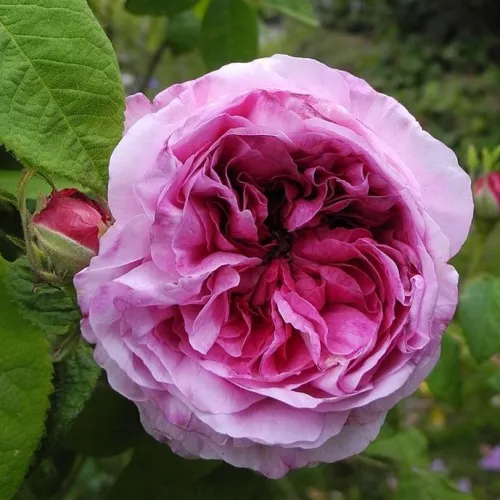
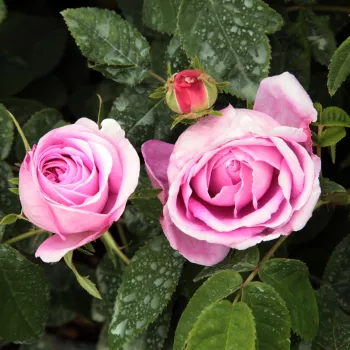
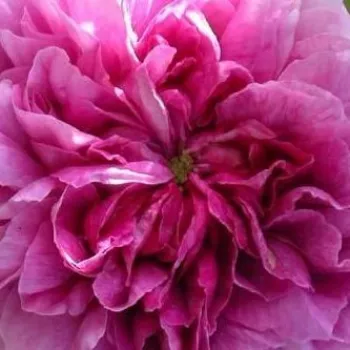
Large, once-flowering, very double rosette blooms with over 40 petals, borne mainly in clusters; flower size typically in the 2.75–3.95 inch range, giving an opulent, traditional appearance in early summer. |
| Colour data and phenology |
Lilac-pink with a deeper crimson-purple centre; buds open deep crimson-lilac then lighten, especially in strong sun; colour holds better in cooler conditions, creating a soft, frosted, greyish-lilac effect before fading. |
| Fragrance and aroma |
Strong, long-lasting scent with a classic old-rose, perfumed character that lingers around the plant; heavily double flowers moderately attract pollinators due to reduced access to stamens. |
| Hip characteristics |
Produces moderate quantities of small, spherical hips, around 12–18 mm across, turning red as they mature; hips contribute late-season colour and a slightly wild, natural effect after flowering finishes. |
| Resistance and winter hardiness |
Hardy to approximately −32 to −29 °C (RHS H7, USDA 4b, Swedish Zone 5); disease resistance is moderate overall, with good black-spot resistance but moderate susceptibility to powdery mildew and rust. |
| Horticultural recommendations |
Best in borders, parks or as a specimen; medium maintenance with occasional plant protection; allow around 110 cm for mass plantings, 100 cm for hedges and 170 cm for specimens to develop fully. |
PRÉSIDENT DE SÈZE offers richly scented historic blooms, dependable winter hardiness and long-lived, own-root resilience; consider it if you would like a traditionally romantic focal rose with manageable care demands.