POMPONELLA® – deep pink bedding floribunda rose – Kordes
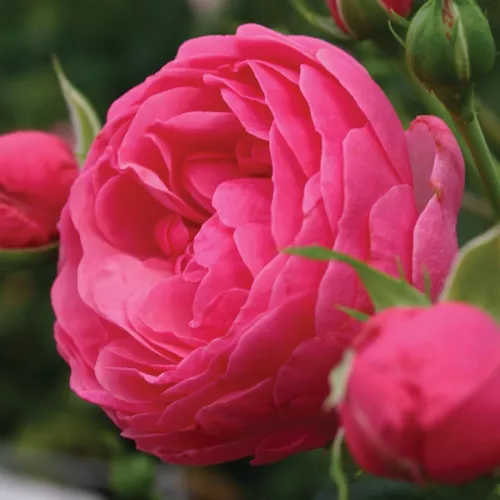
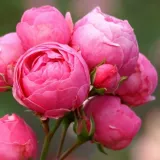
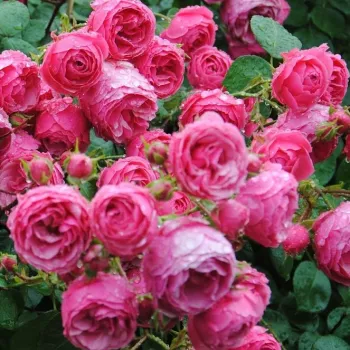
This compact Märchenrosen® floribunda brings a feeling of afternoon-tea romance to even the smallest family garden, covering its neat, bushy frame with clusters of globular pompon blooms in a deep, raspberry-pink palette. Bred by Kordes for modern gardens, it combines excellent disease resistance with low-maintenance habits, so You can enjoy a charming, storybook border without demanding routine. As an own-root rose it settles securely, quietly building a long-lived framework that regenerates well after pruning and adapts reliably to wetter, windier sites where well-prepared drainage keeps heavy soils from staying waterlogged. In containers of at least 40–50 litres it forms a stable, rounded structure that suits patios and cottage-style seating areas, while in beds it makes a softly upright hedge or front-of-border accent, its glossy dark foliage staying attractive through the season. Over time, its steady growth and remontant flowering create a consistently enchanting garden picture.
Usage options
| Target area | Reasoning |
|---|
| Romantic cottage-style front border |
The compact, upright yet bushy habit forms a tidy, low line of structure that fits beautifully along paths and in small front gardens. Clusters of ball-shaped blooms give a fairy-tale look without sprawling, making edging easy to keep in proportion for beginners. |
| Long-flowering feature near seating |
Abundant clusters and strong repeat flowering mean colour from early summer well into autumn, so the plant earns its space beside a bench or terrace. The flowers open deep raspberry-pink and soften to powder-pink, keeping interest even as each cluster ages for romantics. |
| Low-maintenance family planting scheme |
High resistance to black spot, mildew and rust allows dependable performance with minimal spraying, helpful for busy households. Occasional deadheading is enough to keep it neat, and the own-root form underpins a long lifespan with steady ornamental value for busy-owners. |
| Small hedge or path edging |
With planting distances of about 40–50 cm, the upright, bushy growth knits into a dense, flowering strip ideal for defining lawns, driveways or kitchen-garden beds. Moderate prickles also help discourage shortcuts through borders for families. |
| Large containers on patios or balconies |
In 40–50 litre or larger containers it develops a stable root system and rounded top, giving a cottage-rose effect where ground space is limited. The glossy dark foliage and self-contained outline suit urban patios that need neatness with charm for city-gardeners. |
| Heavy-soil or exposed suburban gardens |
Once planted into well-prepared, free-draining soil, the own-root structure anchors securely, coping better with wind and typical clay-based plots when drainage is improved, reassuring those in breezier, wetter districts that still want reliable roses for homeowners. |
| Kitchen-garden borders with cottage companions |
The medium height and ball-shaped blooms weave easily among herbs and low perennials, creating a soft “girly” cottage effect without shading vegetables. Partner with hardy geraniums or clematis for layered colour that still feels manageable for hobby-gardeners. |
| Long-term garden framework planting |
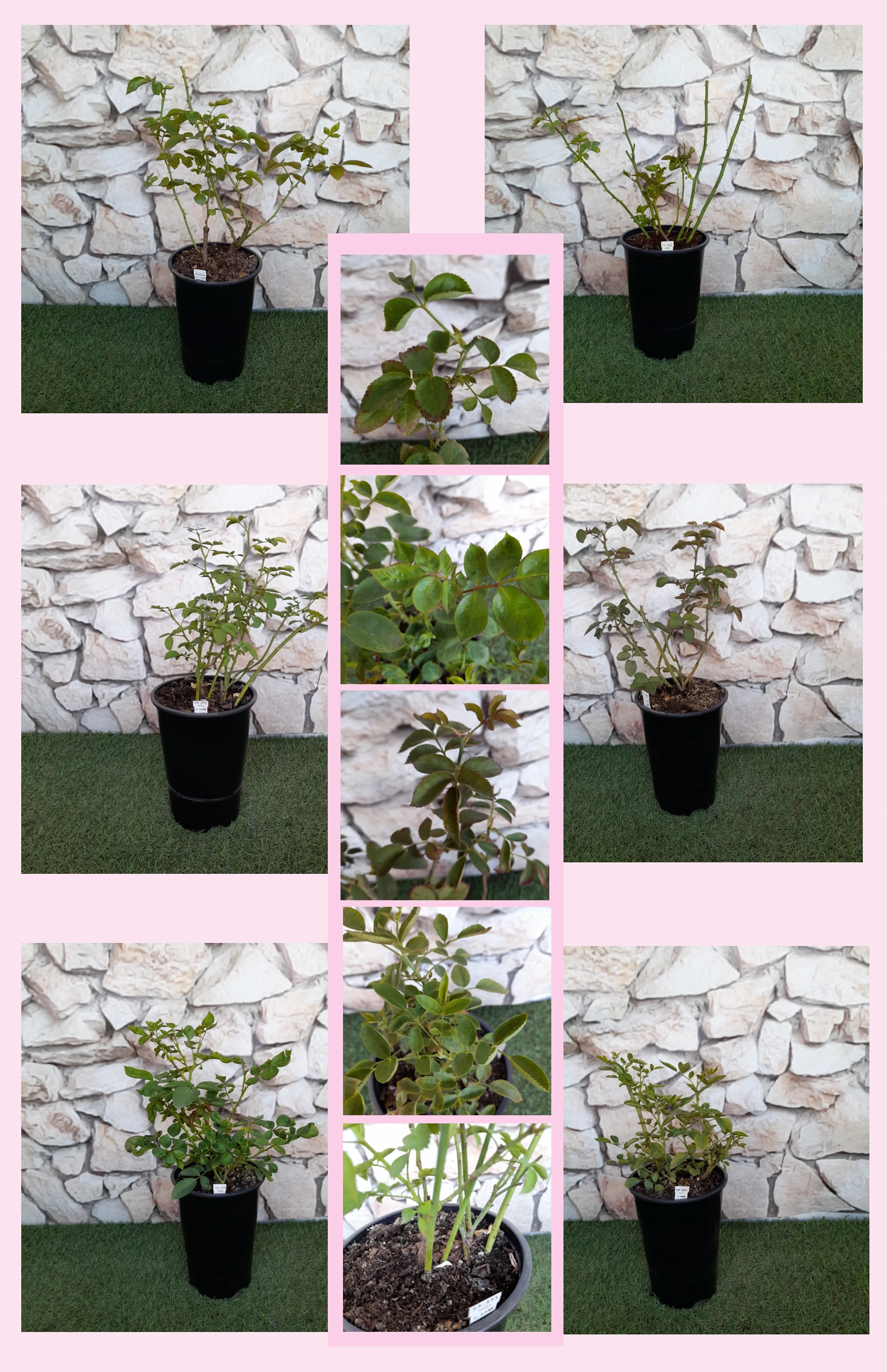
Supplied as a young own-root plant, it focuses first on establishing roots, then sturdy shoots, and by the third year delivers its full flowering and shape. This steady development suits those planning a lasting, evolving garden picture for planners. |
Styling ideas
- Cottage-border ribbon – Plant in a wavering line along a path, underplant with catmint and hardy geraniums to echo the pompon blooms – ideal for lovers of soft English country style.
- Patio-rose tea corner – Use a large terracotta pot and flank with lavender-filled tubs to create a scented, informal seating nook – perfect for small-plot owners wanting effortless romance.
- Kitchen-garden edge – Run a low hedge along veg beds, interspersed with chives and thyme, to blend ornament and utility – good for practical gardeners who enjoy a traditional potager look.
- Storybook arch approach – Line both sides of an entrance path with repeated plants, backing them with clematis-covered supports – suits families seeking a fairy-tale walk up to the front door.
- Mixed pink tapestry – Combine with pale foxgloves, white campanulas and soft grasses for a layered pastel scheme – for gardeners who want a gentle, feminine scheme that is easy to maintain.
Technical cultivar profile
| Parameter | Data |
|---|
| Name and registration |
Floribunda bedding rose, Collection Märchenrosen®. Registered as KORpompan, marketed as Pomponella® / Pomponella™; exhibition floribunda class, premium gold quality rating. |
| Origin and breeding |
Bred by W. Kordes’ Söhne in Germany and introduced in 2005. Commercial floribunda bed rose selected for garden performance and strong health under European conditions. |
| Awards and recognition |
ADR (Germany) 2006; Gold Standard (UK) 2012; multiple international medals including Geneva Gold Medal 2005 and top certificates in Lyon, Paris, Orléans and The Hague. |
| Growth and structural characteristics |
Upright, bushy plant 70–95 cm high and 55–85 cm wide, with dense, glossy dark green foliage and moderate prickles; medium self-cleaning, occasional deadheading recommended. |
| Flower morphology |
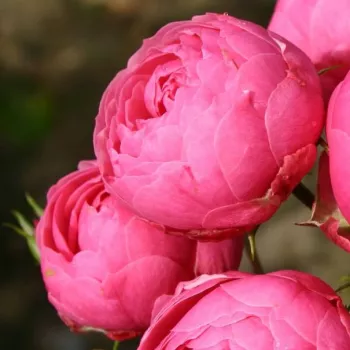
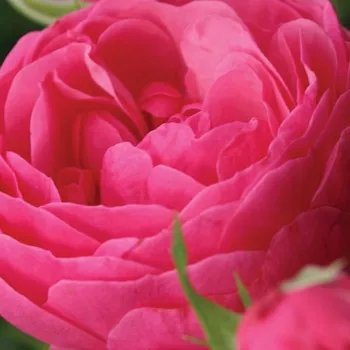
Very double, ball-shaped pompon blooms, medium size with over 40 petals. Produced in clusters, with excellent remontant performance and a notably abundant second flush in season. |
| Colour data and phenology |
Deep pink with raspberry tone; buds crimson-pink, fading gradually to powder-pink in strong sun. Excellent colour retention, flowers opening and ageing attractively across the cluster. |
| Fragrance and aroma |
Delicately rosy scent of very weak strength; primarily grown for its visual effect rather than perfume. Dense petals and full form give high ornamental value over fragrance. |
| Hip characteristics |
Produces small spherical orange-red hips, about 6–10 mm wide, in moderate numbers; add a discreet seasonal accent without overwhelming the plant’s overall floral display. |
| Resistance and winter hardiness |
Rated highly resistant to black spot, powdery mildew and rust. Hardy to approximately −26 to −23 °C (RHS H7, USDA 5b, Swedish zone 4), reliable across most UK regions. |
| Horticultural recommendations |
Best in full sun with fertile, well-drained soil. Suitable for borders, low hedges, containers and urban plantings; spacing 40–75 cm depending on use, with generally low maintenance needs. |
POMPONELLA® offers long-season deep pink clusters on a compact, healthy framework that thrives with minimal care, and as an own-root rose it promises durable structure and easy regeneration for those planning a long-lived, romantic garden planting.